


❤️ Would you like to save this?
By saving, we'll email this post to you for later. Unsubscribe anytime.
Are you looking for some advice on how to spruce up the area by your fence line? It’s easy to overlook this narrow strip of your yard, but with a little creativity, it can become one of the most attractive parts of your outdoor space. Whether you have a plain wooden fence, a chain-link boundary, or a modern vinyl panel, the right combination of plants, structures, and decor can transform that empty edge into a lush, eye-catching feature that ties your whole backyard together.
From flower beds and climbing vines to shade gardens and cozy seating nooks, there are countless ways to make your fence line work harder for your outdoor aesthetic. Continue below to see our inspiring collection of backyard fence line ideas to help you turn that overlooked border into a true landscaping highlight, no matter your budget, style, or level of gardening experience.
Tell Us: Which one of these backyard fence line landscaping ideas do you find most inspiring? Let us know in the Comments below!
1. Plant Slender Trees and Colorful Flowers Along the Fence
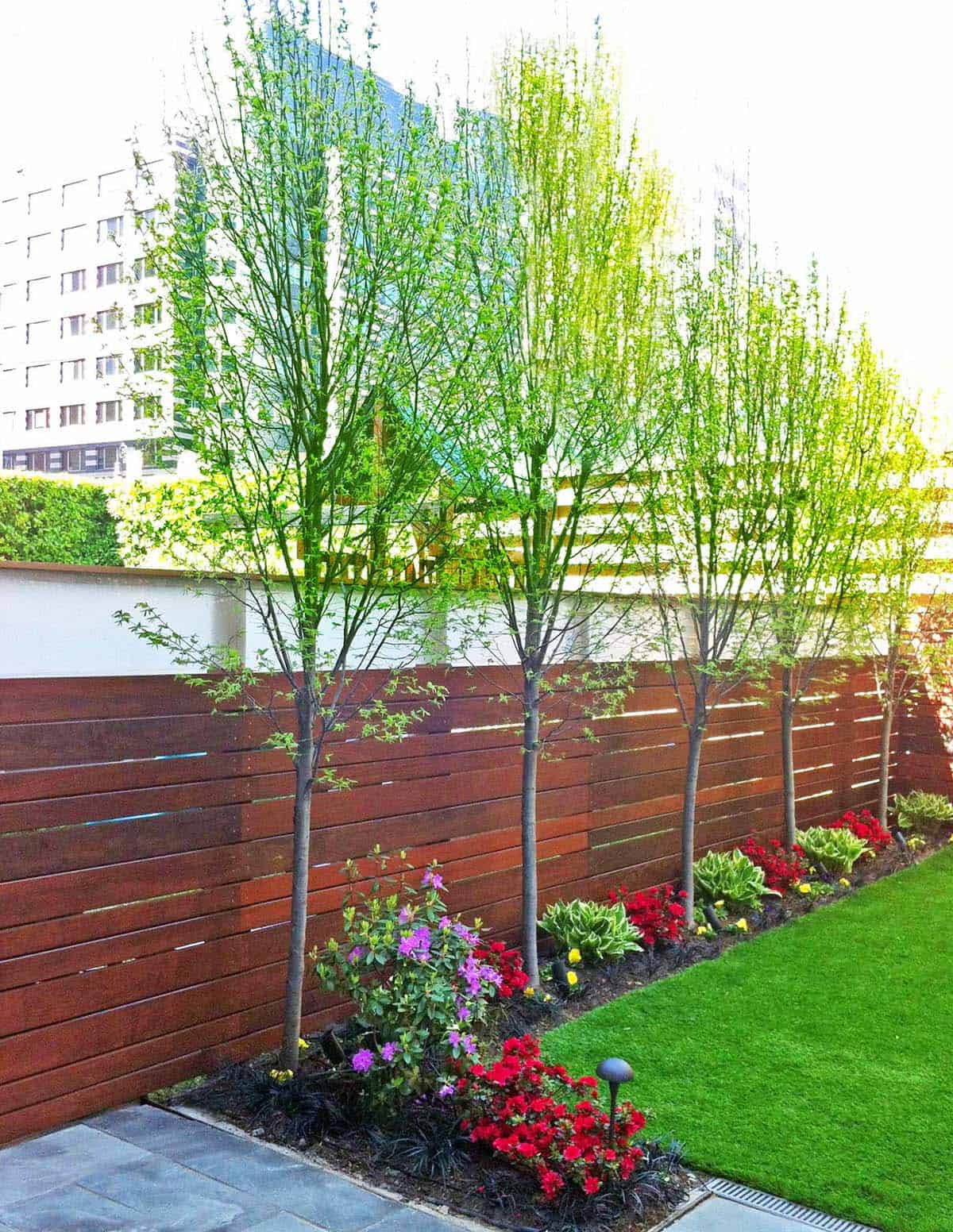
This contemporary Boerum Hill, Brooklyn backyard features an ipe fence, bluestone patio, artificial turf lawn, and a neatly lined up row of American hornbeam trees. Artificial turf has come a long way in recent years and is much more realistic looking than it used to be. Why was a tree chosen with a shallow, wide spreading root system? It was chosen more for the upright, narrow form / the aesthetics of this particular tree, rather than with regards to the root system. They have a naturally very upright habit, so can be planted close together like this and have done very well over the past few years. (Photo Credit: Amber Freda Garden Design)
2. Grow a Living Privacy Screen with Trellis Panels
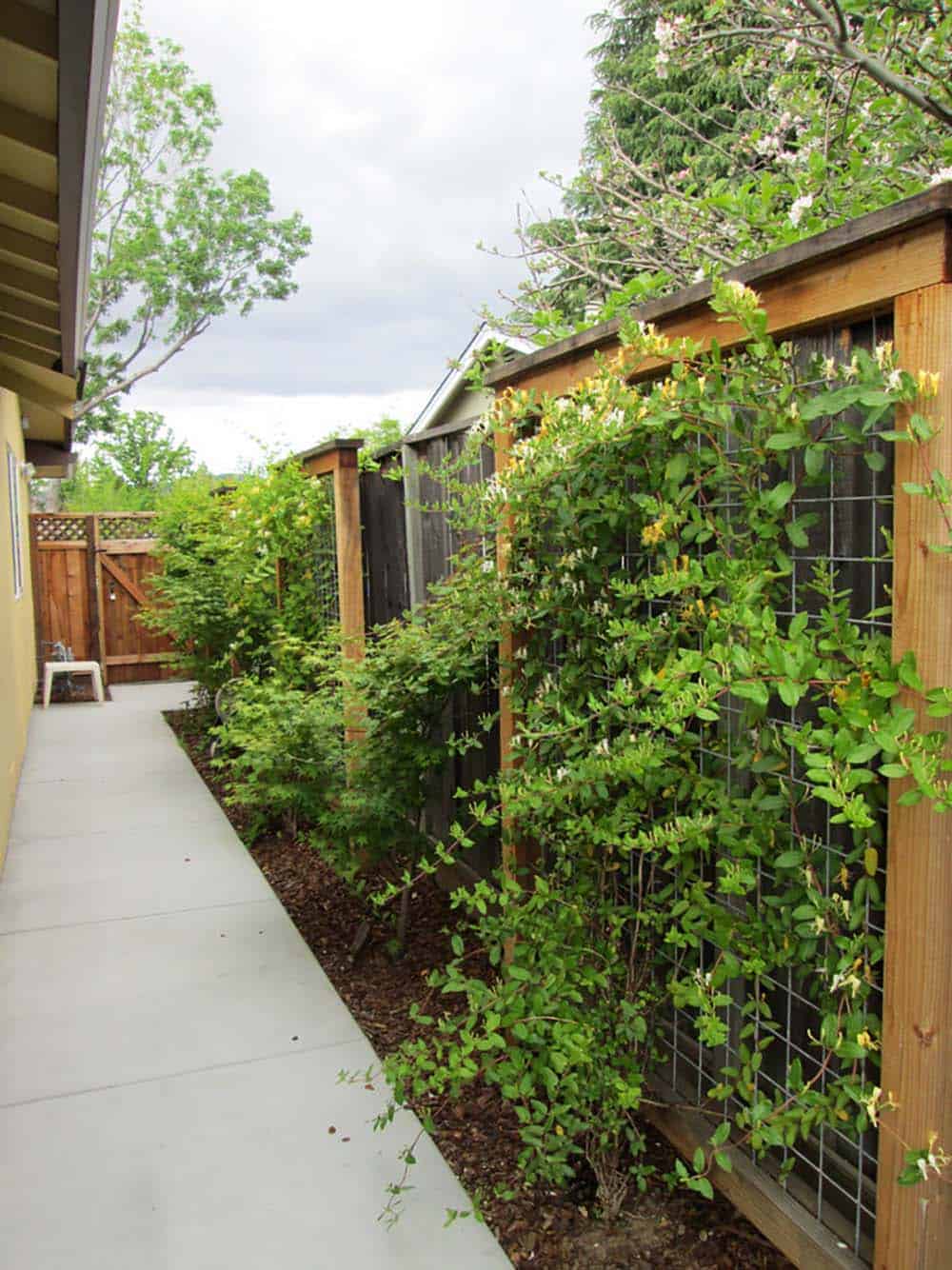
In the backyard, three trellises with Honeysuckle vines were built alongside a sidewalk, giving the homeowner’s a fragrant path while moving between the frontyard and backyard spaces. Two of the homeowner’s existing Japanese Maples were saved and transplanted in between the trellises. (Photo Credit: Taproot Garden Design)
3. Cover a Metal Mesh Fence in Climbing Vines
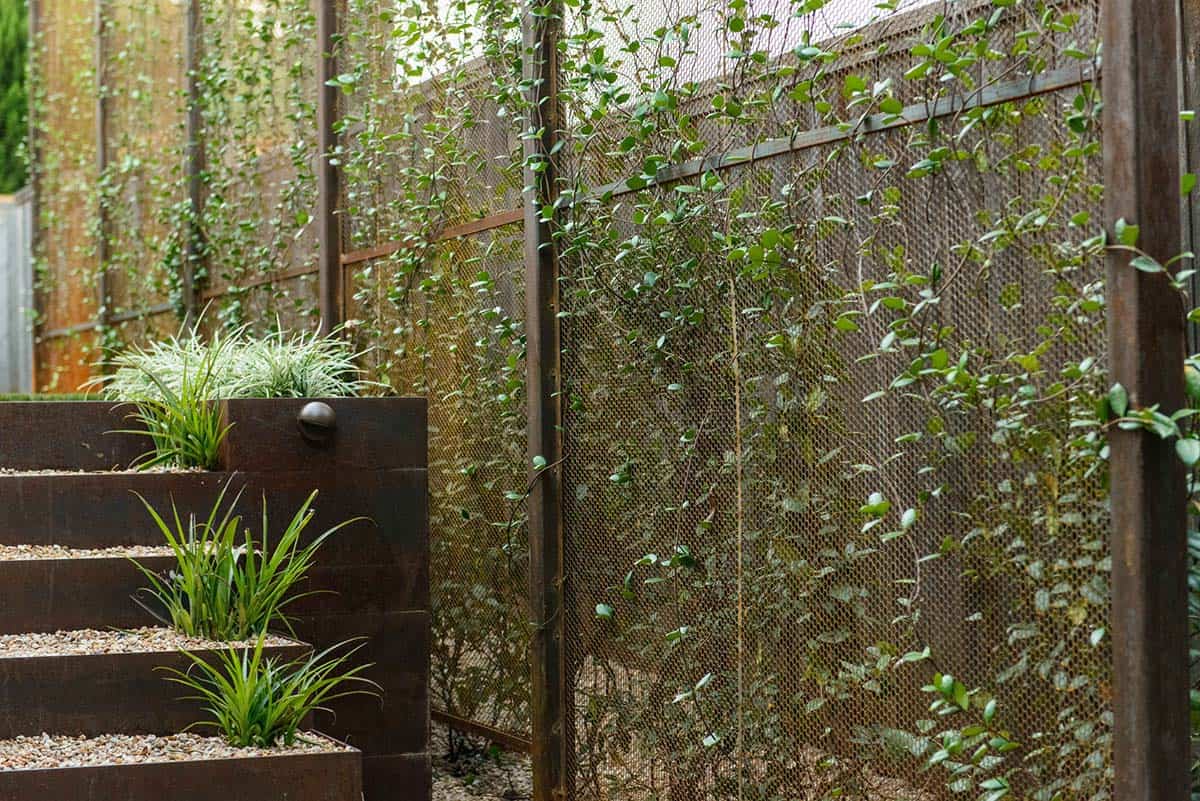
Scented star jasmine vines twine through the perforations of this custom steel screen that provides privacy to the outdoor dining area of a home in Texas. Pocket planting on the stair treads includes a variegated Silver Dragon lilyturf and the bromeliad Queen’s Tears (Billbergia nutans). (Photo Credit: Eden Garden Design)
4. Line a Slatted Fence with Pleached Trees
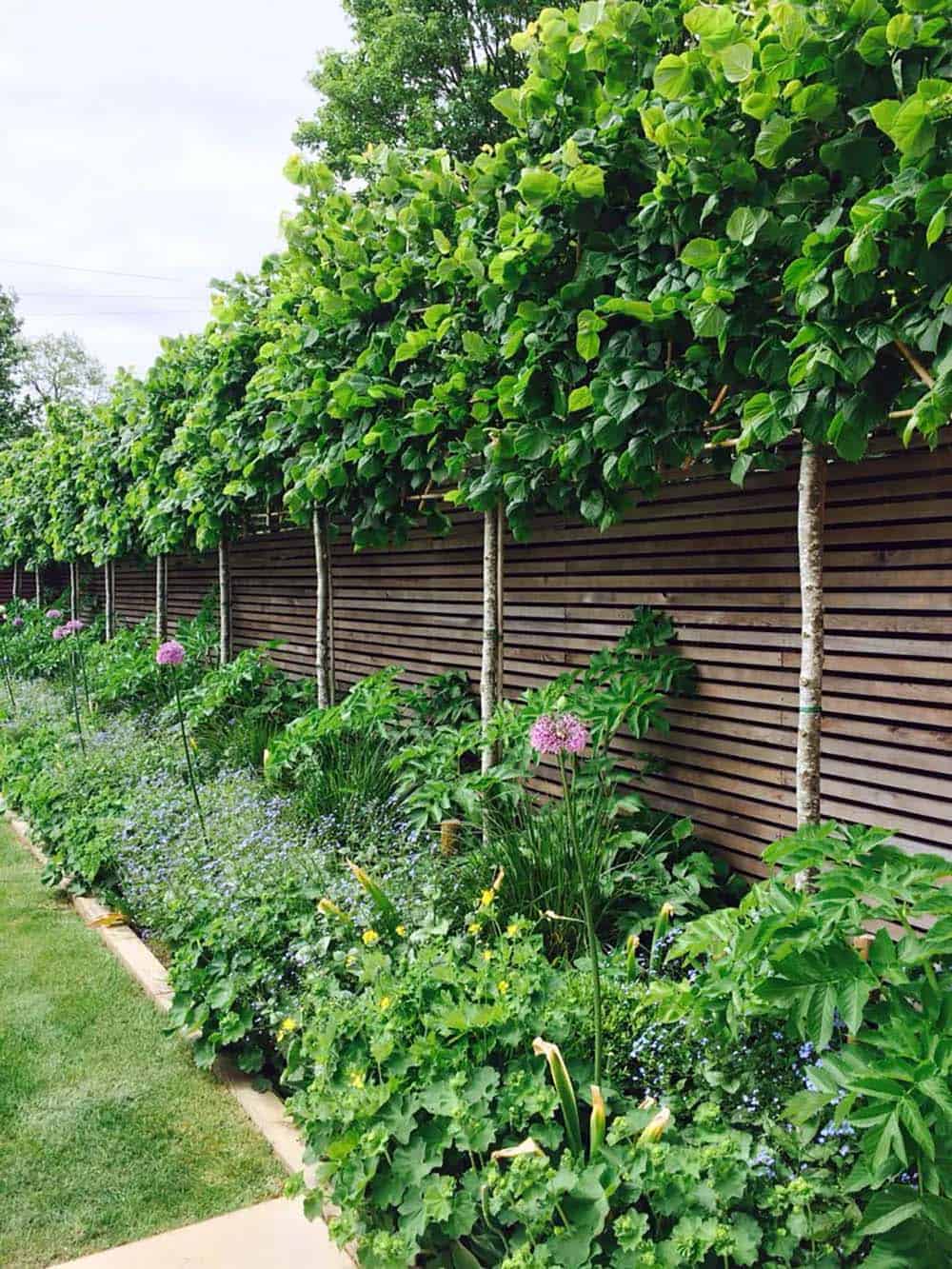
Pleached Linden Trees, trained to form a formal screen of branches and foliage on a clear stem, line this trellis. Lindens thrive in USDA zones 3–8, including this zone 7a garden. Below, allium, various types of Alchemilla mollis, and forget-me-nots (Myosotis) add color and texture. This combination offers a low-maintenance way to add height, privacy, and seasonal interest all along your fence line. (Photo Credit: O S/ Pinterest)
5. Plant a Row of Live Oaks Along Your Fence
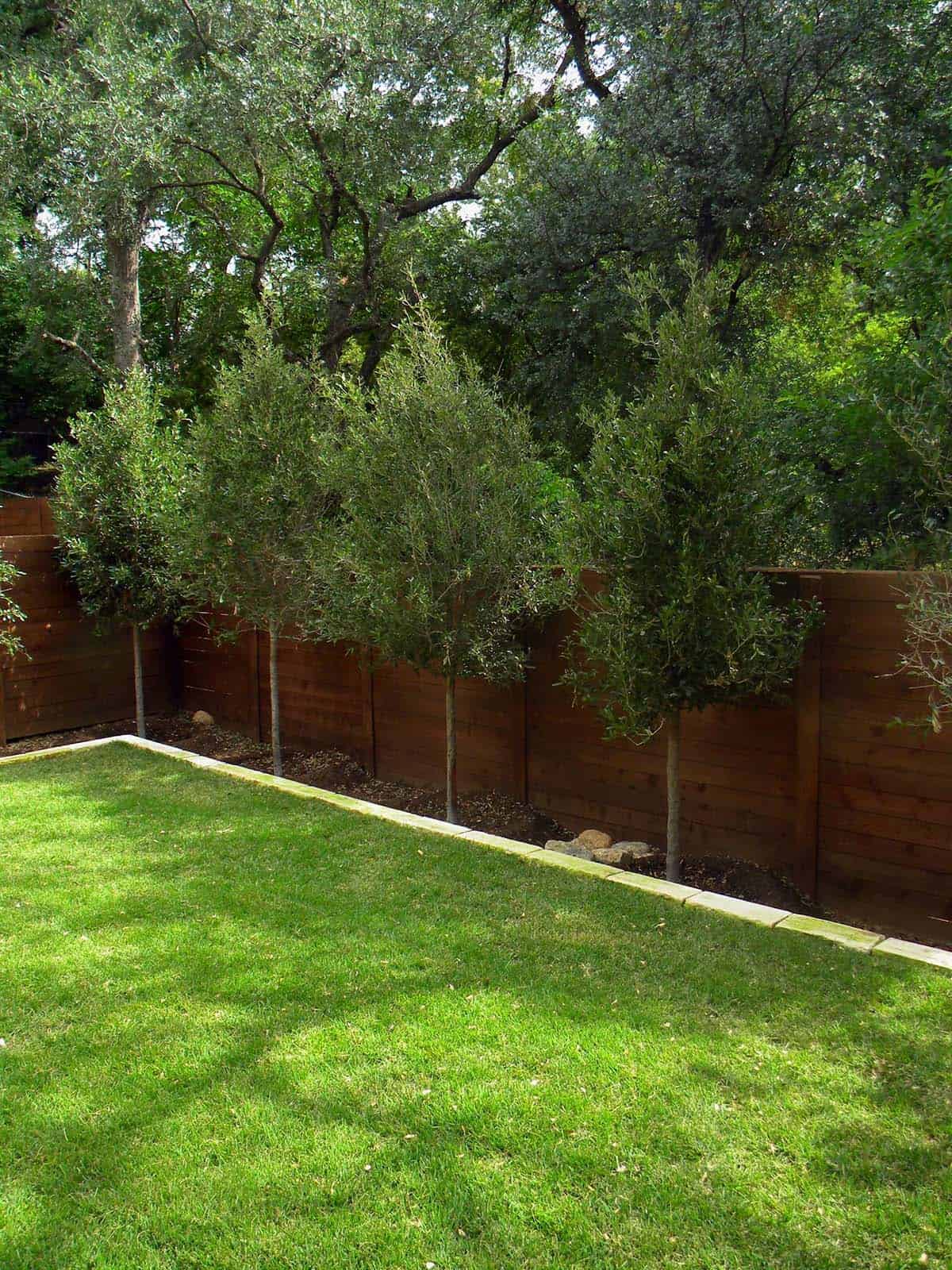
While there is a wonderful natural remnant landscape behind this small, minimal backyard, there was also a lot of window-to-window viewpoints from nearby houses. The owners of this property in Austin, Texas wanted to see the trees beyond, but not be able to look in each others windows. This raised hedge of live oaks will eventually be clipped into a rectangular box above the fenceline. (Photo Credit: Robert Leeper Landscapes)
6. Hang Planters and Layer Ferns Along Your Fence
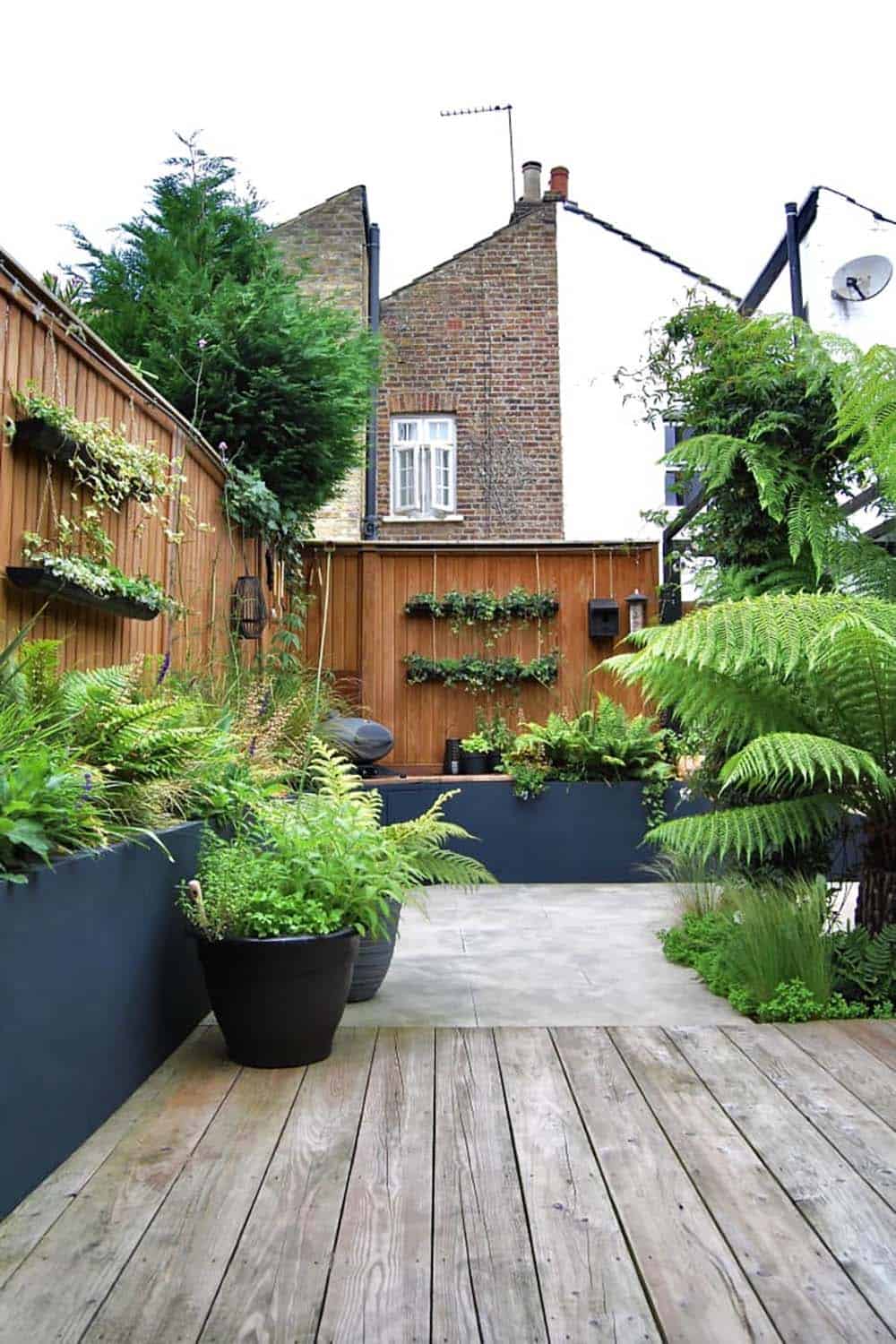
This compact backyard in East London, UK, transforms a simple fence line into a lush focal point with warm timber fencing, raised charcoal planters, wall-mounted greenery, and layers of ferns, ornamental grasses, and cascading plants. The mix of vertical planting and woodland-inspired textures softens the fence line, creating a private retreat that feels larger, greener, and more connected to nature. (Photo Credit: Apartment Therapy)
7. Layer Hedges, Roses, and Trees Along Your Fence
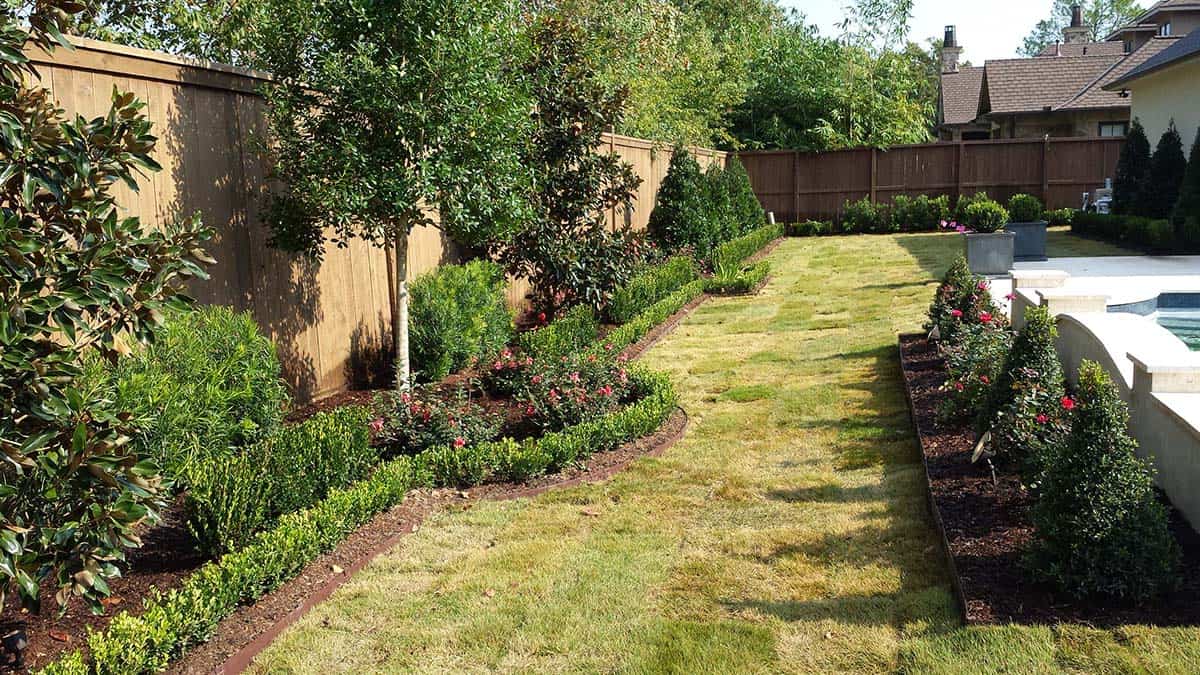
This fence line uses layered plantings to add depth and structure: clipped boxwood hedges along the bottom, flowering roses for color, and taller trees behind to soften the fence itself. Tip: Stagger plant heights front to back, low hedges, mid-size shrubs, then trees, so every layer stays visible from the yard. (Photo Credit: Urbanscapes LLC)
8. Train Climbing Vines Against a Sleek Black Fence
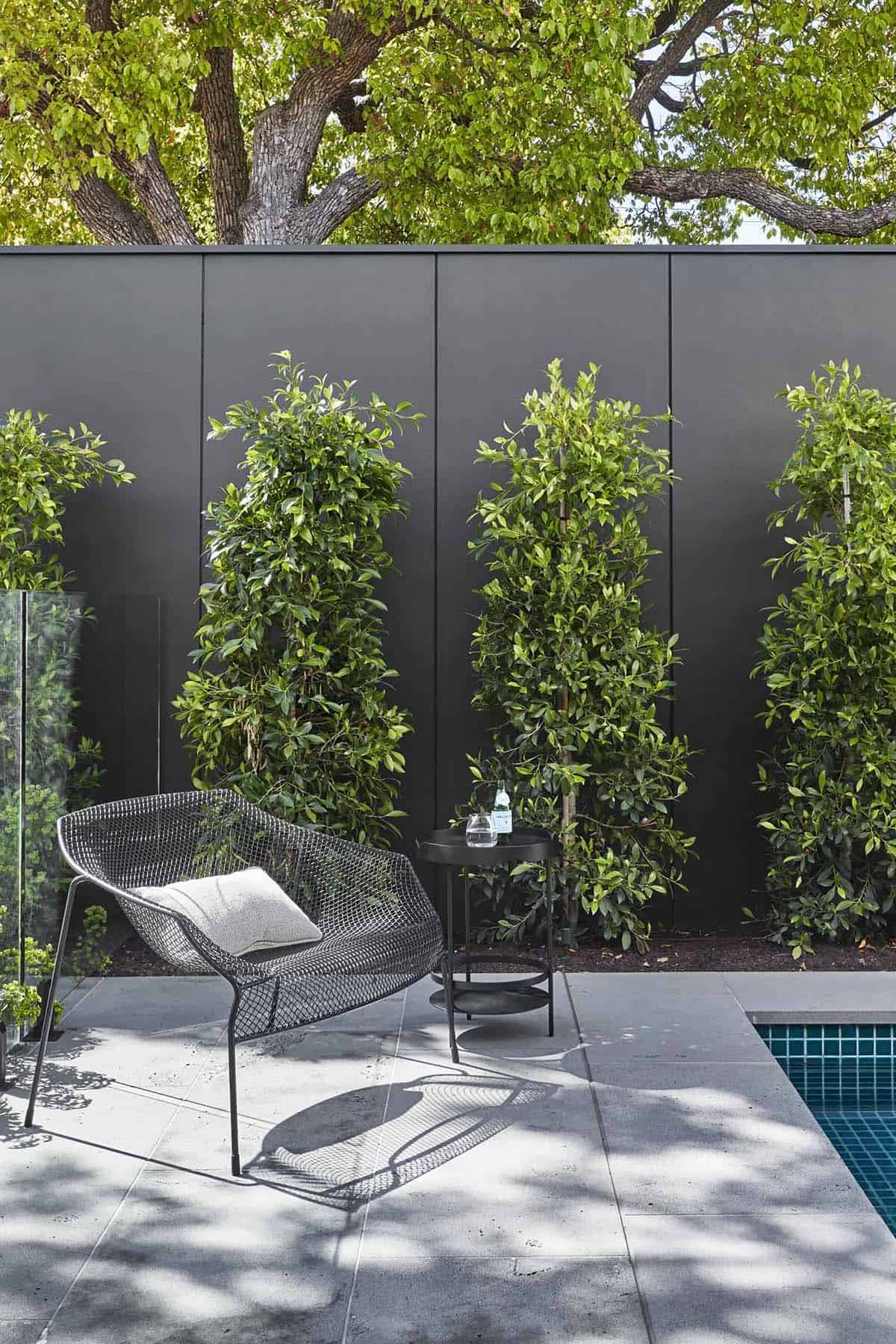
This sunken courtyard in Brighton, East Victoria, uses Hill’s fig trained against a sleek black fence to soften the space and borrow views of the surrounding street tree canopy. The lush greenery contrasts beautifully with Australian bluestone paving and vivid mosaic pool tiles, creating an array of tones and textures right along the fence line. Tip: Choose a dark, matte fence color to make climbing greenery pop, especially near a pool or patio. (Photo Credit: Nathan Burkett Design NBLA)
9. Edge Your Fence Line with Stone and Columnar Trees
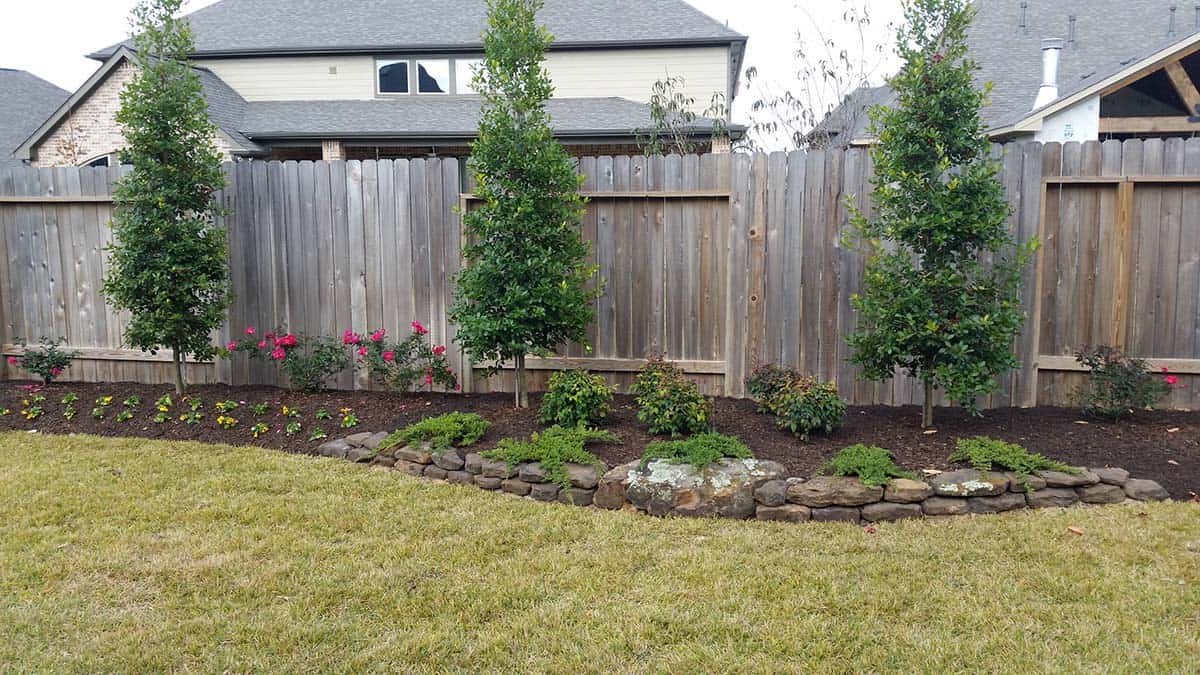
This fence line combines columnar evergreens for vertical structure, flowering roses for color, and a low natural stone border to keep the bed neatly defined. Tip: Use stacked, irregular stones instead of cut edging for a more natural, less formal look along a wood fence. (Photo Credit: Thigpen’s Design Landscaping)
10. Soften a Split-Rail Fence with Flowering Perennials
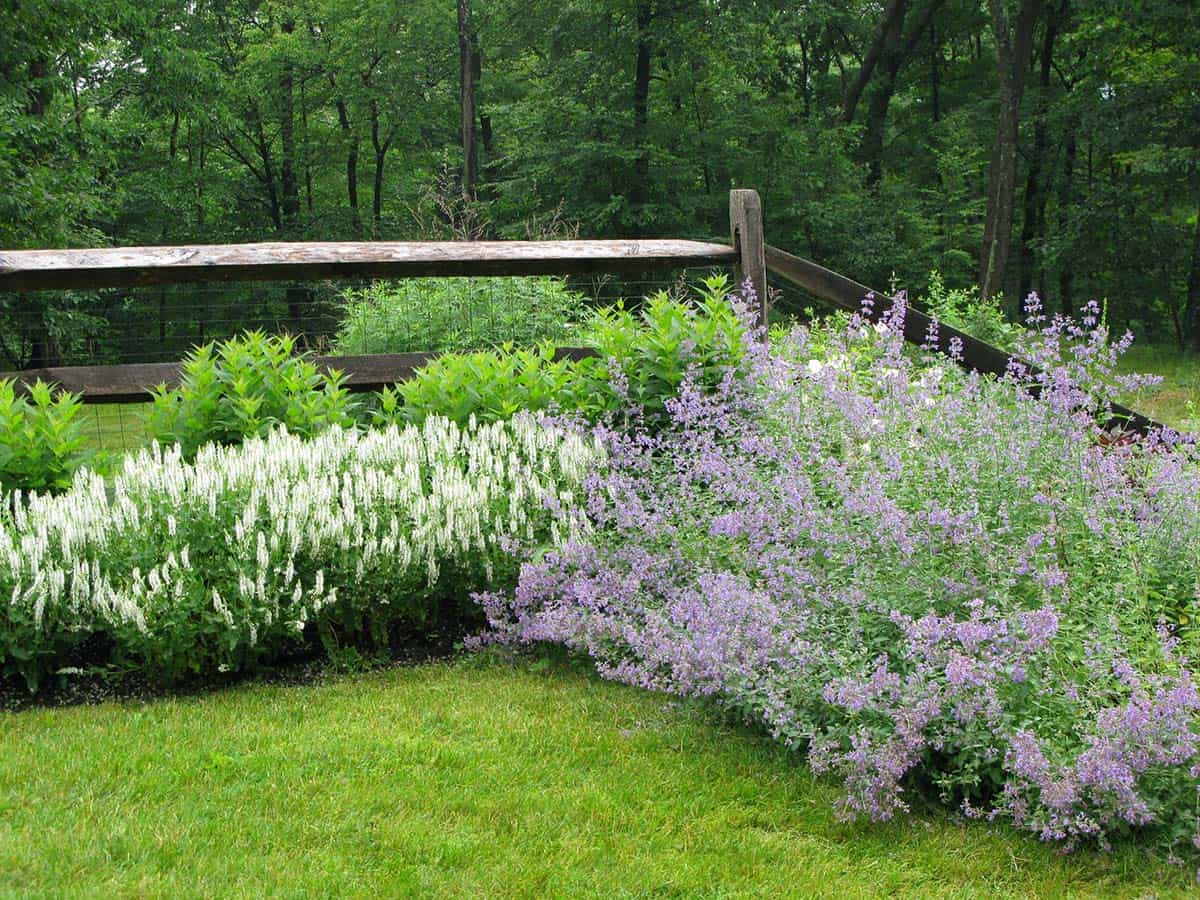
Purple catmint blooms profusely through out the sumer complimenting the other plants in the bed as they come in and out of bloom. White garden sage lines the front of the planting bed board, with Agestache against the fenceline, a split rail with wire mesh. Tip: Let billowy perennials like catmint spill over a low fence rail for a relaxed, cottage-garden look that needs minimal upkeep once established. (Photo Credit: Austin Ganim Landscape Design)
11. Fill Your Fence Line with Hostas and Shrubs
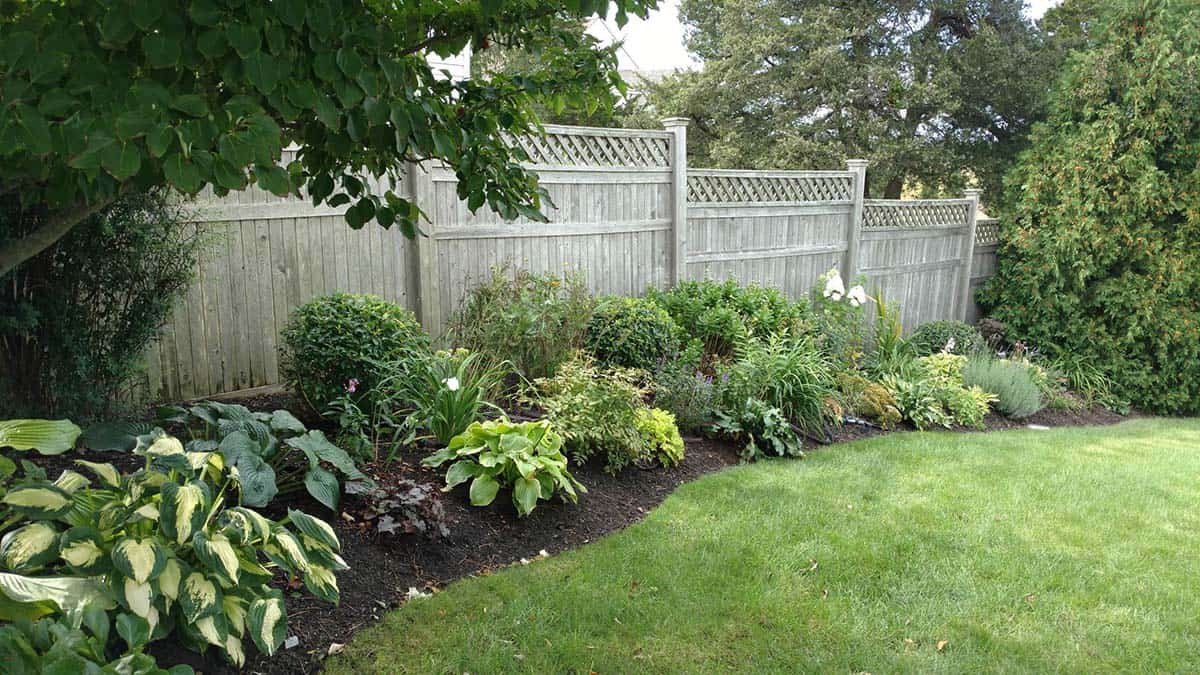
Various hostas comprise the majority of this fenceline border. This bed runs along the entire fence. Rich in variety with perennials, shrubs accent the back. It lends a sophisticated elegance and softens the fence line creating a living border. Tip: Mix leaf shapes and shades of green, like variegated hostas next to darker shrubs, to add visual interest even without a lot of flowers. (Photo Credit: M&M Garden Designs, LLC)
Fragrant lilacs provide the canopy for a fragrant bouquet of hosta and other shade loving plants. While usually bushy, the unique pruning of these allows for a more graceful look to this Madison garden. Shade loving hostas and other perennials soften the fenceline with their myriad of flowers.
12. Bring Bold Color to Your Fenceline Bed
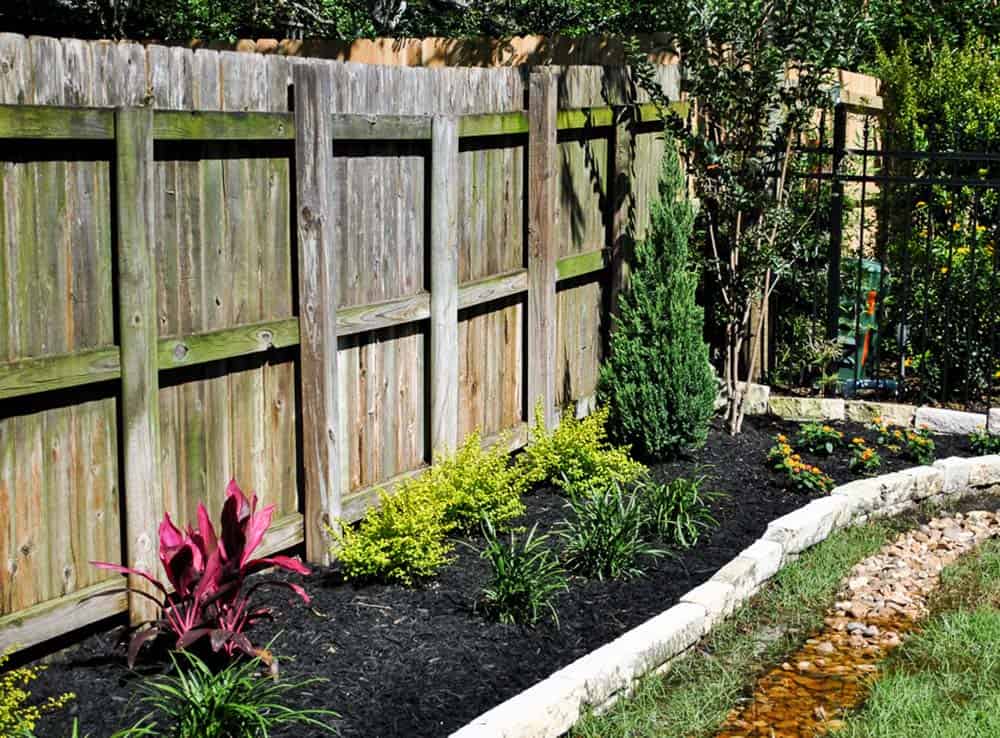
This fenceline bed, in a Texas backyard, uses vibrant red cordyline and canna lilies for bold color, backed by dark mulch and a natural stone edge that doubles as a dry creek bed. Tip: Plant one or two bright, dark-leafed accents (like cordyline) against a neutral fence to make the whole bed pop without needing lots of flowers. (Photo Credit: Landmark Landscape Group)
13. Plant Italian Cypress for a Tall Privacy Screen
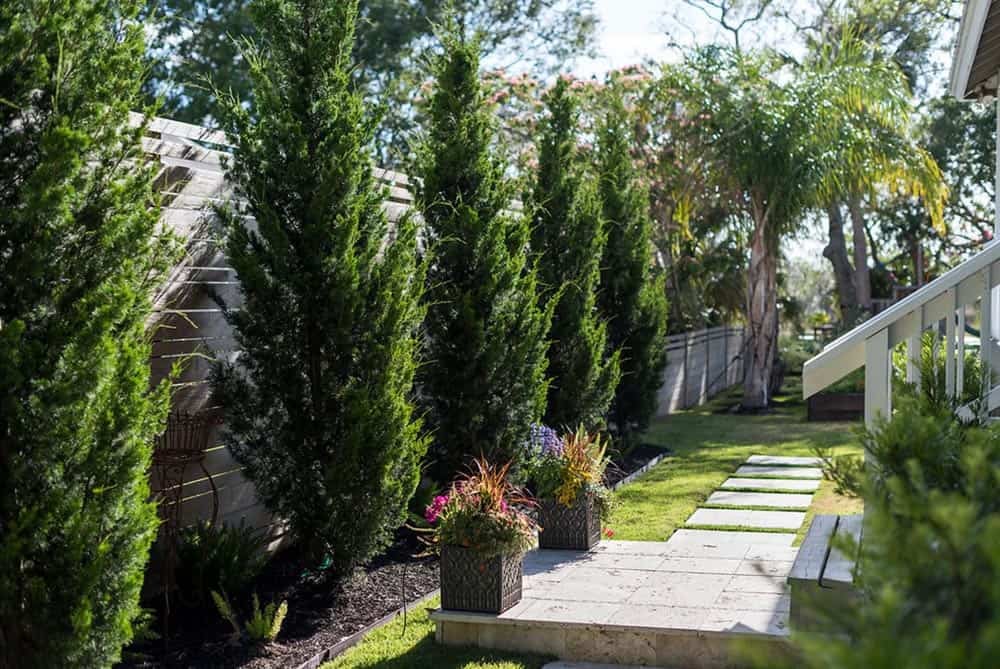
A row of narrow Italian cypress trees creates an elegant, dense privacy screen along this fence in a backyard in Orange Park, Florida, without taking up much ground space. Tip: Space columnar trees like Italian cypress closely together, about 3-4 feet apart, for a fuller screen faster. (Photo Credit: Scapes of North Florida)
14. Line a White Fence with Roses and Perennials
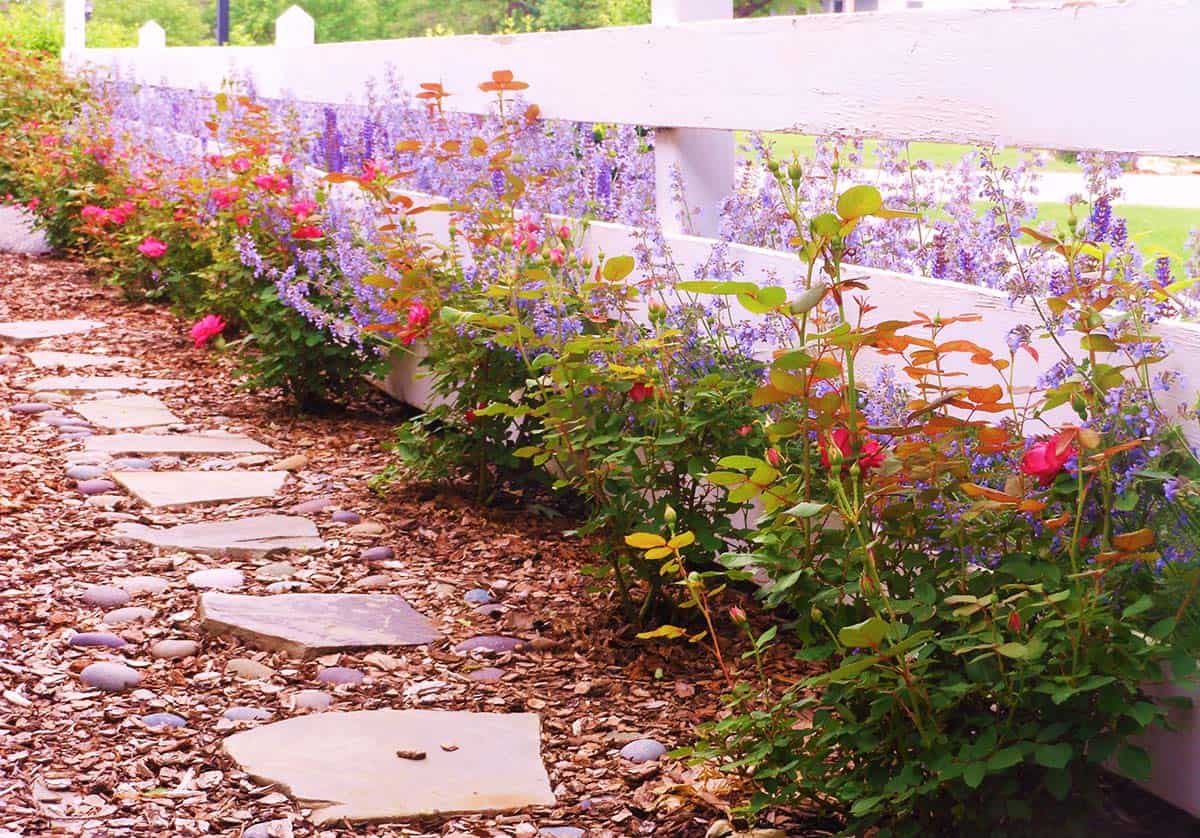
A row of pink double knockout roses planted along the fenceline at Lakeshore Cottage, catmint (Nepeta, Walker’s Low) is in the background. A stone path allows a walk through the garden. Tip: Plant catmint behind roses to create a soft, textural backdrop that blooms all season with minimal upkeep. (Photo Credit: lakeshorecottage)
15. Grow an Edible Landscape
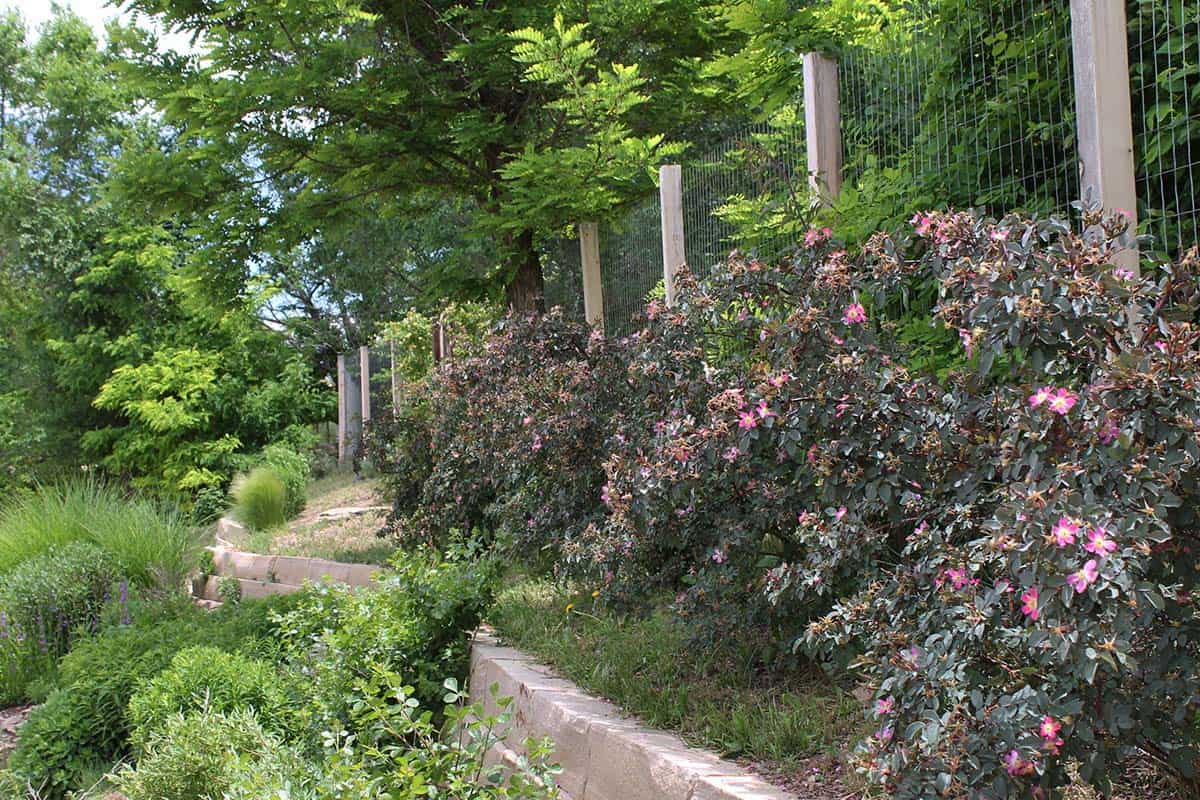
This edible landscape in Santa Fe, New Mexico, uses Rosa glauca along a wire fence for pink blooms, blue-gray foliage, and vitamin C-rich rose hips. Tip: Harvest rose hips after the first frost, when they’re softened and sweetest, for teas, jams, or syrups. (Photo Credit: radicle)
16. Build a Raised Flower Bed Along a Wood Fence
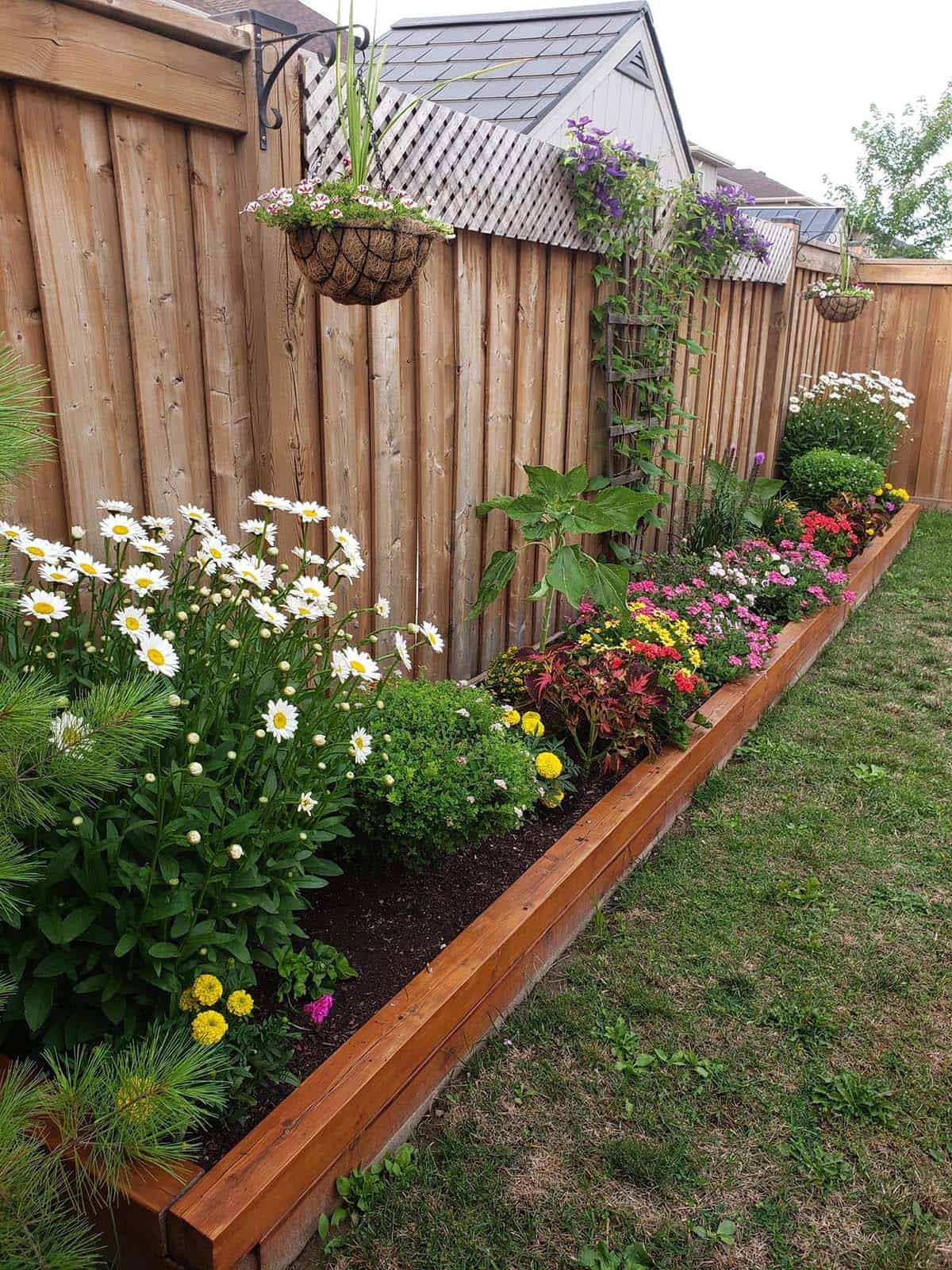
This wood fence gets a colorful lift from a raised planter bed filled with daisies, coleus, and marigolds, plus hanging baskets and a small trellis for climbing vines. The planter bed is pressure treated cedar tone 4×4 from Home Depot. Tip: Hang baskets or add a trellis above a raised bed to layer color at multiple heights along the fence. Also, put the hanging pots on a drip system! (Photo Credit: JungleJay57 / Reddit)
17. Pair Iris and Groundcover Along a Picket Fence
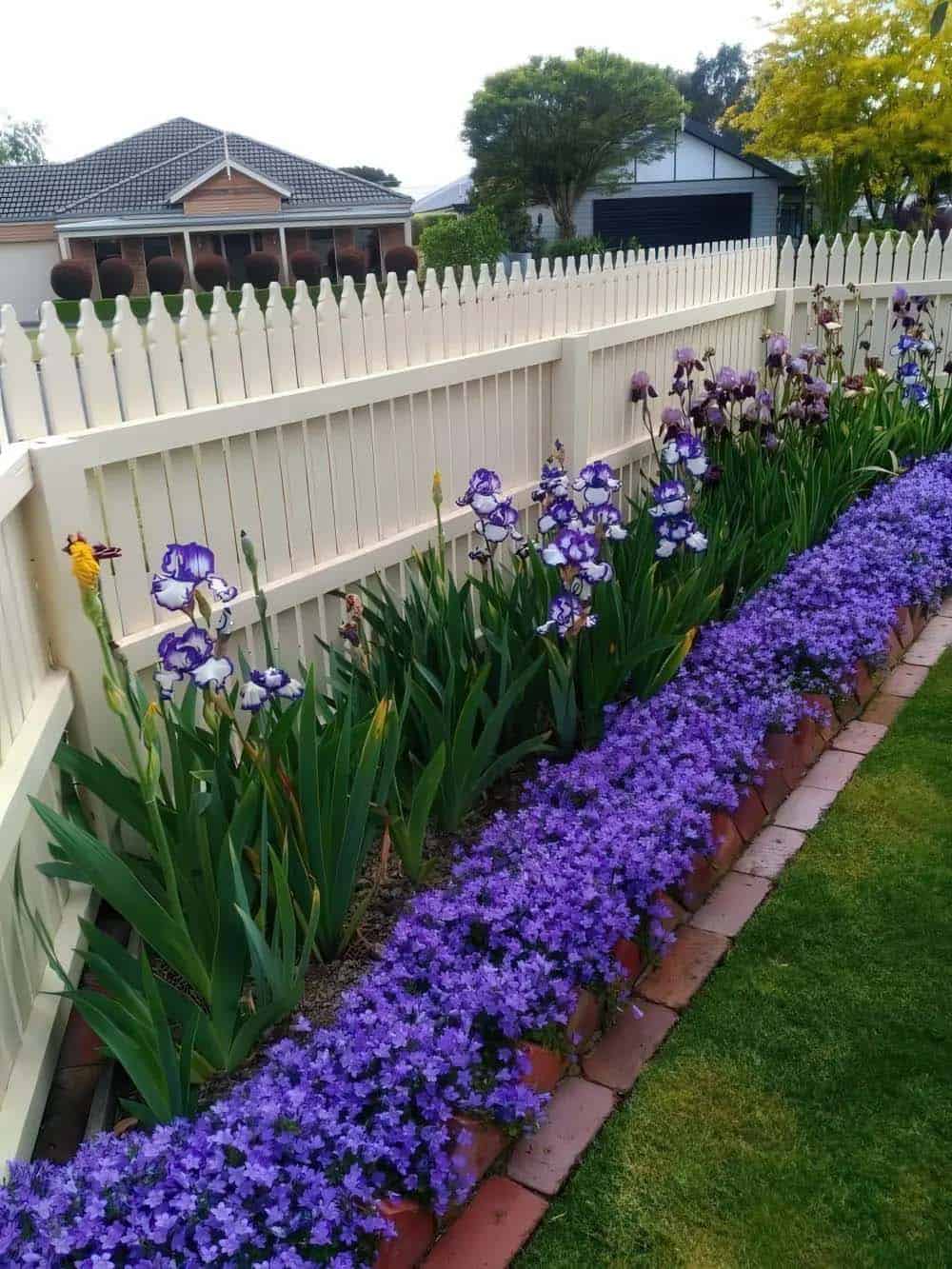
Striking purple bearded iris stand tall against this white picket fence, underplanted with a dense carpet of blue star creeper (or similar groundcover) for a polished, layered look. Tip: Use a low, spreading groundcover to fill gaps beneath taller flowers, it keeps the bed looking full even before everything’s in bloom. (Photo Credit: Teresa Pope / Pinterest)
18. Edge a Fence Bed with Wavy Pebble Borders
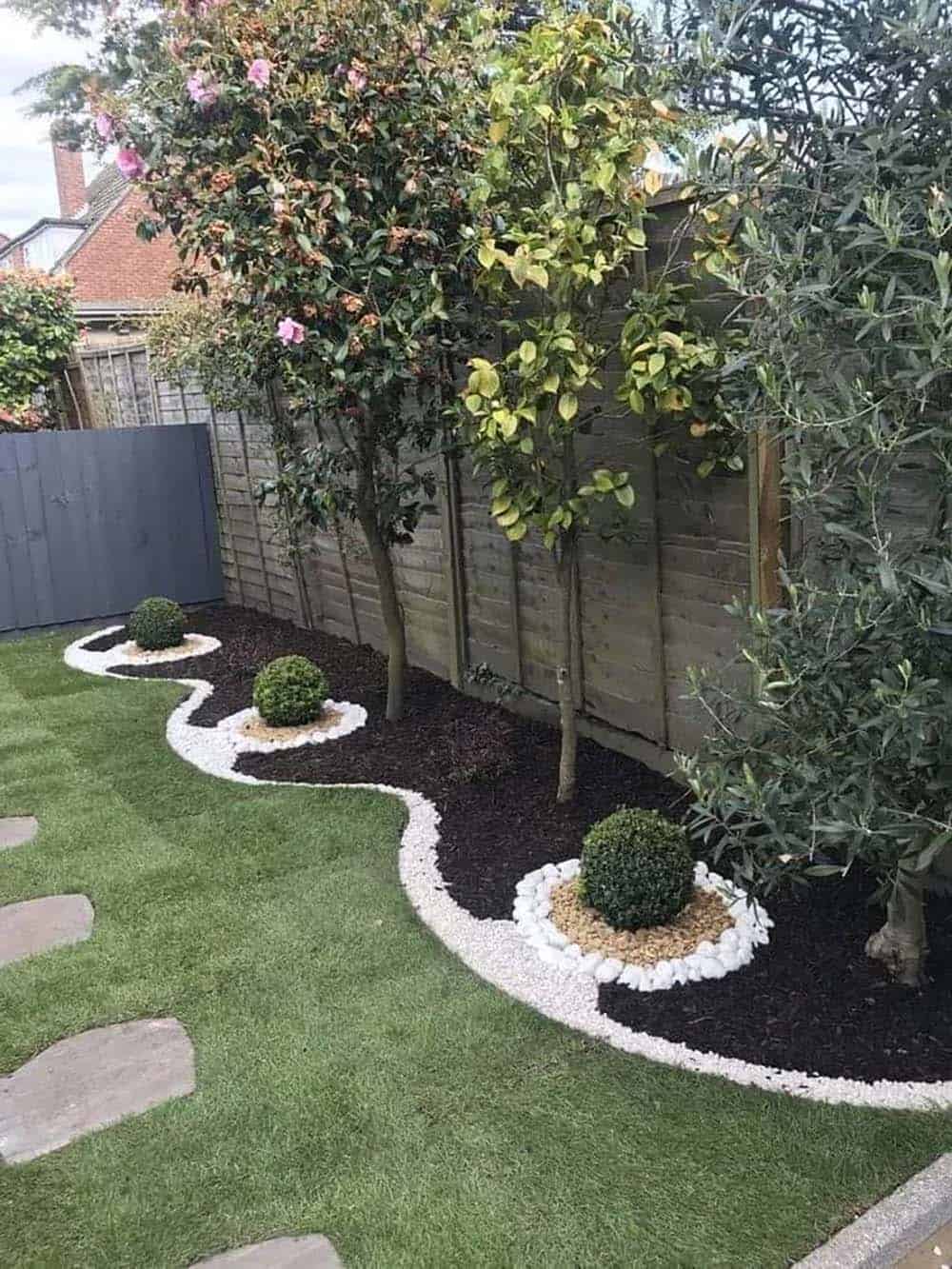
This fence line uses a curving white pebble border to frame boxwood spheres and small ornamental trees, creating a clean, modern contrast against dark mulch. Tip: Use a contrasting light-colored gravel or pebble edge to make a curved bed design stand out against dark mulch or turf. You can see an amazing video of how this garden was created on Instagram. (Photo Credit: JB landscaping Fence and Masonry)
19. Use Wood Planter Boxes
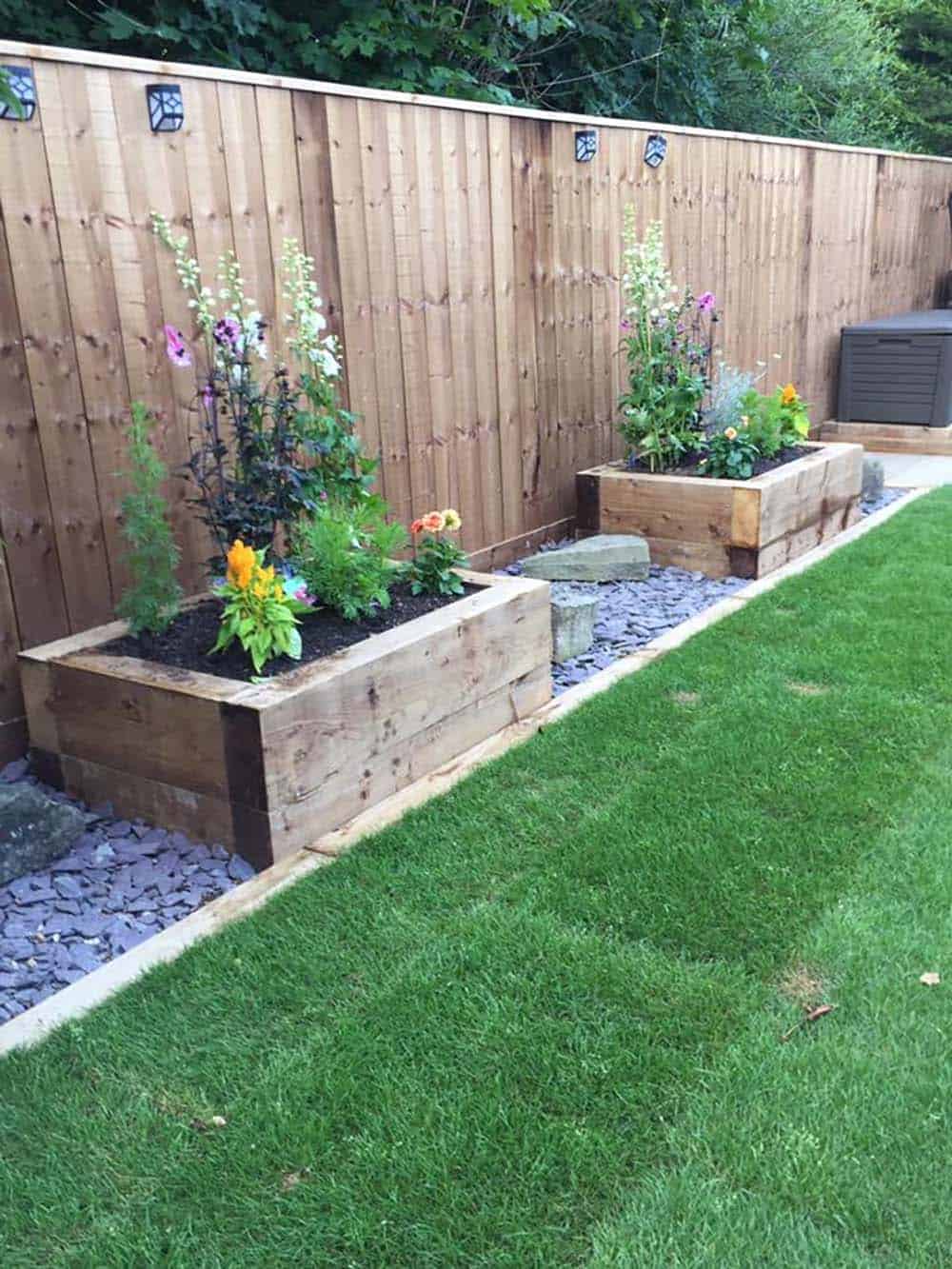
Raised wood planter boxes filled with snapdragons, dahlias, and other flowers sit along this fence, framed by dark slate gravel for a tidy, low-maintenance edge. Lights mounted on the fence help to illuminate the planter boxes when the sun goes down. Tip: Raised planter boxes are ideal for fence lines with poor soil, they let you control drainage and soil quality without digging up the ground. (Photo Credit: Dodds Fencing & Sheds)
20. Design a Green and White Garden
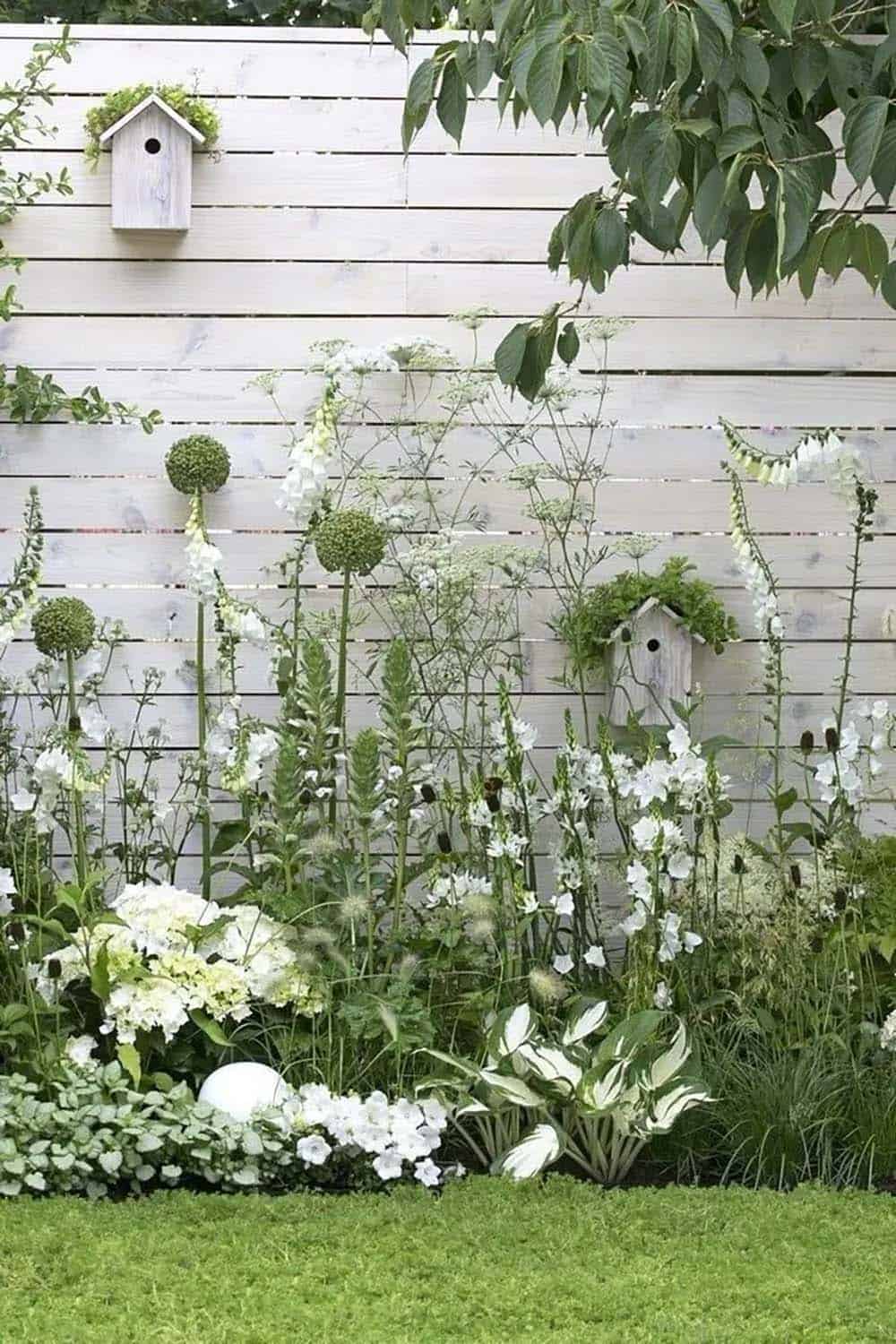
This dreamy fence line uses only white and green blooms, foxglove, allium, hydrangea, and hosta, for a soft, monochromatic look, accented by charming mounted birdhouses. Tip: Stick to a single color palette and let varied plant heights and textures do the visual work instead of competing colors. (Photo Credit: Laura / Pinterest)
21. Create a Cottage Garden Look
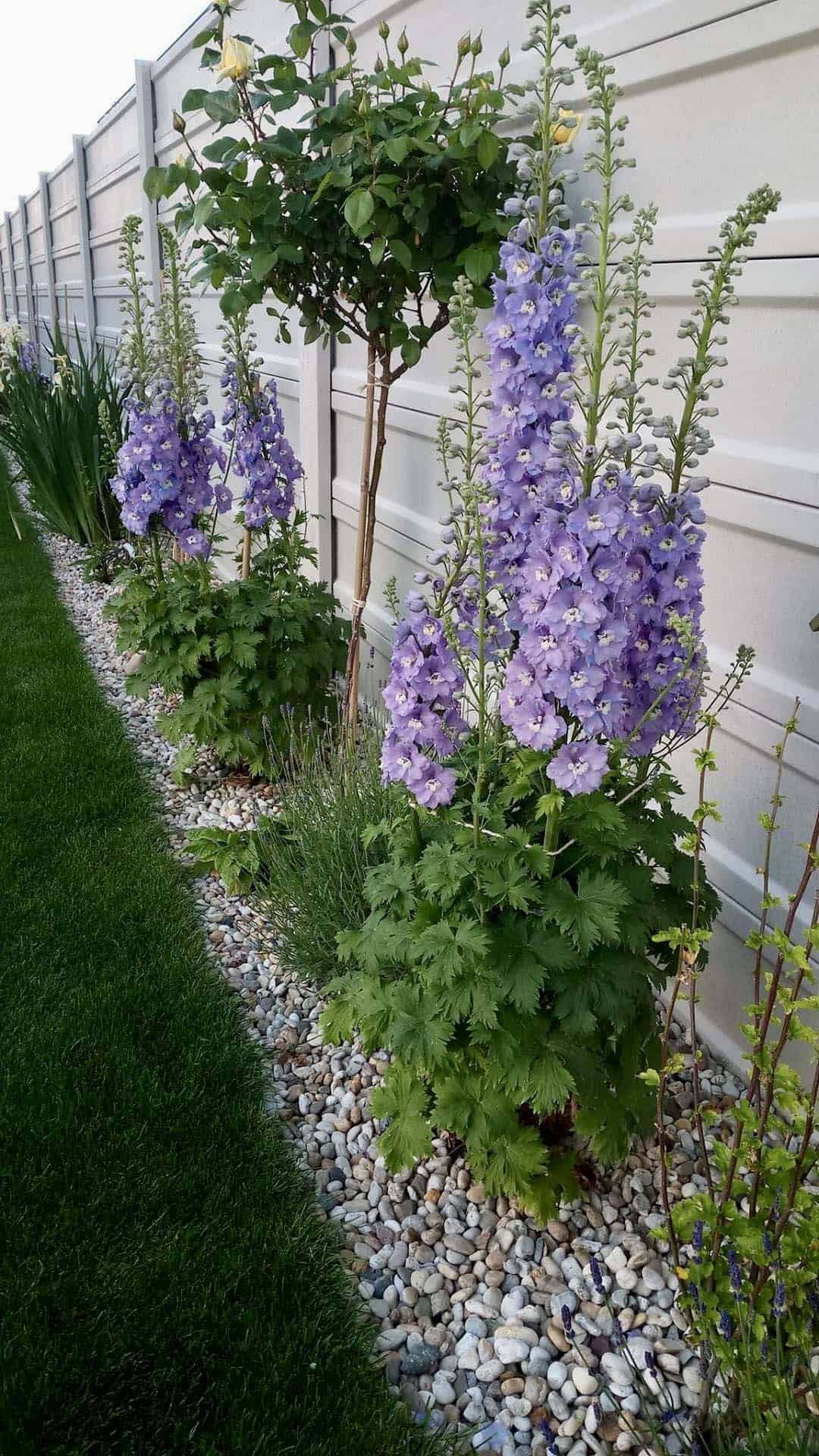
This fence line channels classic cottage garden style with towering purple delphiniums and tree-form standard roses, softened by a gravel border below. Tip: Stake tall delphiniums early in the season, their heavy flower spikes can topple in wind and rain once fully bloomed. (Photo Credit: V.Rózsa / Pinterest)
22. Edge Your Fence with a Low-Maintenance Gravel Border
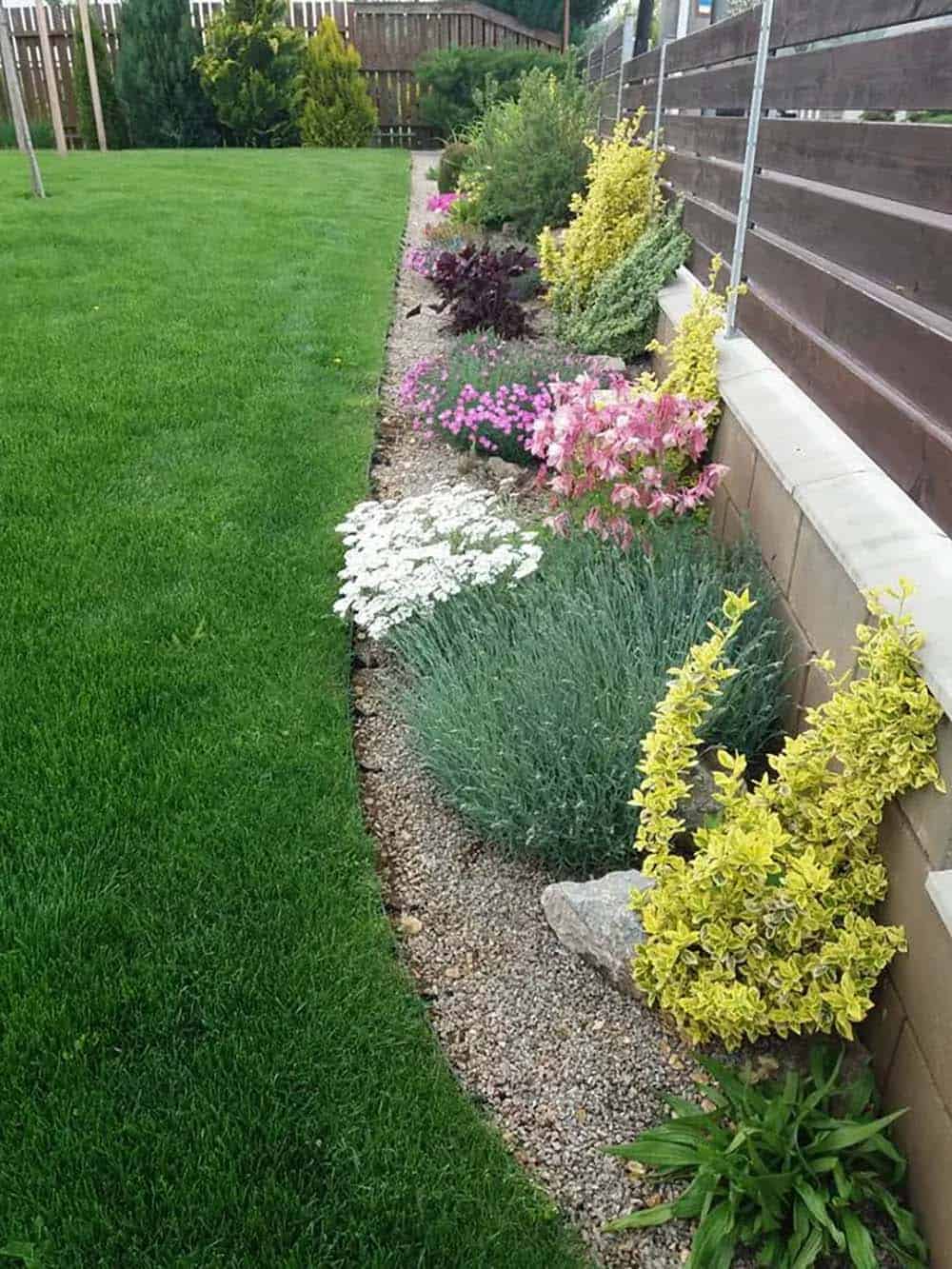
This fence line uses a gravel border filled with white yarrow, columbine, Emerald ‘n’ Gold euonymus, lavender, and Firewitch dianthus for layered color and texture year-round. Tip: A gravel border cuts down on weeding and improves drainage, ideal for plants such as lavender that need well-drained soil. (Photo Credit: Marie Zelenková / Pinterest)
23. Grow Ornamental Grasses in a Raised Planter Bed
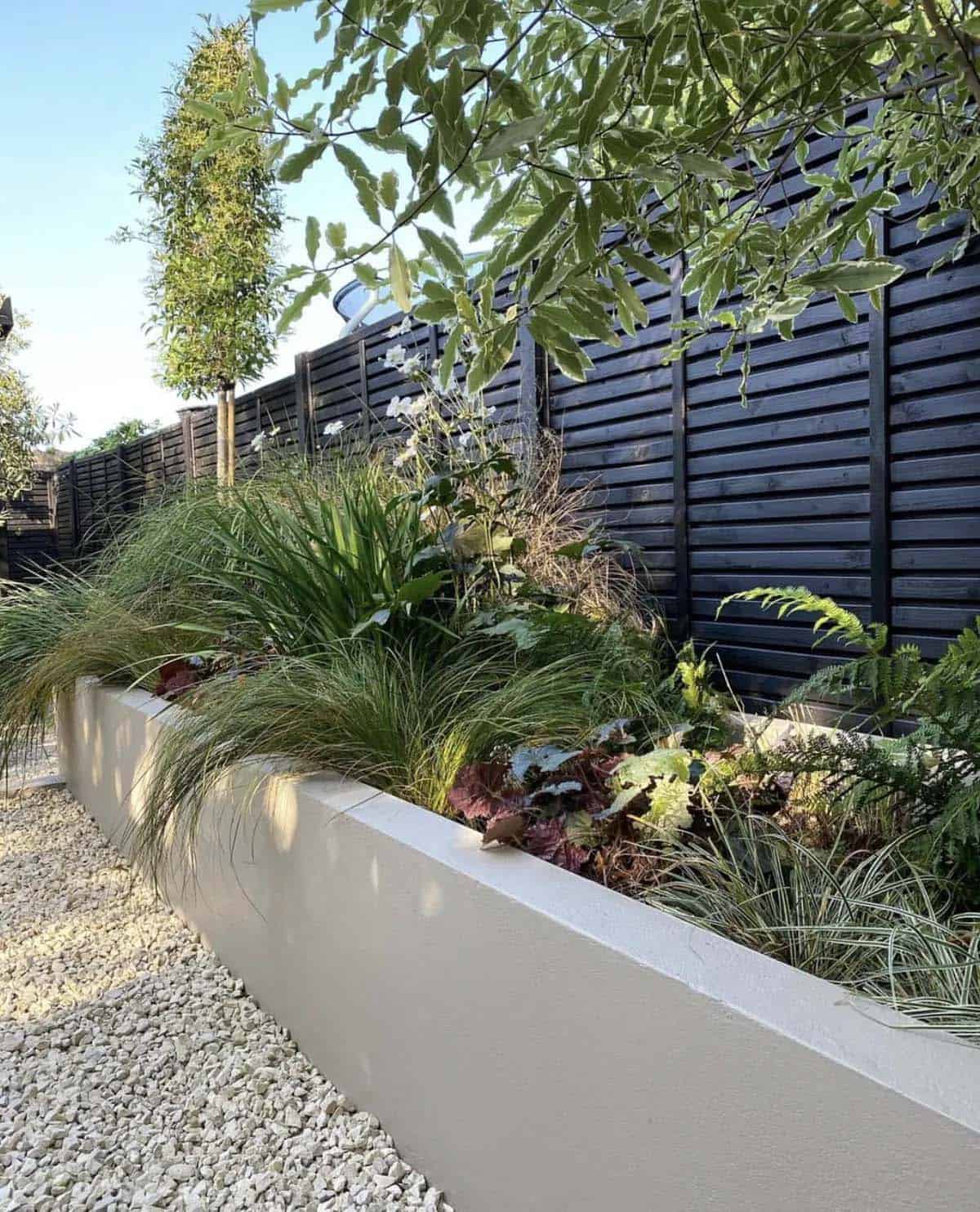
Feathery ornamental grasses and dark, textured foliage fill this raised concrete planter, standing out against a modern black slatted fence. Tip: Pair soft, airy grasses with bold dark-leafed plants to add movement and depth without relying on flowers. (Photo Credit: Iwona Bialas / Pinterest)





2 comments