


❤️ Would you like to save this?
By saving, we'll email this post to you for later. Unsubscribe anytime.
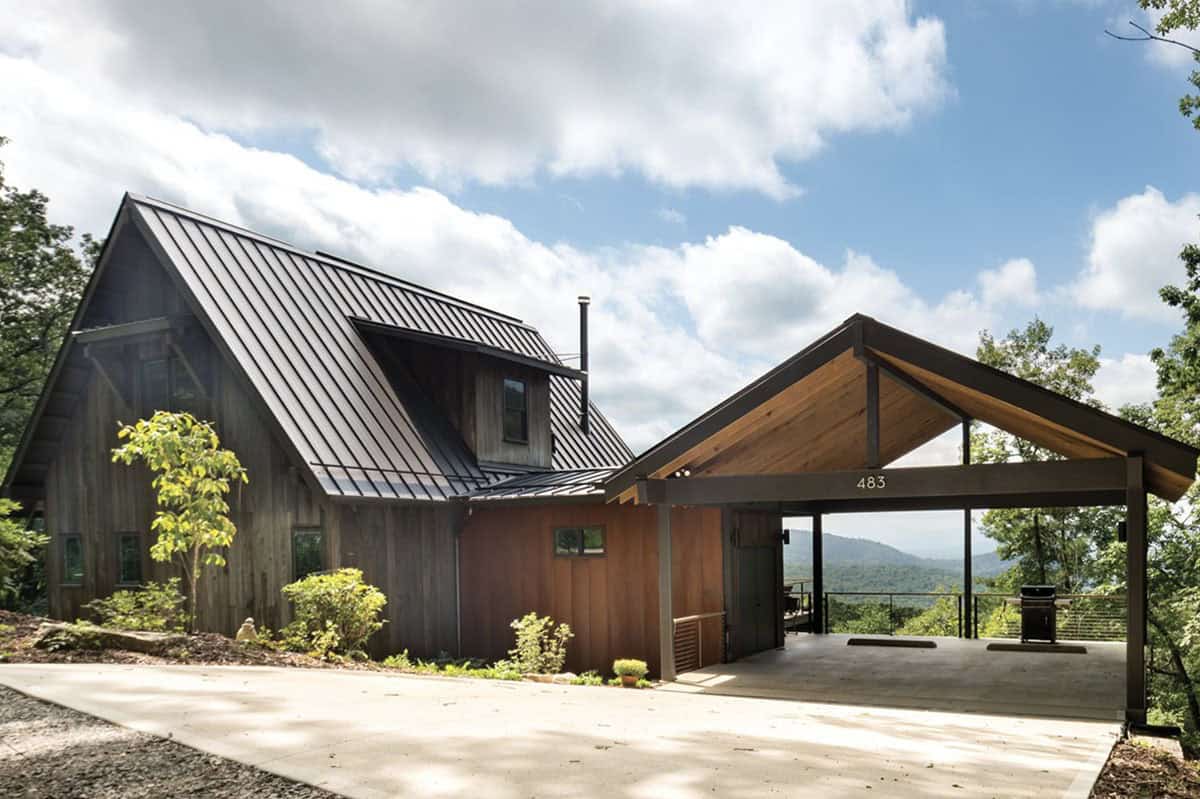
Situated just below the crown of a mountain top in the Beaverdam Valley neighborhood of Asheville, North Carolina, this net-zero home was designed for a couple of empty nesters by Wilson Two Architecture, along with Jade Mountain Builders. The Southcliff Residence was conceived from the outset to allow the owners and their family to connect as much as possible with the tremendous views available to them while embracing a reverence for the calm and protection of the surrounding forest.
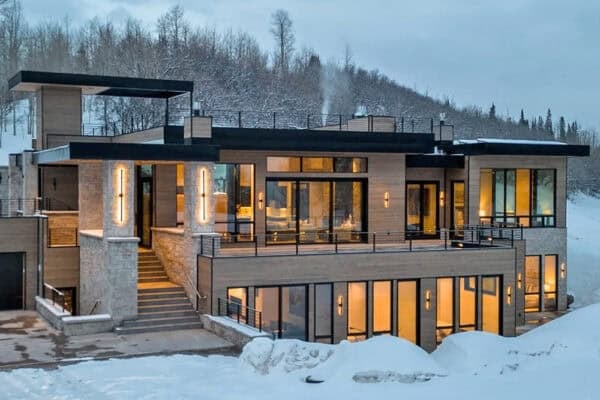
To that end, the design was conceived as a three-sided courtyard home, with the “fourth wall” of the courtyard being the existing forest edge. The two flanking concrete wings anchor the home deeply into the land while supporting the great room bar, which cantilevers lightly into the trees and extends toward the views beyond. The home offers 2,500 square feet of living space, plus an additional 1,600 square feet of functional outdoor space.
DESIGN DETAILS
Architect Wilson Two Architecture
Builder Jade Mountain Builders
Interior Design Liz Hackett Interiors
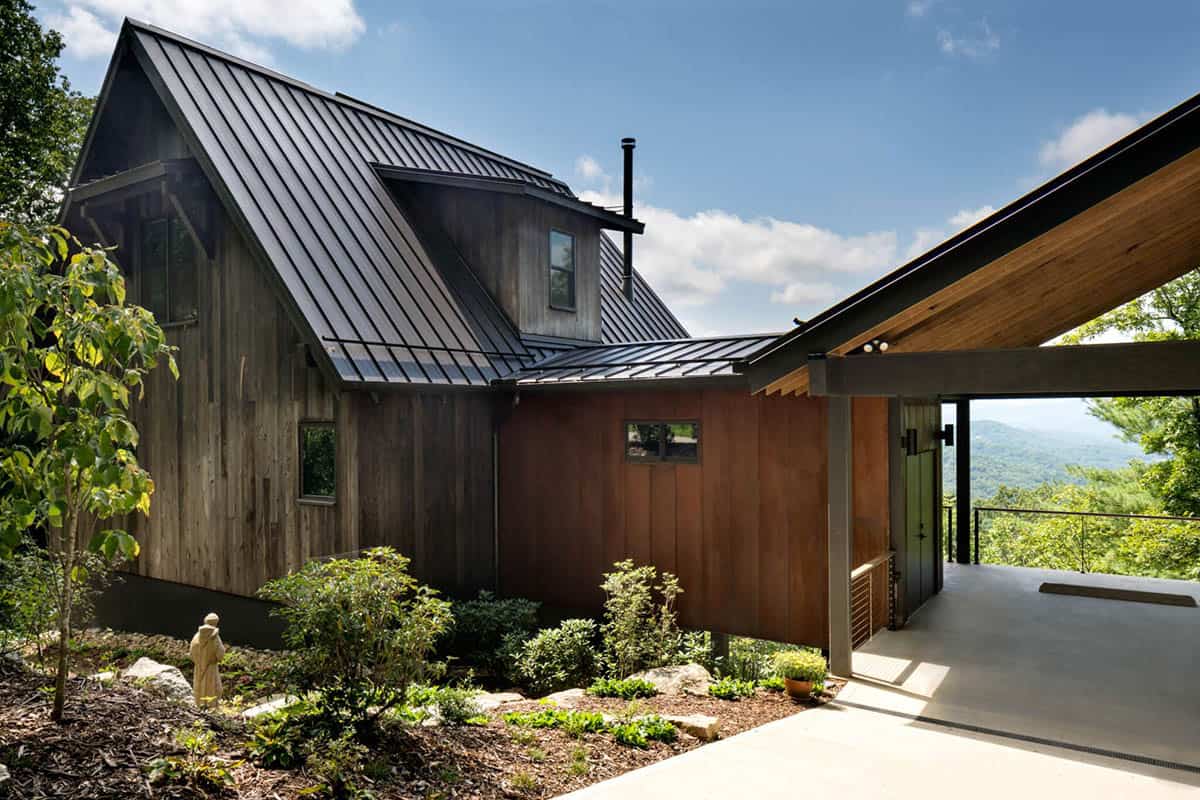
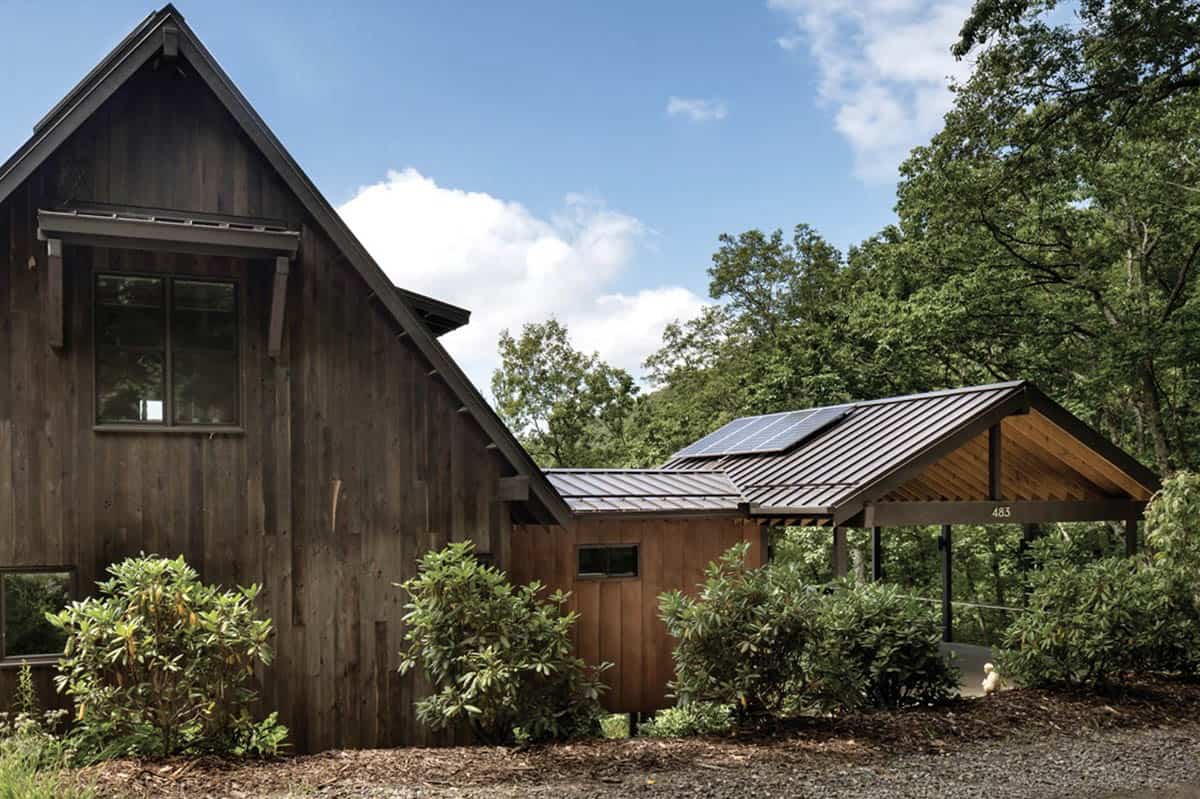
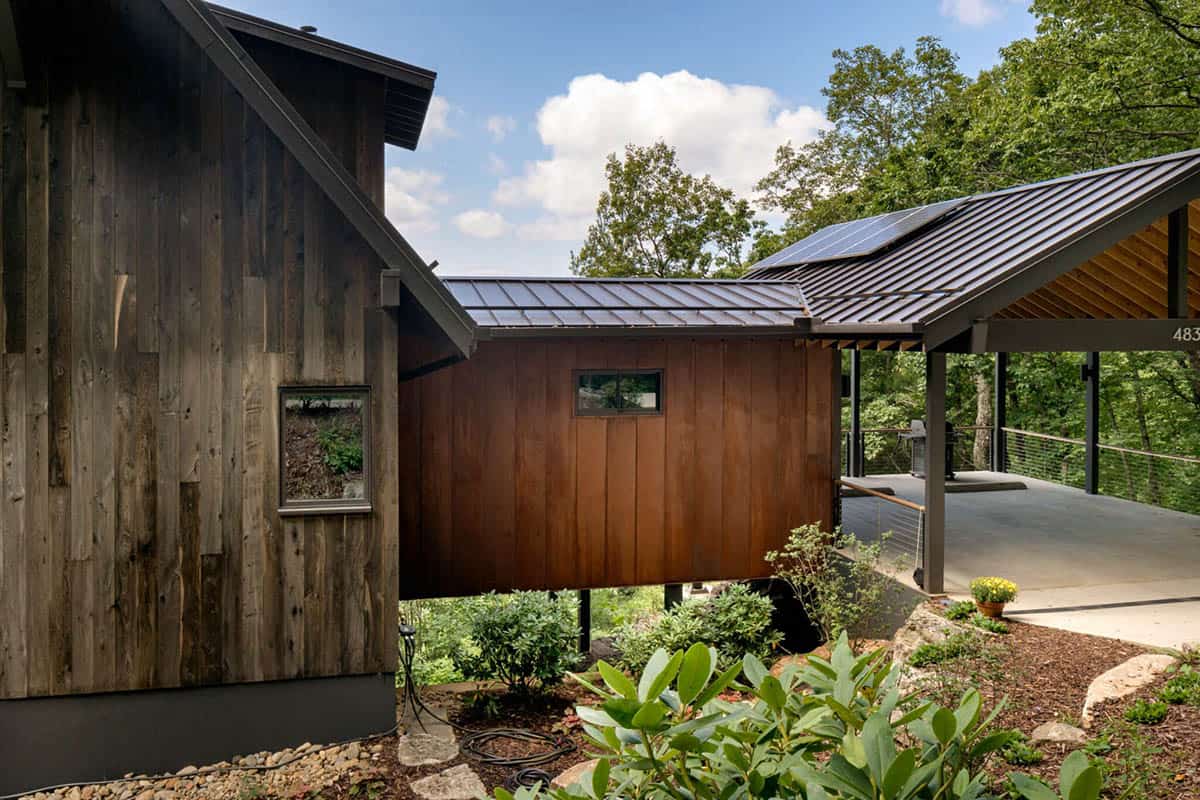
Above: A garage to house the owner’s bicycle collection was created by enclosing the breezeway between the carport and the front door.
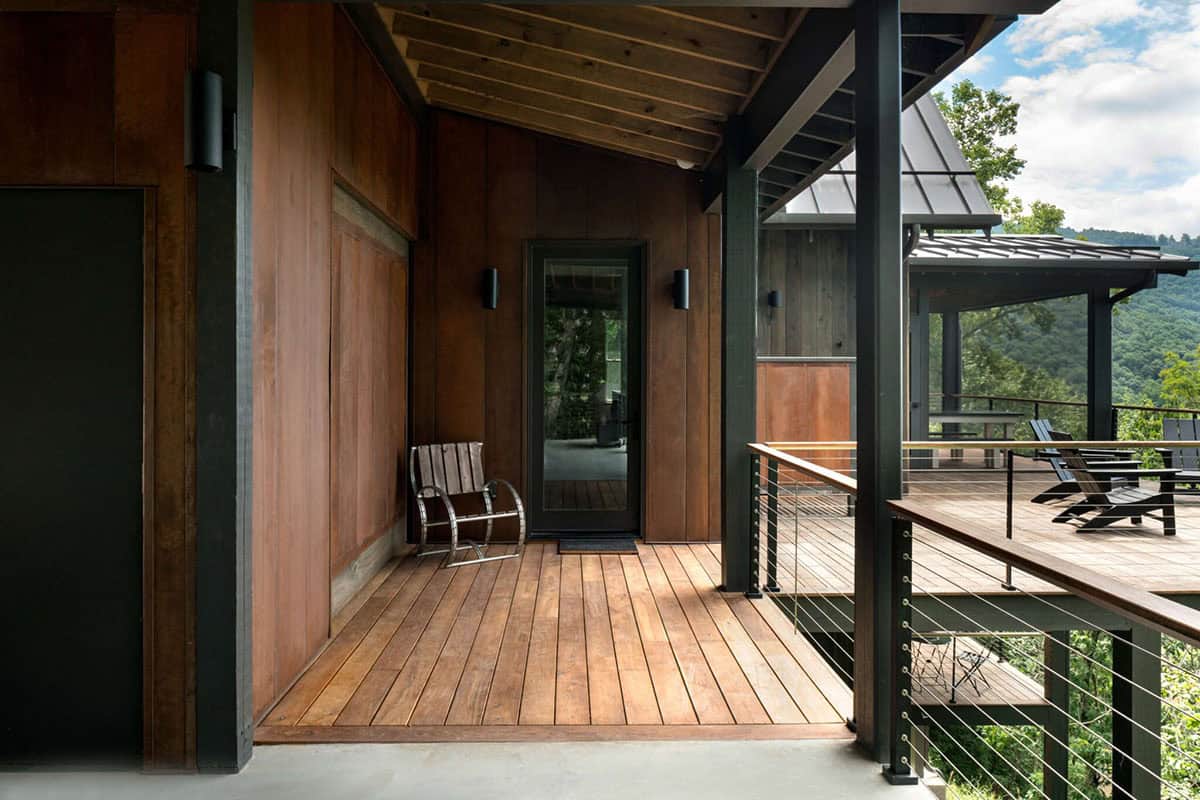
When the couple’s three children moved out of the house, they sold a lot of their possessions to downsize into something more modern and sleek. Their vision was to build a sustainable house that would produce more energy than it would consume, a key net‑zero goal. This haven is not entirely fossil fuel-free, as the couple does possess a propane grill in their covered parking lot and one gas car.
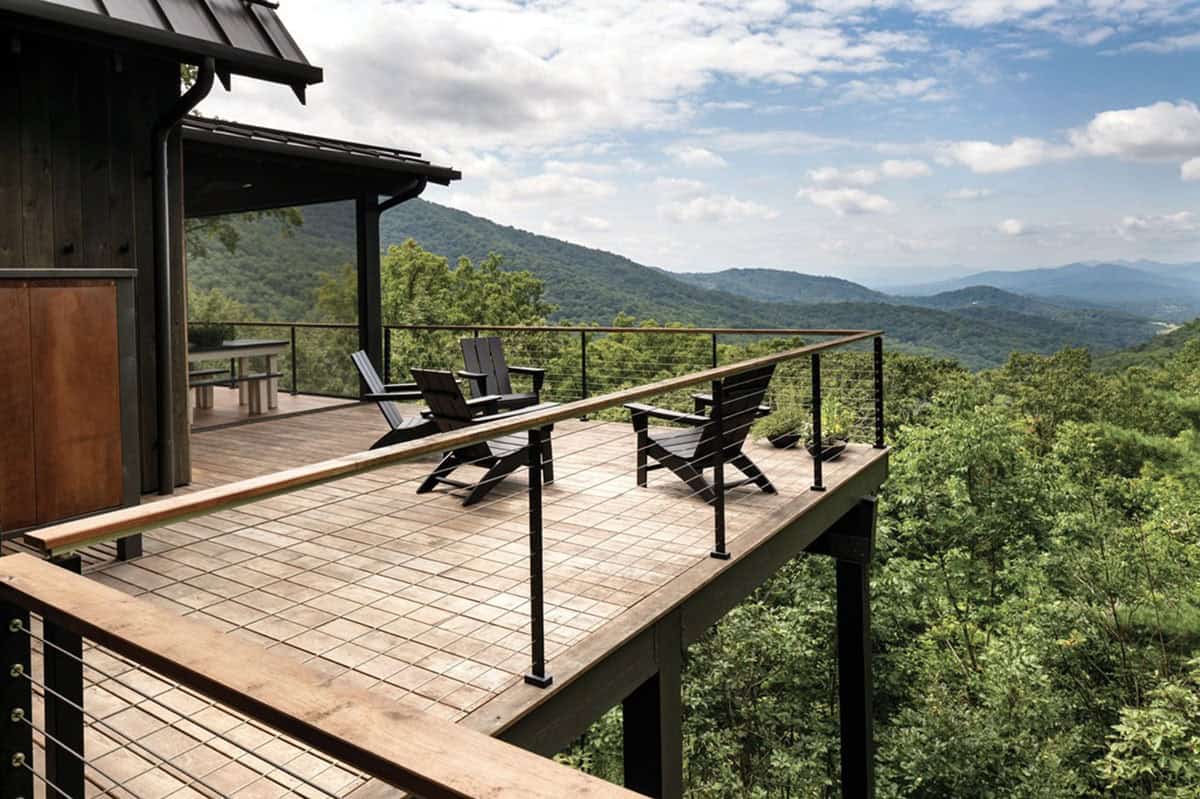
Located just a half mile from the Blue Ridge Parkway, the owner’s property has unparalleled views down Beaverdam Valley.
The steep site grade and the sizable granite outcropping posed significant challenges for the project team. The homeowners wanted one-level living; however, with the architect’s initial drawings following the slope’s contours, that seemed impossible because of the exorbitant cost of drilling many rebar footings into the rock. This meant the design would need to go up. To limit foundation and roofing costs, the home was stacked on three levels. The owner’s bedroom, kitchen, and living area are on the middle level. The overall dimensions were designed to minimize construction waste.
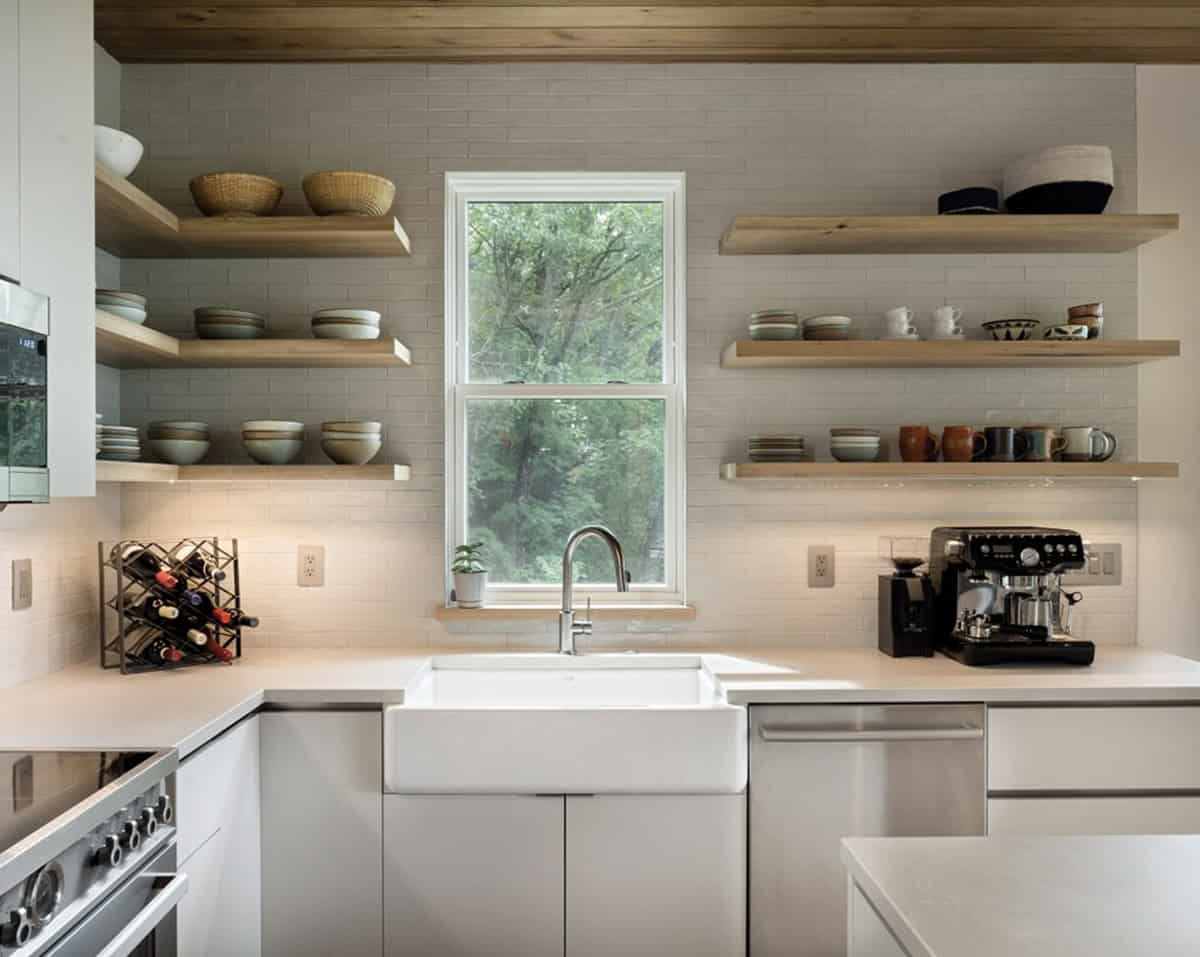
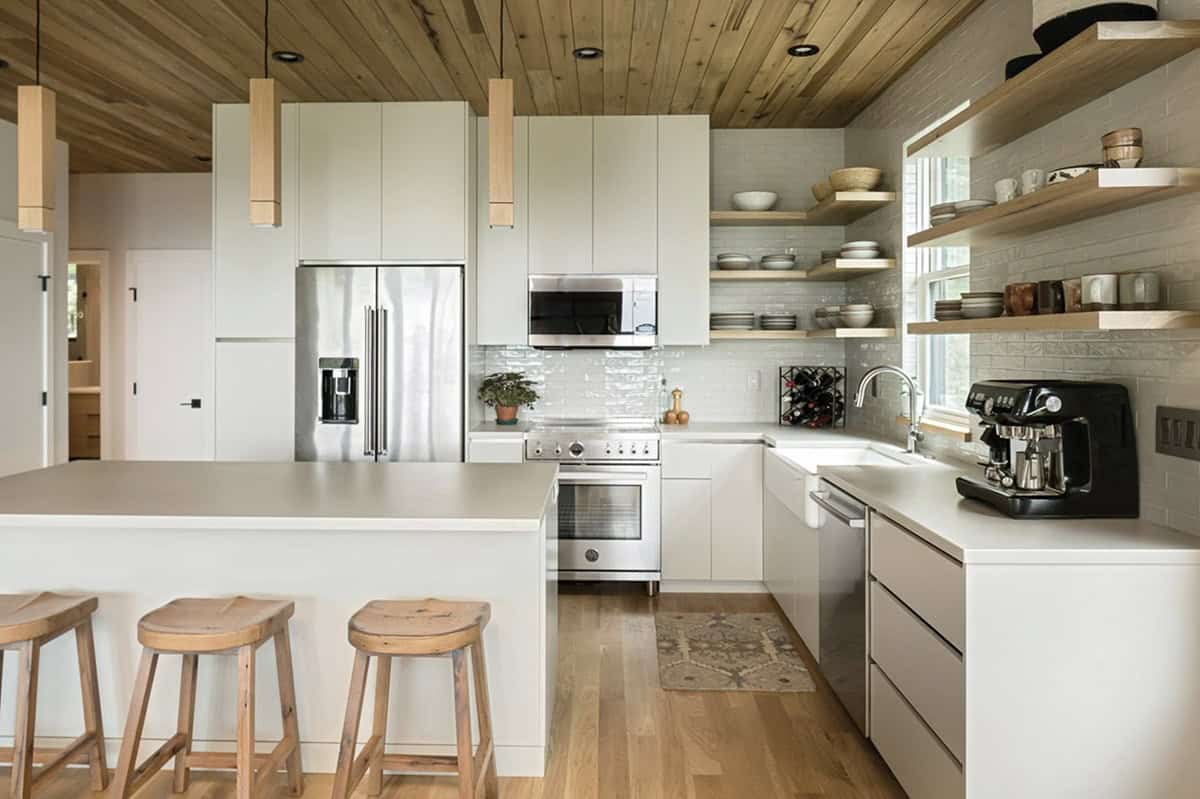
Above: This compact yet highly functional kitchen features floating shelves and frameless cabinets to maximize every square inch. The subway-style backsplash was sourced from Crossville Studios. The countertop material is porcelain, an eco-friendly and highly durable material. The kitchen also features an induction range that is three times more efficient than gas and offers better air quality.
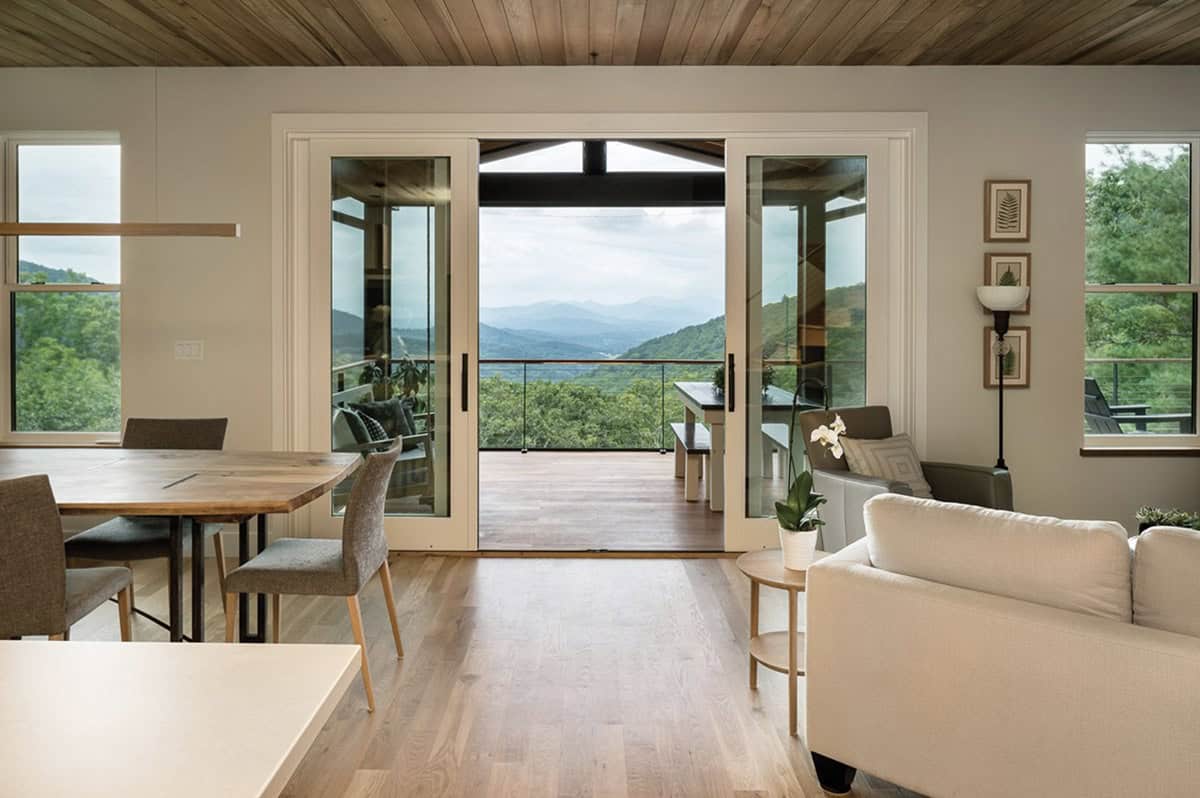
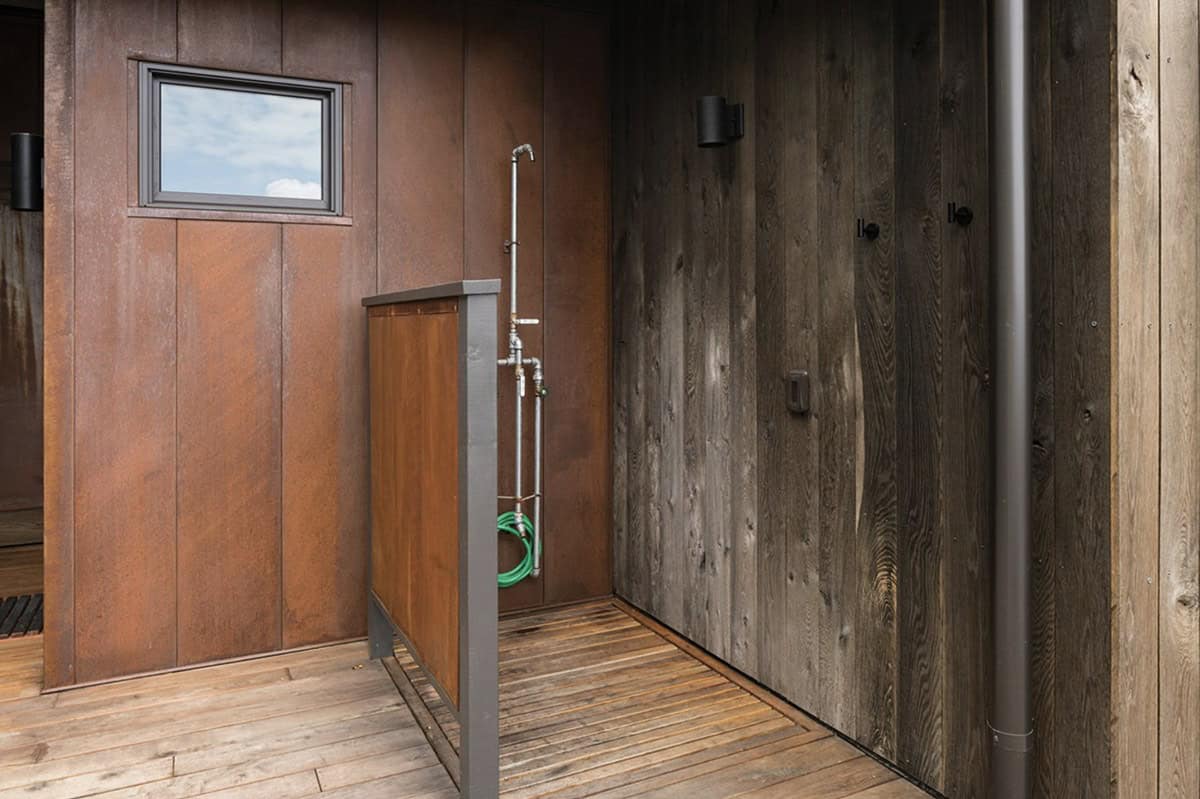
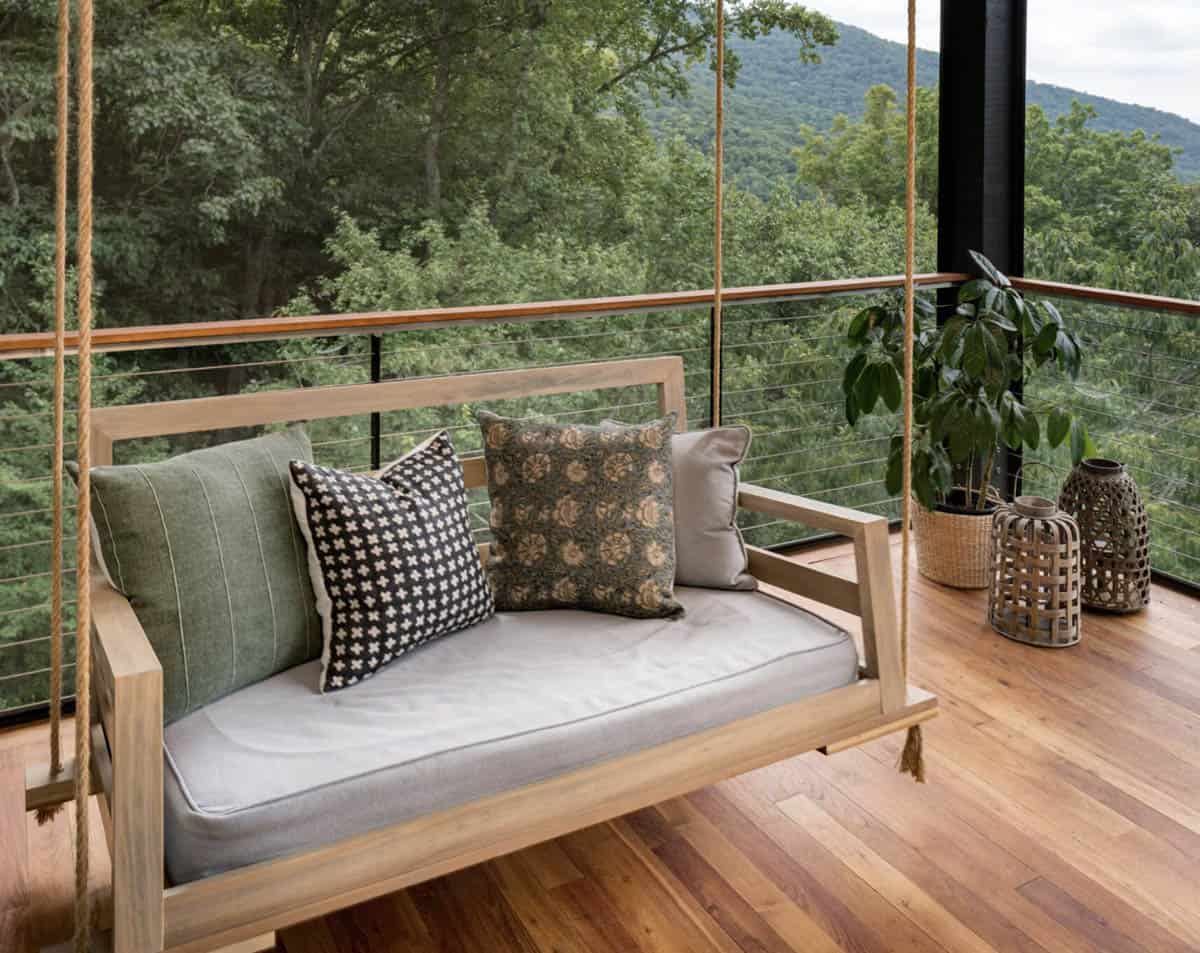
Throughout the home, the walls are painted in a neutral hue (Classic Gray by Benjamin Moore) so as not to distract from the view. Sliding French doors spill out onto a screened-in porch, expansive deck, along with an outdoor shower. The views are beyond spectacular.
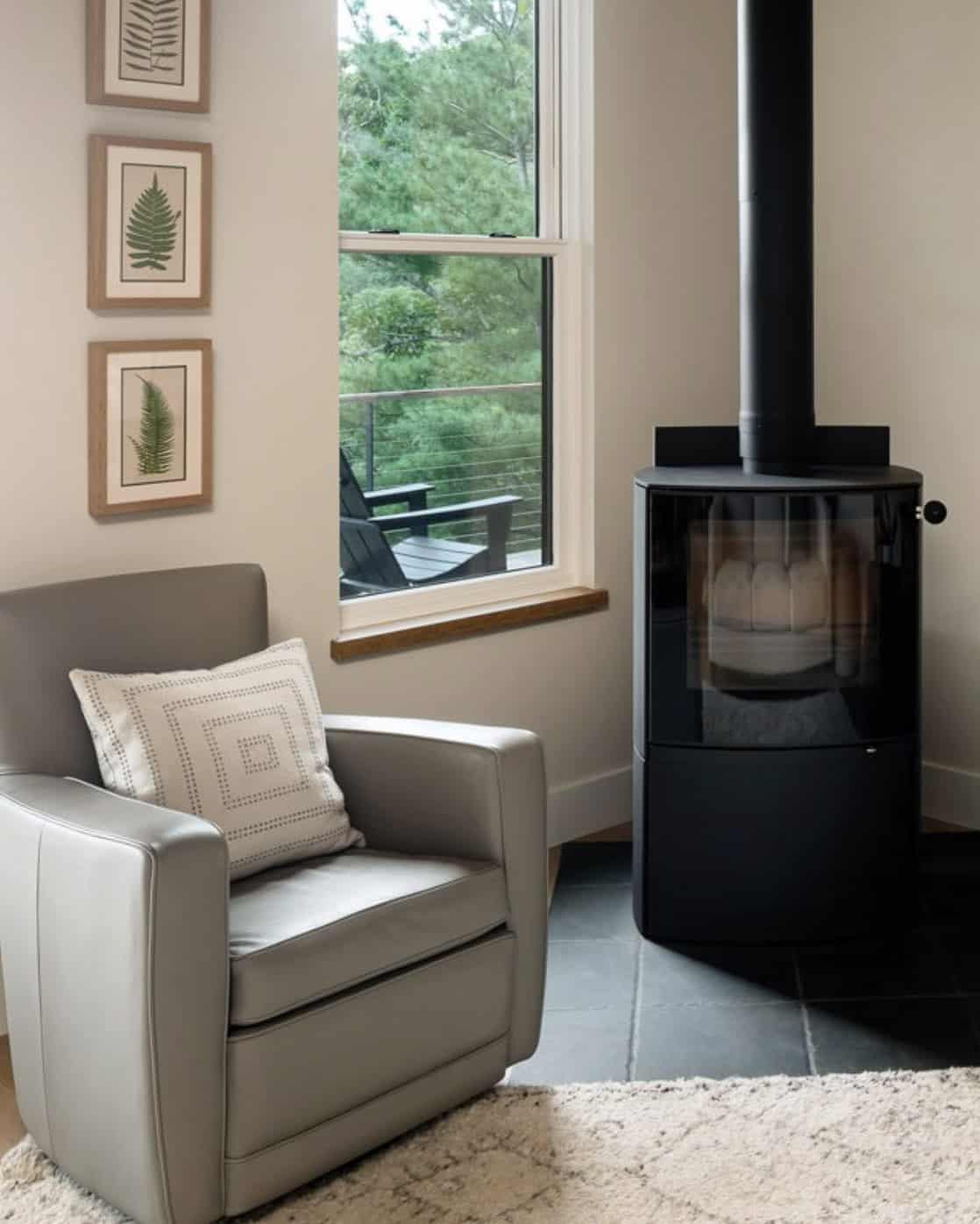
Above: The owners live at an elevation of 3,000 feet, so their home is naturally cooler than in town in the summer. However, they like to keep their thermostat in the 50s in the winter. Their Danish wood stove helps keep the main level quite warm while adding a hygge vibe.
Sustainable Features
- Geothermal system for efficient heating and cooling
- Nine-kilowatt solar system from Sugar Hollow Solar
- Two Tesla Powerwalls for storing electrical energy
- Energy-efficient LED lighting
What We Love About This Home
We love how this net-zero mountain house in North Carolina blends sustainable design with dramatic cantilevered architecture, creating a serene retreat that connects seamlessly with the surrounding forest and Beaverdam Valley views. The thoughtful layout, neutral interiors, and expansive outdoor spaces, from a screened porch to a deck and outdoor shower, enhance indoor-outdoor living while letting the breathtaking Blue Ridge Mountain panoramas take center stage. Energy-efficient features, including a nine-kilowatt solar array, Tesla Powerwalls, and a Danish wood stove, make this home as functional and environmentally mindful as it is stunning.
Tell Us: What details do you love most about this empty-nest home, and what would you change if this were your personal residence? Let us know in the Comments below!
Note: Check out a couple of other amazing home tours that we have highlighted here on One Kindesign in the state of North Carolina: Tour this rustic modern dream house in the Balsam Mountain Preserve and Lake house bridges over three rocky ravines in the North Carolina mountains.
Resource List
- Ambiente Modern Furniture
- Biltmore Hearth & Home
- Gardenology
- Cris Bifaro Woodworks
- Haywood Appliance
- Lavoro Lighting
- More Space Place Asheville
On the deck, the owner had the builder drill a deck hole to accommodate an umbrella clothesline. This helps reduce the dryer’s high energy consumption.
PHOTOGRAPHER Deborah Scannell





1 comment