


❤️ Would you like to save this?
By saving, we'll email this post to you for later. Unsubscribe anytime.
A small front garden does not necessarily mean small impact. The right layout, plant selections, and a few well-placed details can turn even a narrow plot along the walkway into a welcoming space that makes neighbors want to take a second look. From layered planting beds to clever vertical features that stretch a tight space upward instead of outward, these front gardens show that scale has nothing to do with style.
Whether you have a few feet between your porch and the sidewalk or a small patch of lawn beside the driveway, there is a clever idea here for every style and climate. Please check the USDA Plant Hardiness Zone Map to make sure the plants we list with each small front garden idea will work with your region. Get ready to create some amazing curb appeal on your property!
Tell Us: Which one of these small garden ideas most inspires you to apply to your own garden? Let us know in the Comments below!
1. No grass front cottage garden
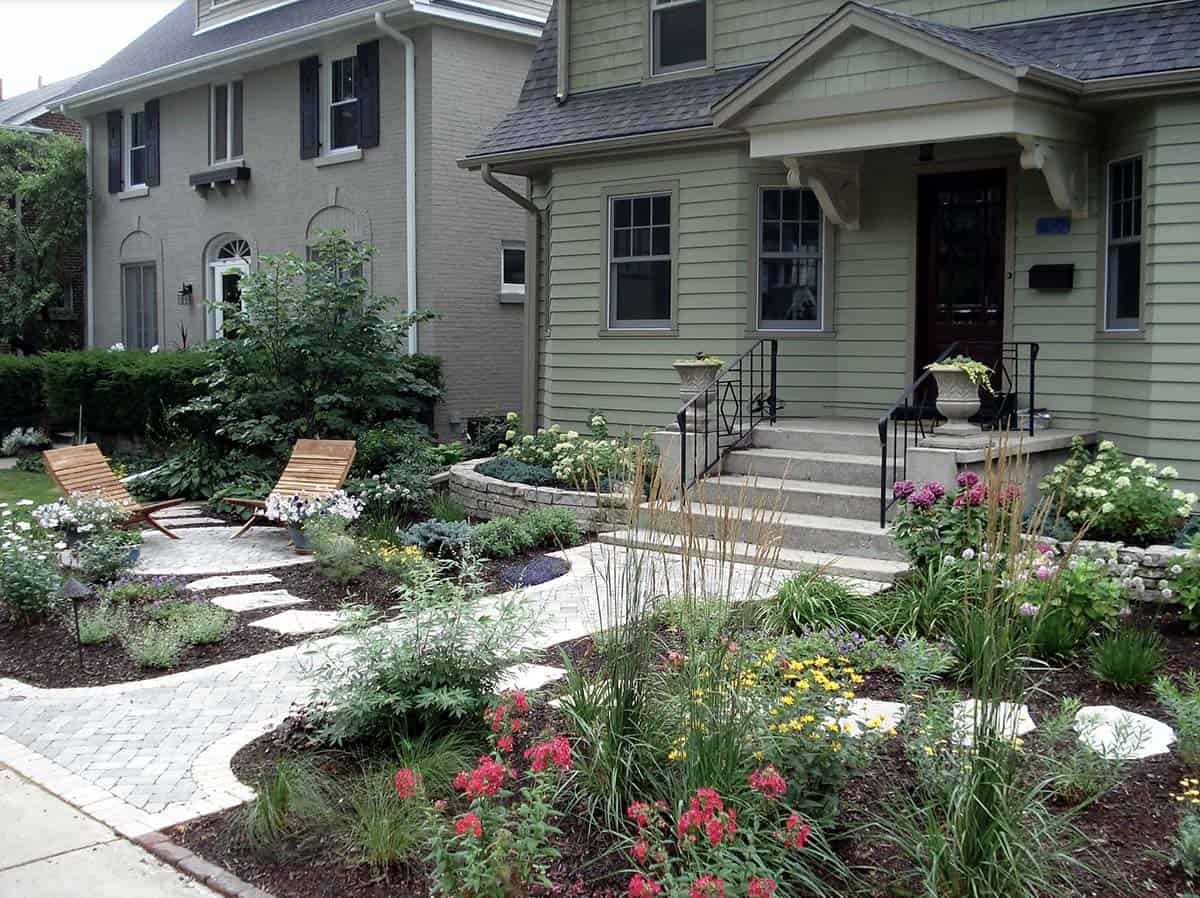
This front yard trades grass for a charming cottage garden bursting with curb appeal, layering a color palette of long-blooming perennials, shrub roses, and ornamental grasses. The ornamental grass is Karl Foerster Feather Reed Grass. The purple flowers near the steps are Hydrangeas. The mulch is shredded hardwood bark. The small, round sitting area to the left of the photo is paved with the same materials as the front walk (Brussels Block, 2 colors, Half Stone size). TIP: The landscape architect does not install landscape fabric under shredded hardwood bark mulch. It is installed at a depth of 2 inches, which is sufficient to inhibit weeds and retain moisture. A yearly topdressing provides a finishing touch. Apply in early spring, before perennials have emerged, to save installation time. (Photo Credit: Nature’s Perspective Landscaping)
2. Long-blooming perennial border
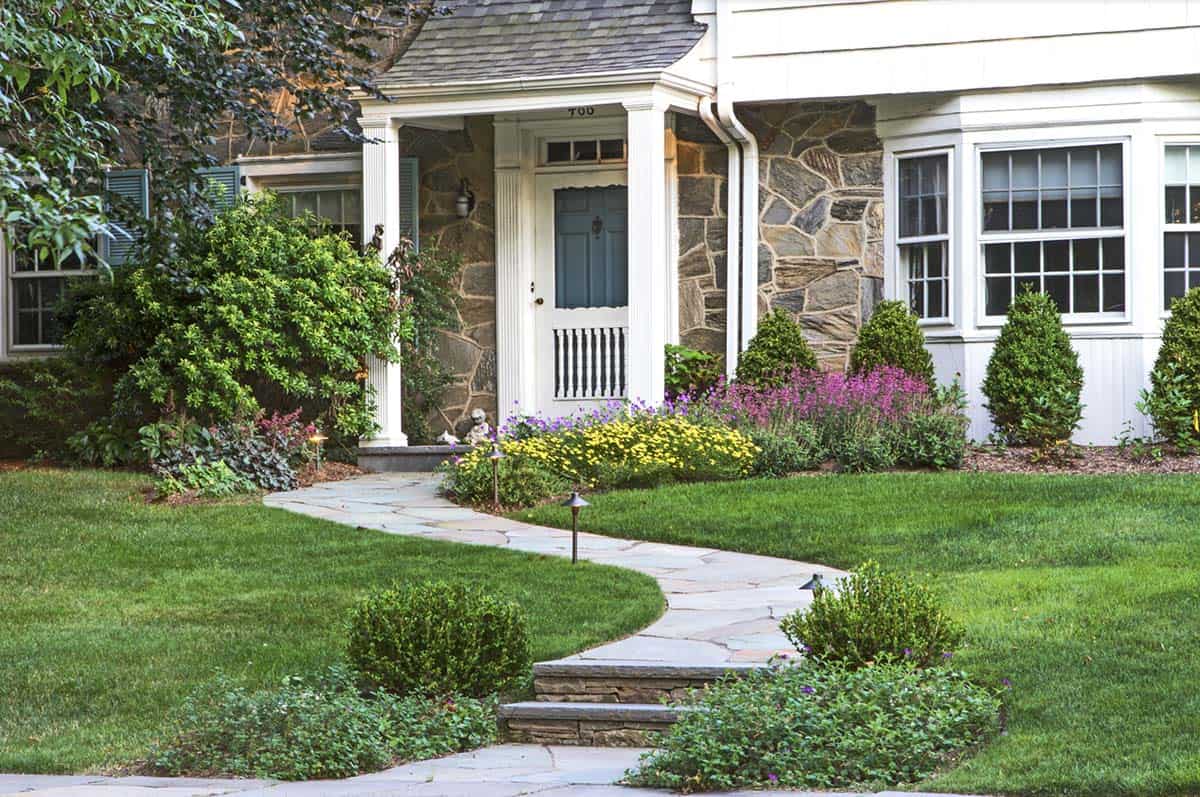
A serpentine bluestone walkway brings romance to this beautiful New York home’s entry, curving gently through a lawn bordered by long-blooming coreopsis, geranium, and agastache. Boxwood spheres and stone steps add structure at the threshold, while the mix of yellow and violet blooms keeps the border colorful through the season. (Photo Credit: Mierop Design)
3. Mexican pebble stone garden
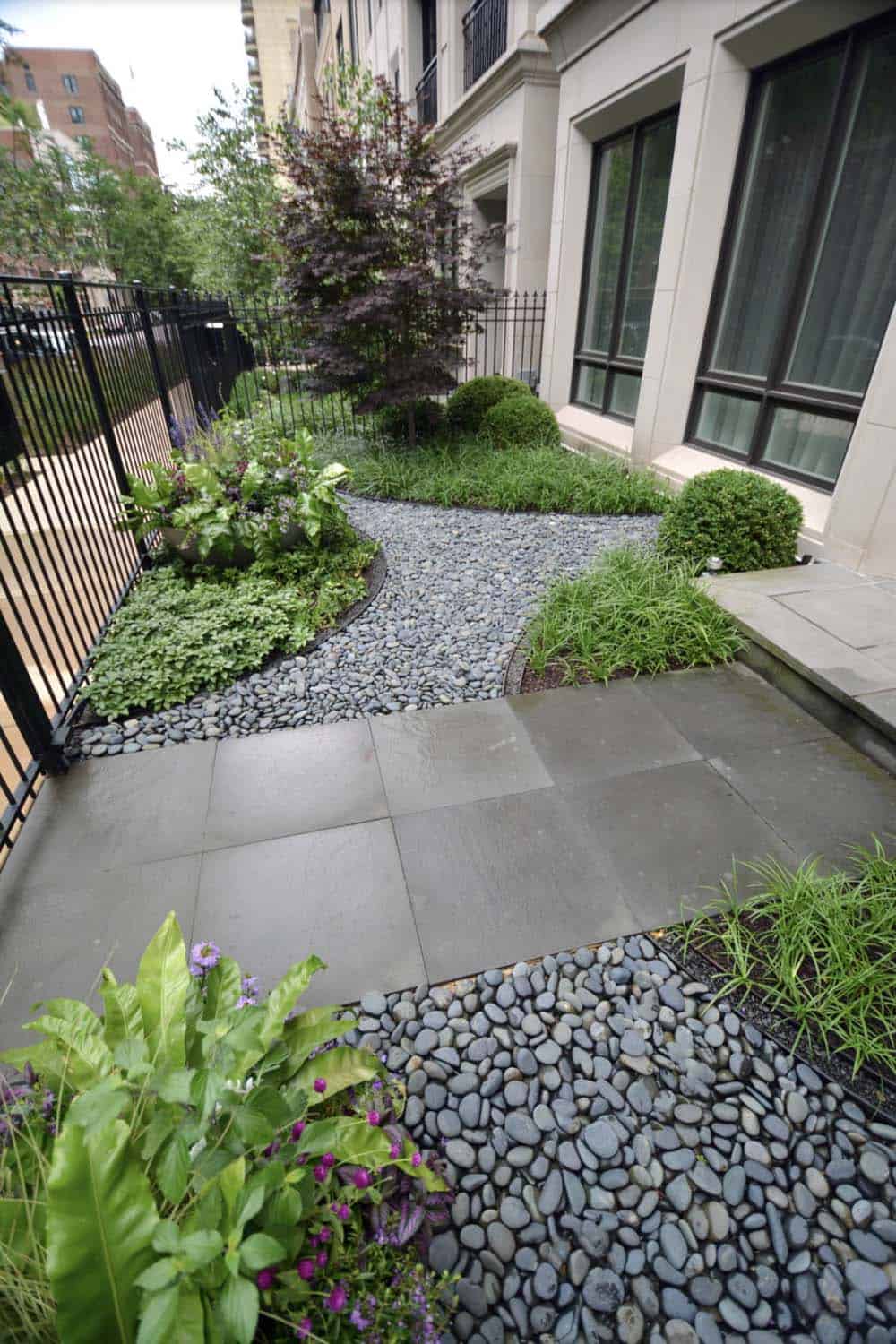
This multi-level urban row house in Chicago swaps grass entirely for a mix of Mexican pebble stone, bluestone pavers, and clipped boxwood spheres. A Japanese maple and ornamental grasses soften the hardscape, while potted perennials at the gate add a pop of color to the modern look. (Photo Credit: Topiarius, Inc)
4. Crescent-shaped corner bed
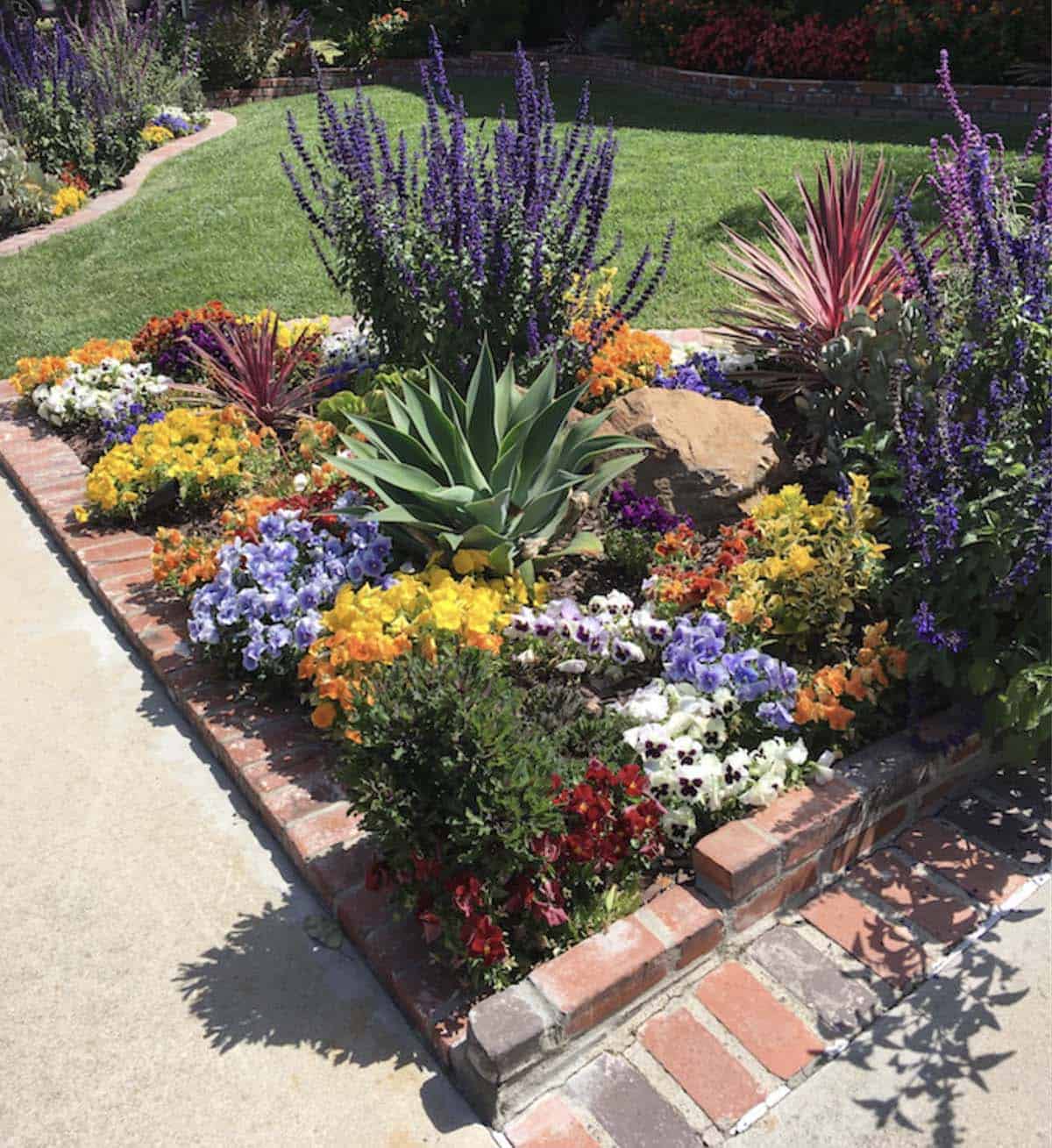
This crescent-shaped corner bed in Long Beach, California, features a drought-tolerant garden that is packed with color, anchored by a bold agave and a spiky cordyline, with a boulder accent. Towering purple salvia spikes rise above a colorful array of pansies and lobelia in red, orange, yellow, and blue. (Photo Credit: CaliScape Landscape Services)
5. Plant a hedge of hydrangeas
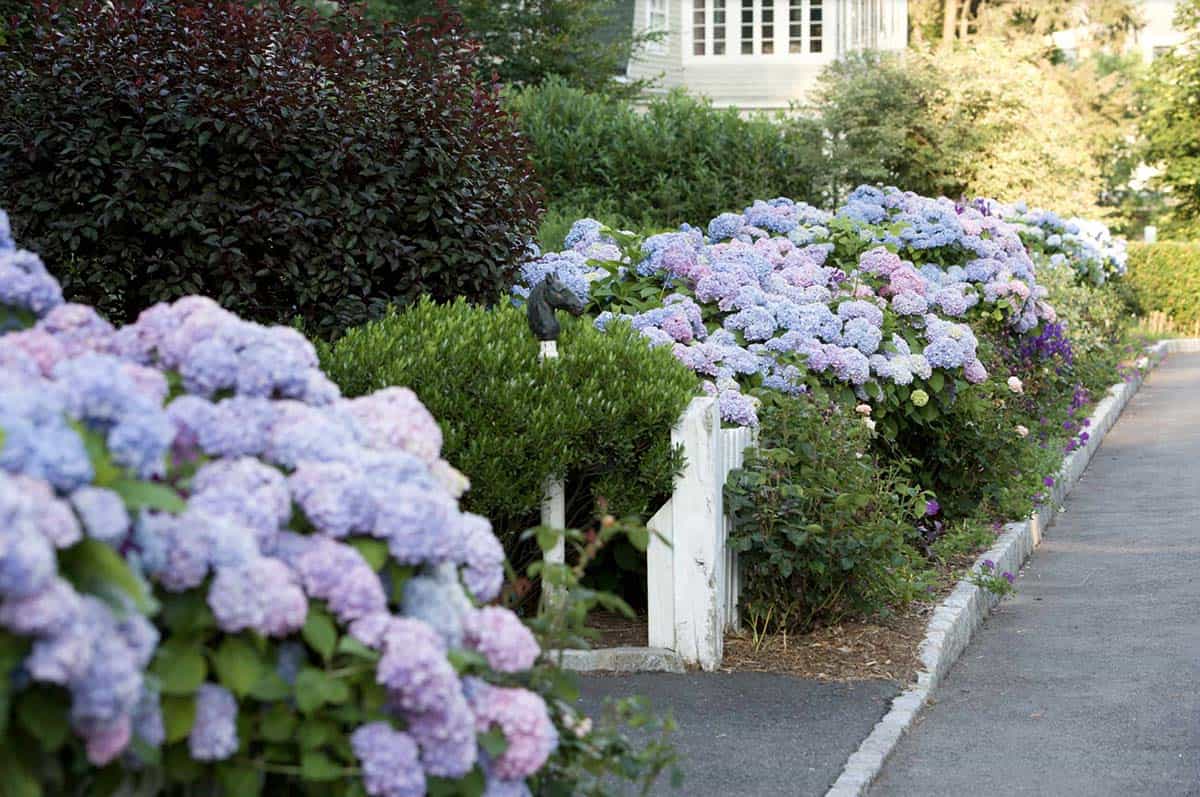
This Nantucket-inspired front garden features a mass planting of Nikko Blue mophead hydrangea alongside an antique picket fence, complete with a hitching post. The tall reddish bush in the background is a Purple Leaf Sand Cherry — a deciduous shrub prized for its striking foliage; best for Hardiness zones: 2–8 (USDA). (Photo Credit: Mierop Design)
6. Layered perennial fence border
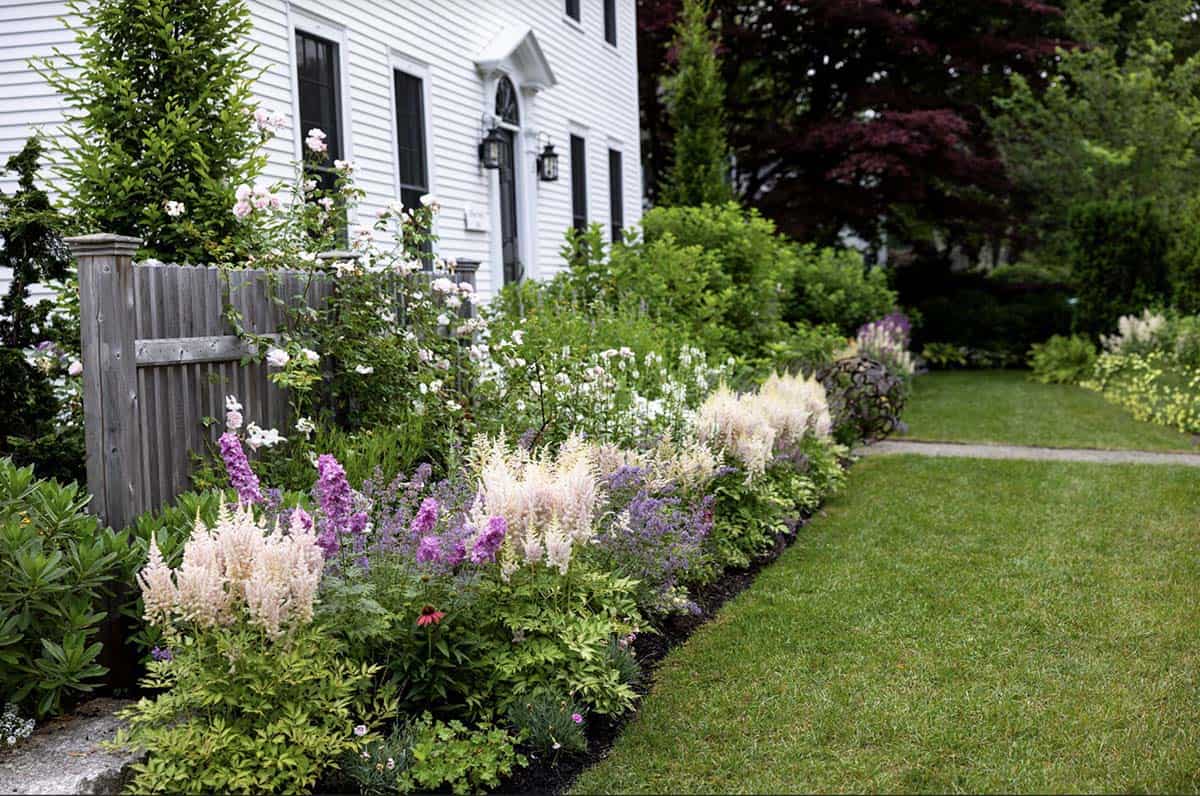
A lush perennial border softens the wood fence line at this historic home in Portland, Maine, layering astilbe, phlox, and climbing roses for color from spring through summer. The mix creates privacy along the front yard without blocking the view of the classic white colonial behind it. (Photo Credit: Ted Carter Inspired Landscapes)
7. Plant a relaxed coastal garden
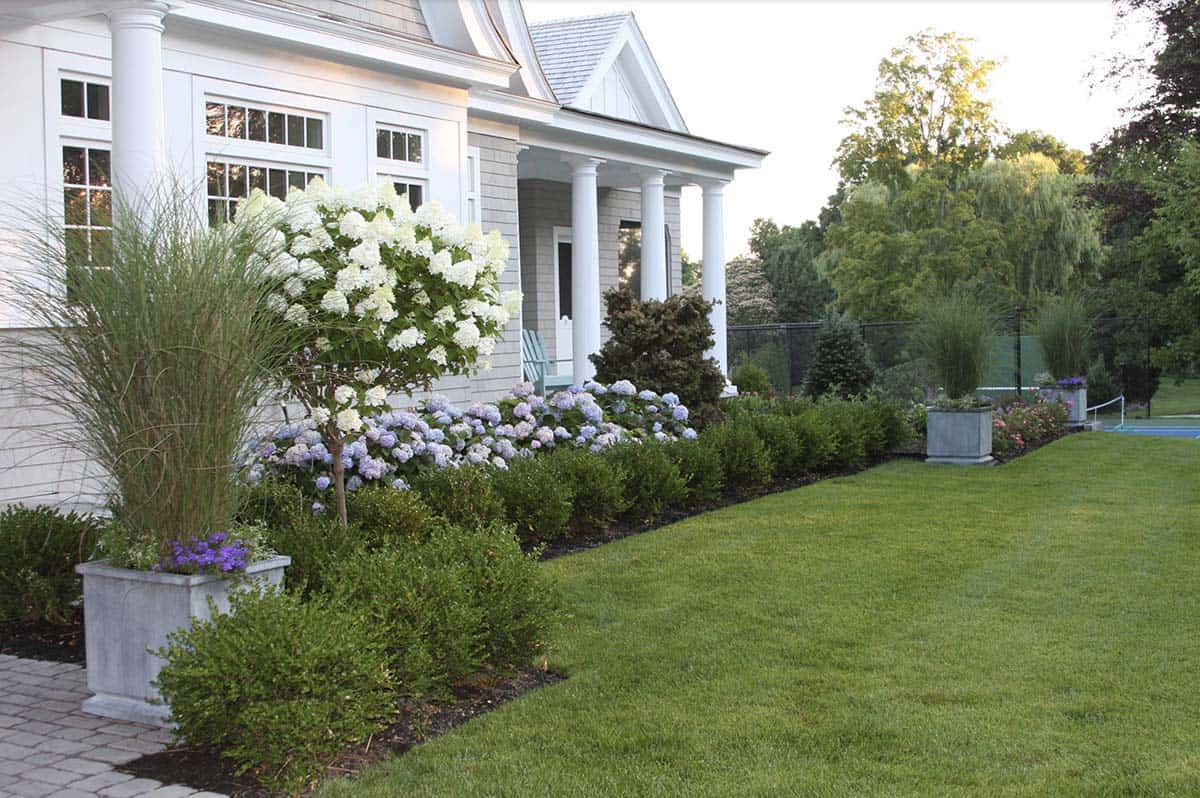
This Hingham, Massachusetts, home embraces its coastal surroundings with a relaxed, elegant front entrance with a classic plant theme: boxwood, blue hydrangeas, and grasses. A white hydrangea tree is on the corner. The evergreen in the back is a Hinoki cypress, and the grass in the container is Miscanthus Morning Light. The large square planters are from Restoration Hardware. (Photo Credit: Amy Martin Landscape Design)
8. Mix evergreens with gold accents
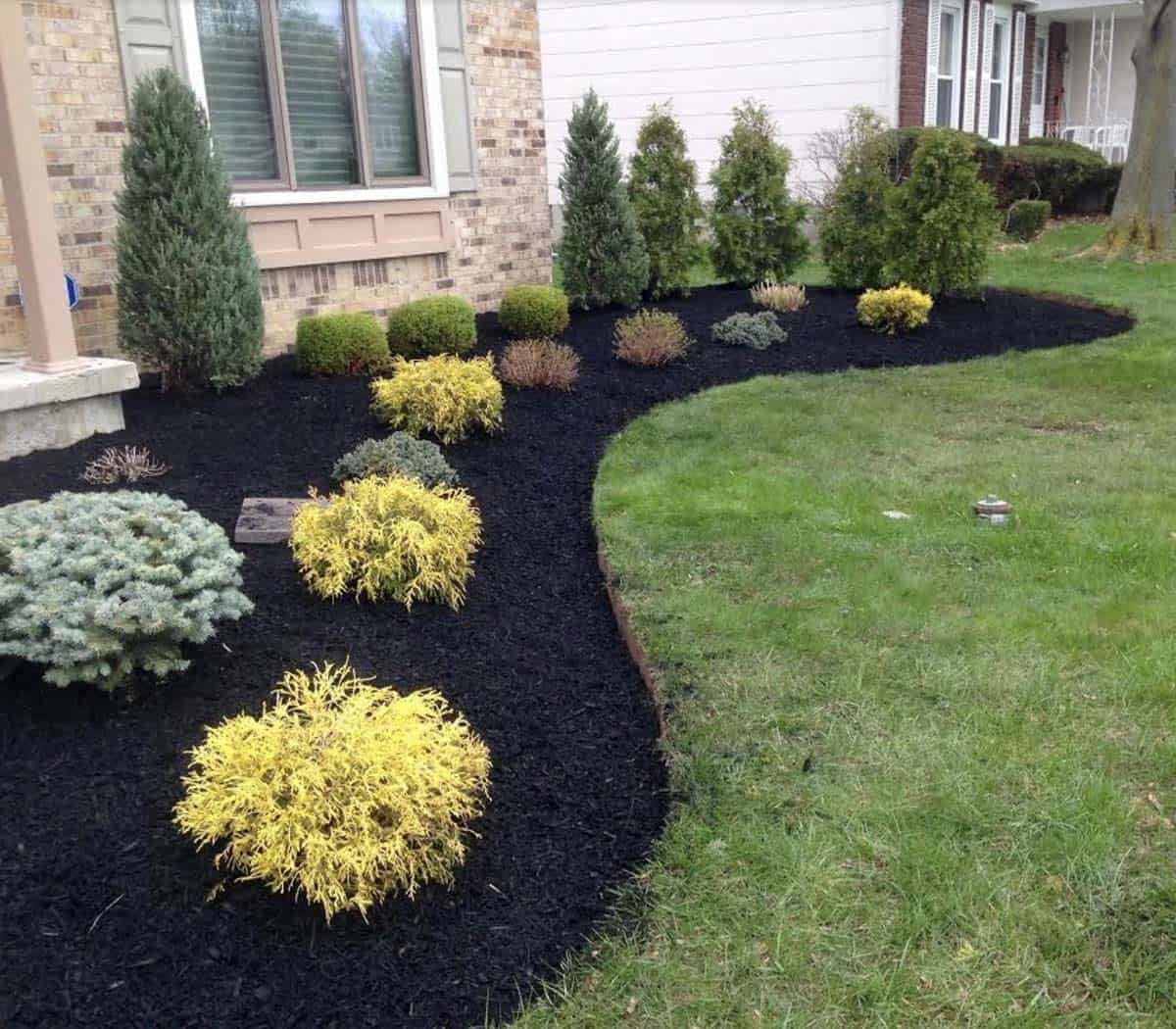
This Buffalo, New York front yard garden features small, round bushes called Cypress golden mops. They do grow large, so if you want a small bush in your landscape, try the “Franklin gem boxwood”. It is green year-round, 18 in tall, deer-resistant, and low-maintenance. The tree near the step is called “Blue Moffet Juniper”. Black mulch makes the bed look polished and keeps the weeds at bay. (Photo Credit: Gorski Landscaping)
9. Layer a tropical garden bed
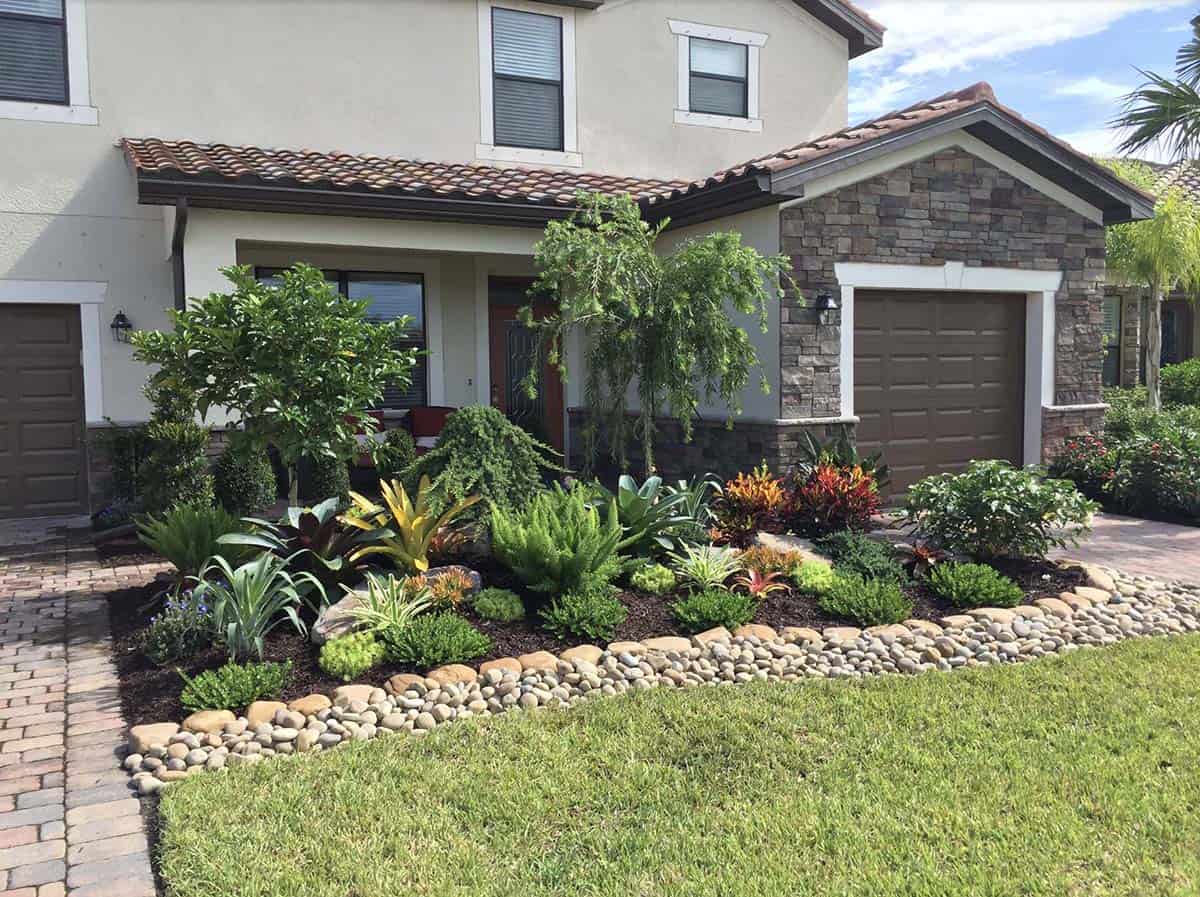
This Tampa, Florida, front garden leans fully into the tropical look, with vivid crotons, layered bromeliads, and a lush Boston fern grounding the bed. A weeping conifer adds a soft, cascading accent near the entry, while a river rock border keeps the bold color contained and polished against the lawn. (Photo Credit: Photoscape Landscape and Design)
10. Create a flower-lined pathway
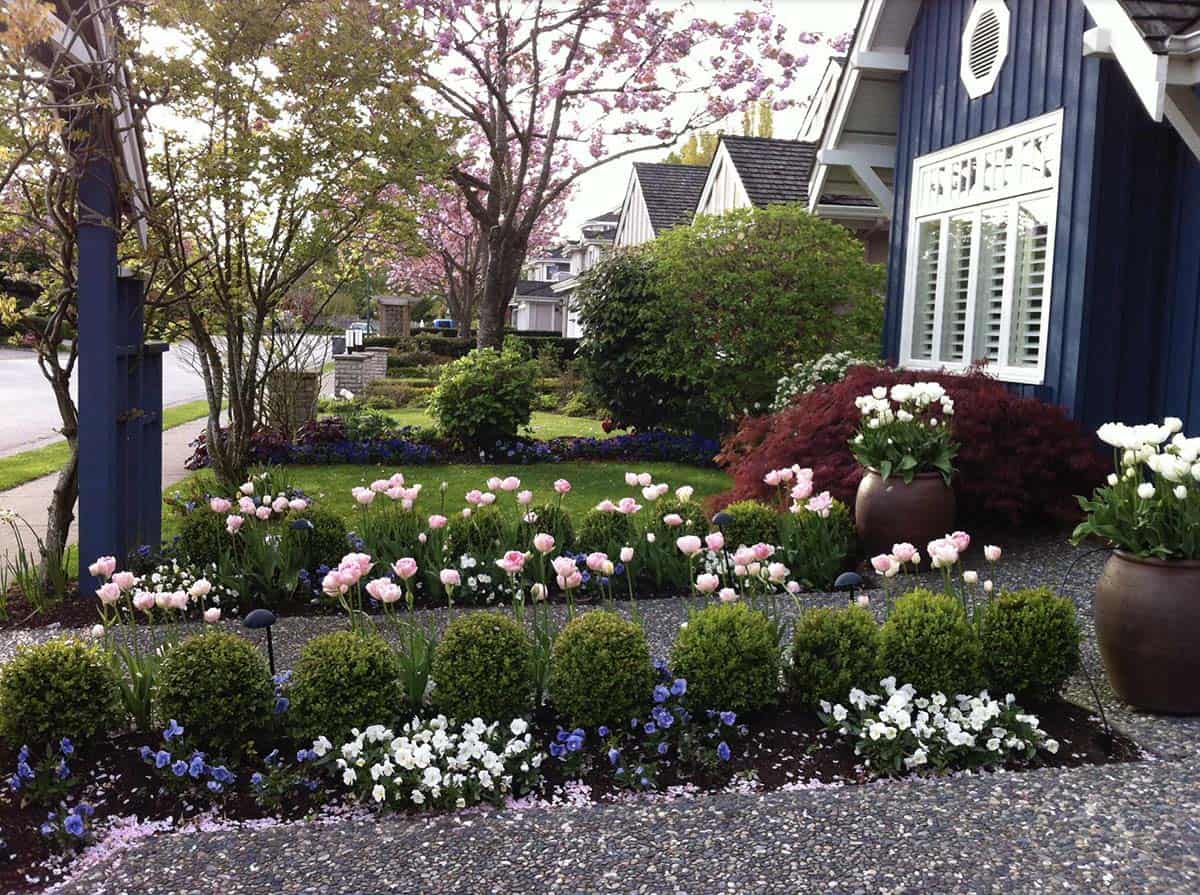
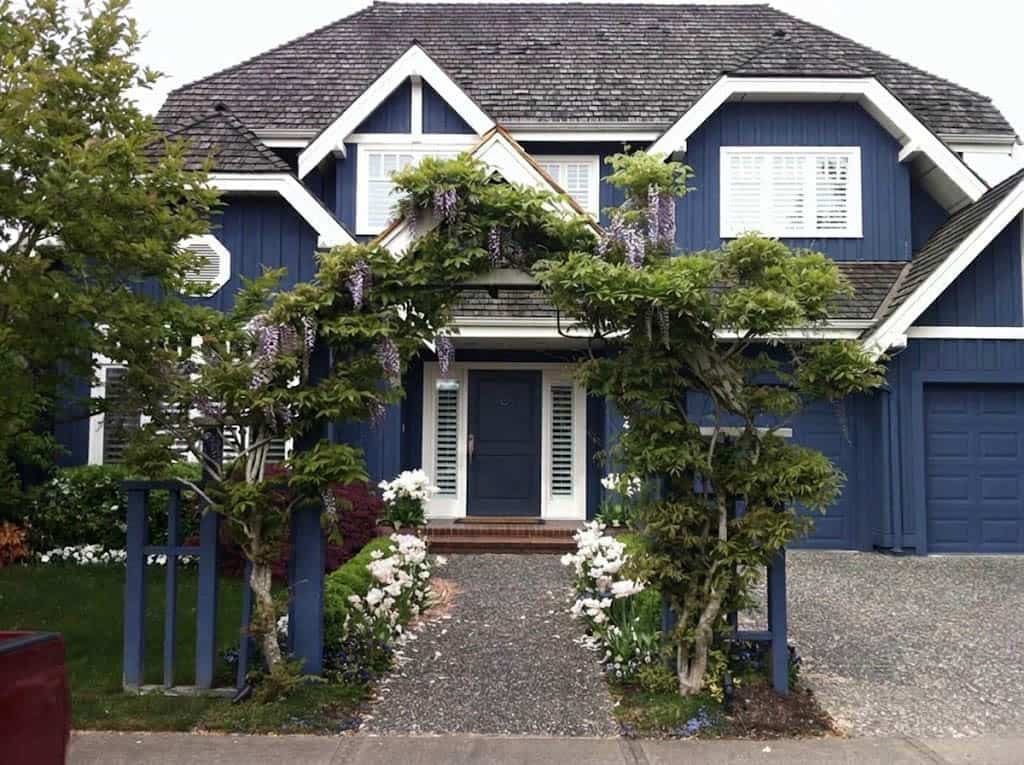
An arbor draped in wisteria frames the entry of this home in Vancouver, British Columbia. The taller stem flowers are double flower Tulips ‘Angelique’. The white flowers are pansies, and the blue flowers are blue pansies. The red plant is a weeping cut leaf maple tree. Acer palmatum dissectum ‘Crimson King’. The green shrubs lining the pathway are True Dwarf English Boxwood. FYI: The house is painted in Benjamin Moore HC-155 Newbury Port Blue (Flat finish), and the roof has wood shingles. (Photo Credit: Glenna Partridge Garden Design)
11. English-style perennial border
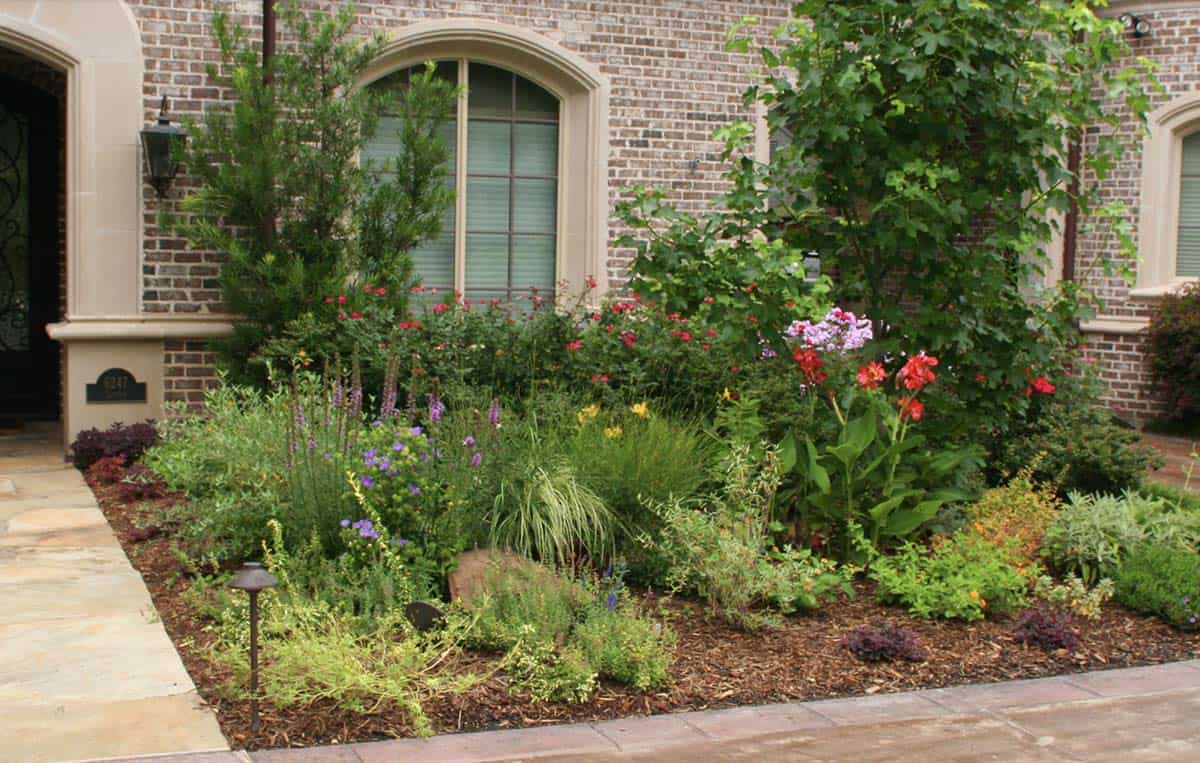
This Dallas, Texas, home called for a lush English-style garden to match its traditional architecture, with deep beds layered with Texas-hardy perennials like canna lily, phlox, and roses for color all season long. Ornamental grasses and a low stone accent add texture along the drive, keeping the border full and colorful through every season. (Photo Credit: Verdant Landscape Design)
12. Plant small accent trees
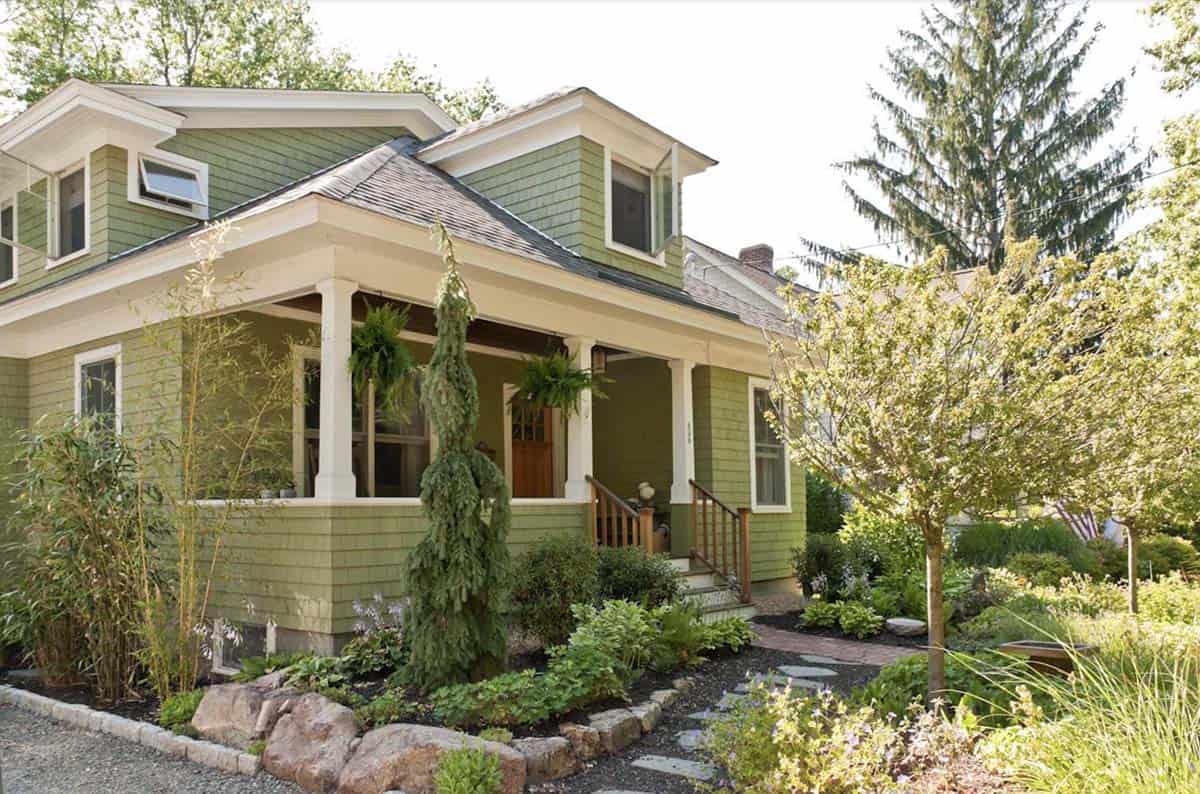
Planting dwarf or semidwarf trees in your small front yard can be an attractive addition, adding a focal point and enhancing the sense of depth. In this yard, a pair of trees flanks a central path leading to the front door, while a second, stepping-stone pathway runs crosswise. This look can be scaled up or down, contingent on the size of your property. A weeping cypress tree is next to the house in the front bed. FYI: The exterior of this home features Maibec shingles, sea moss color. The exterior trim is Benjamin Moore white. (Photo Credit: Amy Dutton Home)
13. Drought-tolerant succulent garden
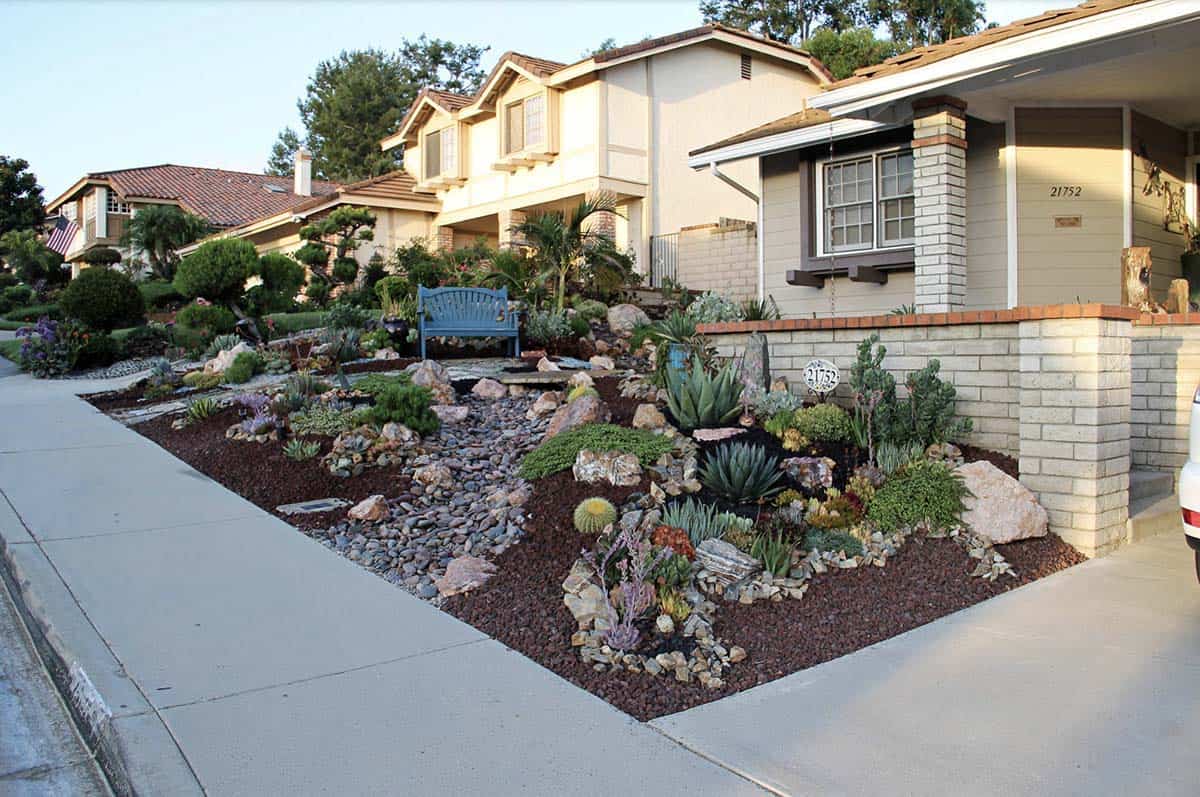
This Orange County, California front yard is fully drought-tolerant, layering agave, golden barrel cactus, and other water-wise succulents among an array of boulders and a dry streambed. Cobble, rubble, pebble, flagstone, and crushed rock work together to give the bed a sense of fluid movement. (Photo Credit: Southwest Boulder & Stone)
14. Stepping-stone path under a shade tree
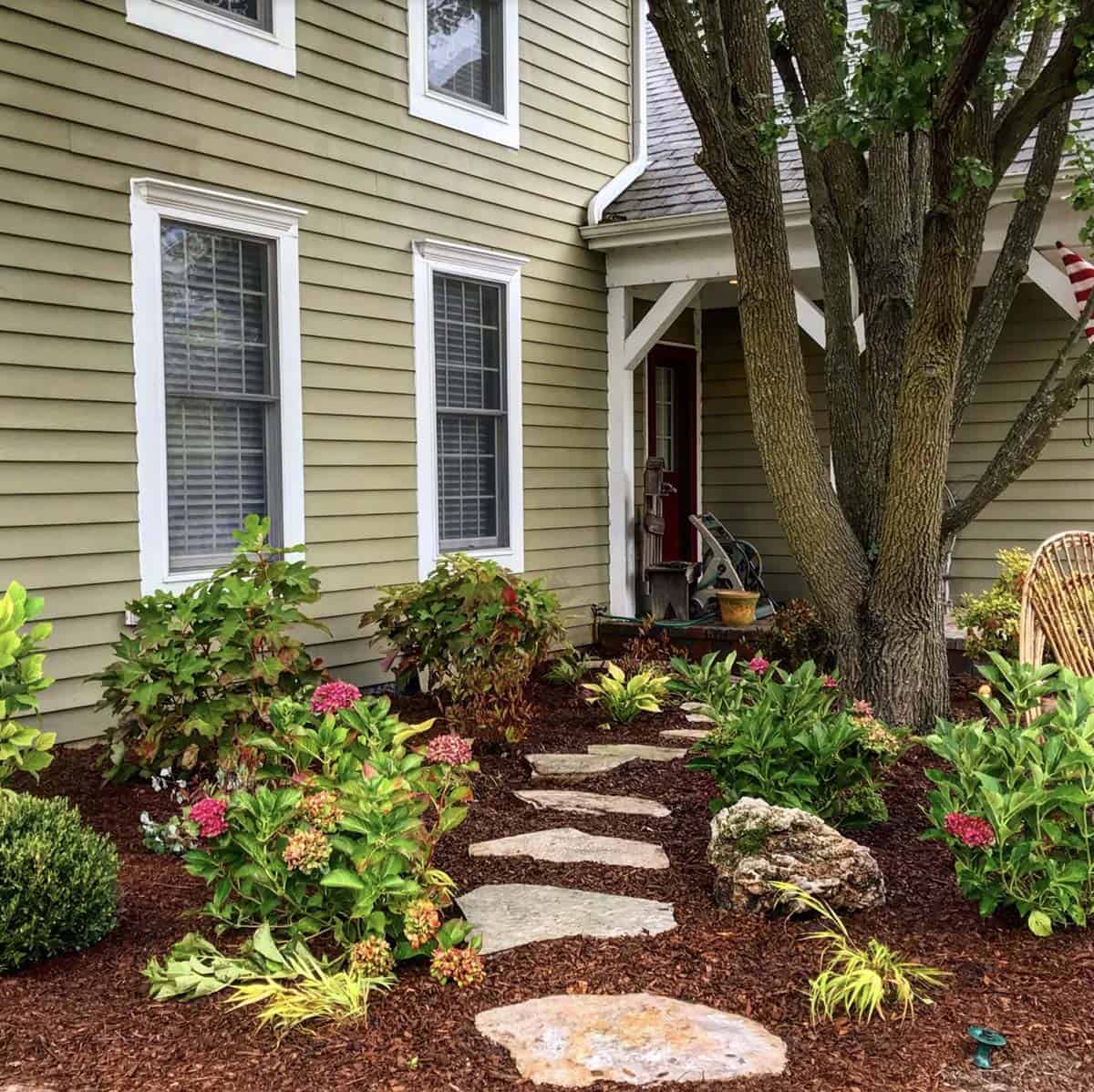
A flagstone stepping-stone path winds through this shaded front bed, curving naturally around a mature tree on its way to the front door of a home in Chicago, Illinois. Pink hydrangeas, hostas, and a low boxwood add color and texture along the edges, turning a tricky shade garden into one of the yard’s best features. (Photo Credit: Jill Davis Design)
15. Grow a foundation garden
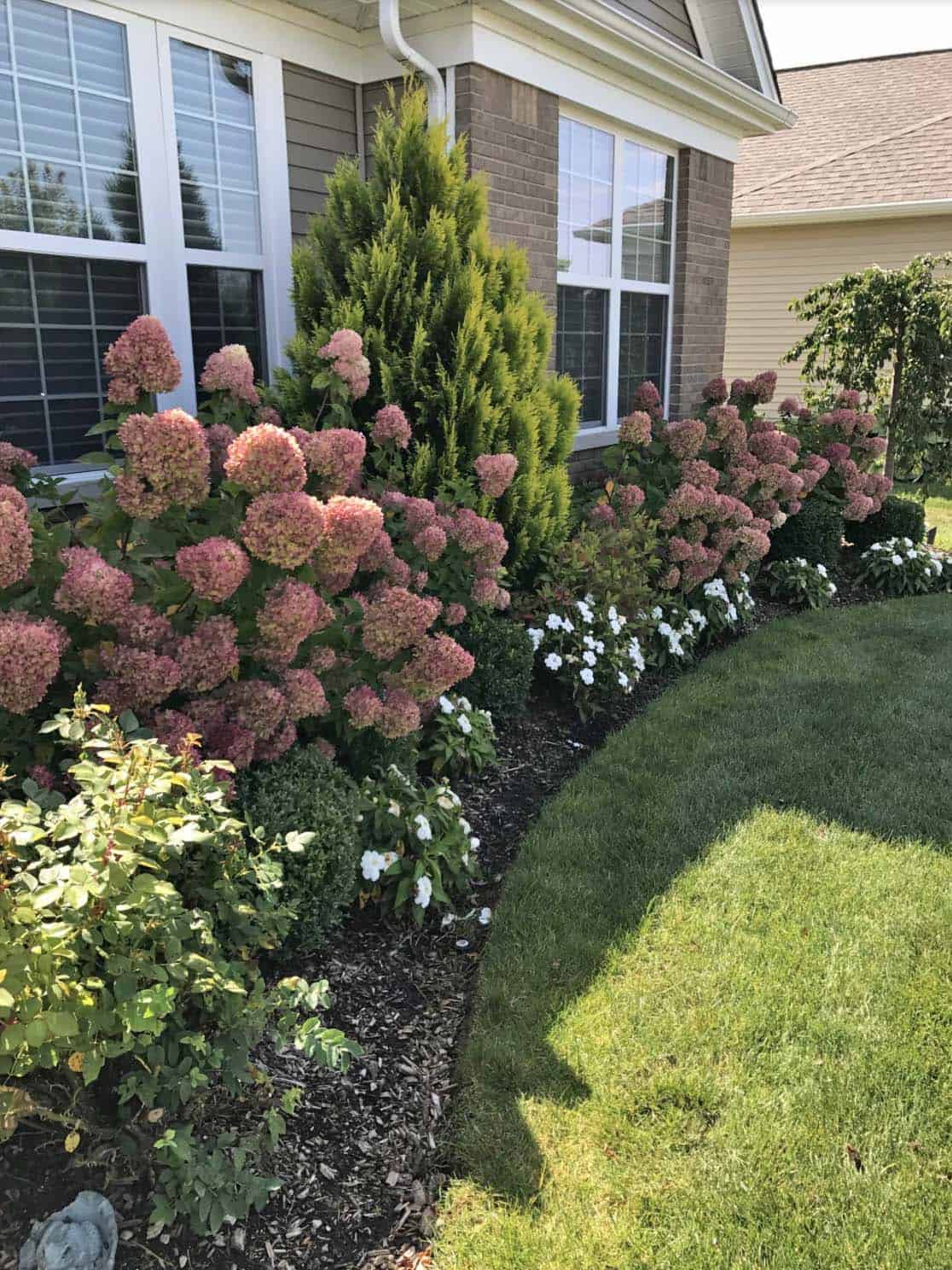
This foundation bed pairs pink hydrangea blooms with a tall, narrow arborvitae for contrast in height and texture against the brick exterior of a home in Chicago. White impatiens and a low boxwood edge soften the curve where the bed meets the lawn, keeping the look full without blocking the windows. (Photo Credit: Jill Davis Design)
16. Design a pollinator-friendly garden
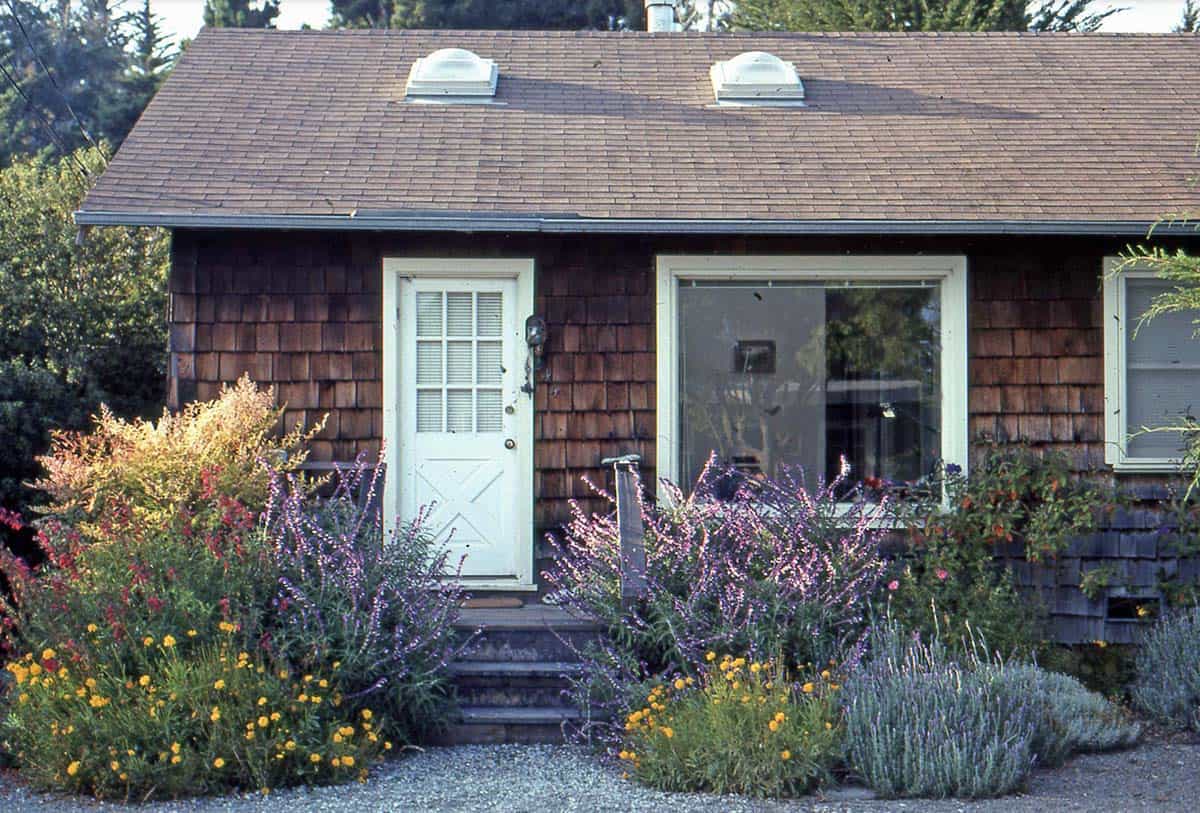
This coastal cottage garden in Aptos, California, pairs a welcoming wood entry deck with a vibrant mix of drought-tolerant perennials chosen as much for their vibrant blooms as for their ability to attract and nourish local pollinators. Purple Mexican sage flanks the steps alongside California poppy, sage, and lavender. A groundcover of crushed gravel is the perfect low-maintenance, drought-friendly choice. (Photo Credit: Elemental Design Group)
17. Define beds with curved edging
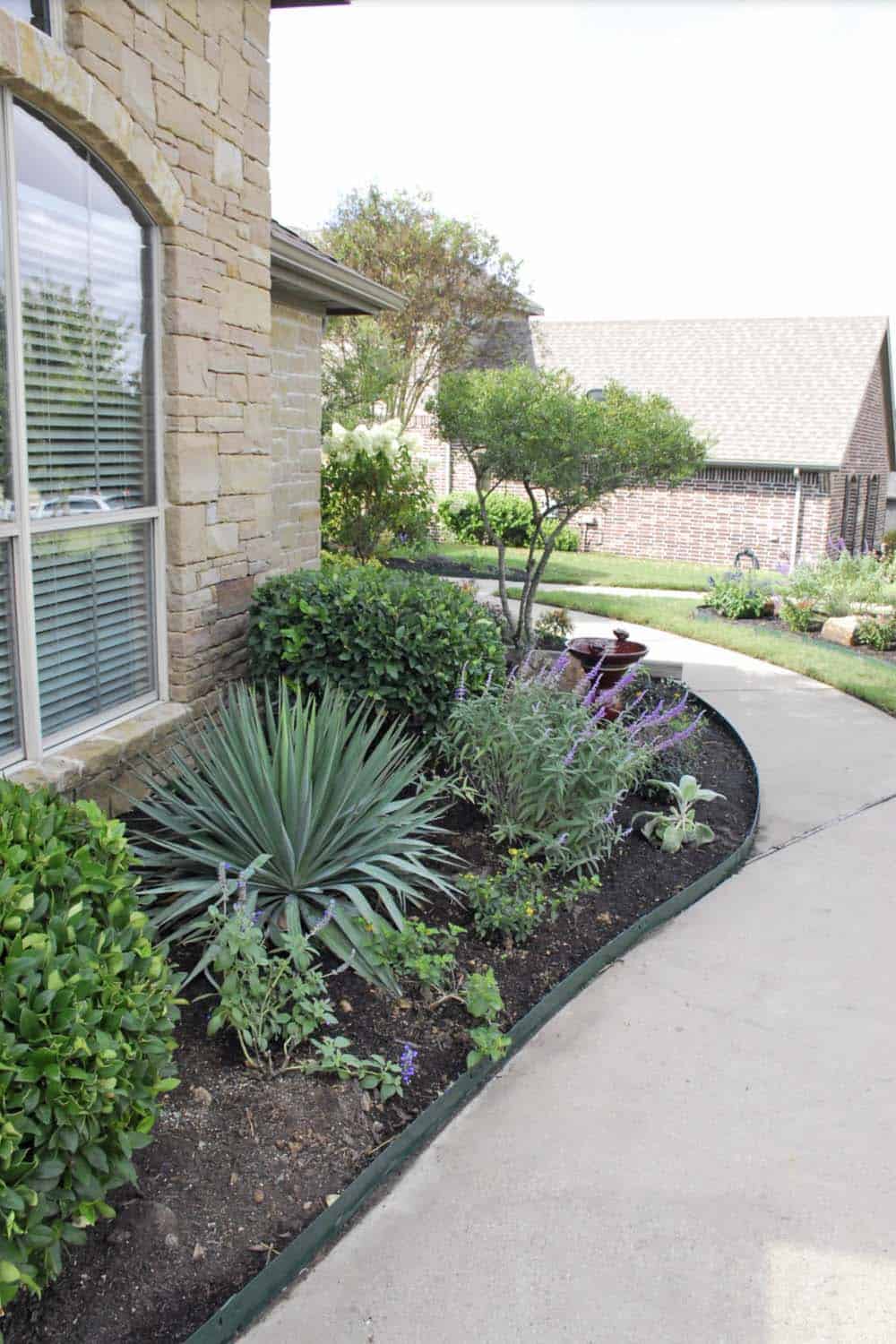
A spiky yucca anchors this curved foundation bed of a bungalow in Willow Park, Texas, balanced by nearby Russian sage and silvery lamb’s ear for a softer texture. Clipped boxwood spheres and a small ornamental tree round out the planting, framing the walkway with structure and color. Plastic garden edging keeps the bed’s curve crisp and easy to maintain against the concrete walkway. (Photo Credit: Alford’s Landscaping)
18. Layer hostas for a shaded garden
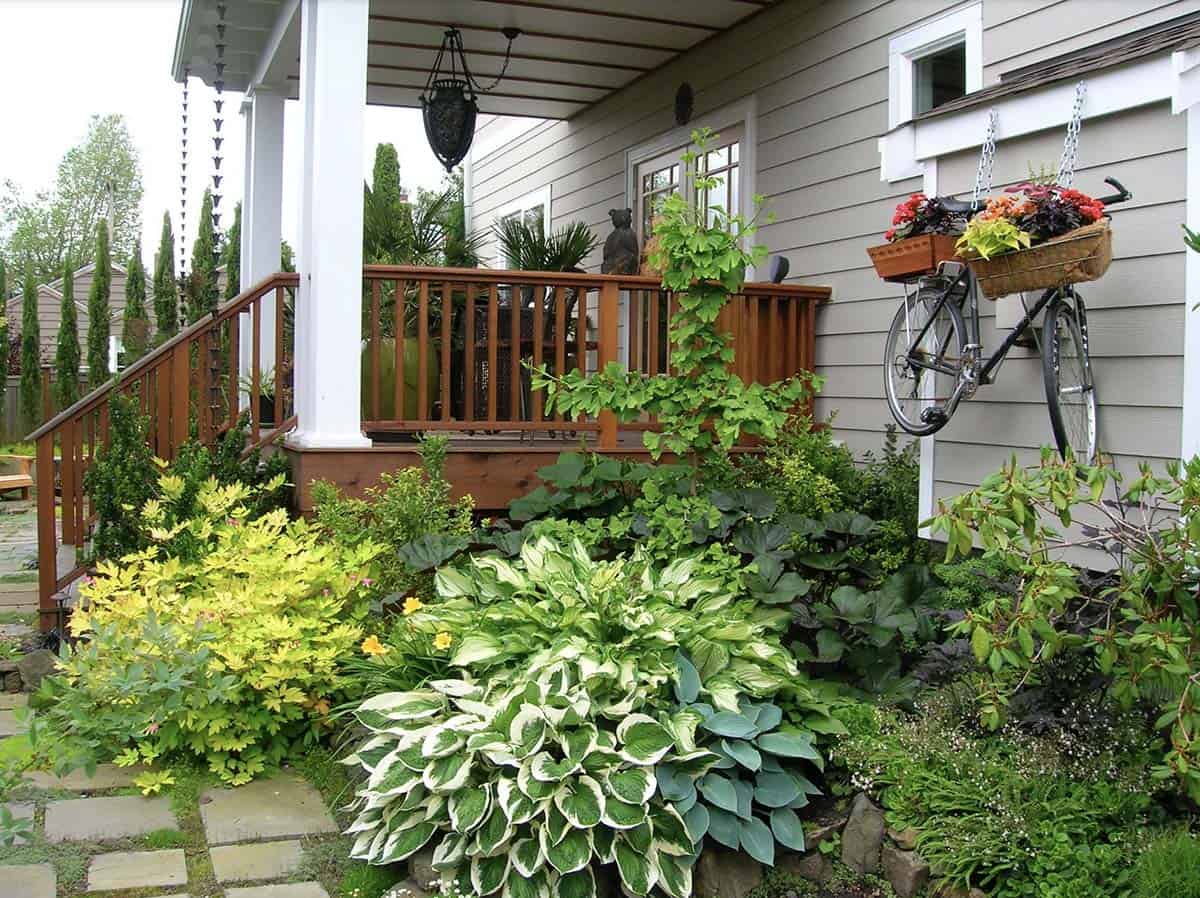
Below this Seattle front porch, a lush shade bed layers blue and white-edged hostas with golden bleeding heart and daylilies for color without direct sun. A repurposed old bicycle with integrated baskets is planted with annuals, adding a whimsical touch against the home’s siding. (Photo Credit: Spirit Garden Design)
19. A front garden for bee allergies
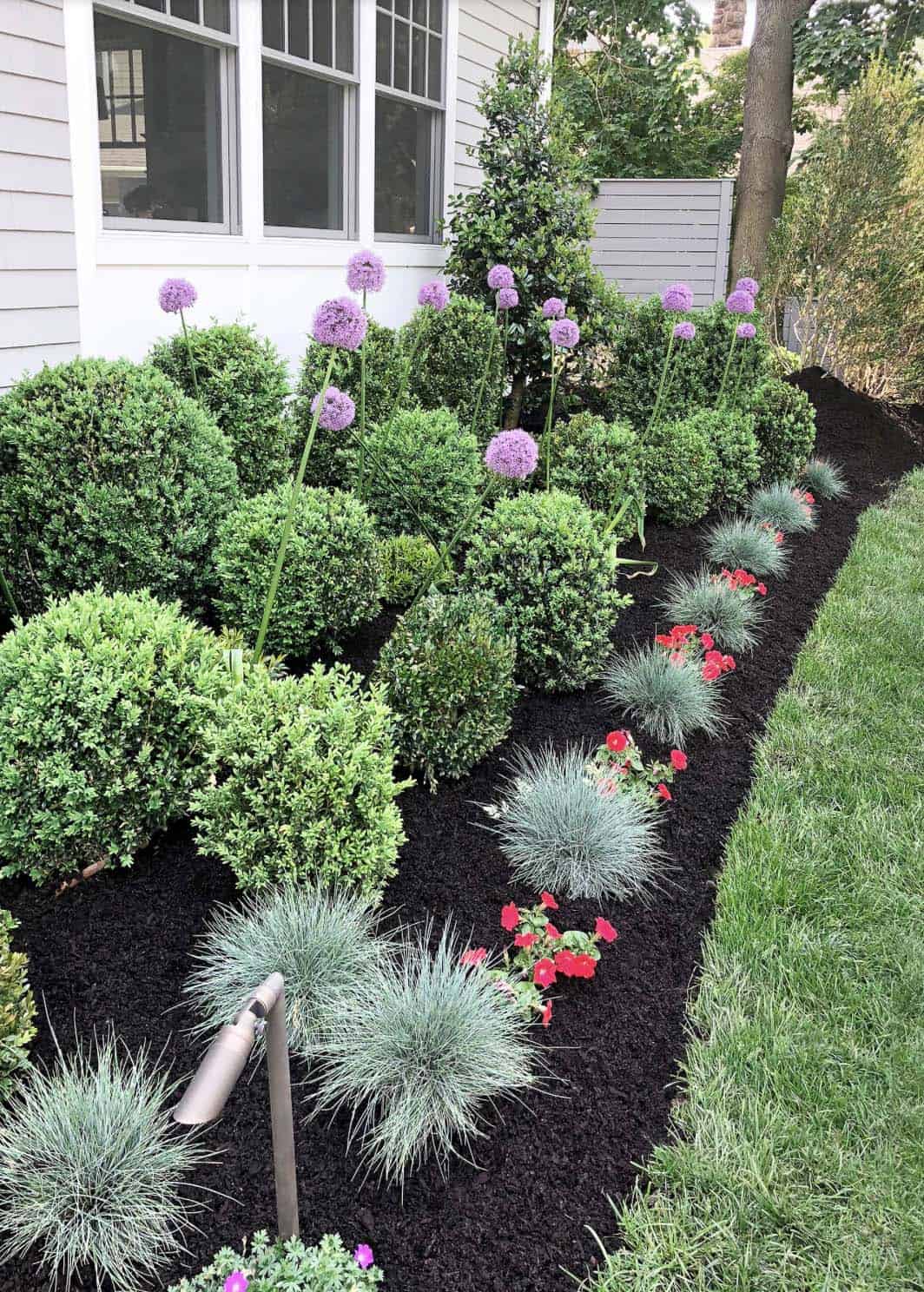
This New York front garden was designed with a bee allergy in mind, layering clipped boxwood spheres, blue fescue grass, and red impatiens for color and texture without relying on heavy pollinator-attracting blooms. Tall purple allium adds height and a sculptural touch above the greenery. This flower bed shows how a low-bee-traffic garden can still feel lush and beautiful. (Photo Credit: Winston Fayer Landscape Design)
20. Add a front yard seating nook
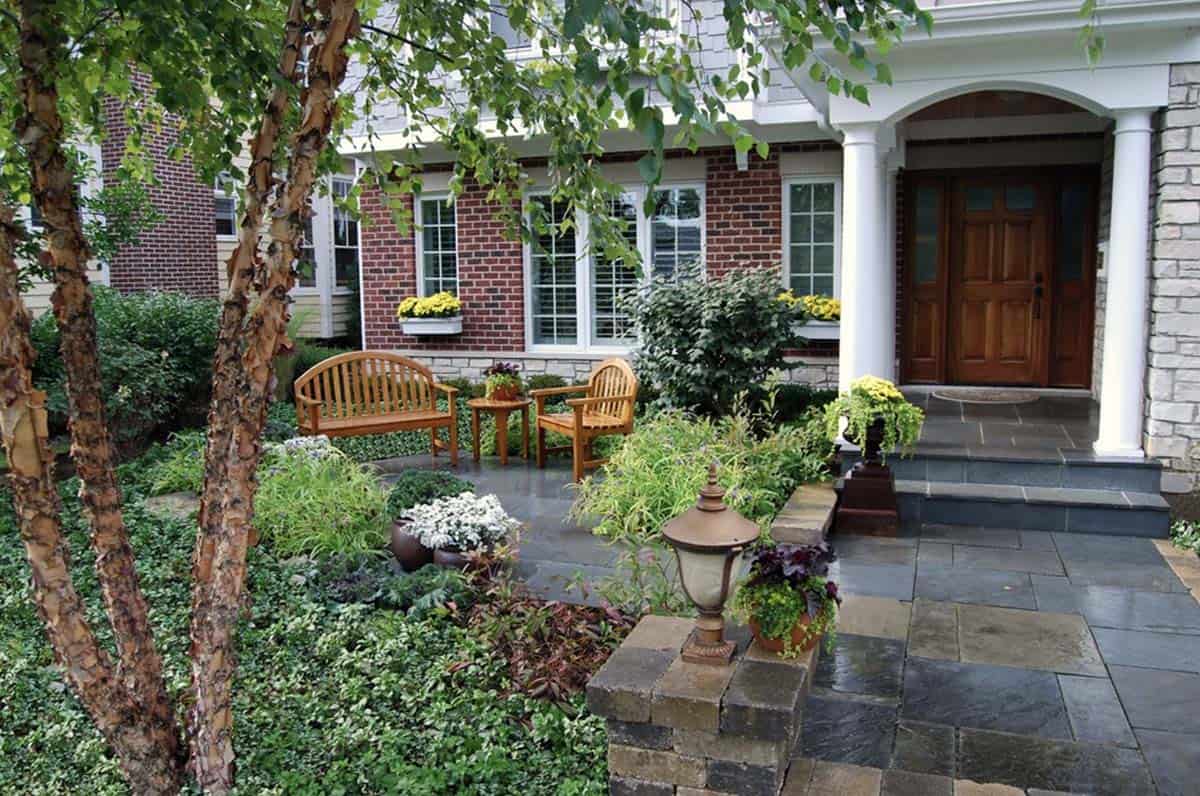
This Chicago front yard features a cozy seating nook on bluestone pavers, shaded by a large river birch and framed by lush groundcover. Yellow mums in window boxes and potted containers add a warm, seasonal pop of color near the home’s entry. (Photo Credit: KD Landscape)
21. A planted privacy screen
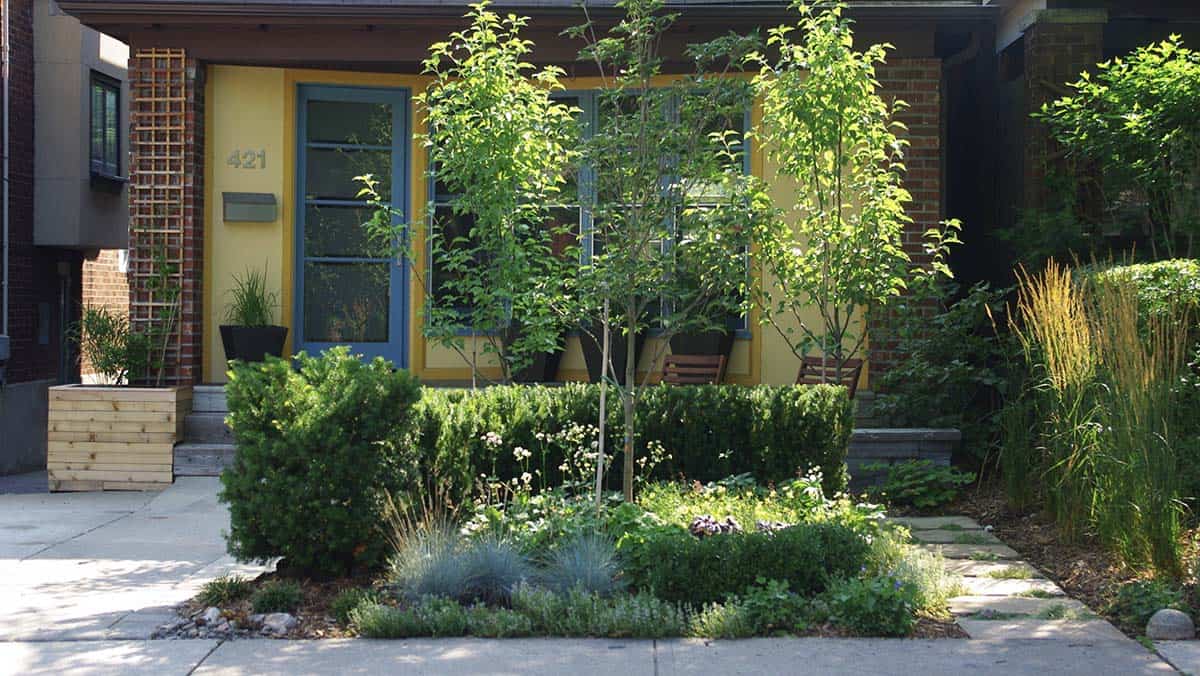
Flagstone pavers fill most of this small urban front yard of a home in Toronto, Canada, with a central square of greenery breaking up the hardscape. Birch trees, blue fescue grass, and a clipped hedge are layered by height to add a privacy screen around the seating area beside the house. A low limestone wall and a simple cedar planter add texture and warmth, framing the entry. (Photo Credit: Paula Deresti Landscape Design)
22. Border the walk with white hydrangeas
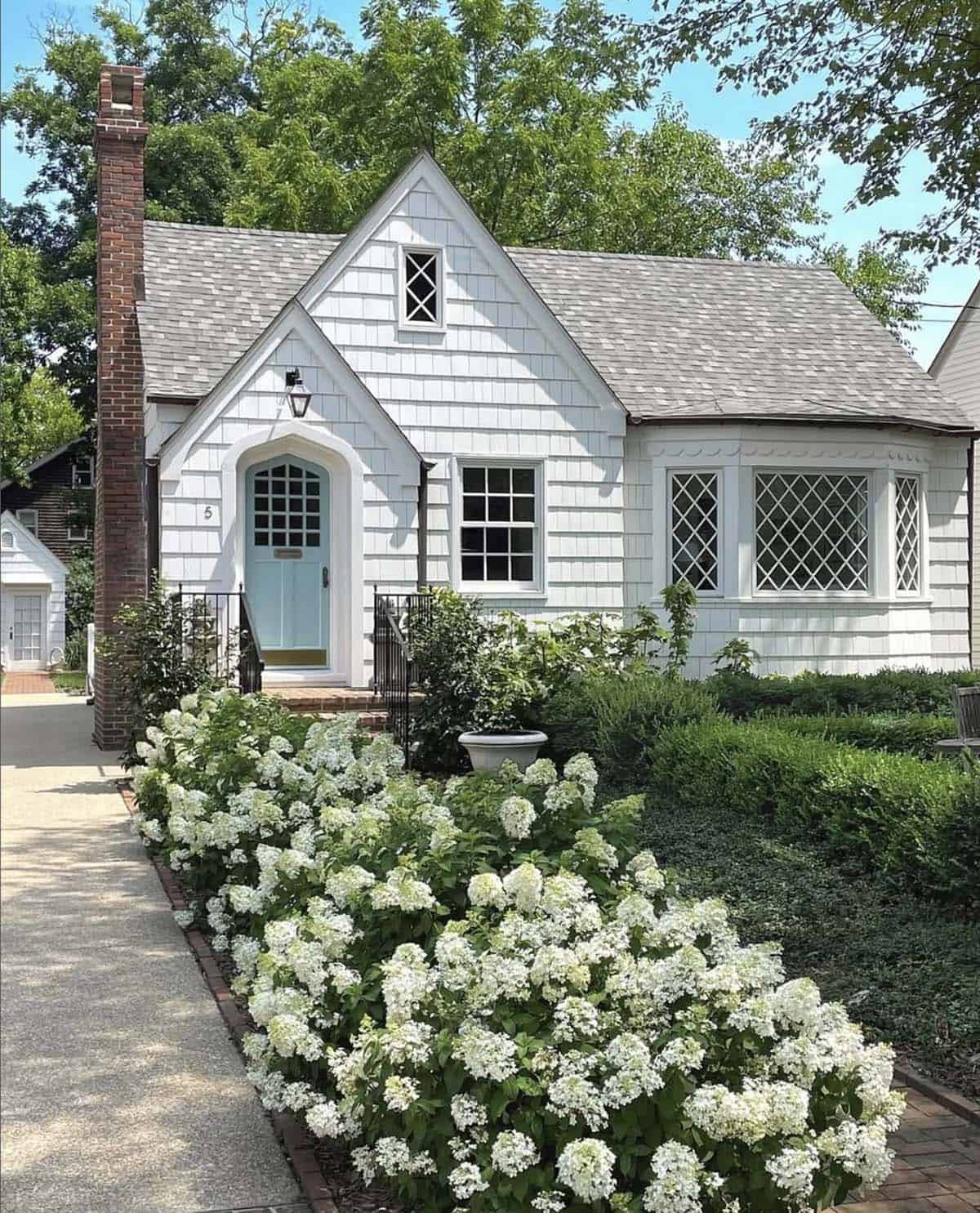
A sweeping border of dwarf Limelight and oakleaf hydrangeas lines the front walk of this storybook cottage in Annapolis, Maryland, their creamy white blooms standing out against the boxwood hedge behind them. A pale blue front door and a brick chimney add just the right touch of cottage charm. (Photo Credit: @loithai / Instagram)
23. Line the path with lavender and boxwood
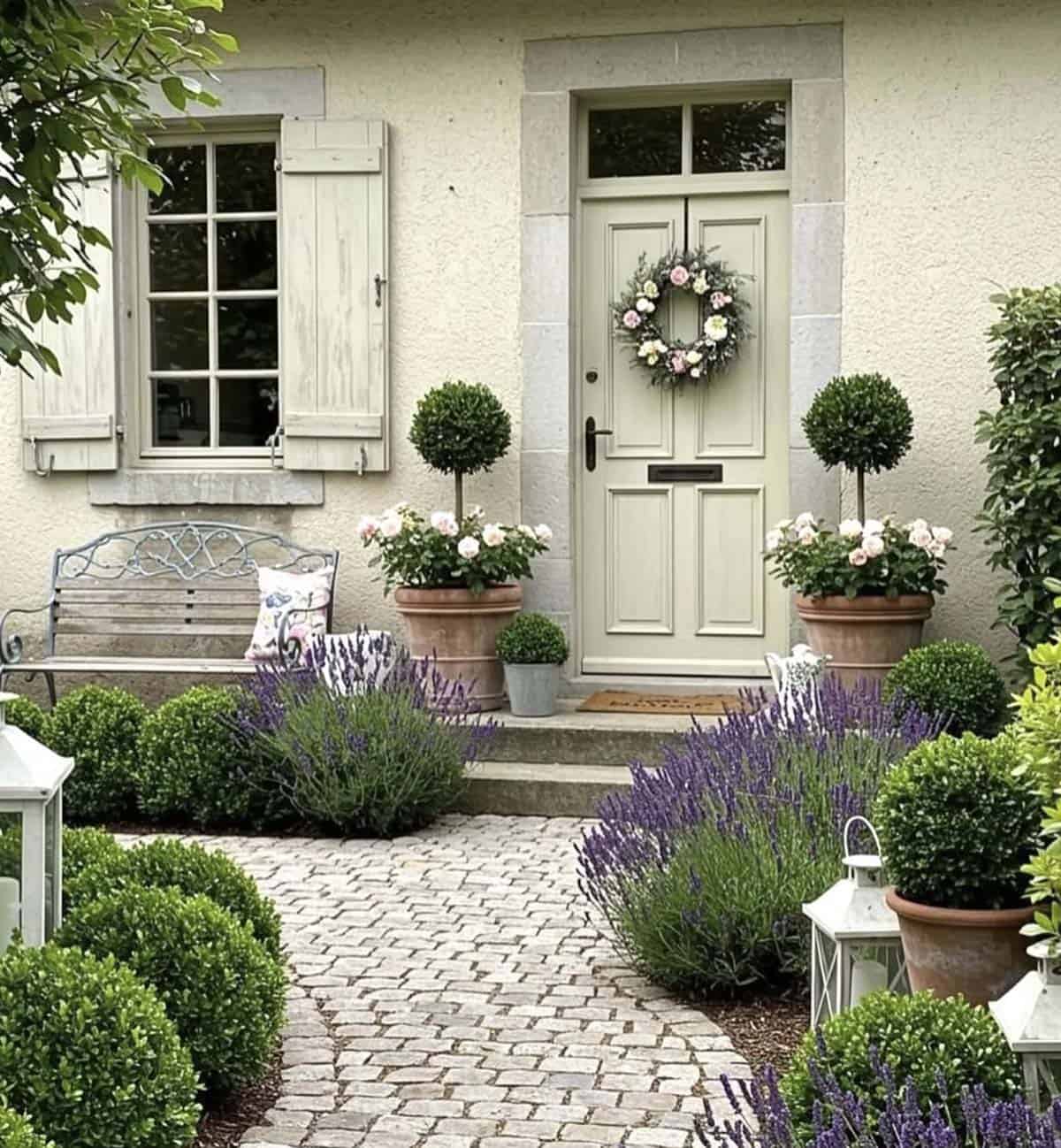
A cobblestone path winds through clipped boxwood and billowing lavender at this charming cottage entry, with matching boxwood topiaries and potted roses framing the front door. White lanterns and a flower wreath add a soft, romantic finishing touch. (Photo Credit: @thecorbel / Instagram)
24. Plant dense garden islands
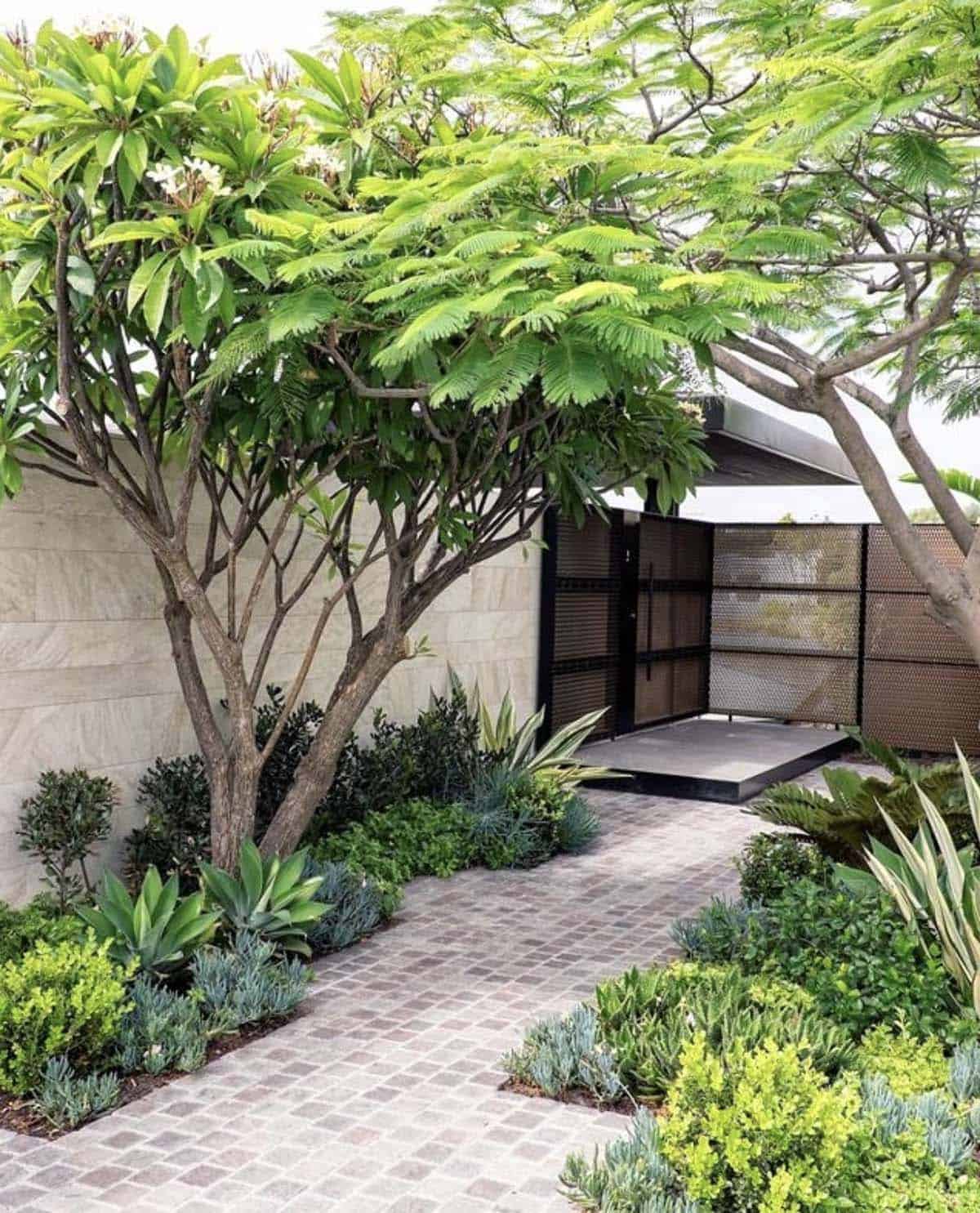
At this Perth home, Tim Davies Landscaping turned a typically dull council verge into densely planted garden islands flanking a cobblestone path. A flowering frangipani tree provides shade overhead, while agave and silvery groundcovers add texture below. (Photo Credit: @timdavieslandscaping / Instagram)
25. Soften the path with catmint
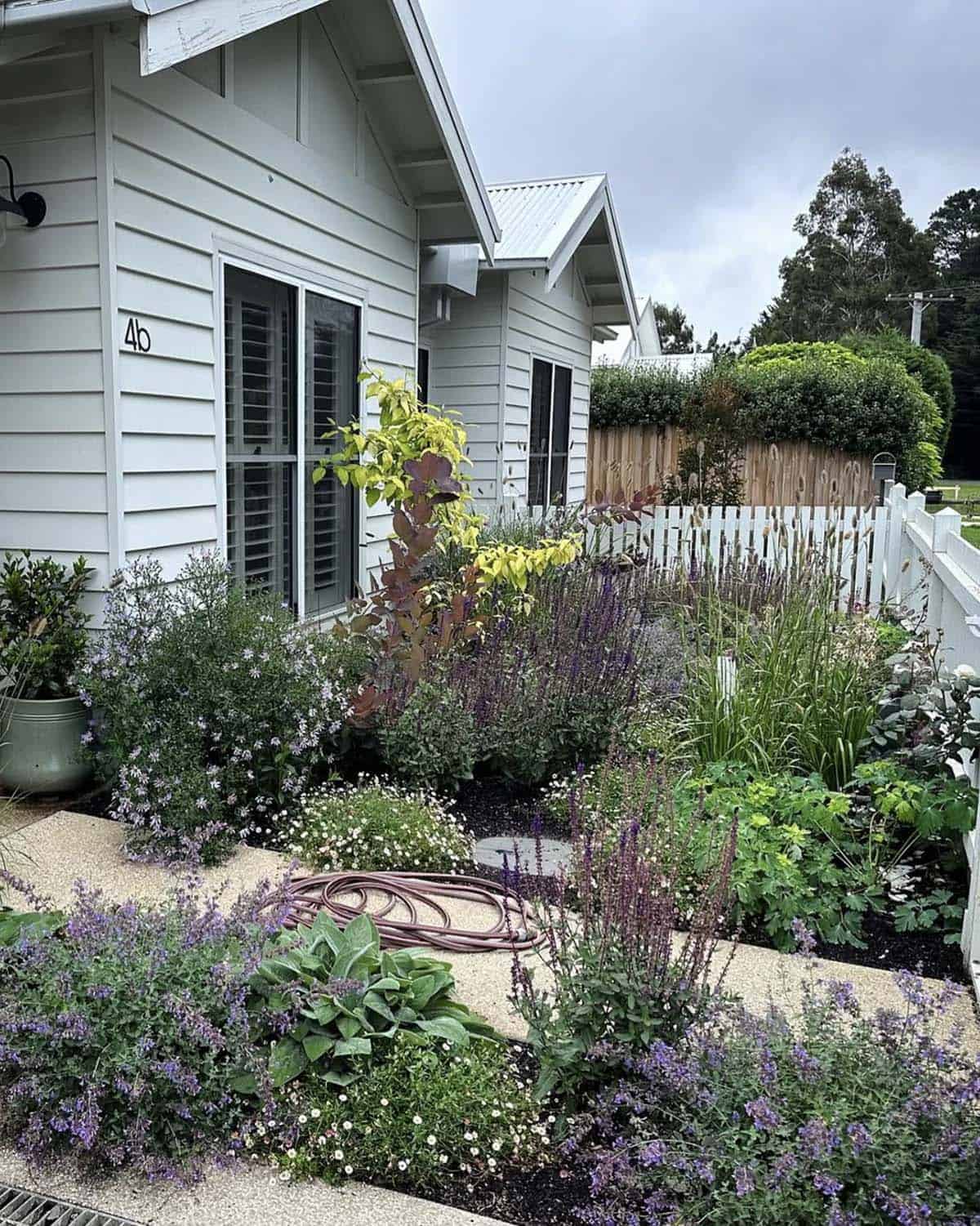
This small cottage garden in Woodend, Australia, layers catmint, salvia, and lamb’s ear for soft texture and color along the path, with a white picket fence and ornamental grasses adding structure behind. Even with such a tight planting area, the mix feels full and effortlessly cottage-style. (Photo Credit: @t.p_gardens / Instagram)







3 comments