


❤️ Would you like to save this?
By saving, we'll email this post to you for later. Unsubscribe anytime.
Whether you are relaxing by the pool, soaking in a spa, or enjoying time on your patio or balcony, privacy can make your outdoor space feel more peaceful and inviting. From lush hedges and climbing vines to decorative fencing and stylish screens, there are countless ways to create a secluded backyard retreat shielded from neighbors and passersby.
Explore this collection of inspiring privacy screen ideas that we have gathered for you, all designed to enhance comfort, define outdoor living areas, and bring beauty and function to your landscape.
Types of Privacy Screens
- Metal screens
- Wood screens
- Vinyl screens
- Outdoor curtains
- Living plant screens
1. Create a Living Privacy Wall
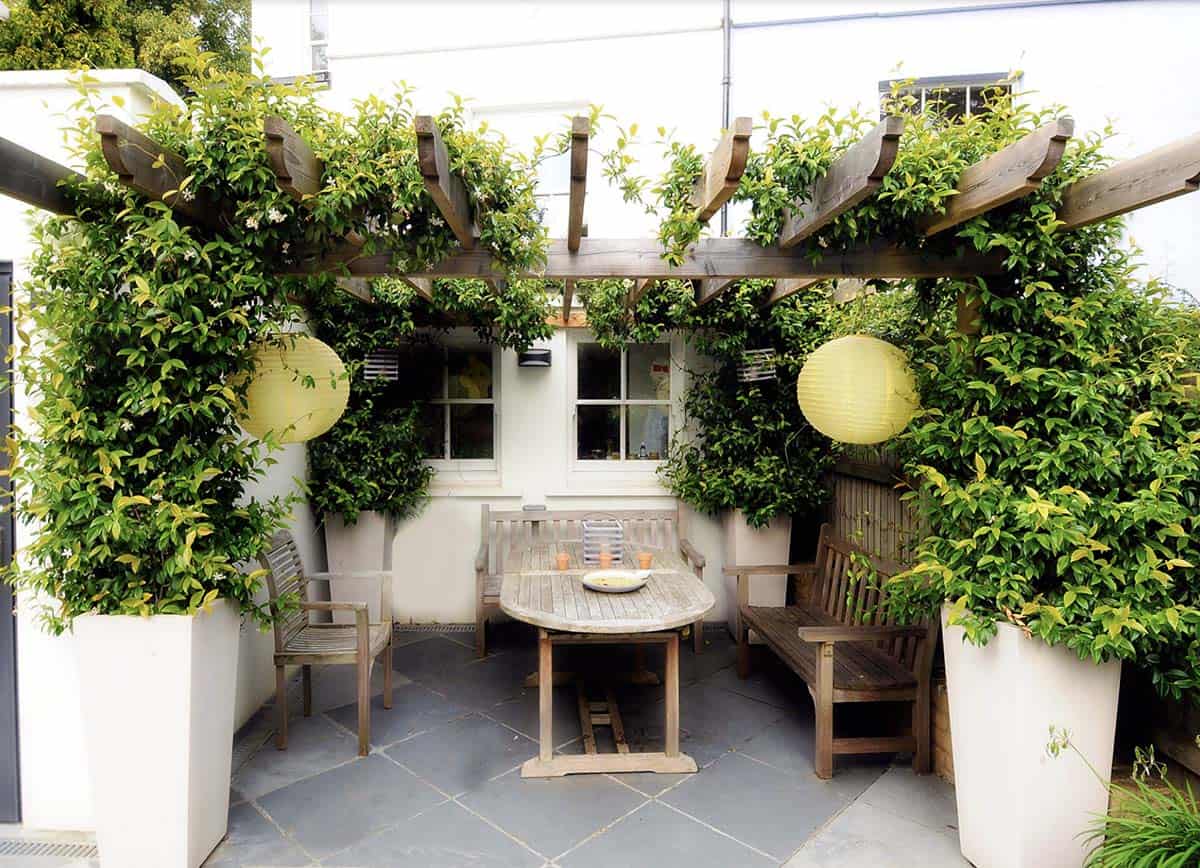
Vigorous vines that climb both vertically and horizontally can create lush, dense coverage, forming a natural living wall (pictured above is Star Jasmine). Planting Tips: Select a support structure based on how your vine climbs. Twining vines ascend by wrapping their tendrils around supports, while clinging vines use small adhesive pads or aerial rootlets to attach directly to surfaces. Twining varieties thrive on trellises, wires, and cables, whereas clinging vines are ideal for walls and textured surfaces such as stucco. (via Kate Eyre Garden Design)
Example Species
Star jasmine (Trachelospermum jasminoides, zones 8–10) — prized for its fragrant white flowers and glossy evergreen foliage; native to eastern and southeastern Asia.
American wisteria (Wisteria frutescens, zones 5–9) — native to the southeastern and south-central United States.
Virginia creeper (Parthenocissus quinquefolia, zones 3–10) — native throughout North America. Caution: berries are poisonous.
Climbing hydrangea (Hydrangea anomala petiolaris, zones 4–8) — native to Japan and Korea; performs poorly in hot, humid climates.
2. Planted Bamboo Screen
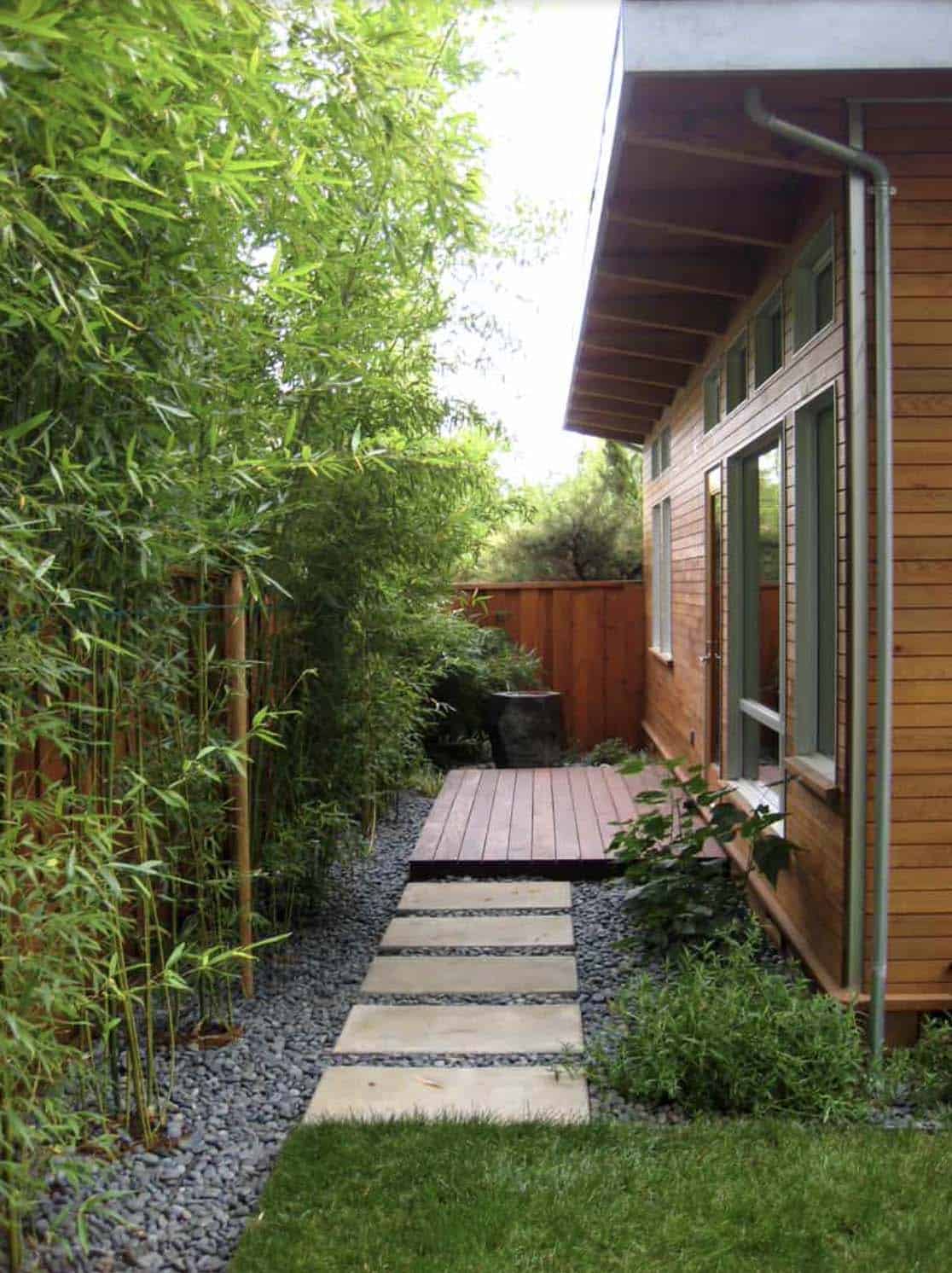
Bamboo can be challenging to manage due to its vigorous spreading habit, so it’s important to choose the right variety. There are two main types of bamboo: clumping and running. Clumping bamboo produces new shoots close to the parent plant, gradually forming a dense cluster. Running bamboo spreads through underground rhizomes that can emerge far from the original planting site.
Pictured here, the bamboo is bambusa oldhamii which is a clumping root as opposed to a runner. It isn’t perfect, but this particular type stays relatively close to home. Still, if you install it, you may want to put in a barrier between your house and your neighbor. The walkway steps are 18 x 24 colored concrete poured in place. PIP as they are called allow for custom sizes. Ideally a pathway width should be wide enough that two people can walk side by side or a single person can walk carrying two grocery bags comfortably.
Planting Tips: Bamboo works best in confined planting areas or large containers where its growth can be more easily controlled. If planting in the ground, install a root barrier to help prevent unwanted spreading. For quick privacy screening, space the bamboo culms, or hollow stems, as closely together as your budget permits. (via Rich Mathers Construction)
3. Plant a Hedge for Added Seclusion
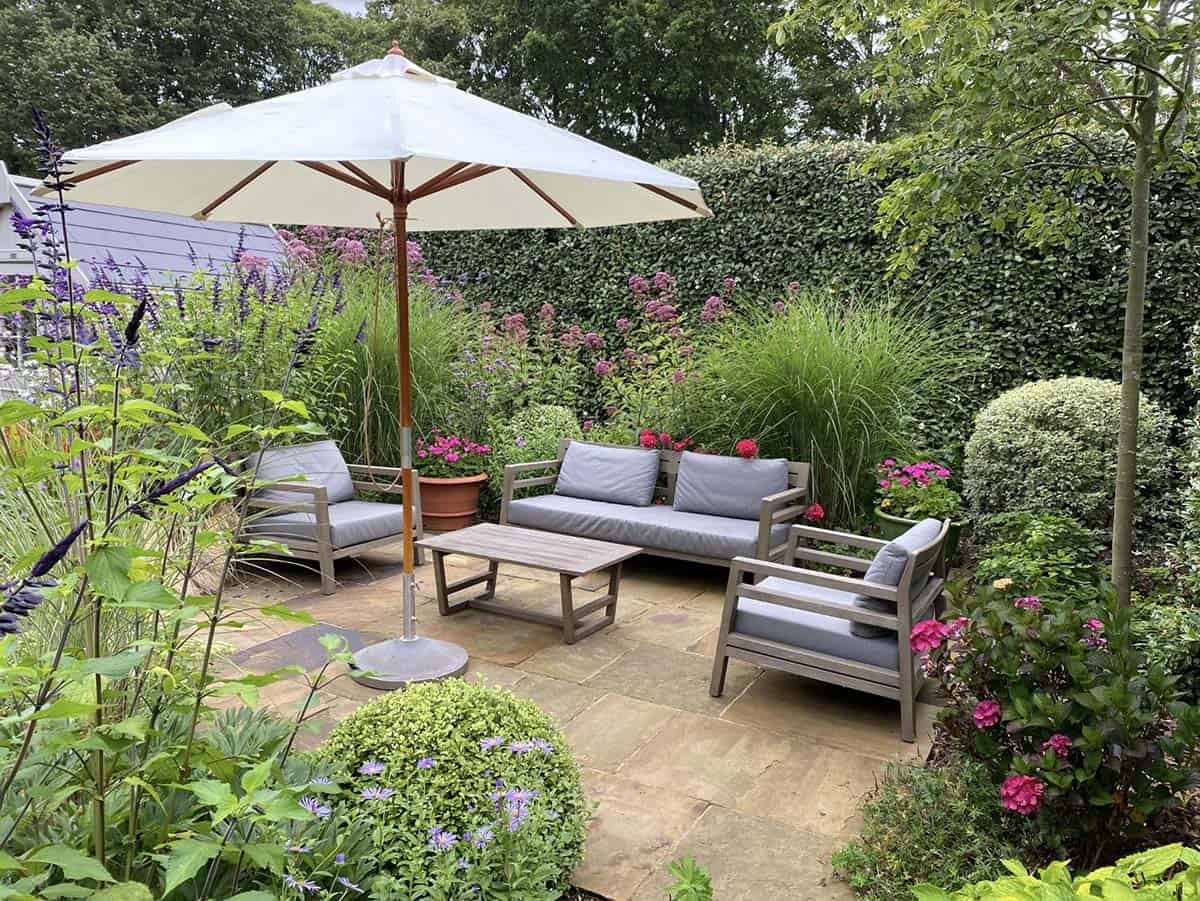
Hedges are one of the most effective natural solutions for creating privacy from neighbors while also improving the look and function of a yard. They act as living barriers that soften hard property lines and create a sense of enclosure without the rigid look of fencing. Over time, a hedge becomes a dense “green wall” that can significantly reduce visibility into your outdoor space while also adding year-round structure and greenery to the landscape. This Yorkstone patio is surrounded by colourful planting with stylish lounge seating and sunshade. (via Jane Ashley Garden Design)
Top privacy hedges include Green Giant Arborvitae, Nellie Stevens Holly, Skip Laurel, Wax Myrtle, and Japanese Holly, offering fast growth, dense foliage, and visually appealing screening. Tip: Annual or semi-annual pruning is essential for shaping fast-growing plants into a hedge. Without regular trimming to control height, width, and overall form, many of these vigorous growers can quickly get out of hand. Be sure to check your hardiness zone to see what hedges are right for your region.
1. Green Giant Arborvitae – Known for rapid growth (3–5 feet per year) and dense foliage. Ideal for large yards, it can reach 40–60 feet tall with a 12-18 foot wide spread, perfect for full privacy. Hardiness Zones: 5-8
2. Nellie Stevens Holly – A versatile, self-fruitful evergreen that grows 2–3 feet per year. Hardiness Zones: 6–9
3. Skip Laurel – Broad evergreen leaves create a dense screen. Expect mature hedges around 6-10 ft tall and 3-5 ft wide with regular trimming. Hardiness Zones: 4-9
4. Wax Myrtle – This fast-growing shrub (3–5 feet per year) tolerates poor soil, salt spray, wind, and flooding. Its aromatic foliage repels deer and mosquitoes, while berries attract birds, providing both privacy and wildlife benefits. It grows 3–5 feet per year and can reach 10–25 feet tall with an equal spread. Hardiness Zones: 7–10
5. Japanese Holly – A broadleaf evergreen with shiny foliage and dense growth, ideal for formal hedges, topiaries, and dividing garden spaces. It typically grows 3–10 ft tall and 3–8 ft wide. Hardiness Zones: 5b–8b
Additional privacy shrubs that grow fast include: Red Twig Dogwood, Pussy Willow, Common Ninebark, Common Lilac, Mock Orange, Yew, Beautyberry, Privet, Cherry Laurel, Forsythia, Cotoneaster, Loropetalum, Canadian Hemlock, Burning Bush, Hydrangea, Leyland Cypress, Butterfly Bush, Boxwood, Holly, ‘Limelight’ Panicle Hydrangea, and Juniper.
4. Container Gardens for Screening
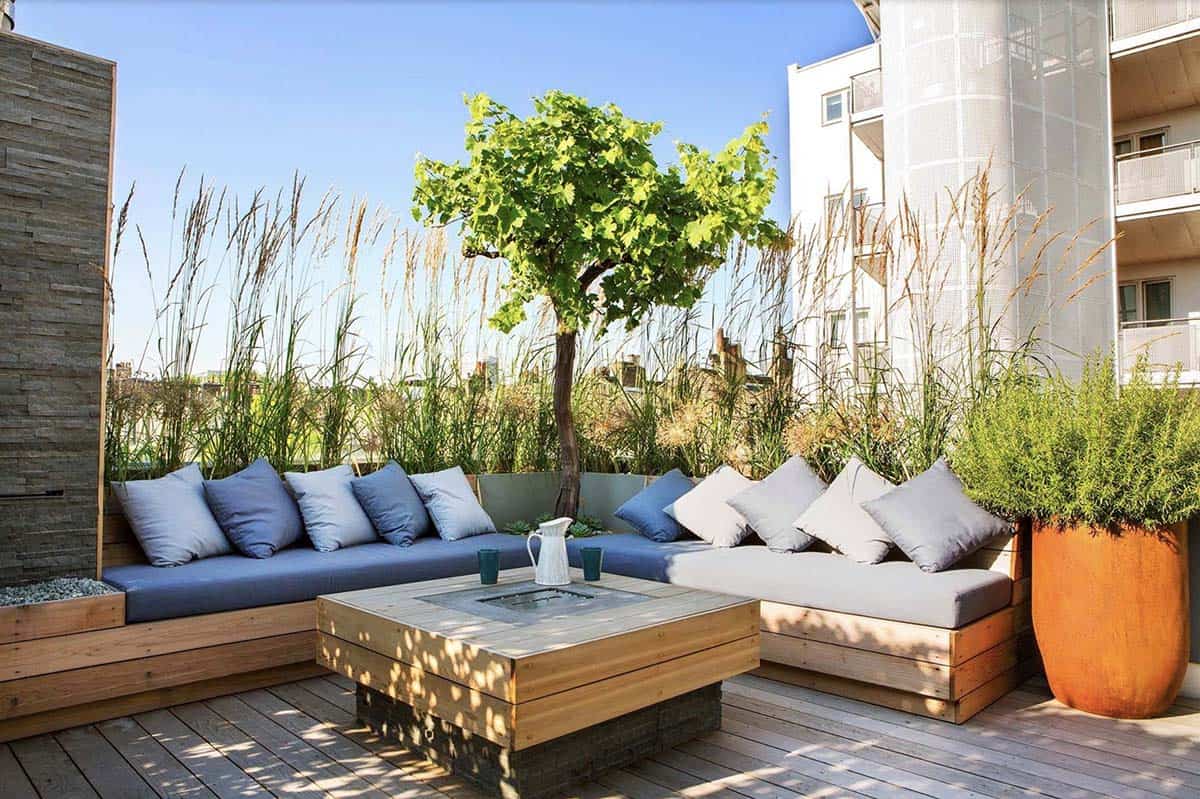
Well-sized container plantings can be an effective way to screen views if you have a rooftop or balcony garden. In this Notting Hill, London balcony garden, ornamental grasses offer the perfect layer of privacy from nearby apartments and will beautifully sway with even the lightest breeze. (via Adolfo Harrison Gardens)
5. Wood Lattice for Outdoor Shower Screening
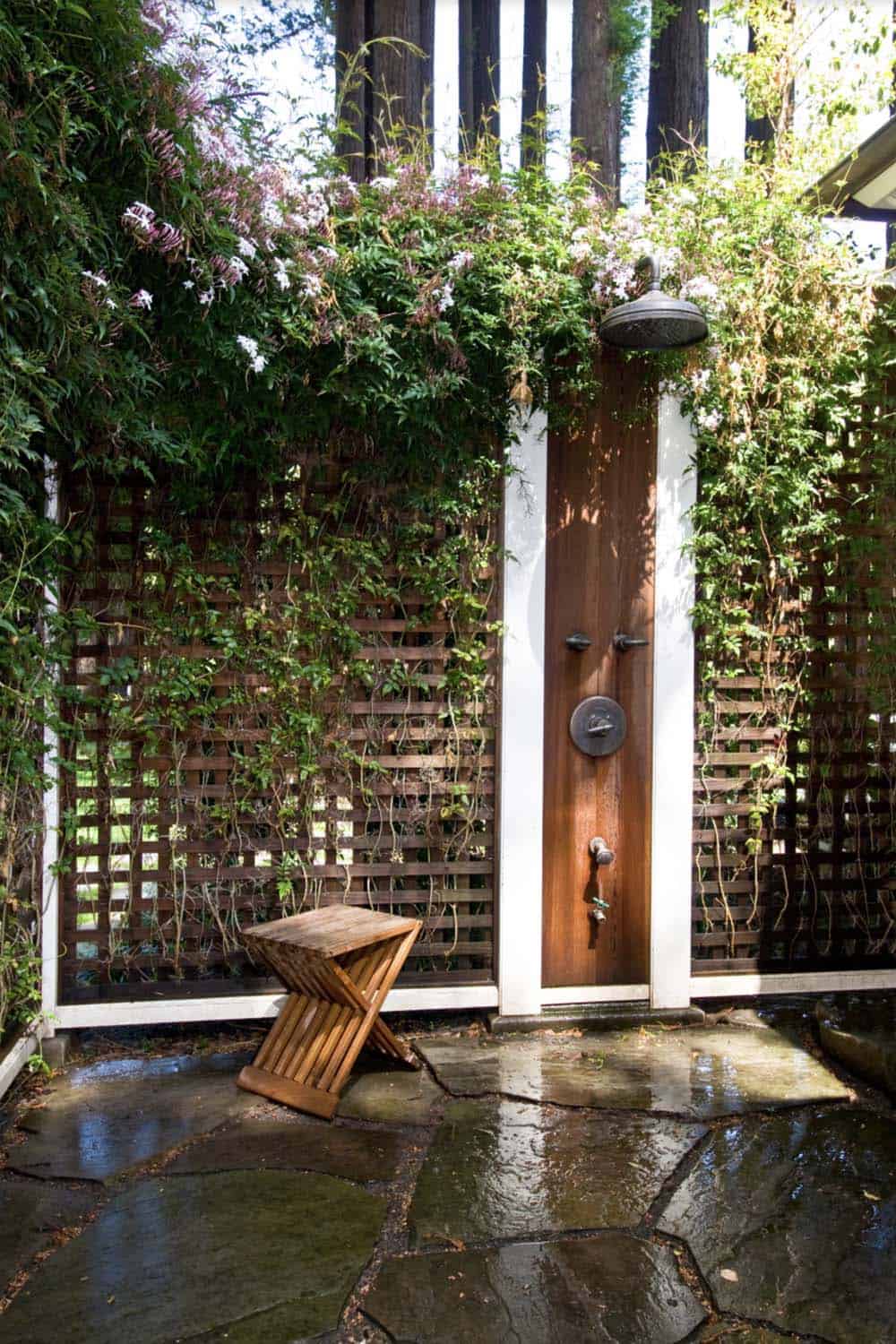
If you enjoy an outdoor shower, surrounded by nature, but don’t want the preying eyes of your neighbors, then the addtion of a wood lattice is an inexpensive option for screening. To help further conceal this outdoor shower of a home in Woodside, California, the landscape designers planted Creeping Jasmine (zones 8 to 10) that was trained up the opposite side and made to overhand the top of the enclosure for increased privacy.
The gaps between the wood slats allow air to circulate freely and light to filter in, helping the area dry quickly after a rinse. FYI: The tall trees in the background are Coast Redwoods which are scattered throughout the property. (via Chateau Construction Company)
6. Recycled Wood Fence for a Private Deck Retreat
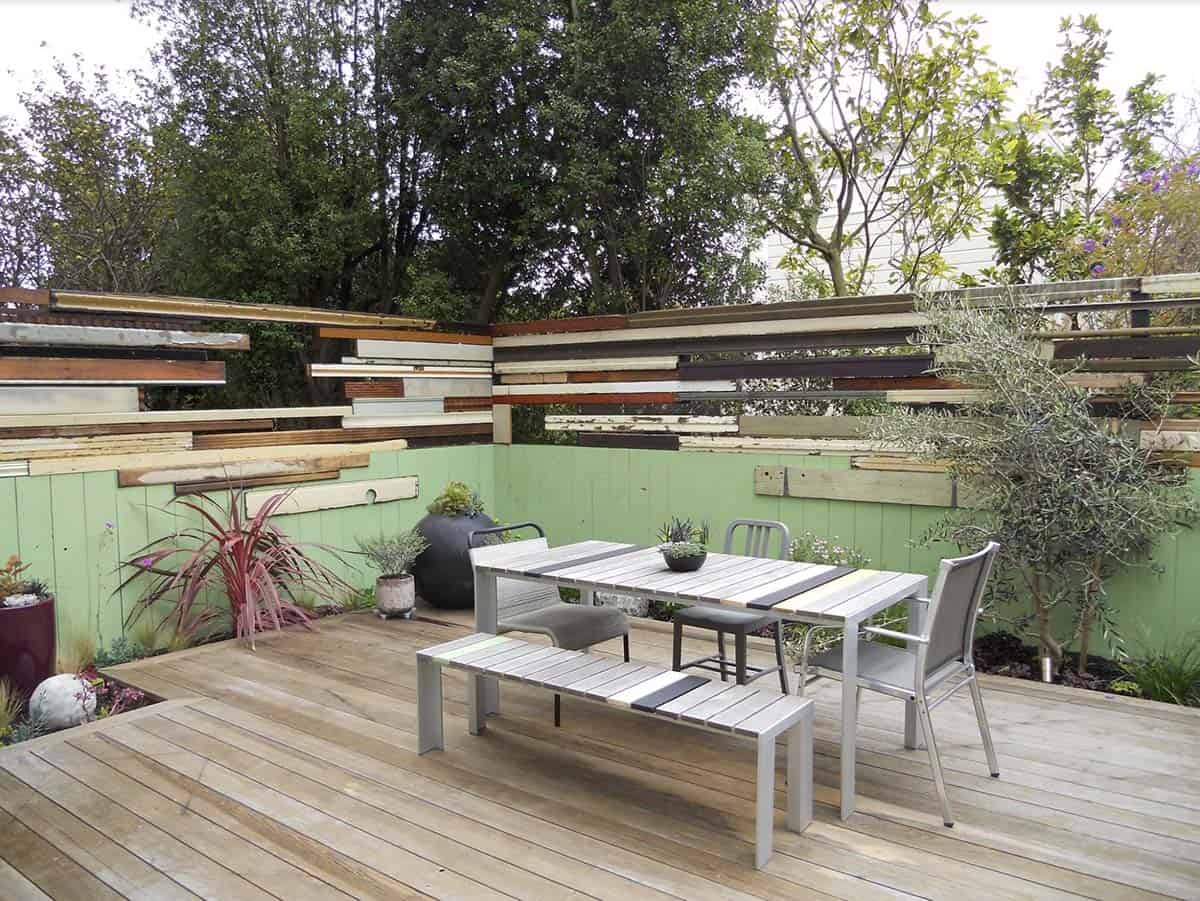
This garden of a San Francisco home already had a deck for alfresco dining so the landscape designer revamped the plantings and built a screen from recycled wood around the existing fence. It was painted a nice sage green. Irregularly placed openings between the boards frame selective views of the surrounding trees. The boards were taken off of the existing bench and table to tie in with the new screen. Over time as the new olives and plantings grow, they will fill in around the screen and add texture and color to the space. (via Growsgreen Landscape Design)
7. Grow a Lush Privacy Screen
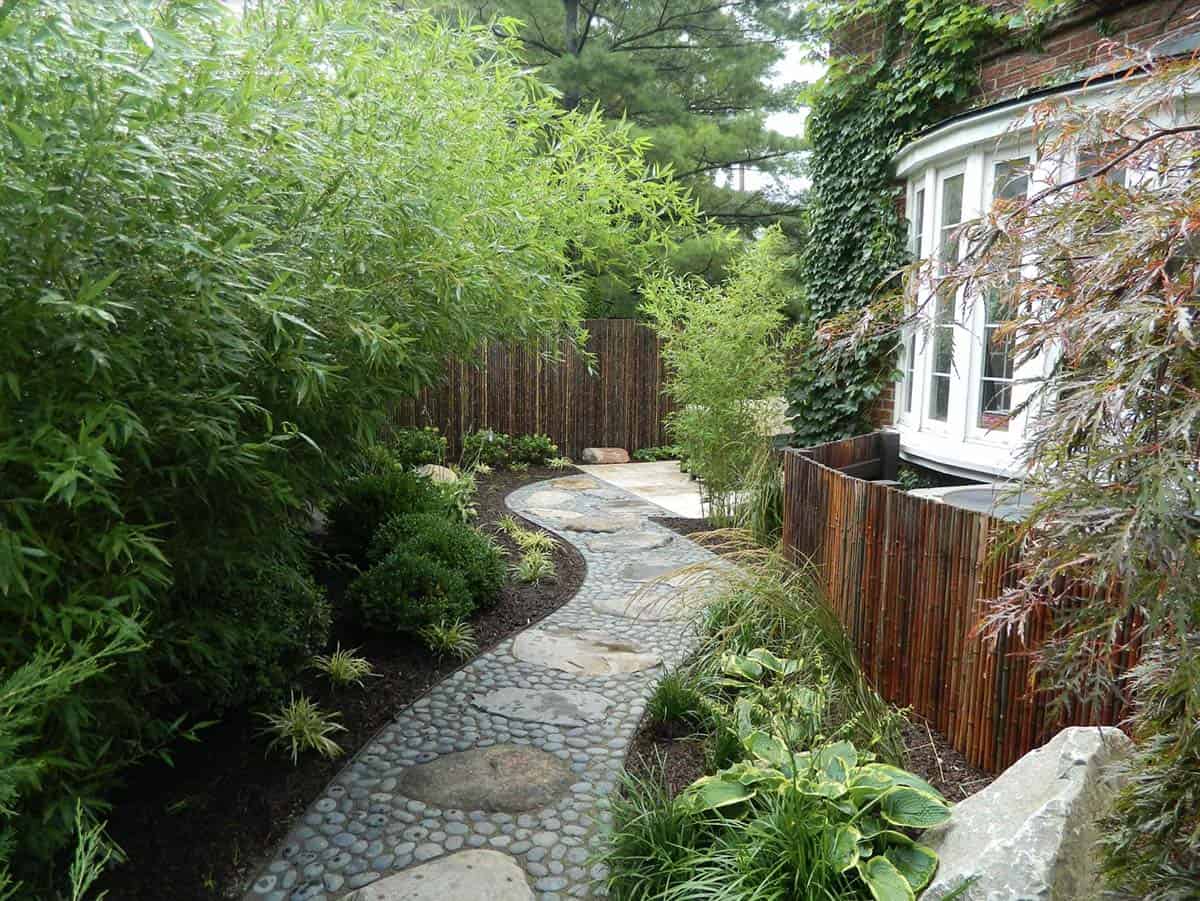
This Asian inspired landscape designed of a home in Detroit, Michigan features a privacy screen of Bisetti Bamboo. The green mounded shrub to the left of the walkway is Green Velvet Boxwood. For the pathway, the stones are not laid in cement, they have a joint compound used with pavers in between the stones. Its swept in place then water activates the agent within the sand setting the sand in place. (via Great Lakes Landscape Design)
8. Grow a Vertical Garden
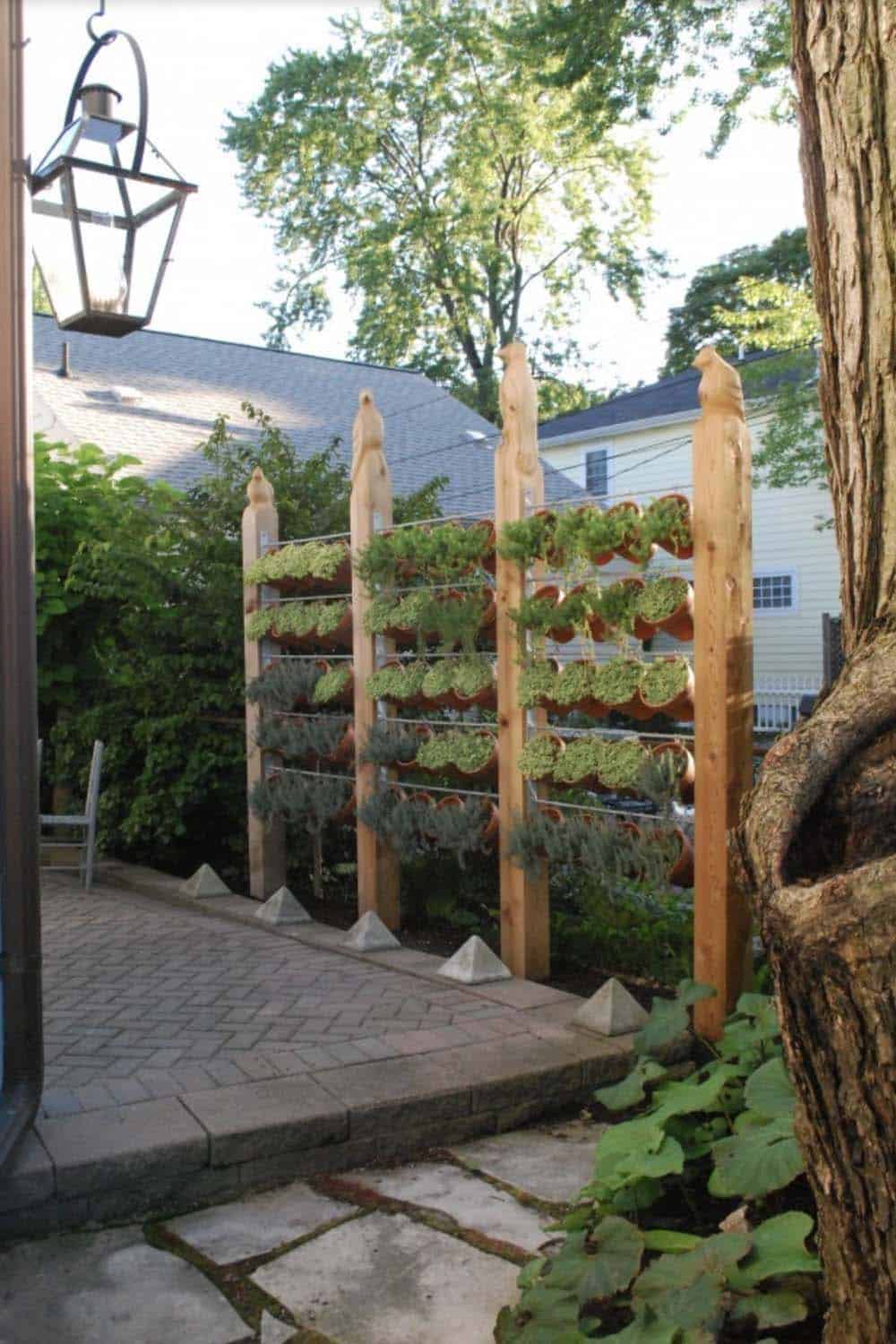
Cedar posts set in concrete footings with horizontal wire cables strung between them will run you $150–$300 in materials depending on length. Fill 7″ terracotta pots (found cheap at dollar stores and thrift shops) with herbs like basil, thyme, and rosemary, or succulents if you want something nearly hands-off.
The hangers were custom made to fit around the pot and hang on the poles. It creates a dense living wall that blocks sightlines from neighbors while putting fresh kitchen ingredients within arm’s reach. The privacy screen pictured is planted with sedums, a hardy succulent that does not have to be watered every day, perfect for hot climates where drought-tolerant herbs like rosemary, oregano, and sage also thrive. (via Art | Harrison Interiors & Collection)
9. Plant a Fast-Growing Barrier
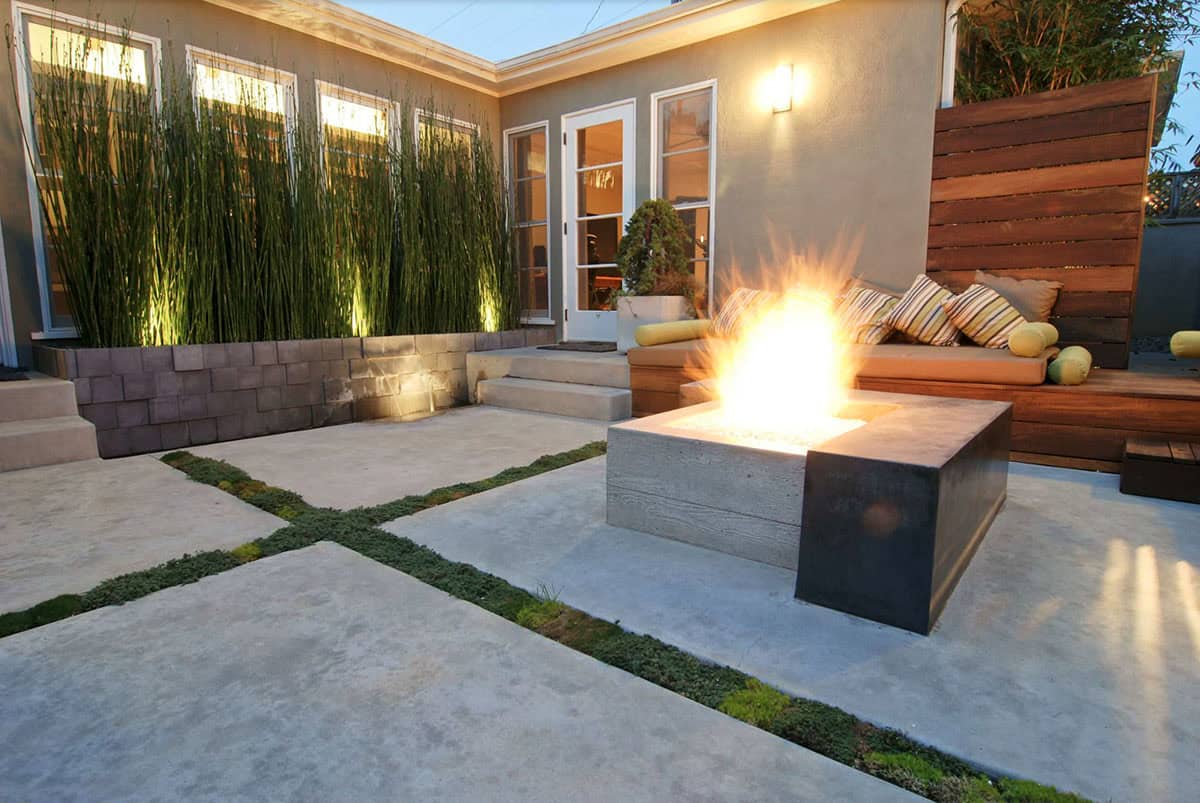
Planted in the raised garden bed of a home in San Diego, California, is Horsetail Rush, hardy across USDA Zones 3 through 11. It thrives primarily as a perennial in Zones 4 through 9, with great cold tolerance down to roughly -30 (use Sanseveria hybrid for Zones 9–11). It is very invasive, so this plant works better when it is contained. The planter box can be imitated using a tile set at different depths. The plants between the concrete pads is is a mix of Thyme, Scotch and Irish moss.
The patio material is poured in place concrete pads. The color is natural gray and the acid is generic ‘Muriatic’ acid available at most hardware stores like Lowes or Home Depot. FYI: The wood is Ipe, a Brazilian hardwood. It is stained with a natural (no color added) stain/seal combination that brings out the natural colors in the wood. Its made by Woodduck. The concrete firepit was custom designed and installed. (via Falling Waters Landscape)
10. Layer Plants Against a Fence for a Lush Privacy Screen
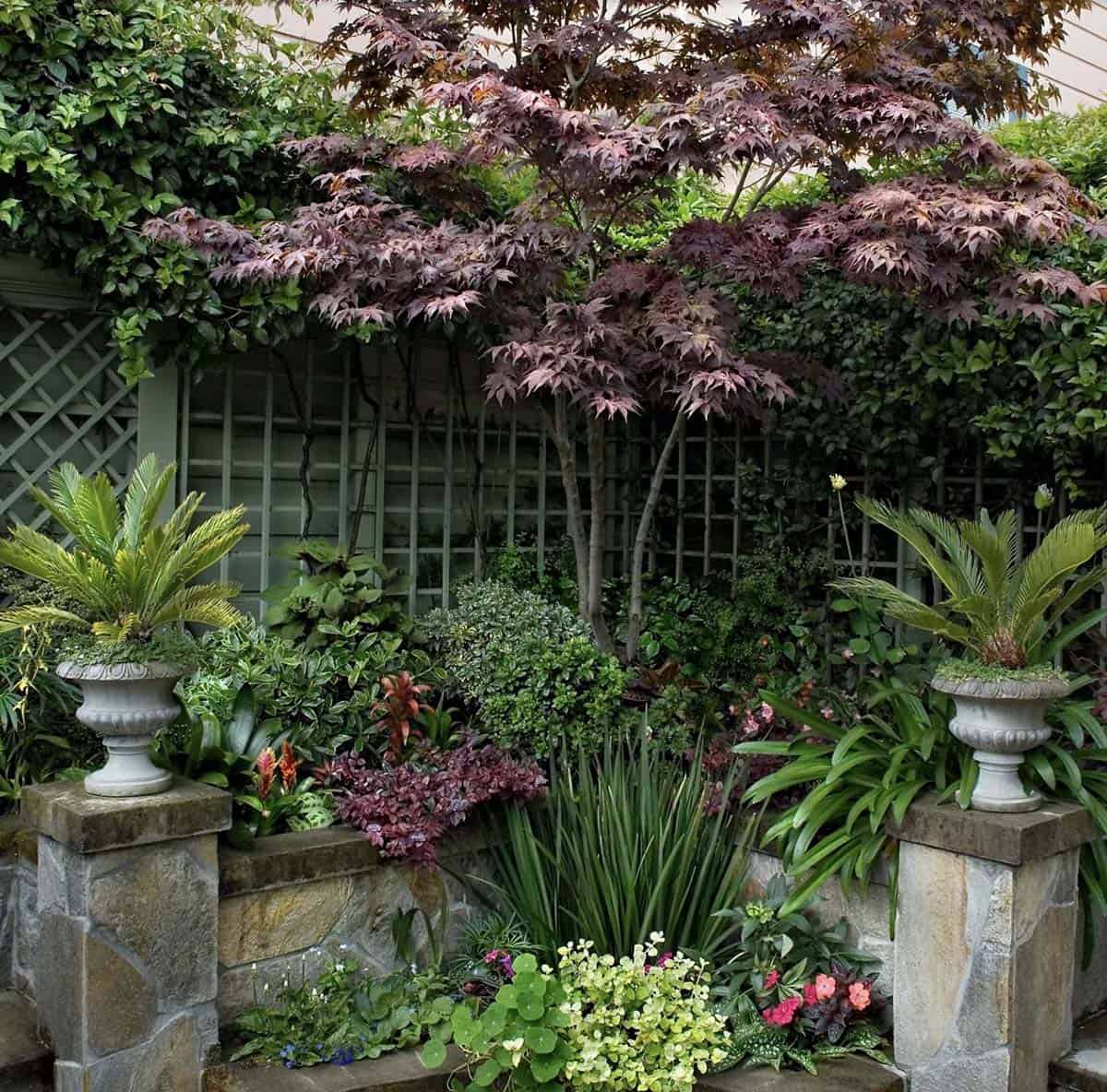
On a smaller scale, plants can work alongside existing fences or walls to enhance their height. To achieve the fencing effect here, these are 6″ posts with a simple board fence in the background to which the lattice was added overtop and then painted a traditional British garden green. The Japanese Maple (zones 5 to 8) in the foreground of a garden in Noe Valley, California, is a basic Acer Blood Good or Ben Otake. The plant in the urns on the columns is Cycas revoluta or Sago Palm. The plants to the right and on top of the lattice are two different aggressive vines: kiwi and trumpet vine. Note: Trumpet vine can be extremely aggressive and may damage structures over time, so plant with caution. (via Terra Rubina)
11. Train a Flowering Vine Up a Metal Trellis Screen
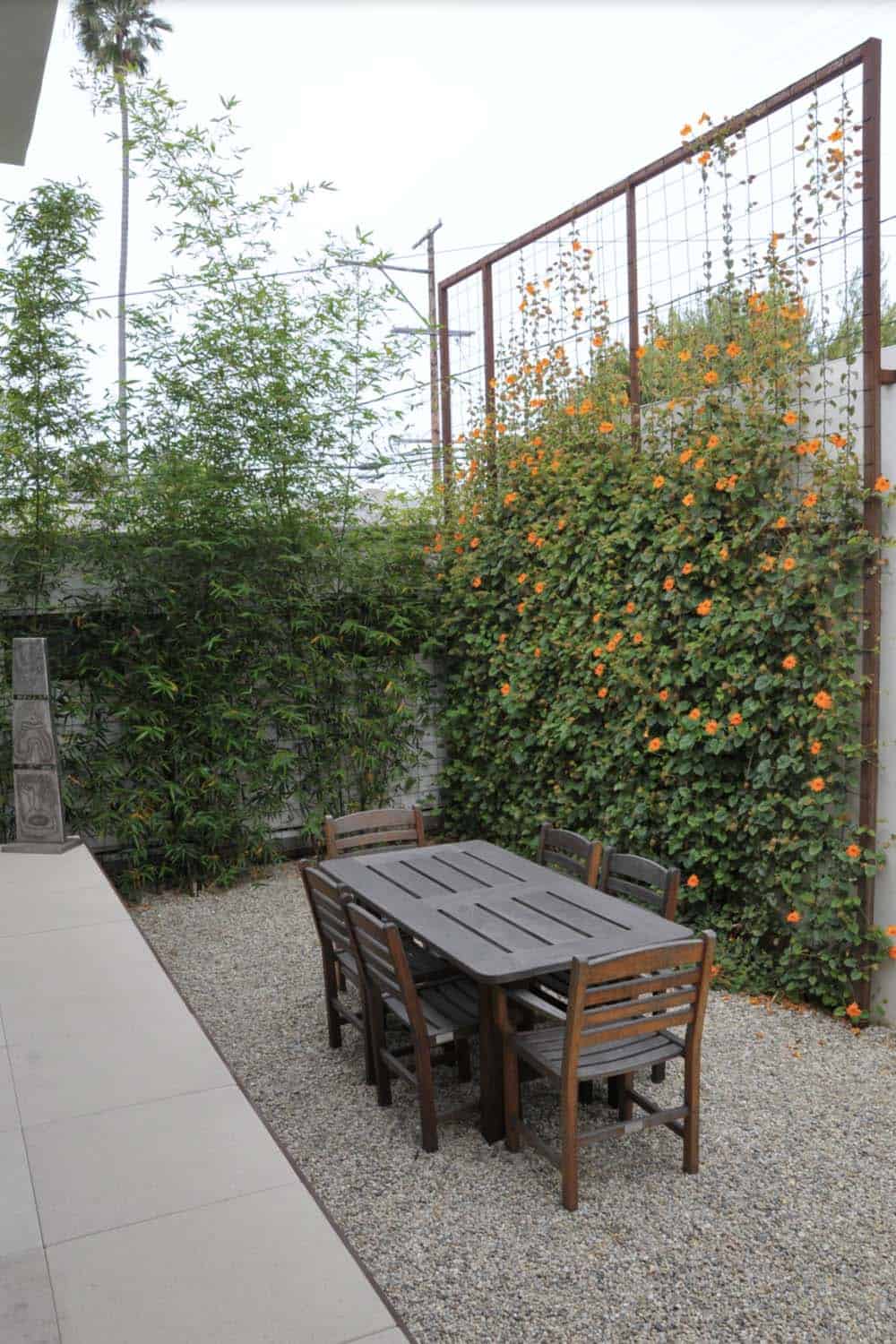
This iron and wire trellis can give privacy while creating an interesting focal point in the yard. This screen was custom-made and bolted directly onto the wall, but you can order smaller versions in various colors from Terra Trellis. A budget-friendly alternative is cattle panels; not as heavy as what’s pictured, but they work well on a wood fence and overlap so you achieve the exact height you need.
Be careful to leave at least a foot between the wood fence and the metal. Add gravel between the two for water drainage, and use clamps with spacers to attach the panels to the wood to allow this space. Choose your vine carefully, as some get so heavy and prolific they can pull a wooden fence down (jasmine, for example, is a beautiful but notorious offender). The orange flowers pictured are Thunbergia gregorii. (via SB Garden Design)
12. Combine a Slatted Fence with Climbing Vines for Extra Height
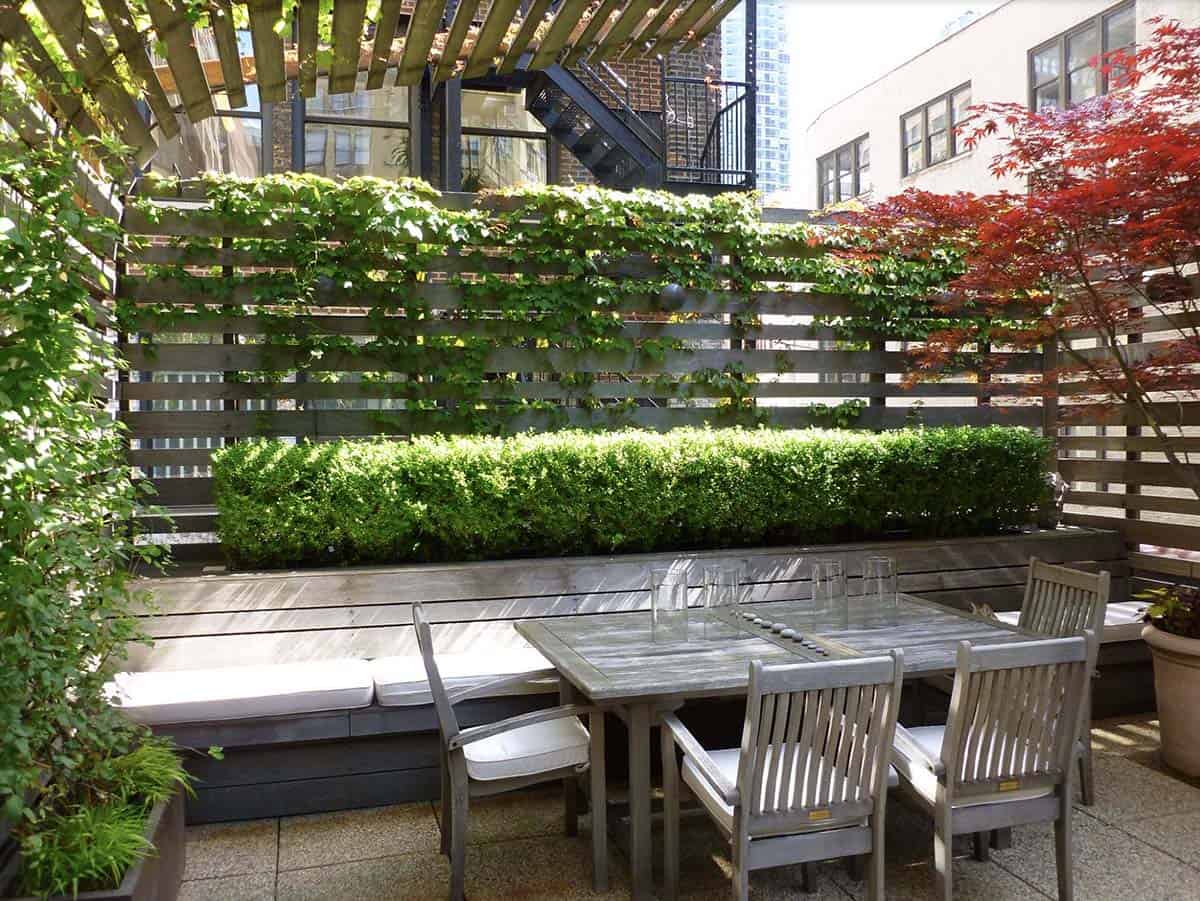
This roof deck shows the wonderful planting and how truly green it is up on a roof in the midst of industrial/commercial Chelsea, New York. The tree is a Japanese Maple (zones 5 to 8). For the climbers, you can use: Boston Ivy (Parthenocissus tricuspidata) — zones 4 to 8, Virginia Creeper (Parthenocissus quinquefolia) — zones 3 to 9, or Kiwi Vine (Actinidia deliciosa) — zones 7 to 9.
For deck drainage, water is able to fall directly through the edges of each paver. The pavers are raised on pedestal system for easy drainage below. The planter box / bench is Ipe (which weathers to a nice silver grey color) and the table/chairs is cedar. The bench seat is 22″ deep, which is rather deep but they are also used for storage. The cushions were custom made to fit the bench. (via Lynn Gaffney Architect)
13. Use Planters to Create a Garden Privacy Border
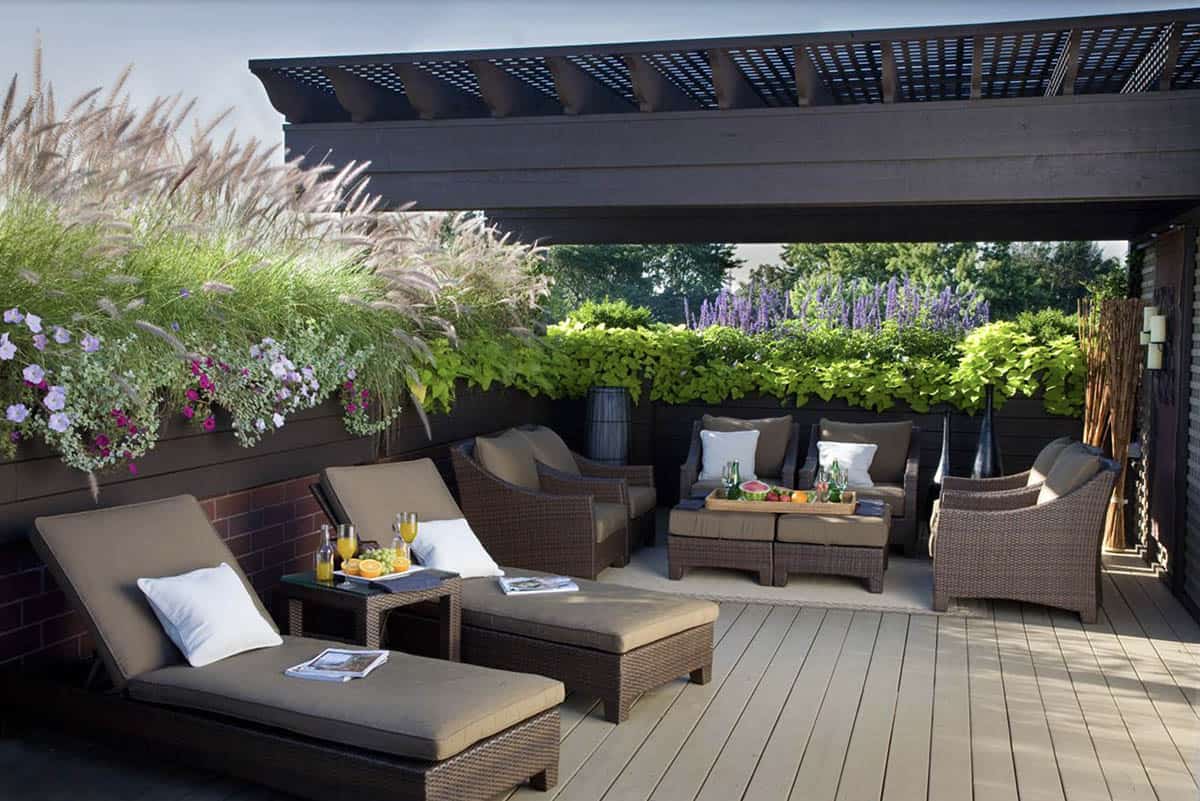
This rooftop deck in Chicago, Illinois uses raised planter boxes for privacy. The ornamental grasses, petunias, purple salvia, and sweet potato vines are planted in treated wood boxes with a rubber liner inside and painted cedar on the outside, measuring approximately 15″ x 18″. Each box has a mini irrigation system installed and is designed to sit safely on the wall with minimal anchors.
The pergola overhead uses 4×8 sheets of cedar square lattice for shading, with painted cedar panels on top. The flooring is stained cedar decking on a floating frame set on rubber pads. The full deck measures approximately 15×30 feet. (via MB Design & Build)
14. Transform a Tired Fence into a Boho Garden Nook
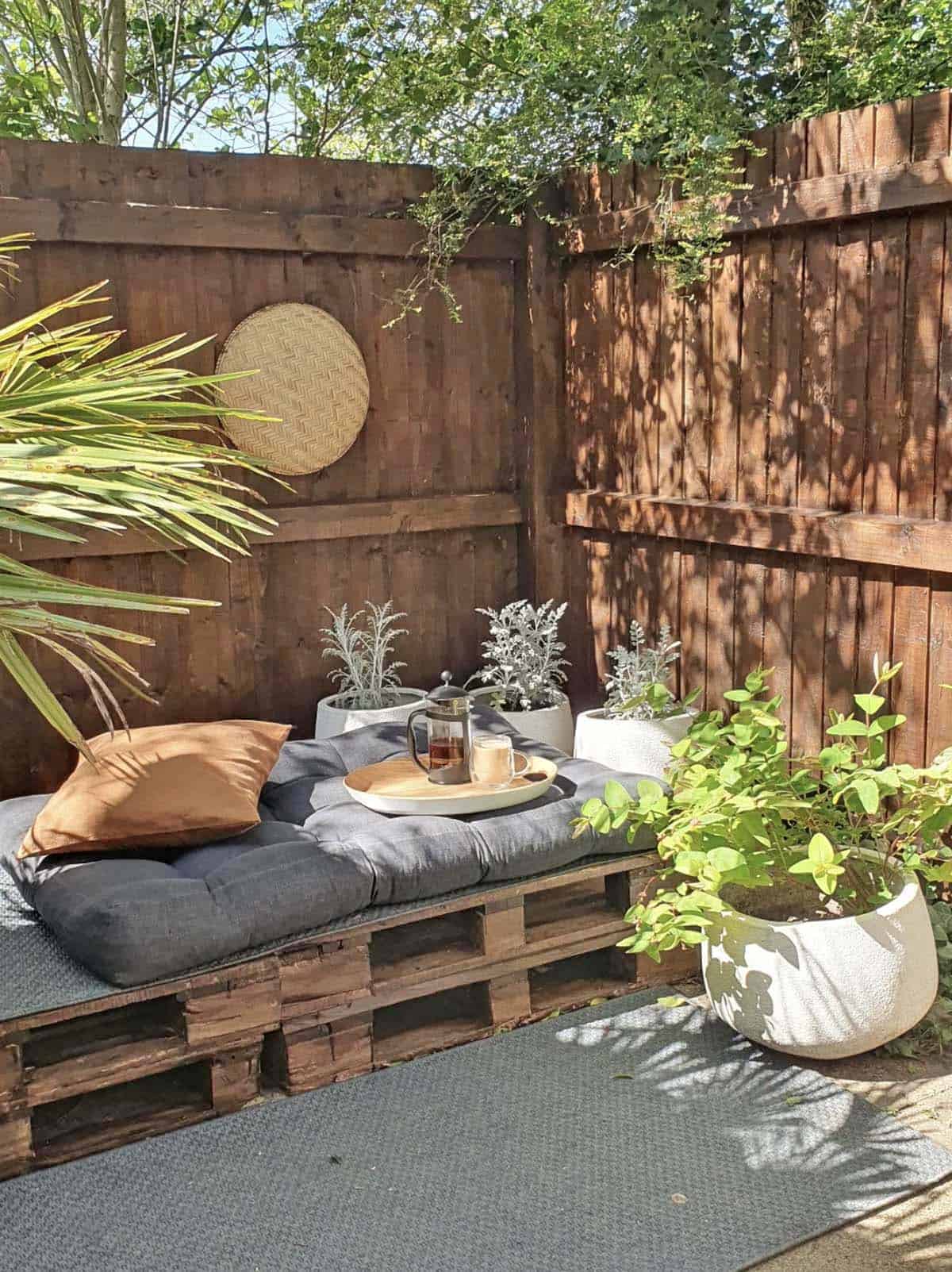
A weathered fence can become the backdrop for an intimate garden nook. Here, stacked wood pallets stained to match the fence create a low daybed that feels purposeful. Its topped with charcoal cushions, a copper throw pillow, and a woven basket hung on the fence as wall art. If you can’t find pallets that match your fence tone, pick up what you can and use wood stain to tie the two together. Add a few potted herbs and a palm for greenery and the corner comes together as a Boho chic outdoor retreat. (via @s.u.s.a.p / Instagram)
15. Enclose an Outdoor Shower with Climbing Vine Screen Panels
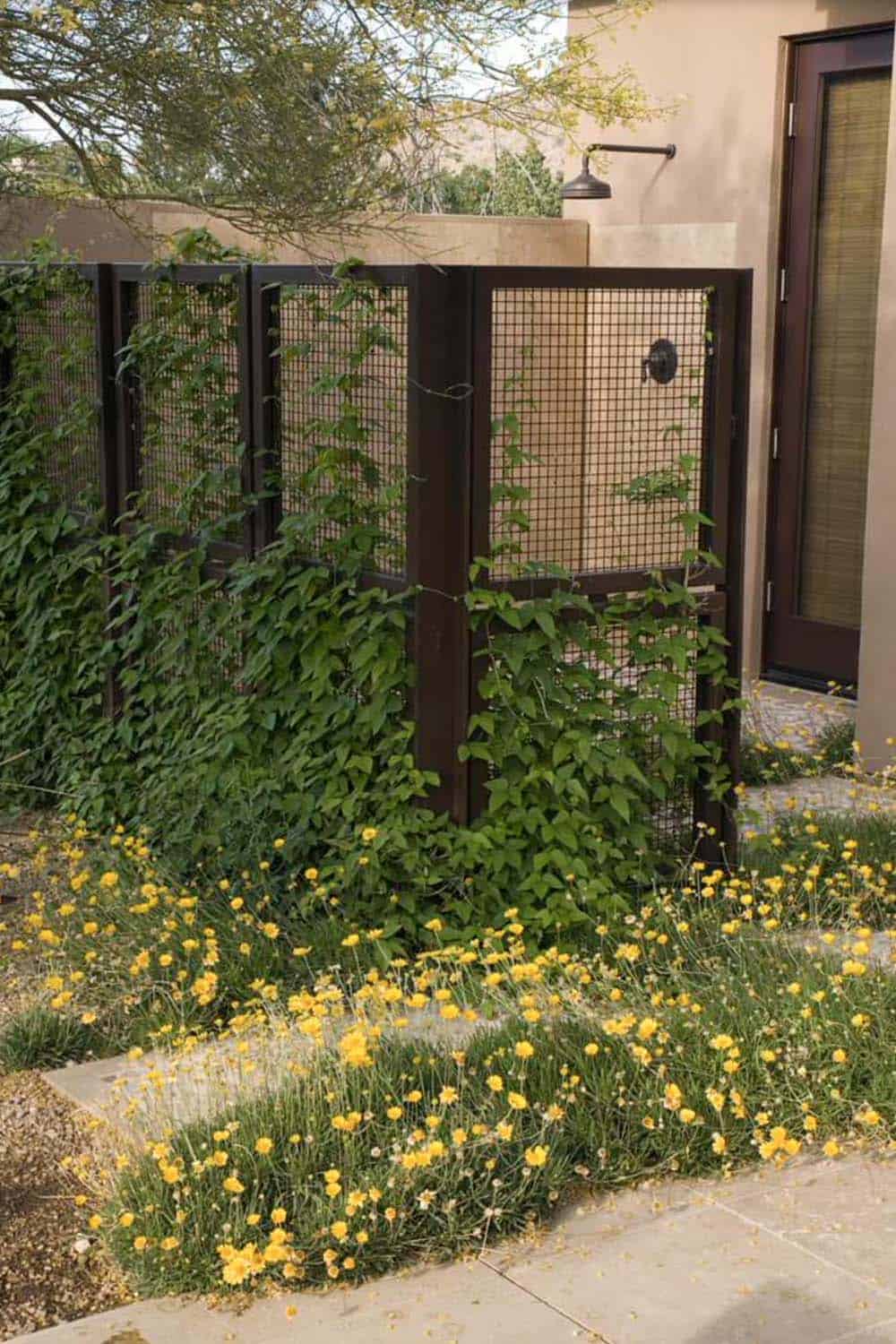
Adding privacy to this garden of a home in Paradise Valley, Arizona, the trellis system is comprised of prefabricated pieces welded together. Parts from the “King’s Architectural Metals” catalogue were used to create this. You can also add a Greenscreen fencing trellis or try Home Depot or Lowe’s with a search for “Garden Trellis”. There are stone pavers inside the enclosure with a landscape border for planting.
Given the climate (zones 9b-10a), the Ipomoea family is a great choice for covering a metal grid trellis fast — Moonflower Vine (Ipomoea alba), Sweet Potato Vine (Ipomoea batatas), or Cypress Vine (Ipomoea quamoclit) all thrive in desert heat and fill in quickly. Queen’s Wreath (Antigonon leptopus, zones 8-11) is another solid option that handles summer heat and adds a pop of pink. The yellow flowers are Desert Marigolds. (via Carson Poetzl, Inc.)
16. Use Reed Screening for Instant Garden Privacy
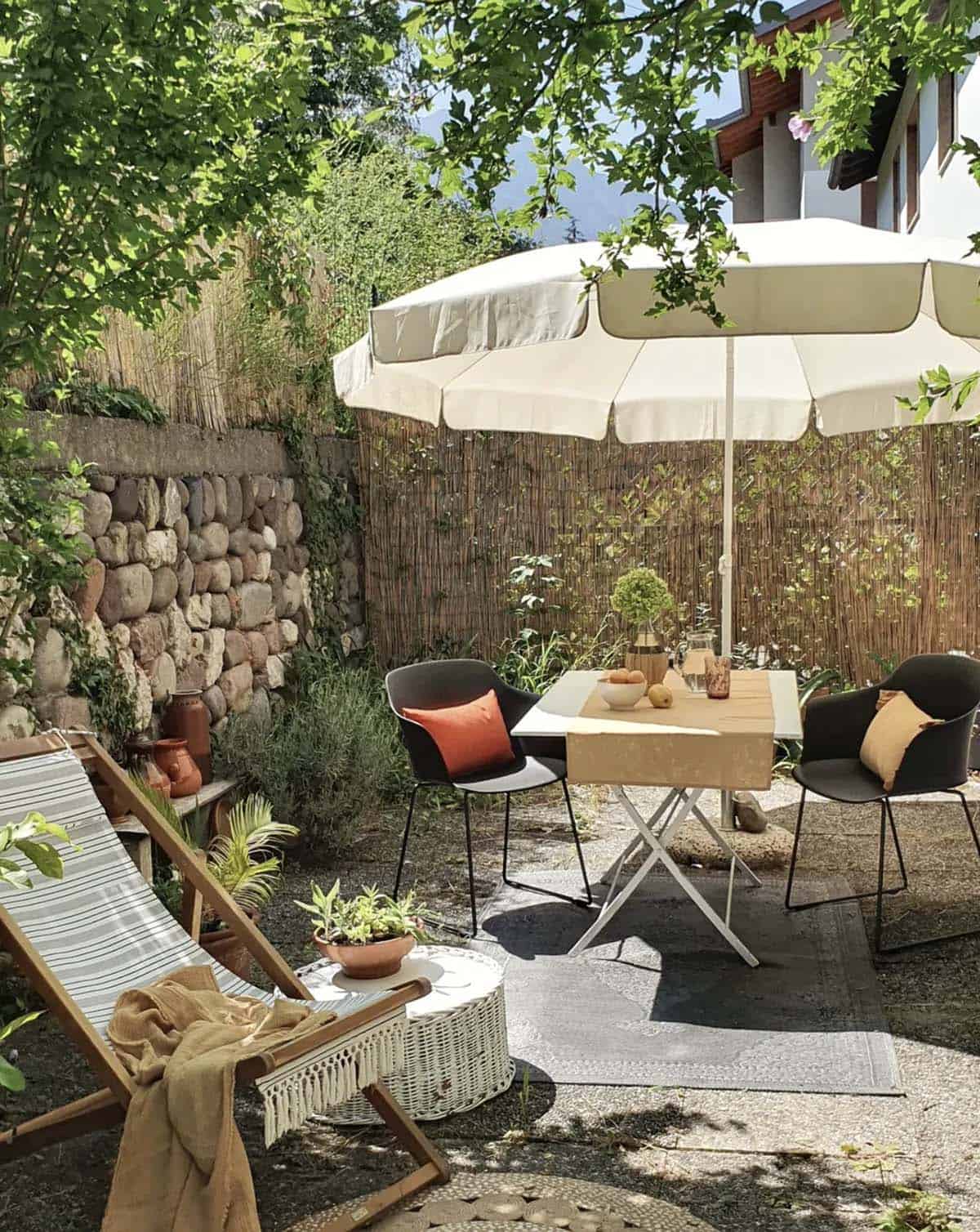
One of the most budget-friendly privacy solutions around, rolled reed screening is sold by the roll at most garden centers and home improvement stores and can be attached to an existing fence or wall in an afternoon. Here it backs a stone-walled patio layered with a folding dining table, black modern chairs, a wood deck chair, and warm terracotta and mustard accents. The reed adds natural texture that softens the space while blocking views from neighbors and unlike a solid fence, it lets natural light and fresh breezes filter through. (via @s.u.s.a.p / Instagram)
17. Elevate Your Deck Railing with White Lattice Panels
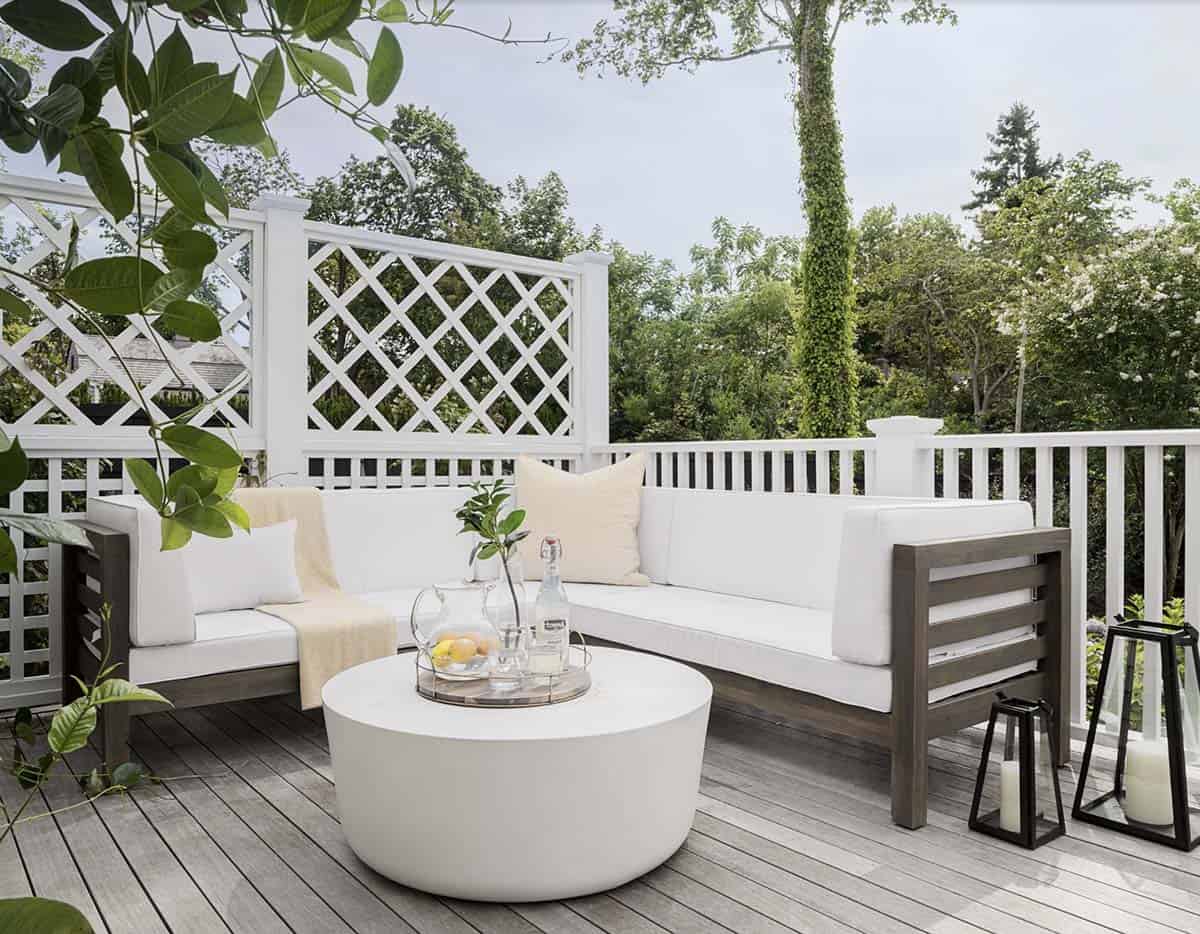
White vinyl lattice panels mounted above an existing deck railing add height and privacy without blocking the garden view entirely. The diamond pattern lets light and air through while softening sightlines from neighbors or the street. Here the crisp white lattice ties in with the painted railing for a cohesive look. Lattice panels are widely available at home improvement stores, cut to size easily, and can be framed out with simple trim for a more finished look. An easy weekend warrior project for a deck upgrade! (via Interior Marketing Group)
18. Paint Your Fence for an Enclosed Garden Feel
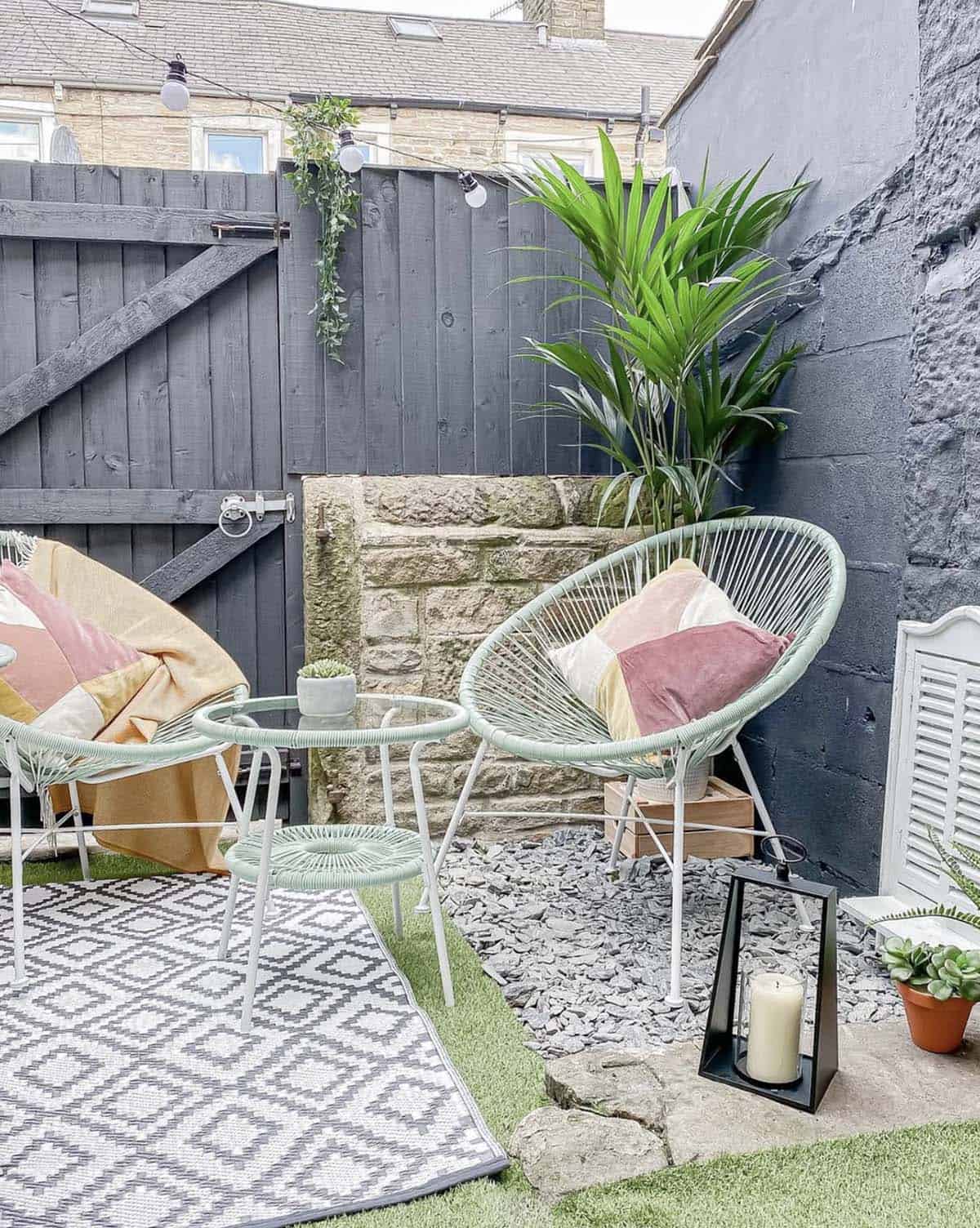
This compact “yarden” in Lancashire uses charcoal paint to unify the boundaries, then pops mint green Acapulco chairs and blush pink cushions against it for contrast. To get this weathered finish, paint the fence white first, then black, then sand down the black to get the right hue. Chalk paint will give a more subtle weathered result than a satin finish. String lights, a tall palm in the corner, and a monochrome outdoor rug pull the space together. The outdoor furniture was sourced from @georgeatasda, while the pillows and throw are from @tkmaxxuk. (via @homebypolly / Instagram)
19. DIY Timber Pergola with Hammock Chairs
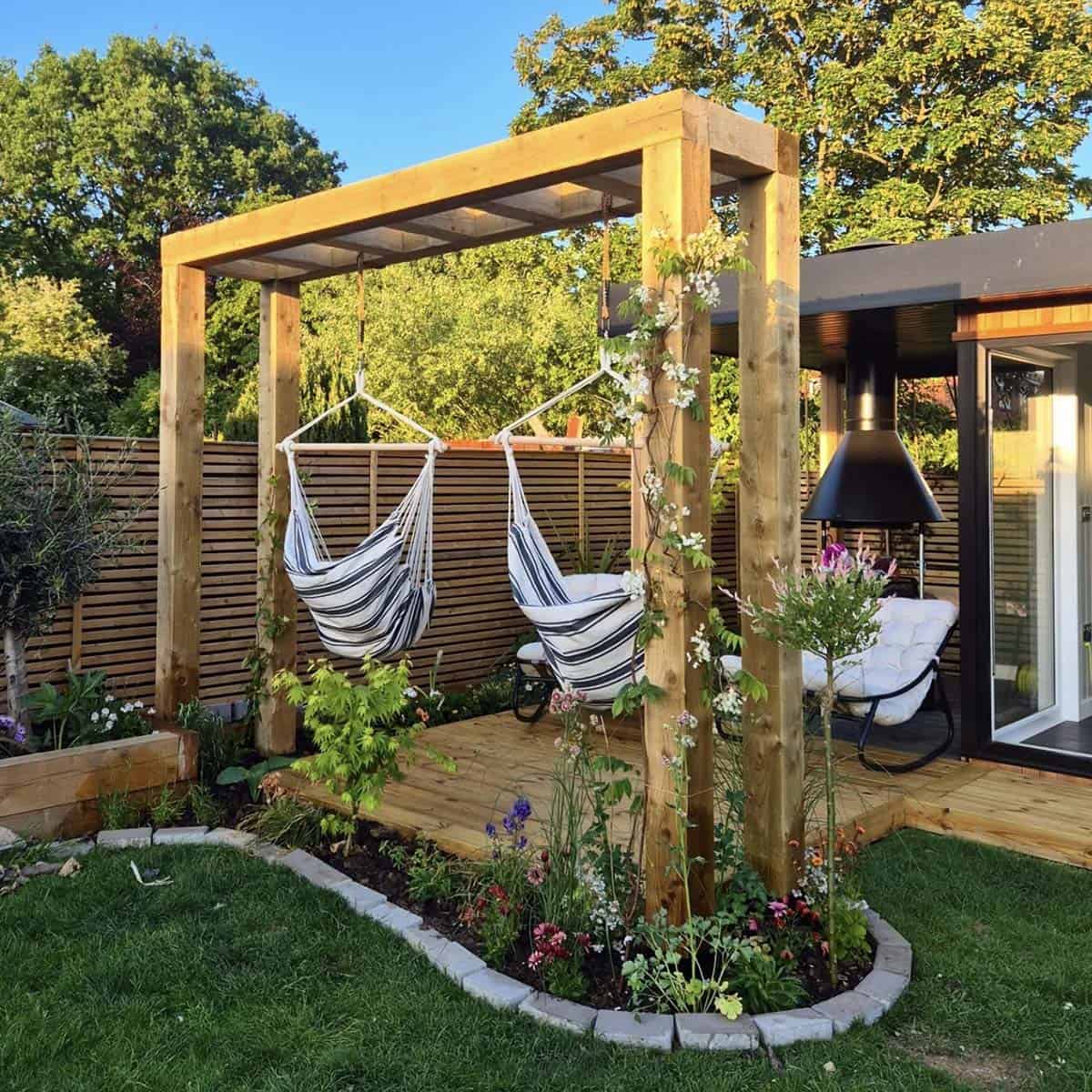
This DIY timber pergola does double duty, the horizontal slatted fence behind it blocks the view from neighbors while the structure itself creates a defined, secluded spot in the garden. A pair of striped hammock chairs hang from the crossbeam, making it a cozy hangout spot. Climbing plants wind up the posts, softening the raw timber and tying the structure into the surrounding planting bed with stone edging. TIP: For extra privacy, train a fast-growing climber like clematis or jasmine up the posts, within a season or two it will fill in the gaps and add another layer of screening. (via @littlehalfhouse_renov)
20. Build a Freestanding Horizontal Slat Screen
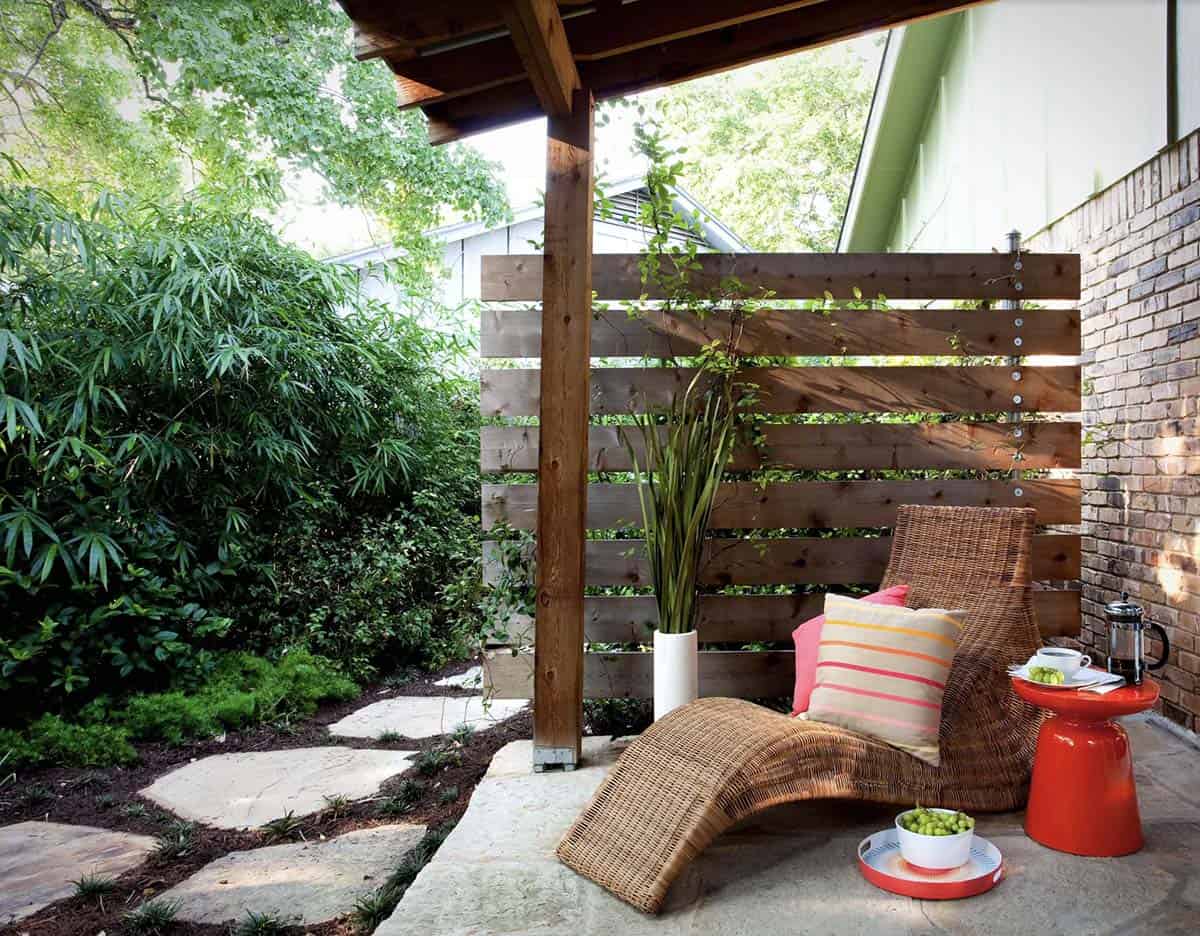
A single freestanding horizontal slat screen creates privacy for this backyard patio. Here, a cedar panel bolted between two posts blocks the sightline from the neighbor’s yard while still allowing dappled light through the gaps. A wicker chaise lounge and a red ceramic side table invites lounging in the garden. Bamboo adds additional privacy, while a flagstone path winds through the garden beyond. For a DIY version, use 2×4 cedar boards spaced evenly between two 4×4 posts set in concrete. (via B. Jane Gardens)
21. Boho Backdrop for Garden Seating
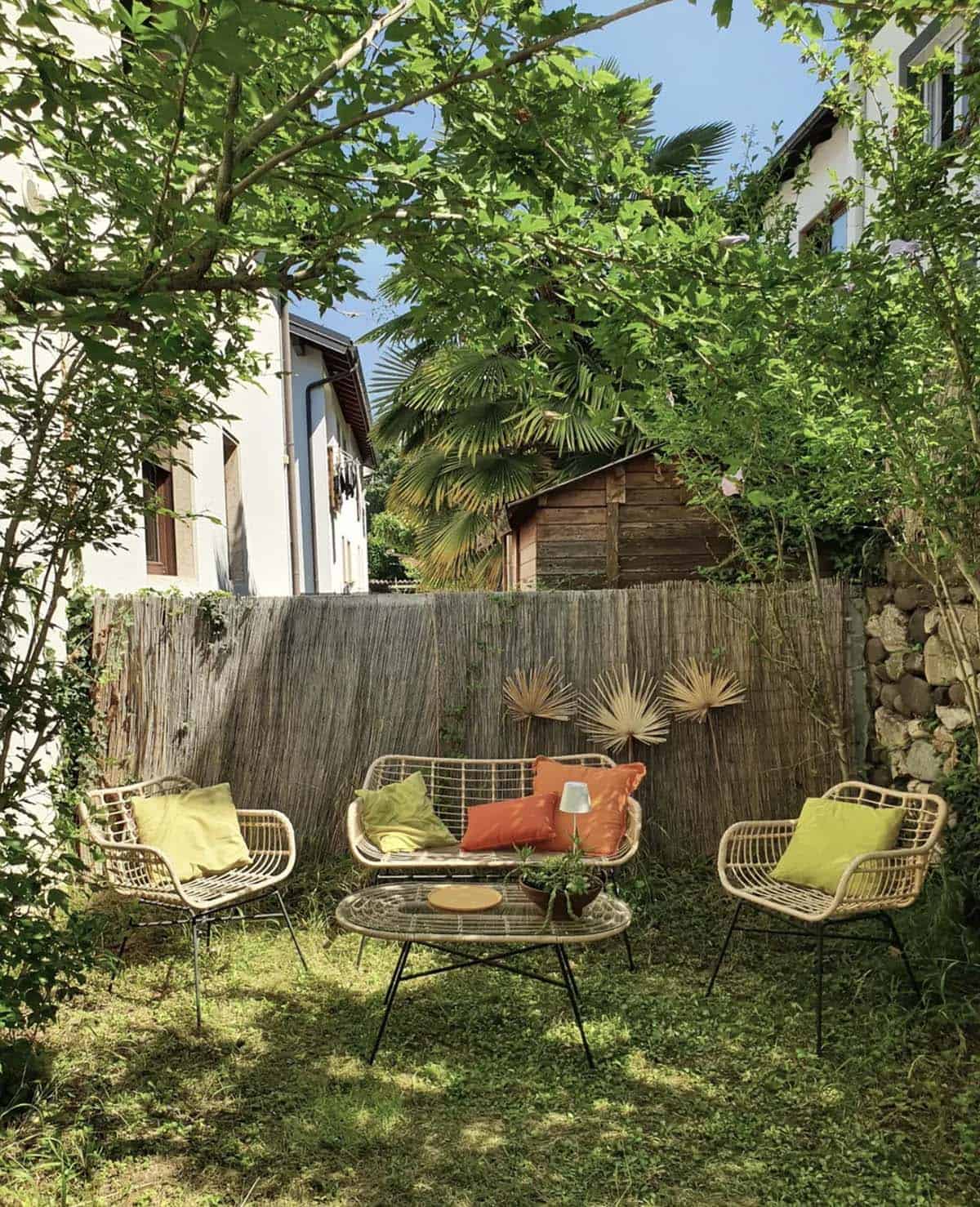
A weathered reed fence serves as a natural boho backdrop for a rattan sofa and chair set, with dried palm fans hung directly on the fence as wall art. The lime green and terracotta cushions pop against the neutral tones of the reed and rattan, while mature trees overhead create a canopy that makes the space feel tucked away despite being surrounded by neighboring houses. You can find this from home improvement stores such as Home Depot or Lowe’s, and Amazon. (via @s.u.s.a.p / Instagram)
Tell Us: Which one of these outdoor privacy screen ideas do you find most inspiring? Let us know in the Comments below!




0 comments