


❤️ Would you like to save this?
By saving, we'll email this post to you for later. Unsubscribe anytime.
There is something satisfying about creating a beautiful garden on your property using stone edging. Developing clean lines between the lawn and flower bed, a boundary between the gravel path and the planting zone, and a defined shape that makes even the smallest patch of earth feel intentional and cared for. Stone edging can be an effective way to achieve this, and it never goes out of style.
Whether you have a narrow garden bed next to a fence or a corner garden, stone edging can completely transform the look of your space. It adds texture, elevates the look of your garden beds, helps to suppress weeds, and gives the garden a sense of permanence. Many of these ideas you can DIY, and stone such as river rock can be locally sourced… for free!
Continue below to see our fabulous collection of stone edging design ideas to inspire your small garden transformation.
Tell Us: Which one of these stone edging ideas most inspires you and why in the Comments below!
1. Curved River Rock Entryway Bed
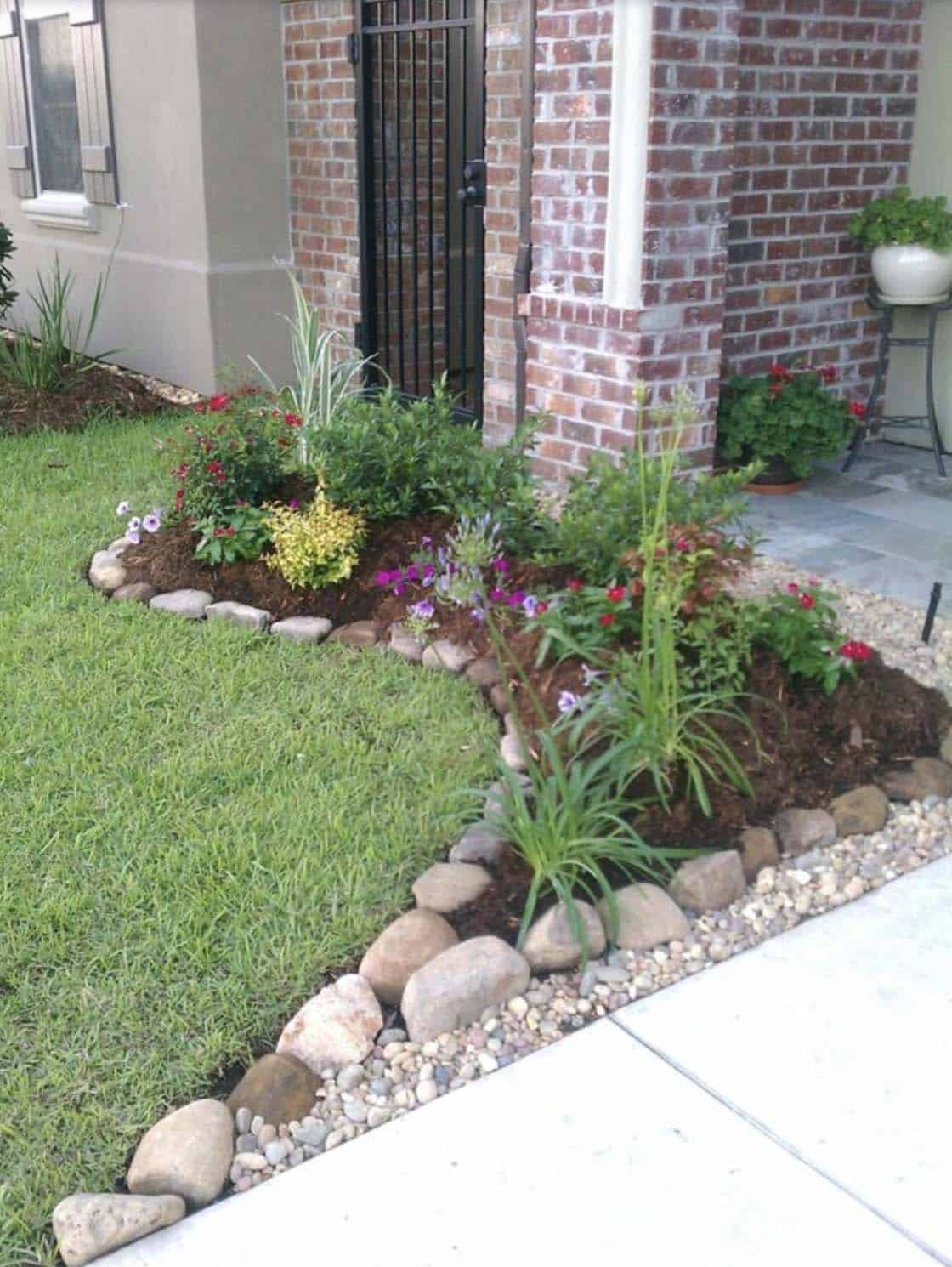
River rocks make an attractive edging choice for a front garden. Here, smooth, rounded stones in varying sizes follow the natural curve of a new entryway landscape bed, separating a lush lawn from a mulched planting zone filled with colorful annuals and shrubs. A mix of smaller and larger stones creates a sense of depth and visual layering. It’s a simple, budget-friendly idea that looks natural. (via Beau Monde Landscape)
2. Ledgerock Natural Stone Border
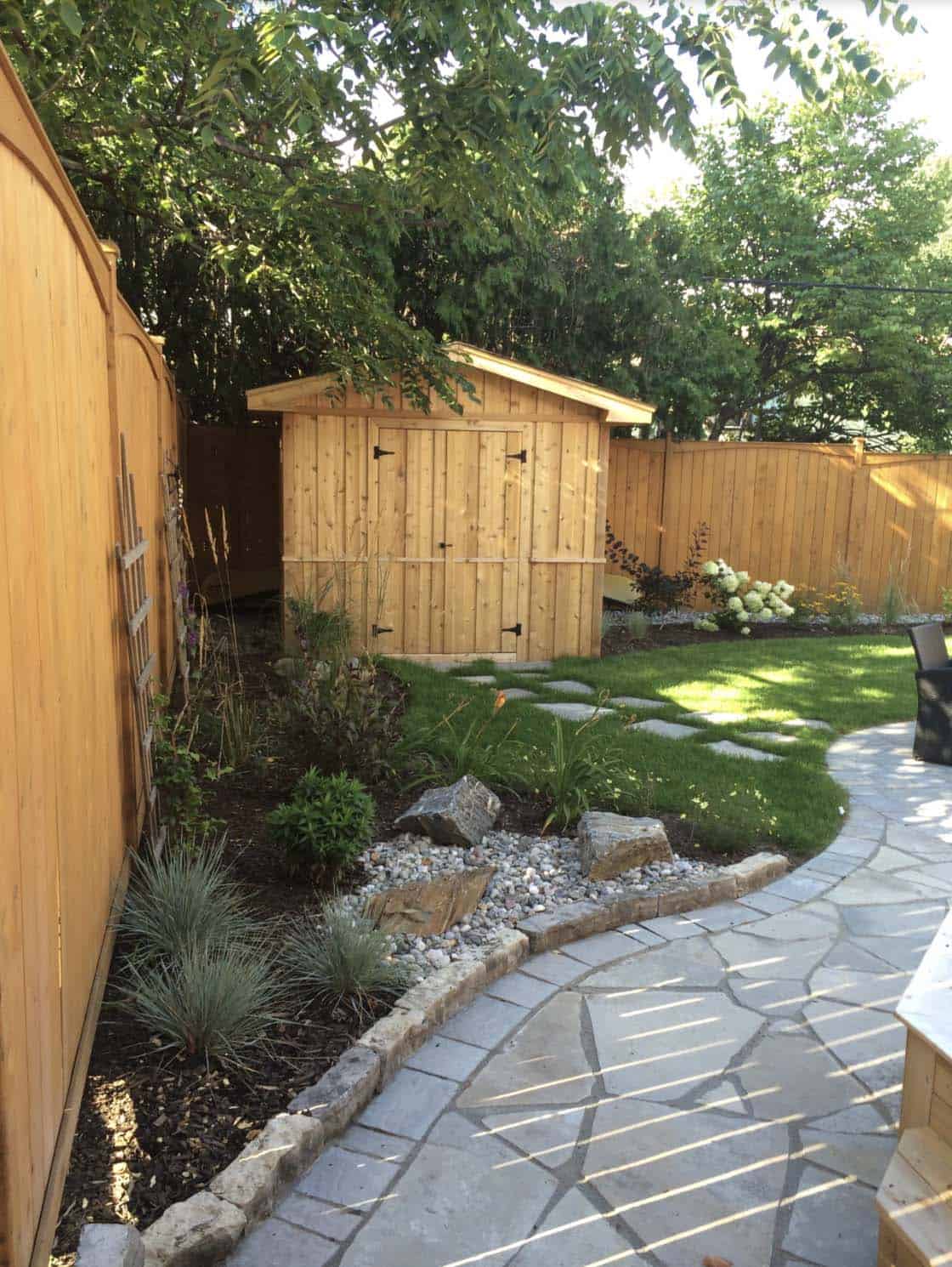
Smaller ledgerock with amazing texture and color variation lines this beautiful small backyard garden in Ottawa, Ontario, Canada. A flagstone pathway leads to a comfortable outdoor living area and a storage shed.
3. Cobblestone Edging for a Defined Garden
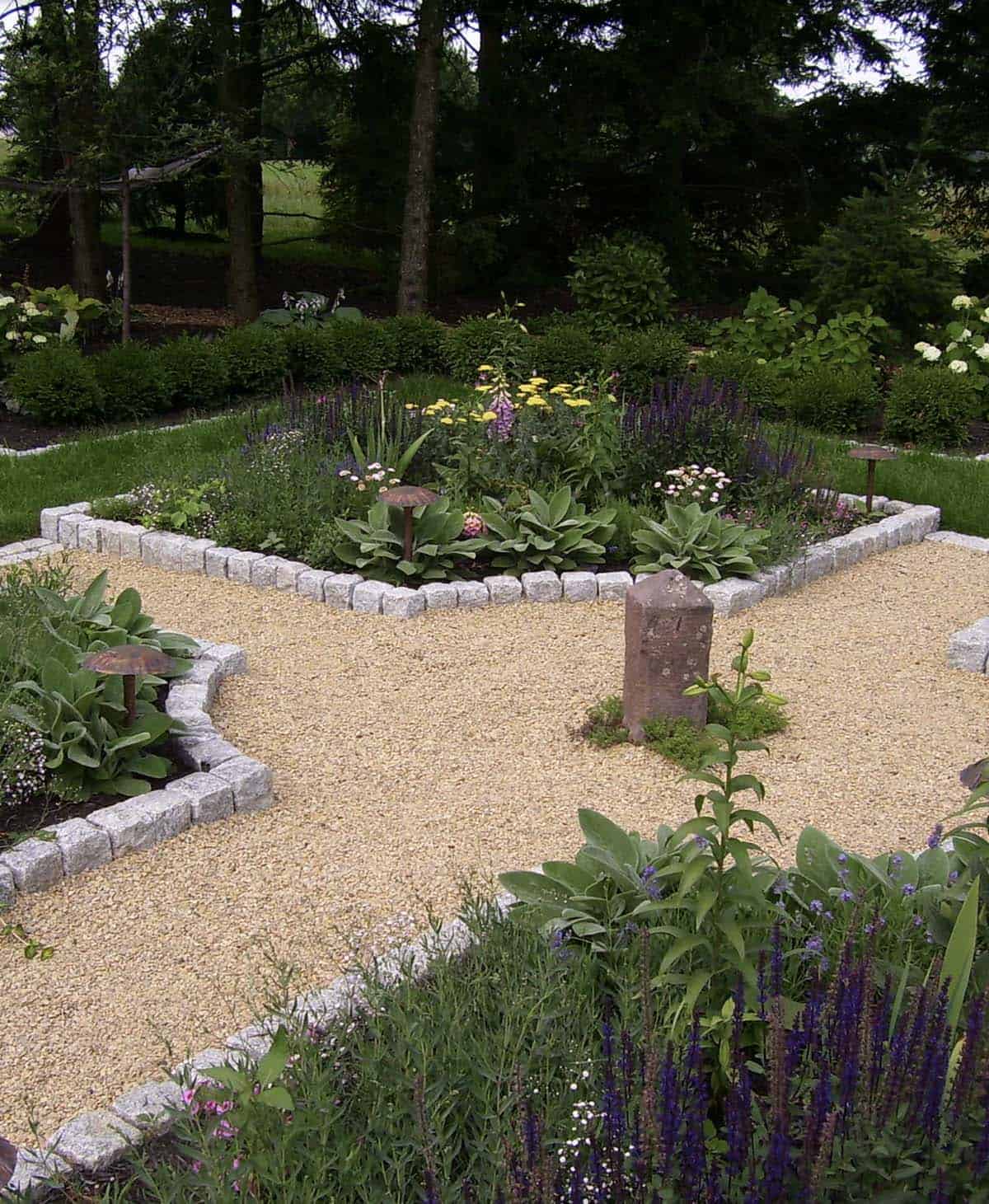
This four-corner garden is nestled into the existing woods edge of the backyard of a modern farmhouse in Pennsylvania. The Plymouth brown gravel was used for the center of the garden. This helps highlight the stone post that was found during construction. The gravel also brings the sense of sound into the garden space. Lamb’s ear was chosen as a fun way to get kids’ interest in horticulture. The edging is called cobblestone or Belgium block. You can get them at most hardscape supply yards. Most of the materials this landscape architect purchases are from Drohan Brick in Mt. Joy, PA. (via River Valley Landscapes)
4. Granite Edging for a Herb Garden
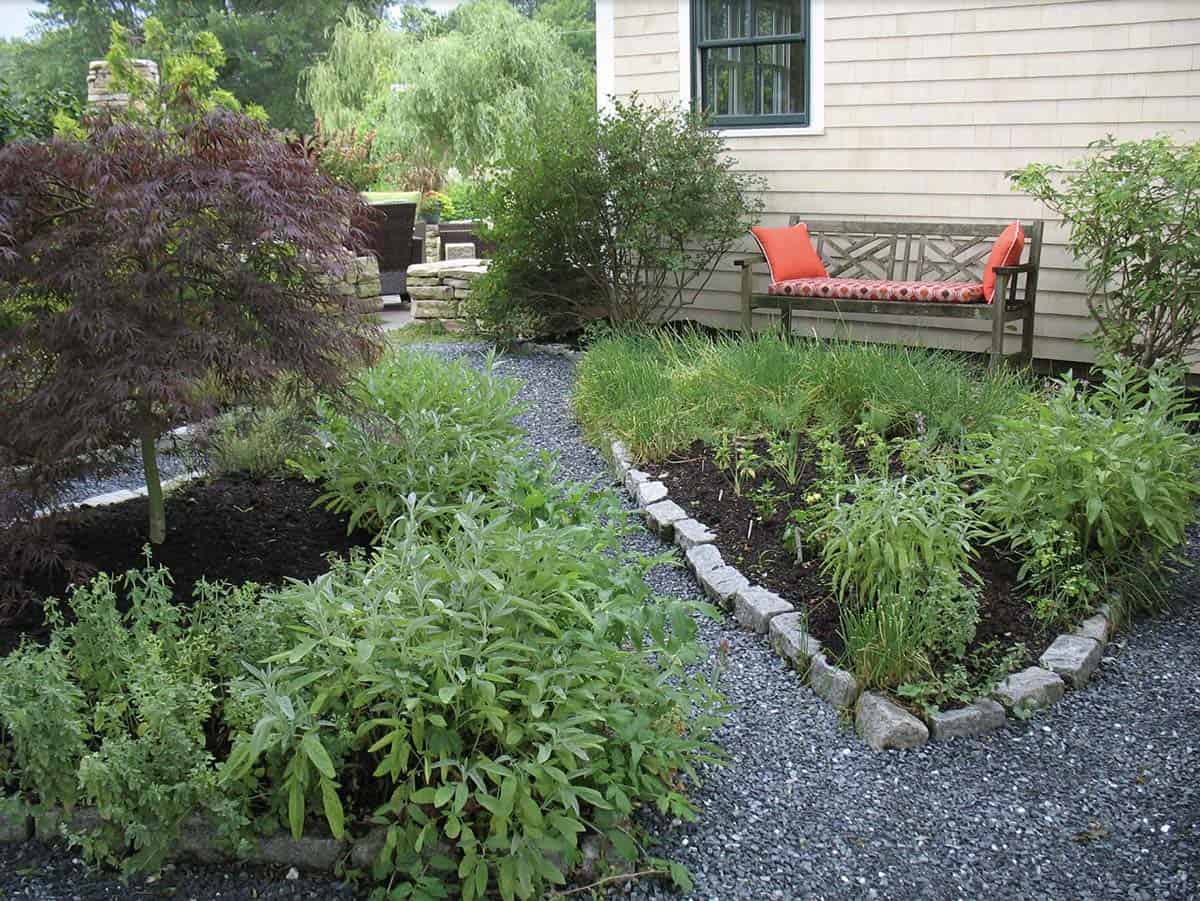
Granite stones border small herb gardens in this Burlington, Virginia, property, creating a clean separation between the pathway and lush planting beds without feeling overly formal. The rough-hewn texture of the stones complements sprawling herbs and perennials that spill naturally over the edge. This garden bed design is well-suited to narrow walkways where a low, durable border is needed but space is tight. (via Linden L.A.N.D. Group)
5. Stone Border Around A Tree
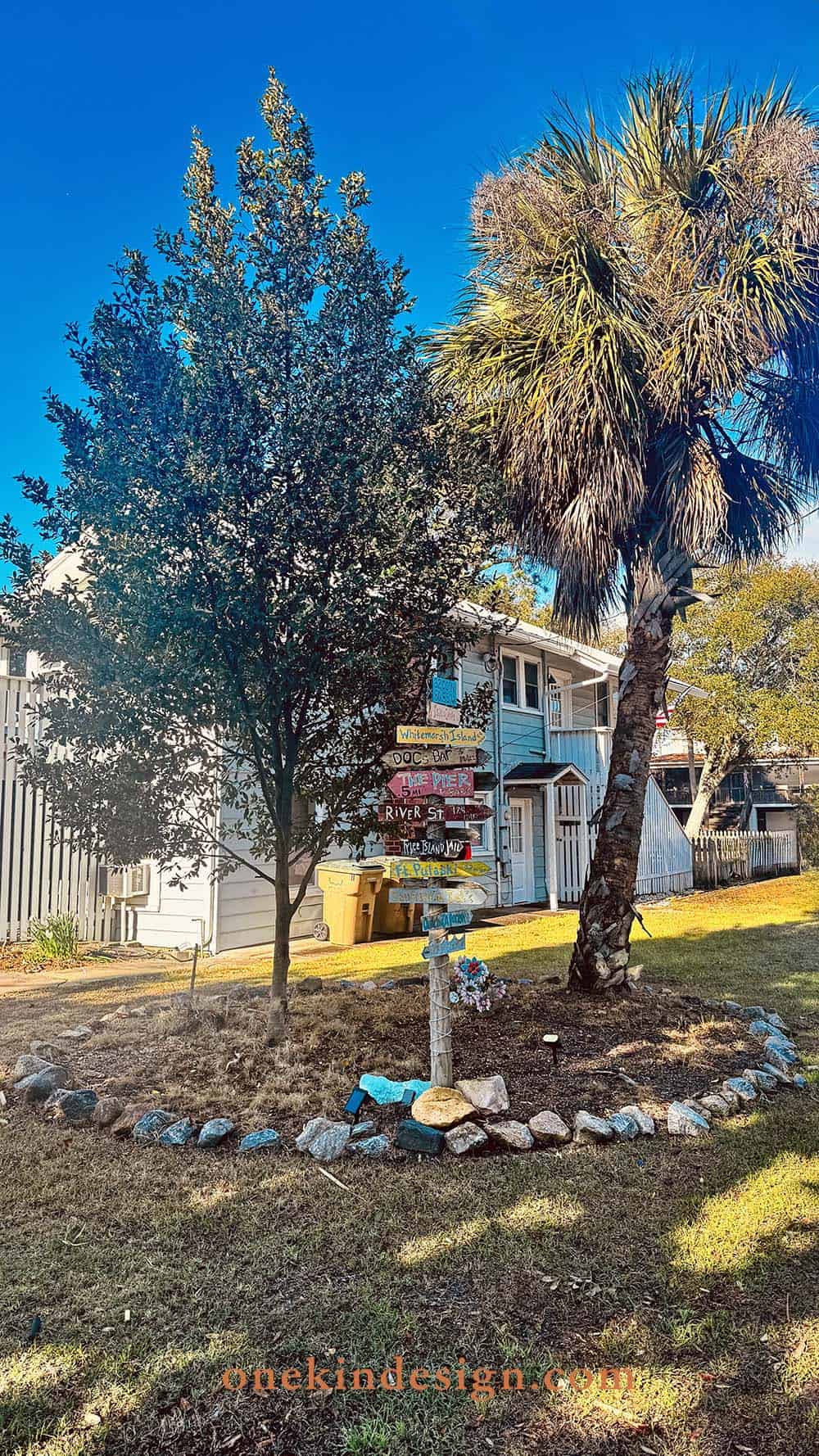
A stone border surrounds a tree in the front yard of a beach cottage on Tybee Island, Georgia. This is a really simple and effective way to elevate existing trees on your property. Just collect some large rocks, paint a few of them for color, and encircle them around your tree. You can also plant some shade plants (such as hostas, ferns, astilbe, hellebores, and coral bells) under the tree after you have a defined border. Add some outdoor solar lights to illuminate your trees at night. (via onekindesign.com)
6. Stone Curbing to Define a Planting Bed
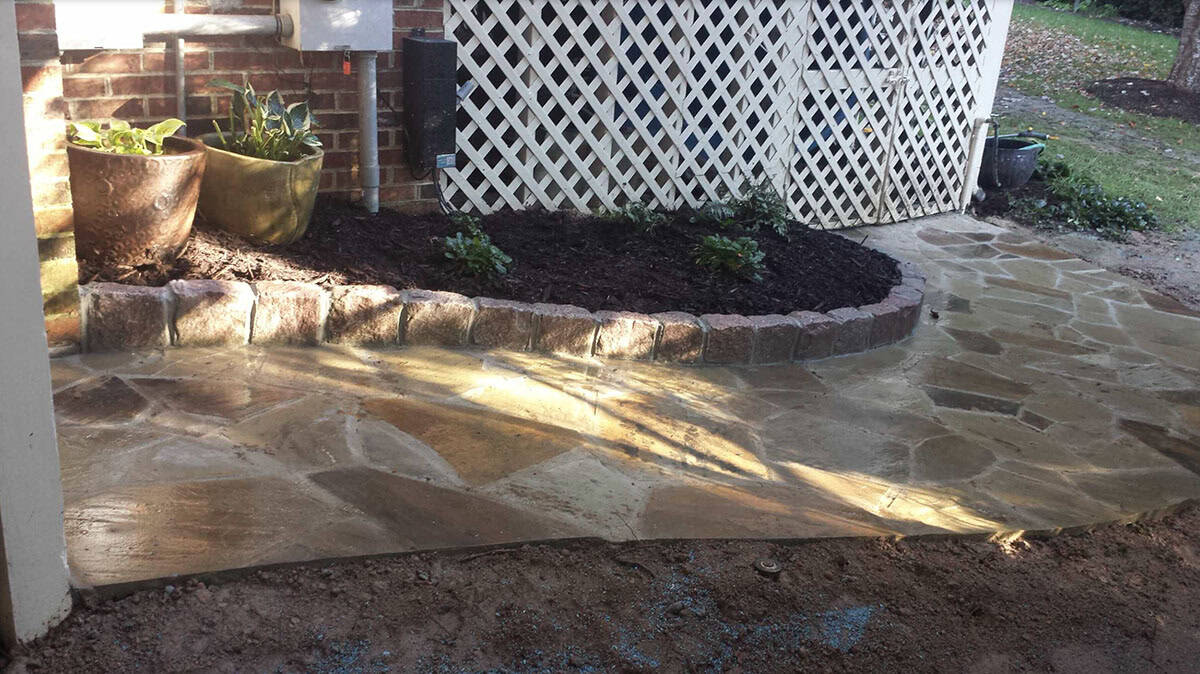
In this backyard in Holly Springs, North Carolina, a natural flagstone path leads from the porch steps into the storage area beneath the deck, with a curved stone curb separating the walkway from a mulched planting bed. The curbing not only helps keep the mulch in place but also gives the bed a defined shape that complements the irregular flagstone pattern. This is a practical approach for any patio or walkway edge where soil and mulch tend to spill onto hardscaping. (via J&A Stone Work)
7. Flat Slate Stone Edging
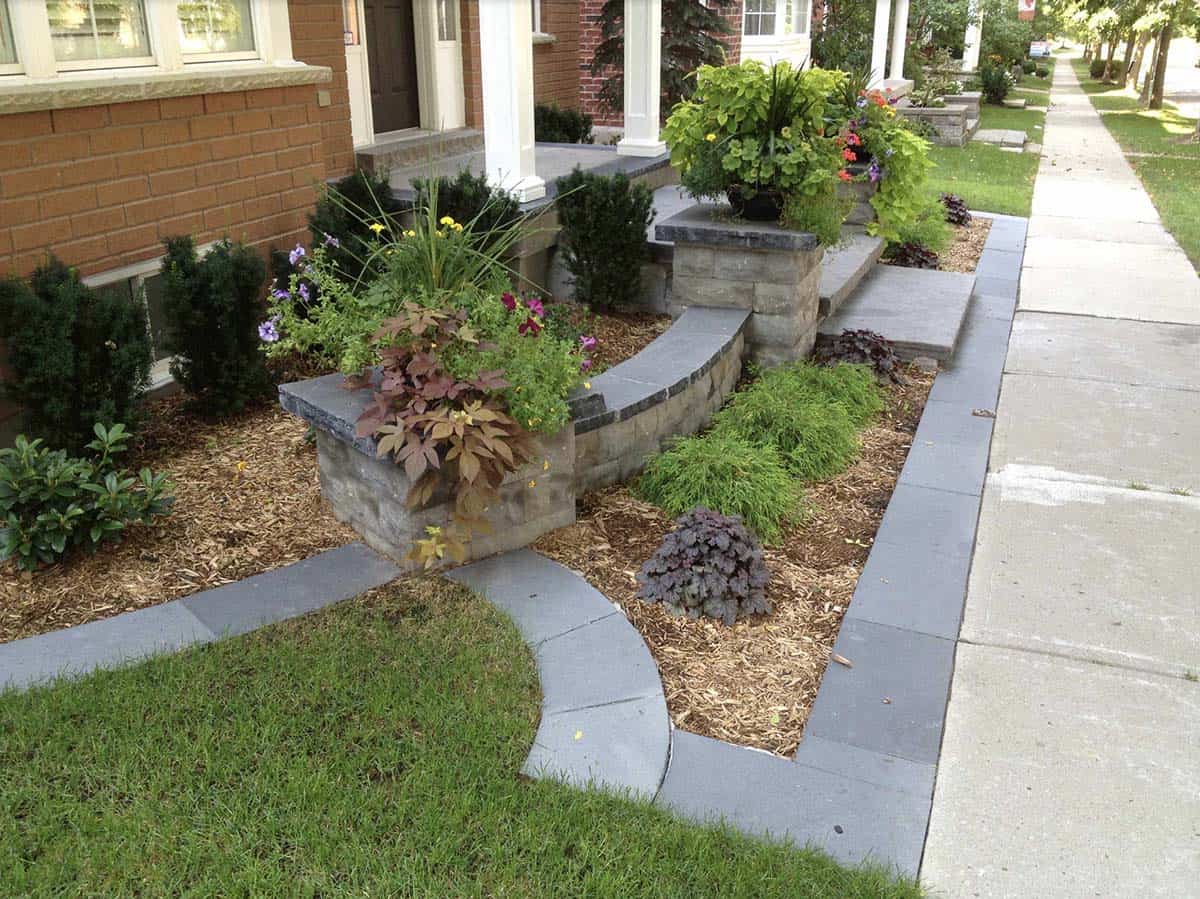
This front garden bed of an urban home in Toronto, Canada, features raised stone planter walls filled with colorful annuals and perennials. The steps are made from custom-cut natural stone. The walkway and borders were installed using India stone slate grey and black. This layered approach, combining steps, walls, and flat edging within the same stone palette, is especially effective on narrow urban lots, where several elements combined create a cohesive look. (via Horvath Landscapes)
8. Natural Stone Garden Edging
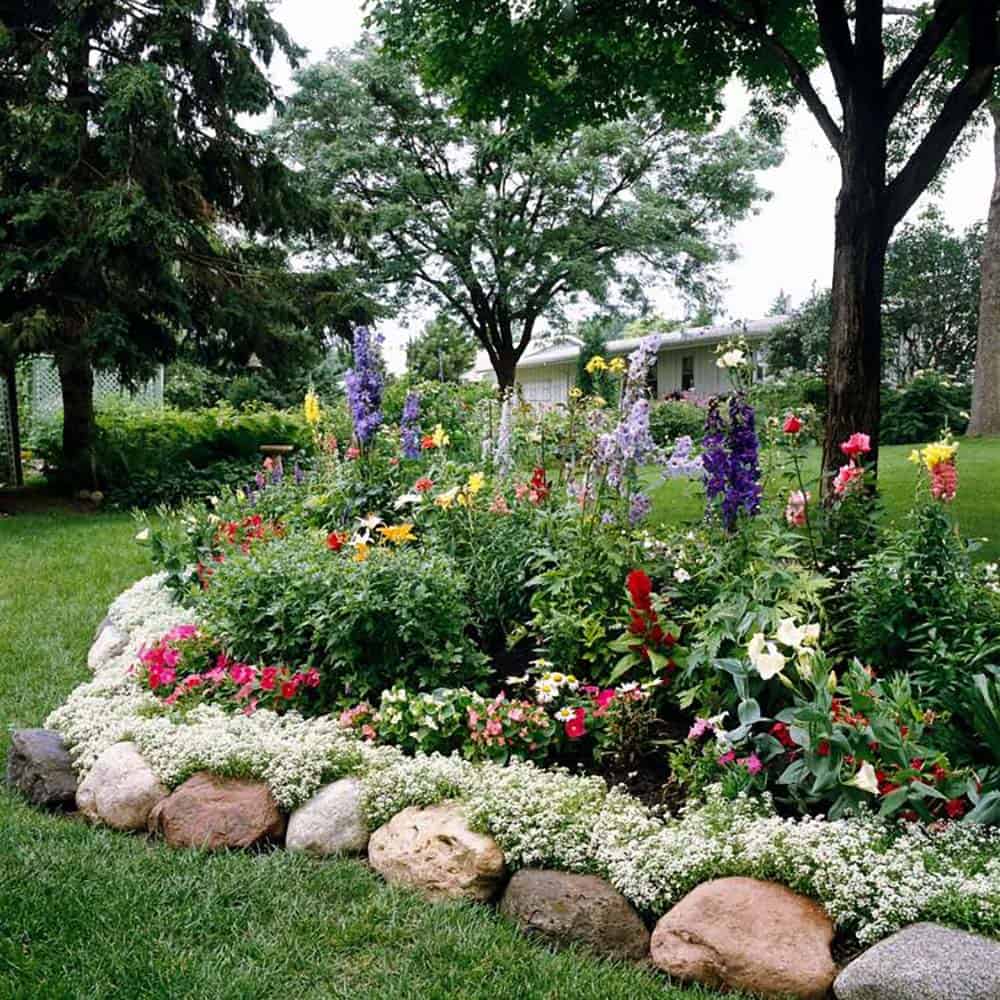
Large, multicolored rocks in varying shapes and sizes follow the natural curve of this lush cottage-style flower bed, complementing the landscape’s informal style. Sweet alyssum planted along the edge spills over and between the stones, softening the border with a delicate, lacy fringe. Additional plants in the flower bed include delphiniums, lilies, and annuals. Mixing variations of rocks is the key to creating this natural edging look. For best results, bury the bottom third of each rock so they appear settled into the ground rather than simply placed on top of it. (via Susan Gilmore for Better Homes & Gardens)
RELATED: 25 Most Creative And Inspiring Rock Garden Landscaping Ideas
9. Flower Bed Stone Border.
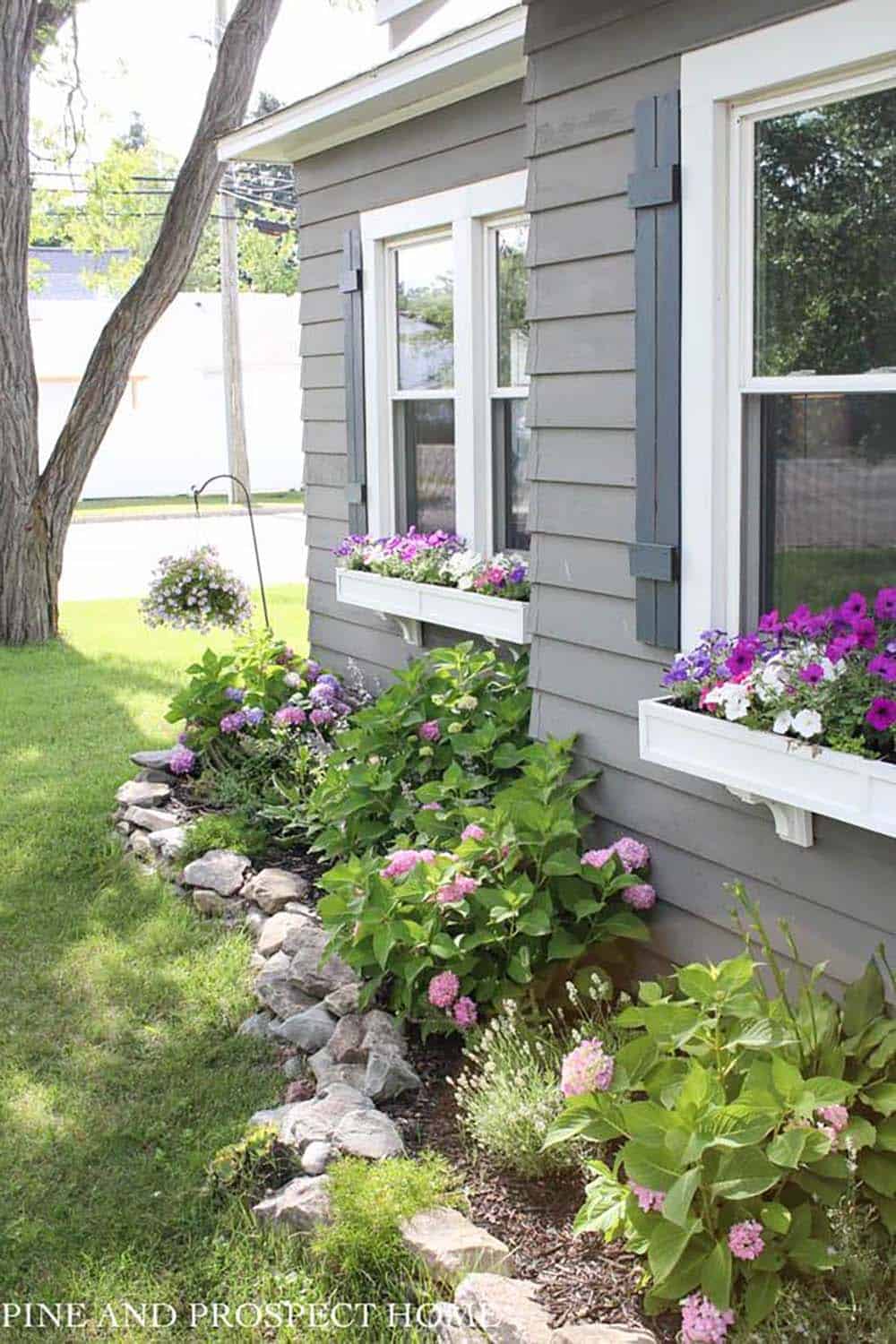
This charming home in Michigan features a stone border around a flower bed of hydrangeas (the large pink and purple blooms), and what appears to be lavender toward the front, along with hostas on the right. In the window boxes: Petunias in purple, white, and pink. The stones were sourced for free from a family friend, and most of the flowers were sourced from the homeowner’s mother-in-law’s garden. Budget-friendly and beautiful! FYI: The exterior is Revere Pewter for the siding and Rockport Gray darkened by 25% for the shutters and cedar shake. (via Pine & Prospect Home)
10. Mortared Stone Tree Ring Edging
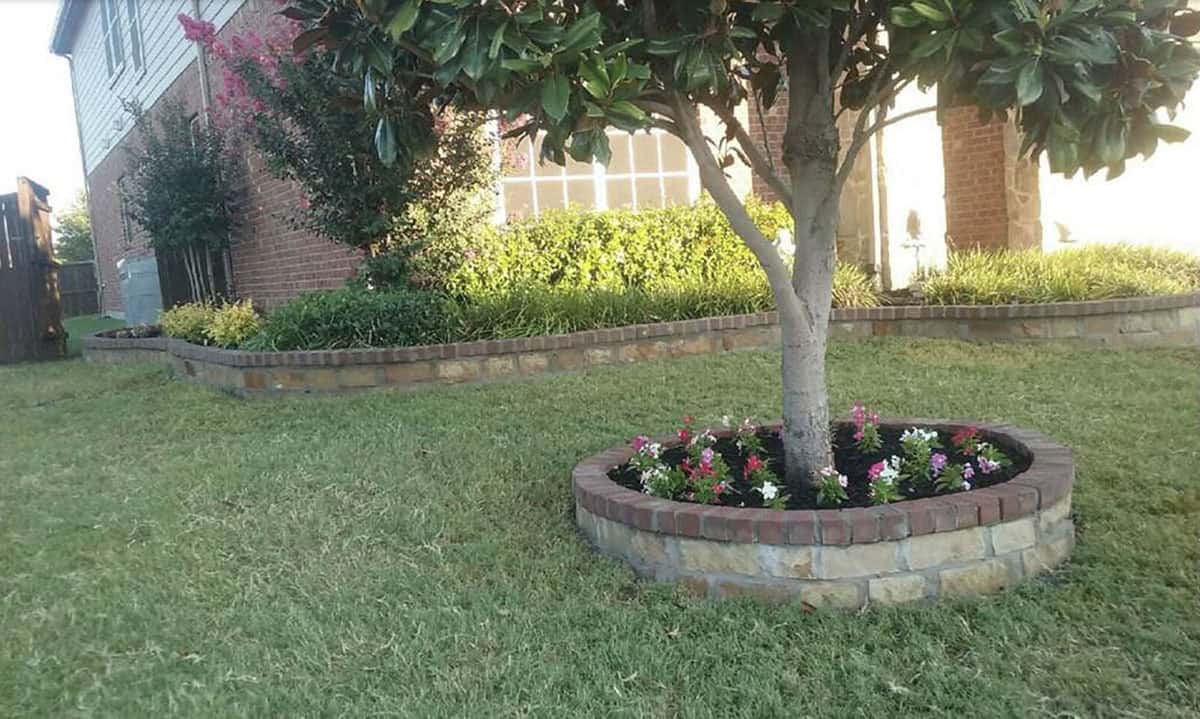
In the front yard of a home in Dallas, Texas, a tree stands out with a mortared stone edging surrounding it. Pink and white impatiens planted inside add seasonal color, while the raised wall keeps mulch and soil neatly contained. The same mortared stone edging continues along the background bed, tying the whole front yard together into a cohesive landscape design. (via Three Kings Grounds Keeping)
11. Flagstone Garden Bed Edging
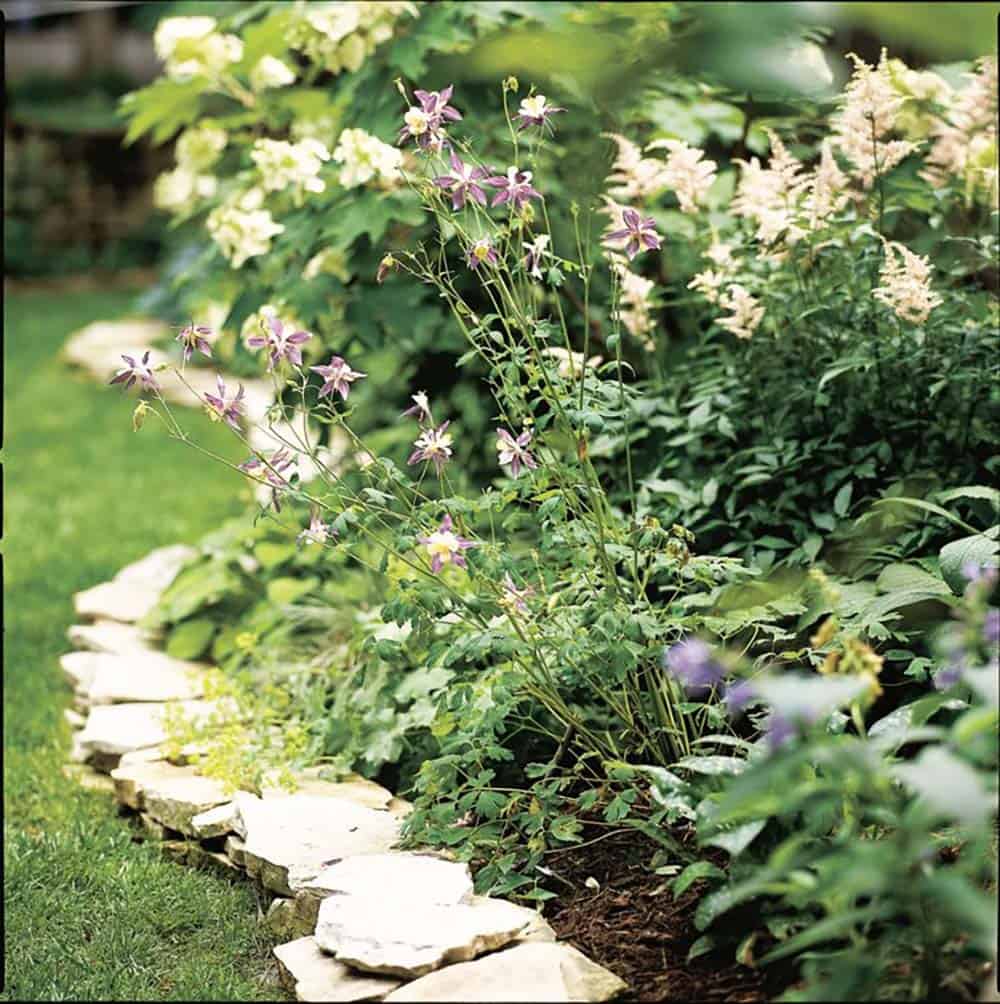
Flat flagstones make a classic, low-maintenance border that suits cottage and country garden beds beautifully. Their pale, creamy tones gently contrast with dark mulch and lush green foliage, letting the plants be the main focus. Because flagstone comes in varying thicknesses and irregular shapes, it’s easy to work with on curved bed edges. It’s also one of the more affordable natural stone options, particularly if you source locally quarried material. (via Peter Krumhardt for Better Homes & Gardens)
12. Granite Block Garden Edging
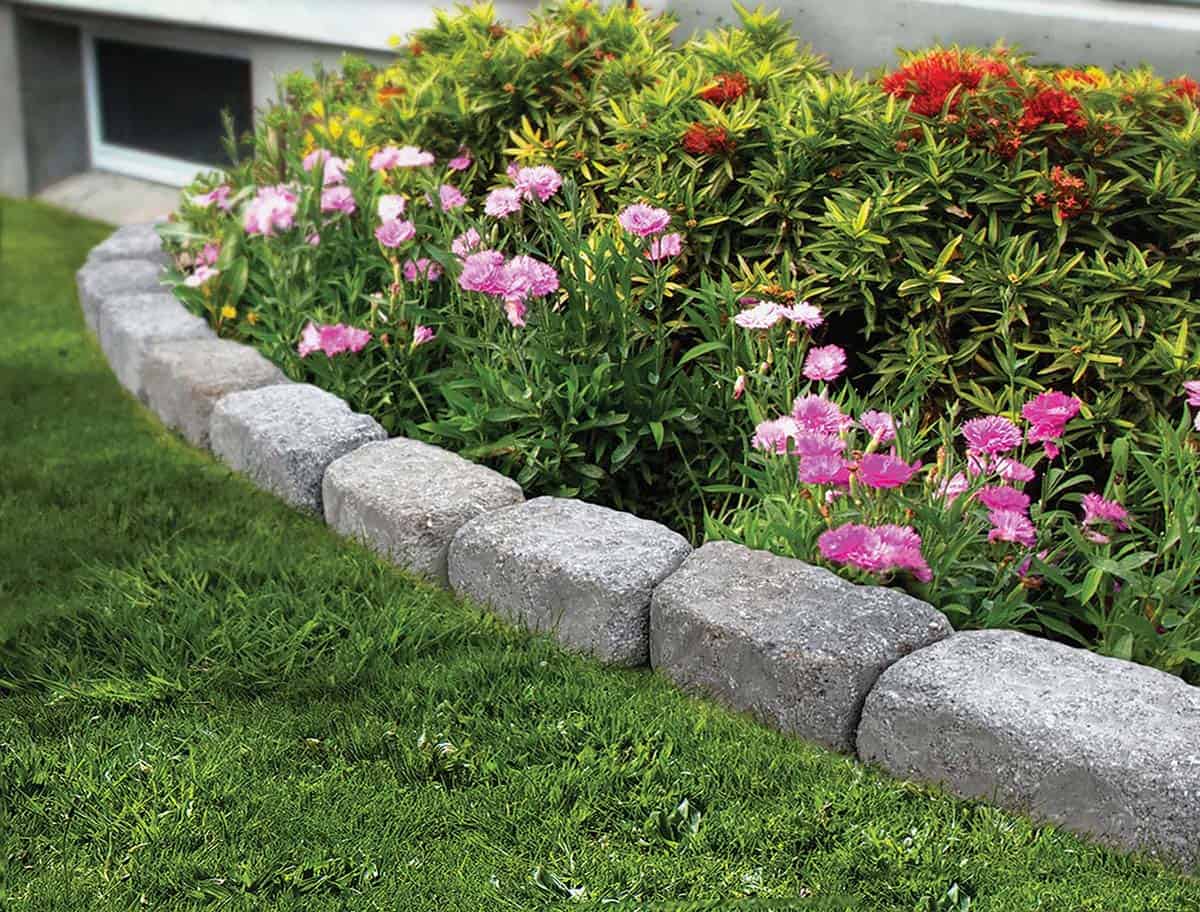
This beautiful garden edging has a distressed, natural-stone appearance and long-lasting durability. The “old world” look adds elegance and a textured appearance, accentuating the flower bed. The stone for this garden bed is the Natura Collection Heritage Gray (sourced from the provided link). The pink flowers in the foreground are Dianthus (also known as carnations or pinks), hardy in zones 3–9, and the red and yellow flowering shrub in the background appears to be Ixora (also called flame of the woods), a tropical shrub suited to zones 10–12 that is often grown as an annual in cooler climates. (via Lee Building Products)
13. Fieldstone Boulder Edging
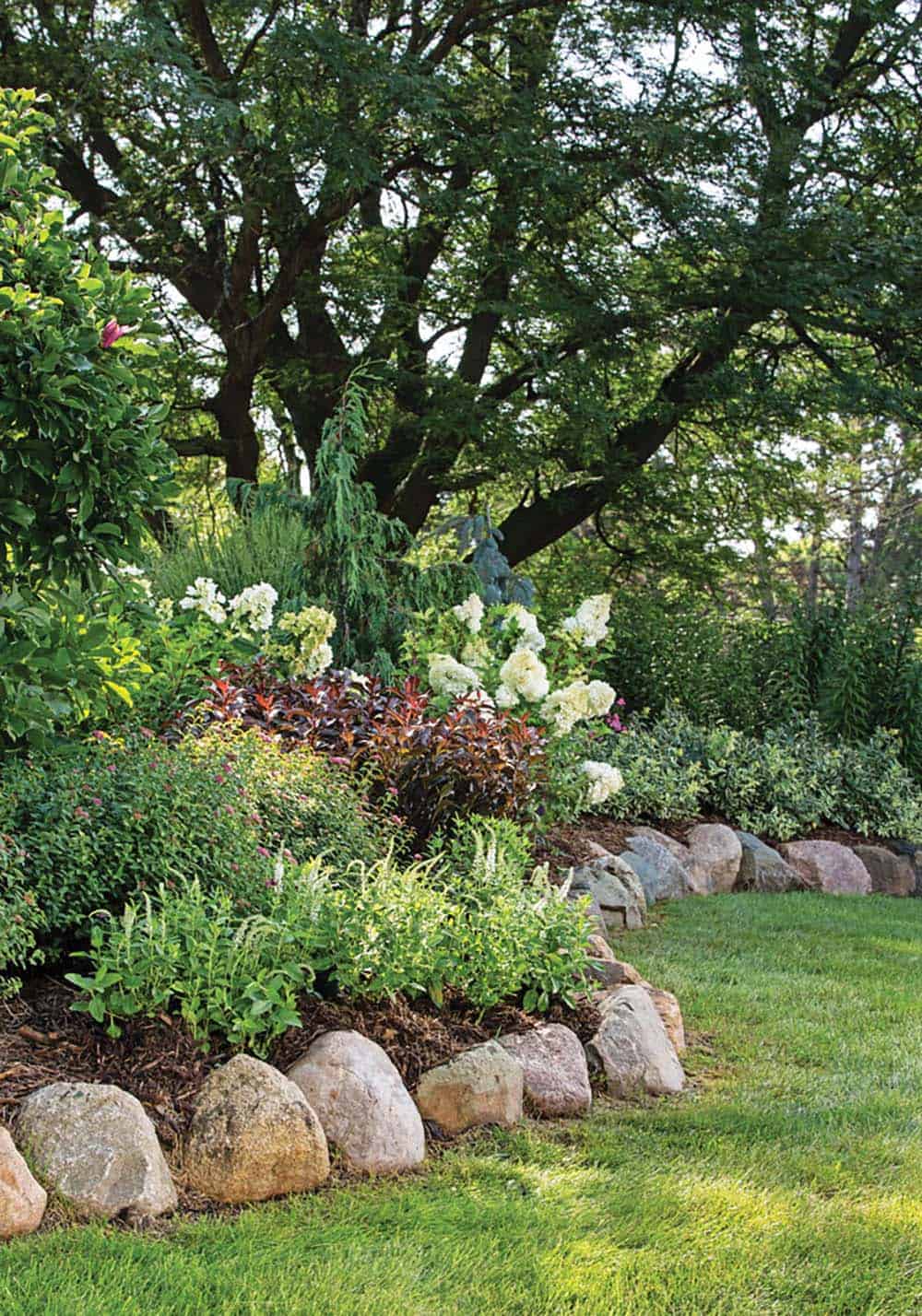
This beautiful garden bed features Panicle hydrangeas (Hydrangea paniculata), which thrive in zones 3–8, making them among the most cold-hardy hydrangea varieties. Magnolia varies by species, but most species grow in zones 5–9, though some varieties, like star magnolia (Magnolia stellata), are hardy to zone 4. Honey locust (Gleditsia triacanthos) is very cold-hardy and drought-tolerant once established, growing well in zones 3–9. Crimson Fire loropetalum, a deep burgundy-colored plant (typically rated for zones 7–10). The garden is edged with large rocks hauled in from a garden nursery’s fields to create a natural-looking retaining wall. (via Tracy Walsh for Midwest Design)
14. Low Stone Edging
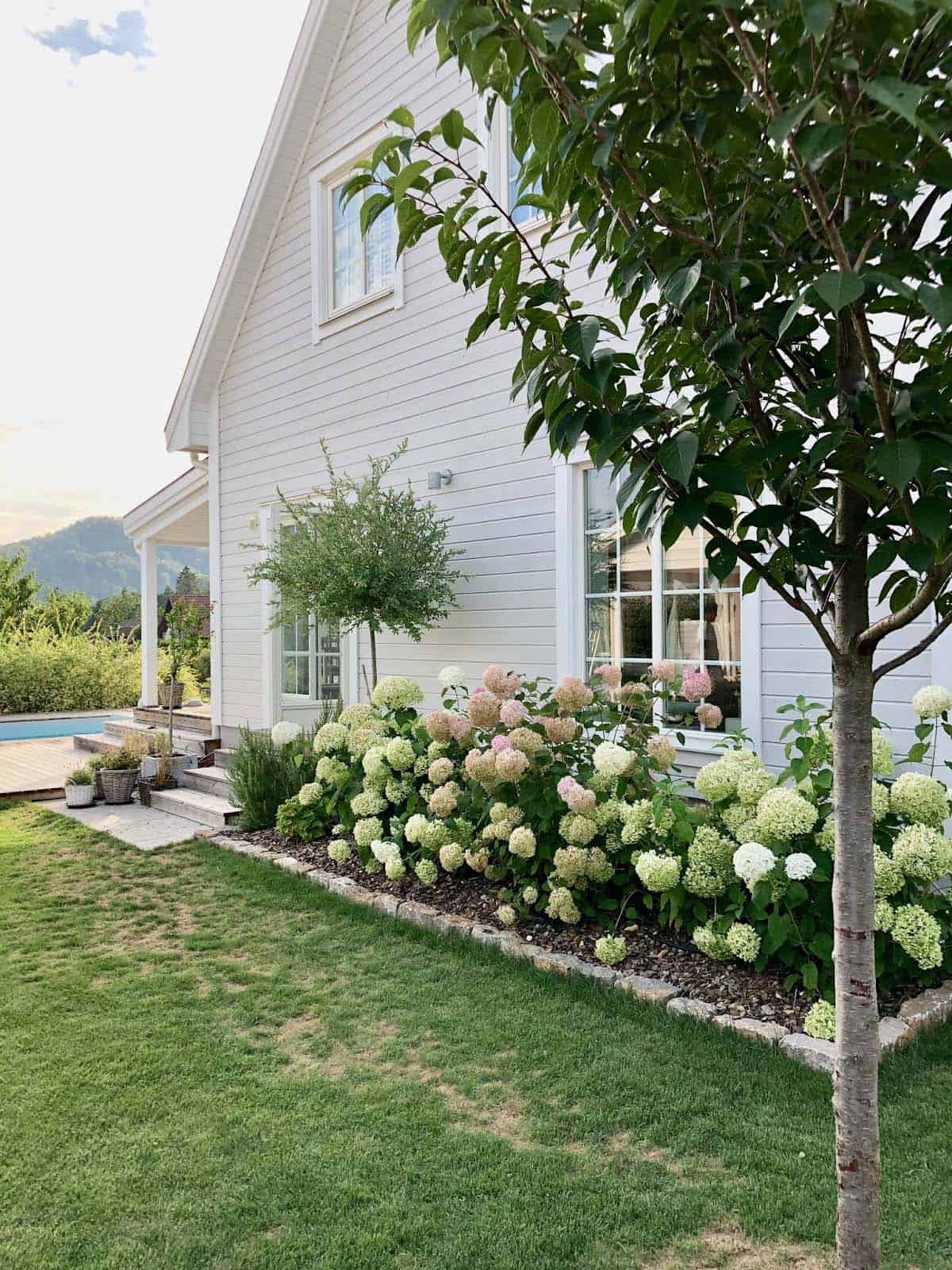
Low stone edging frames this stunning hydrangea border along a white farmhouse exterior of a charming New England home. The understated border keeps the focus on the flowers. The garden bed features a hedge of ball hydrangeas, of the Annabelle variety, in white and pink. Since the hydrangeas need a lot of water, the garden irrigation system irrigates them daily during the hot summer weeks. In the spring, the hydrangeas are cut back to about 20-30 cm above the ground. (via Beach House Living)
15. Cobblestone Garden Edging
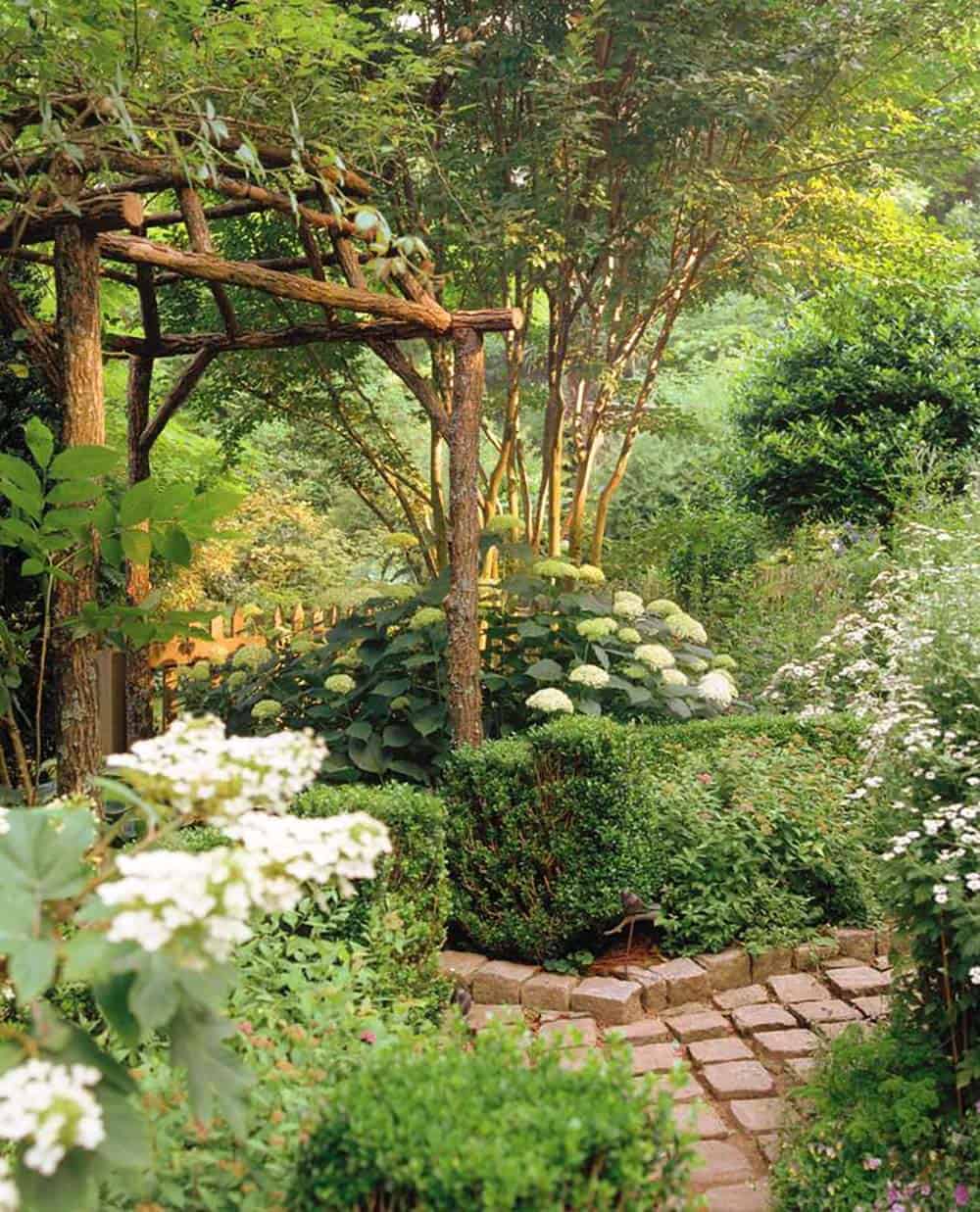
Square granite cobblestones for garden edging, combined with a hedge of Korean boxwood (zones 4–9), give this landscape its definition. ‘Annabelle’ (zones 3–9) and oak leaf hydrangeas (zones 5–9) add billowing white blooms, their large leaves contrasting with the textures and shapes of the paving, edging, and hedge. The rustic log pergola ties the natural materials together, making the stonework feel like it has always been part of the landscape. (via Emily Minton-Redfield for Better Homes & Gardens)
16. Gabion Garden Wall Edging
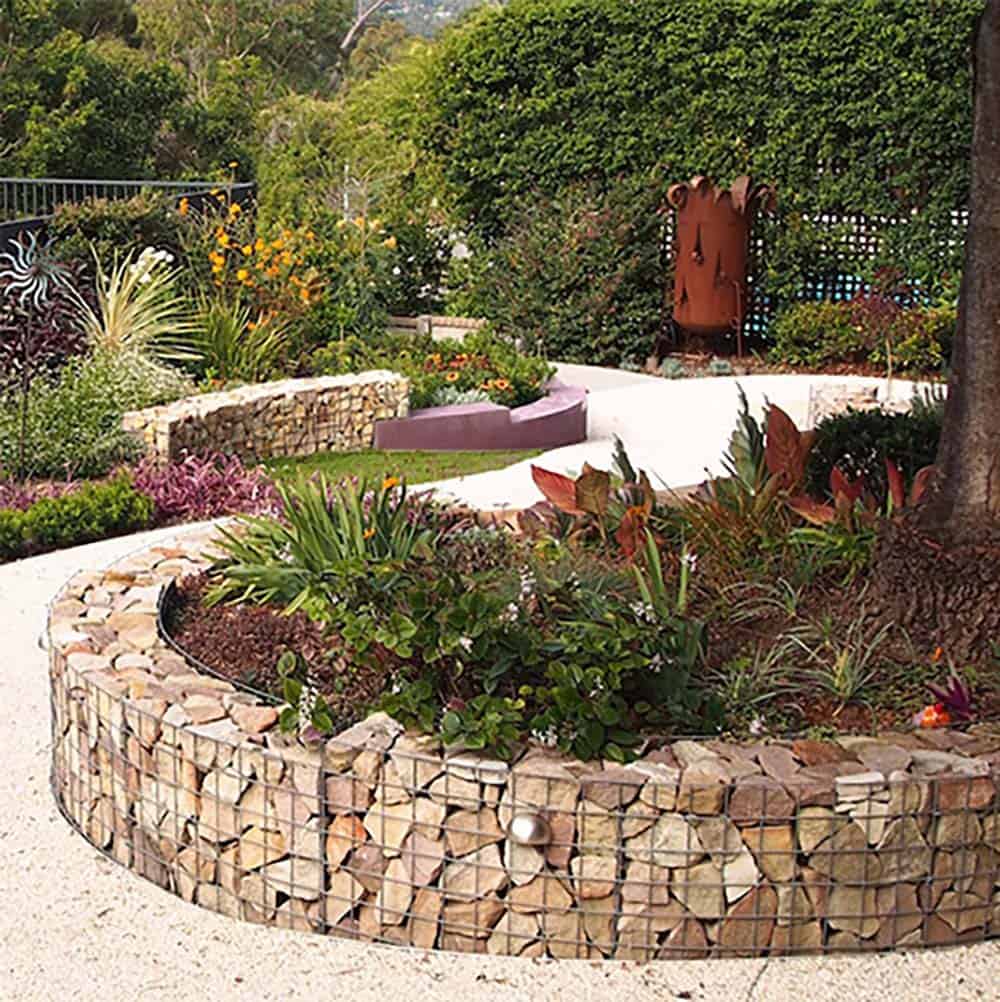
In the backyard of a house in Australia, this hand-crafted gabion wall provides structure to the garden bed and helps form the winding pathway. The warm-toned fieldstone fill complements the bronze and burgundy foliage of cannas and cordylines planted within. Gabion walls are particularly effective on sloped or uneven ground, as they retain soil securely while draining freely to prevent waterlogging around plant roots. (via OUTHOUSE design)
17. River Rock Edging for a Curved Border
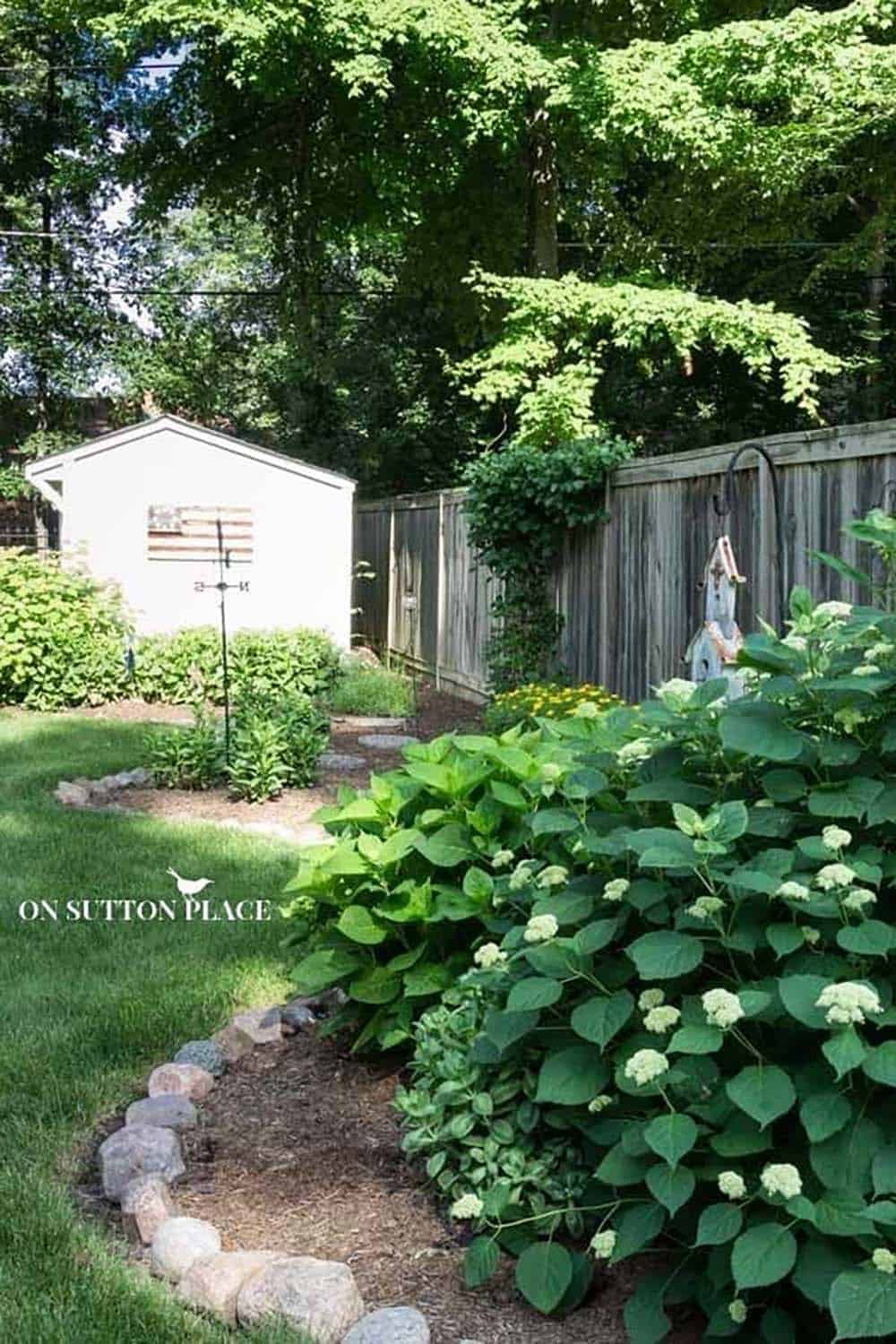
Small, rounded river rocks follow the gentle curve of this backyard border, creating an informal edge that suits the cottage-style planting. Annabelle hydrangeas (Hydrangea arborescens) are very showy in this bed, thriving in zones 3–9 and producing large white blooms through summer. Yellow rudbeckia visible in the background adds a warm contrast and grows reliably in zones 3–9 as well. The natural stone edging may not be uniform, but it will add beautiful texture and charm while maintaining structure for your garden bed. It also creates a separation between the garden and the grass and holds the mulch in place (which helps keep weeds at bay). TIP: Be sure to cut a sharp grass edge using a straight shovel, about 4 to 6 inches from the border. This will give a more finished look and make mowing your lawn easier. (via On Sutton Place)
18. DIY River Rock Garden Edging
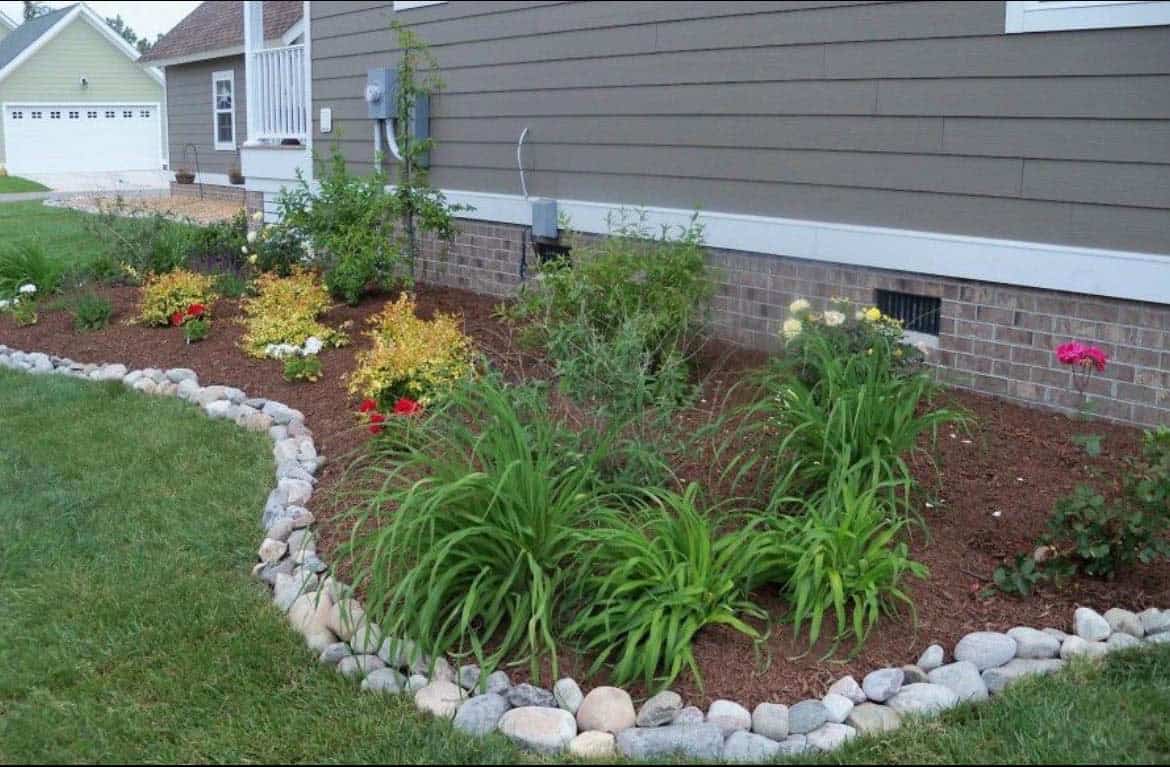
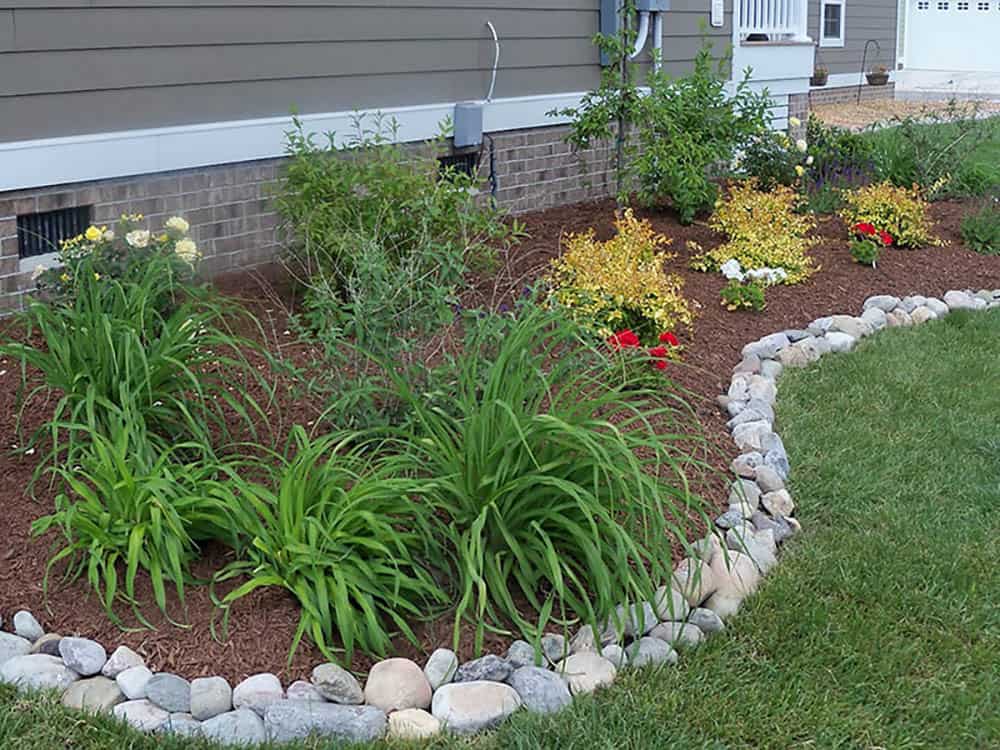
To recreate this beautiful rock garden edging, dig a trench roughly 13 inches deep (adjust to your preferred depth). Using a flat shovel, level the base and tamp the sides. Purchase some cheap weed liner (or use trash bags) and then place your rocks. Choose rocks in similar tones but varying sizes for a natural, organic look and nestle each stone snugly against the next to keep mulch from escaping onto the lawn. (via Scenic South Landscape Design)
19. Creek Rock Edging for a Front Garden
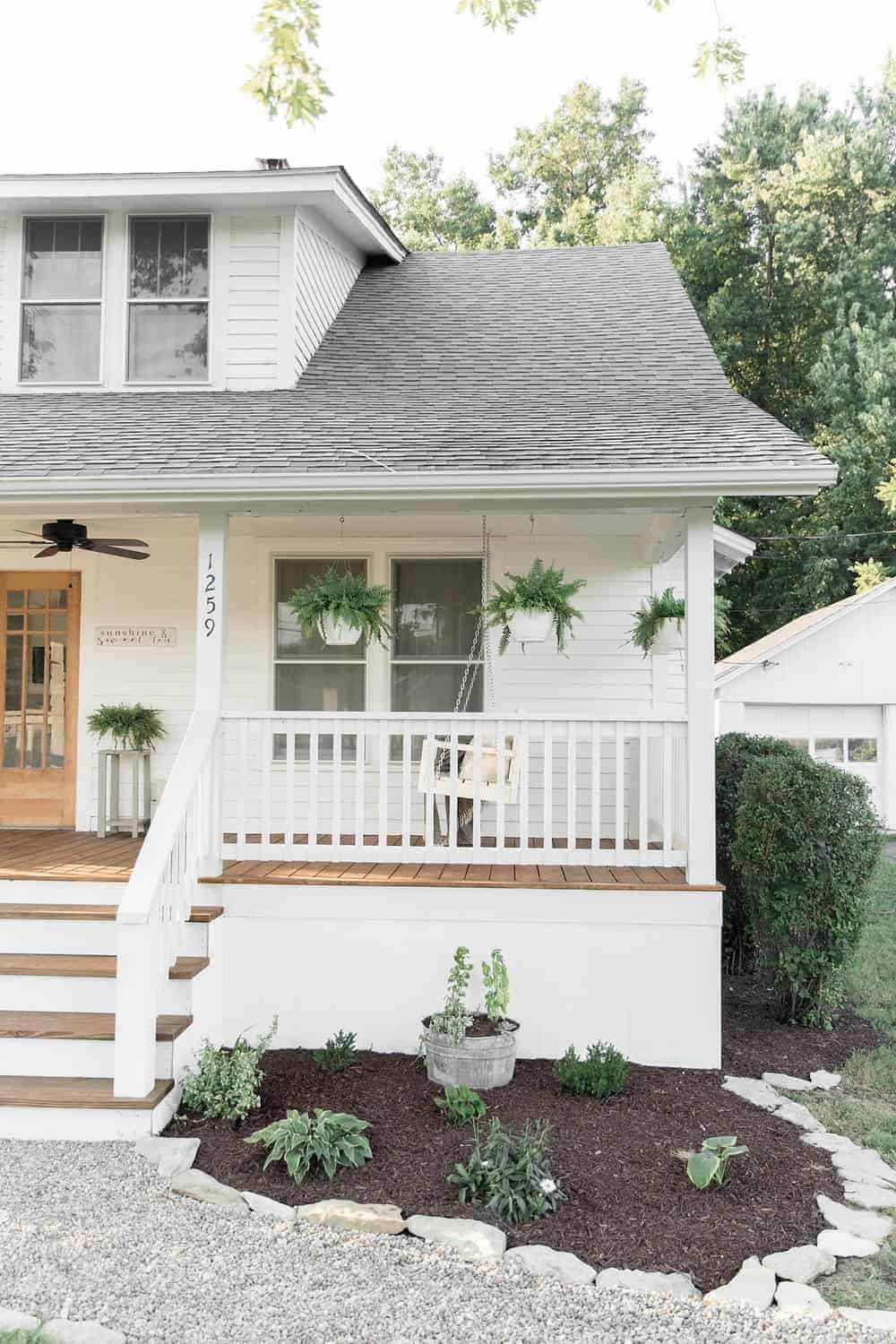
The stone edging around this charming white farmhouse has a unique story. The homeowner’s husband collected every rock by hand from a nearby creek until they had enough to line the flower beds and gravel walkway. The pale, smooth creek stones contrast beautifully with the dark mulch and complement the white farmhouse exterior perfectly. This garden bed goes to show that some of the best landscaping materials are free if you know where to look! (via @farmhouseonboone / Instagram)
20. River Rock Planter Border
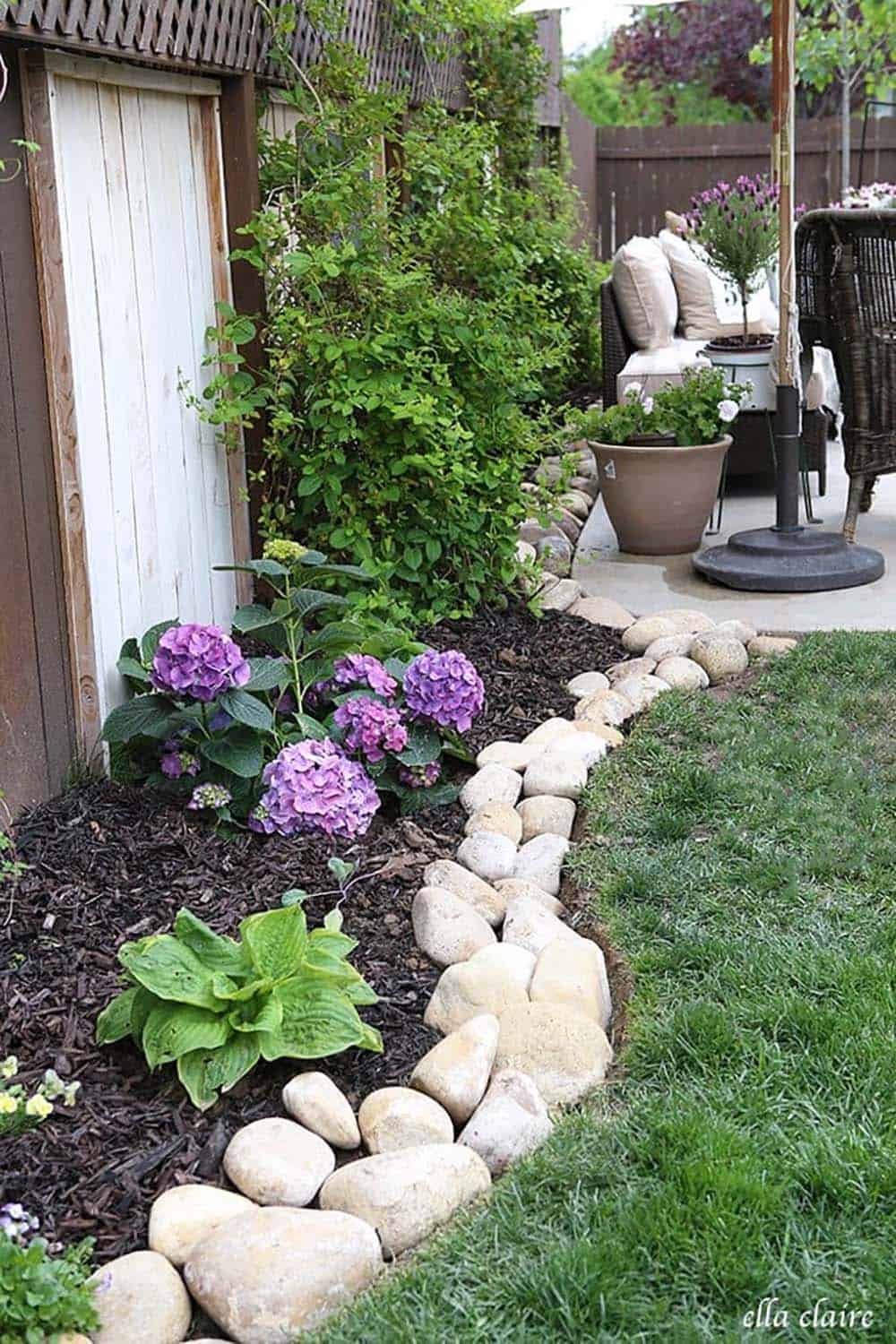
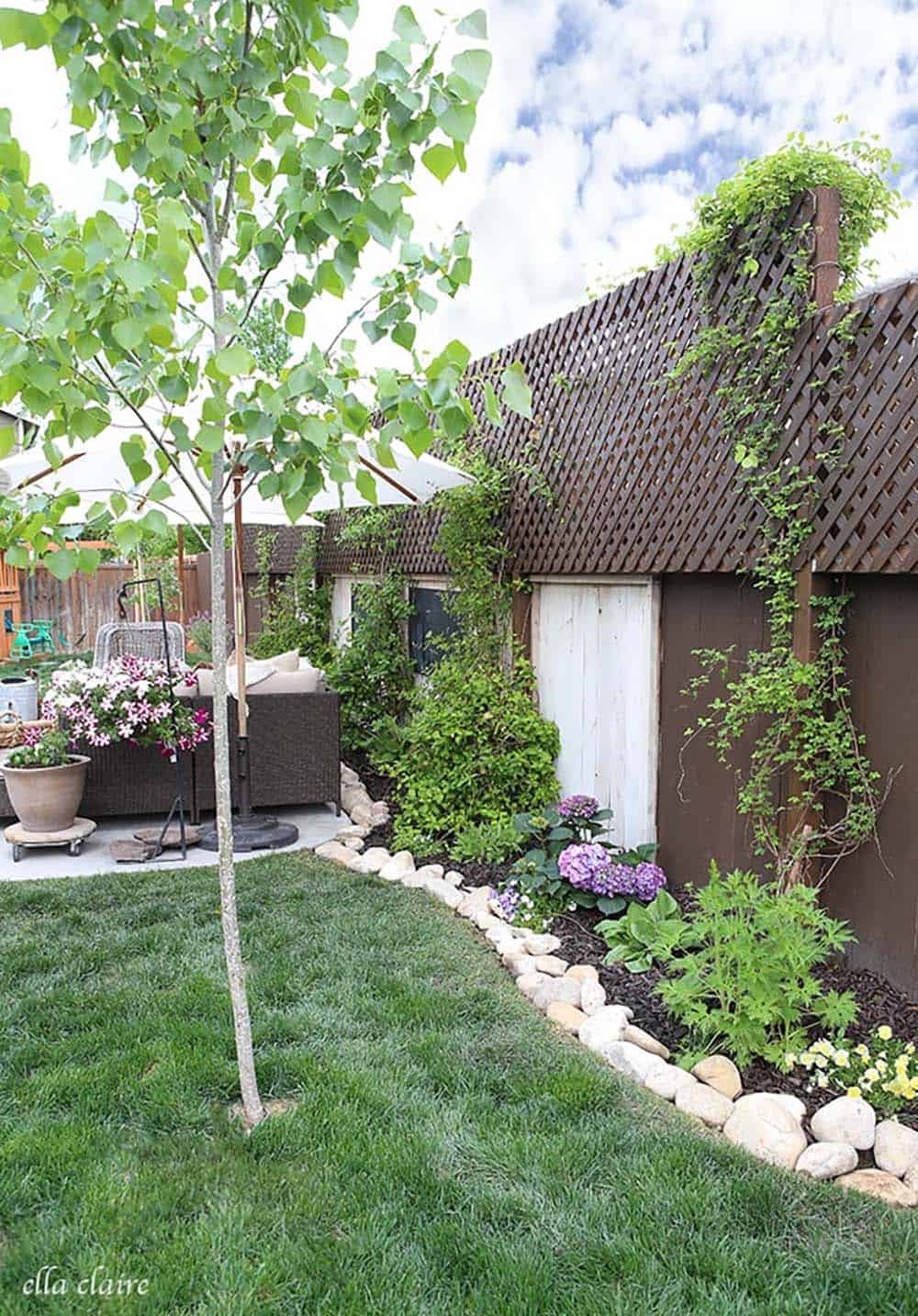
To keep the mulch in place for this garden bed, the homeowner filled it in with a couple of staggered rows of river rock. A 40-foot privacy lattice features growing vines of Honeysuckle in the middle and Akebia vine on either side (both are zones 4–9 and are vigorous climbers). The perfect solution for this small space since trees were not an option. The plantings add a lot of green to the backyard patio. Additional plants include a Hosta (zones 3–9, partial to full shade), Bigleaf hydrangea (zones 5–9, morning sun and afternoon shade), and Pansies (zones 4–8, cool-season annuals). (via Ella Claire & Co.)
21. Large Boulder Edging for a Raised Garden
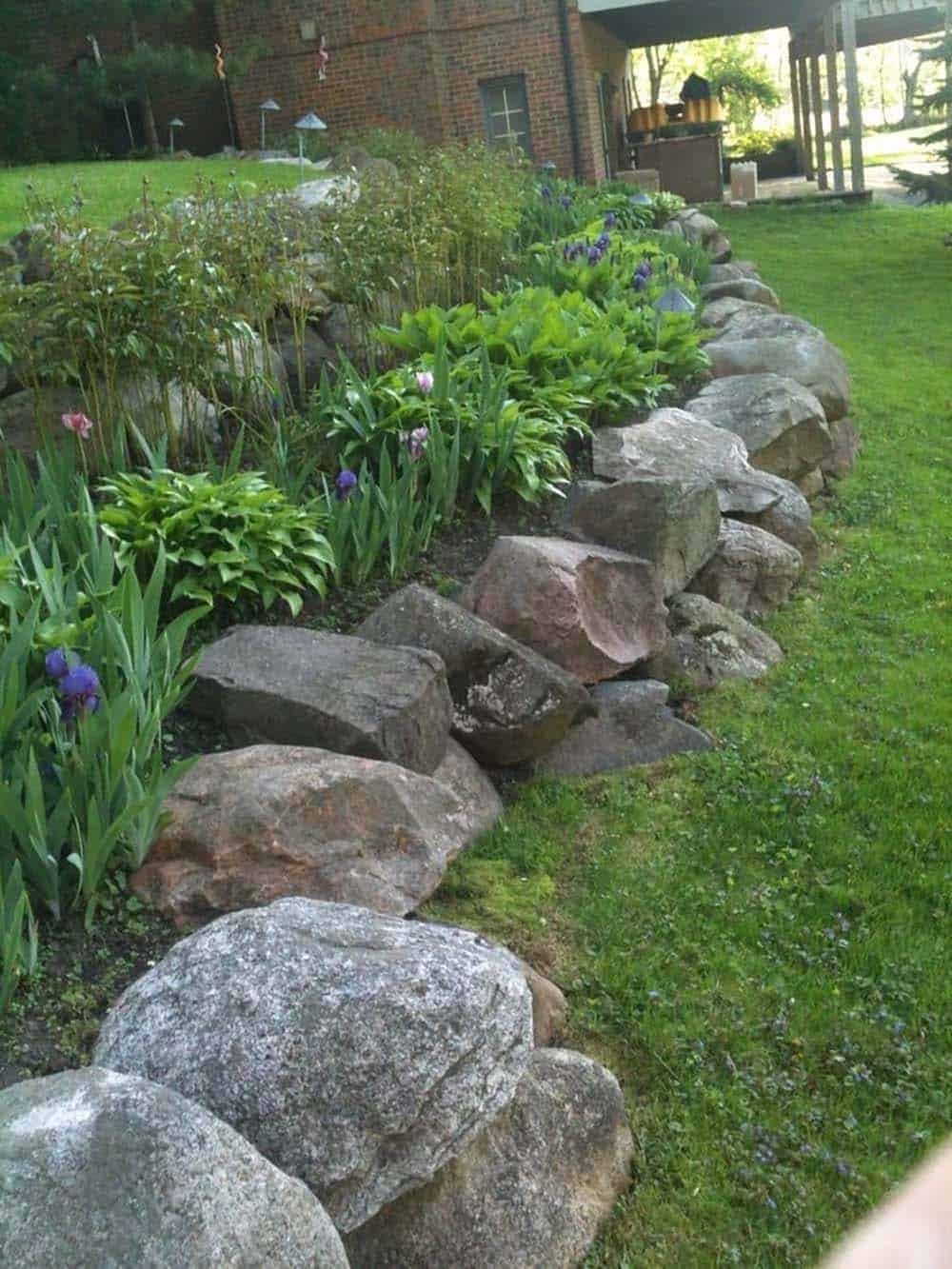
A continuous line of large granite boulders creates a bold, natural retaining edge along this sweeping garden bed, raising the planting level above the lawn without any formal construction. The irregular shapes and colors of the stone give the border an organic quality that suits the naturalistic planting of bearded irises and hostas behind it. This stone edging idea works well on a gentle slope where soil would otherwise creep onto the lawn over time. (via Pinterest)
22. River Rock Edging for a Curved Bed
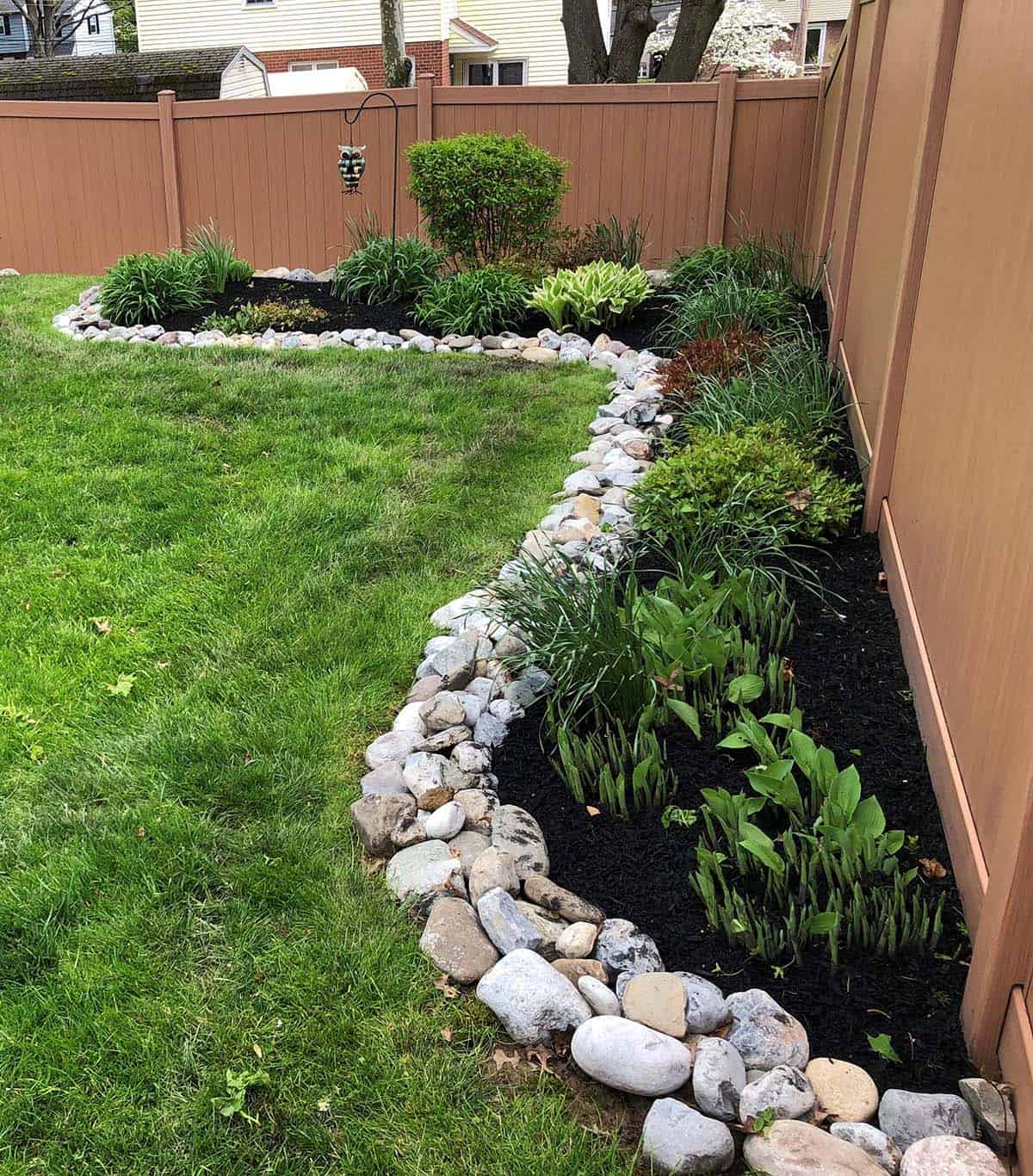
This border was formed by river rocks stacked together along the outer edge, three to four stones deep, for a fuller, more substantial look. The contrast between the pale white and grey stones and the dark mulch makes this border visually striking. Plants include Hostas (zones 3–9), Bearded irises (zones 3–9), Ornamental grasses (zones 3–9), Boxwood (zones 4–9), and Bleeding heart (zones 3–9) or similar perennial. (via Bob Craig Landscaping)
23. Fieldstone Edging for a Corner Garden Bed
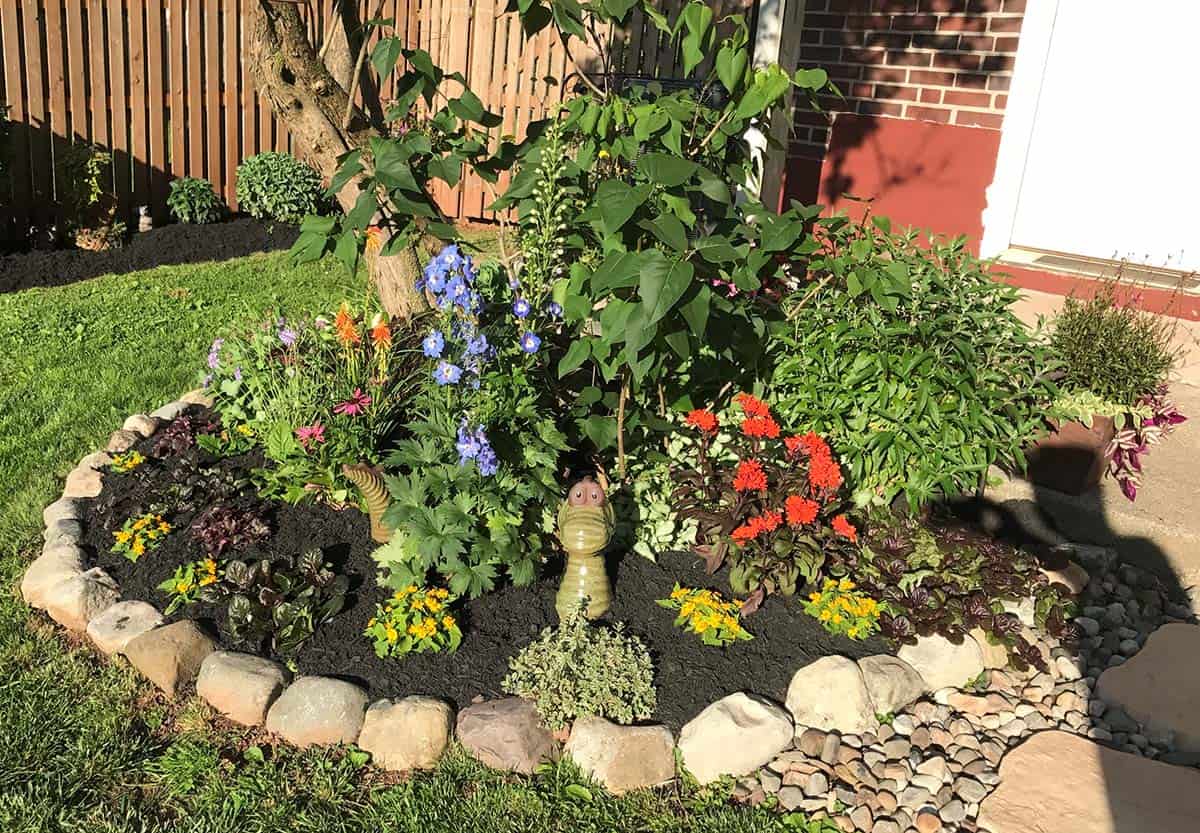
Rounded fieldstones define this vibrant corner garden, transforming an awkward space between a fence, lawn, and driveway. The stones are uniform enough to appear intentional yet irregular enough to feel natural, a balance that works for this cottage garden mix of delphiniums, red pentas, marigolds, and dark-leaved ajuga planted within. Corner beds like this are ideal for maximizing planting space in a small yard without disrupting the lawn. (via Bob Craig Landscaping)
24. Mixed Stone Edging for a Shade Garden Bed
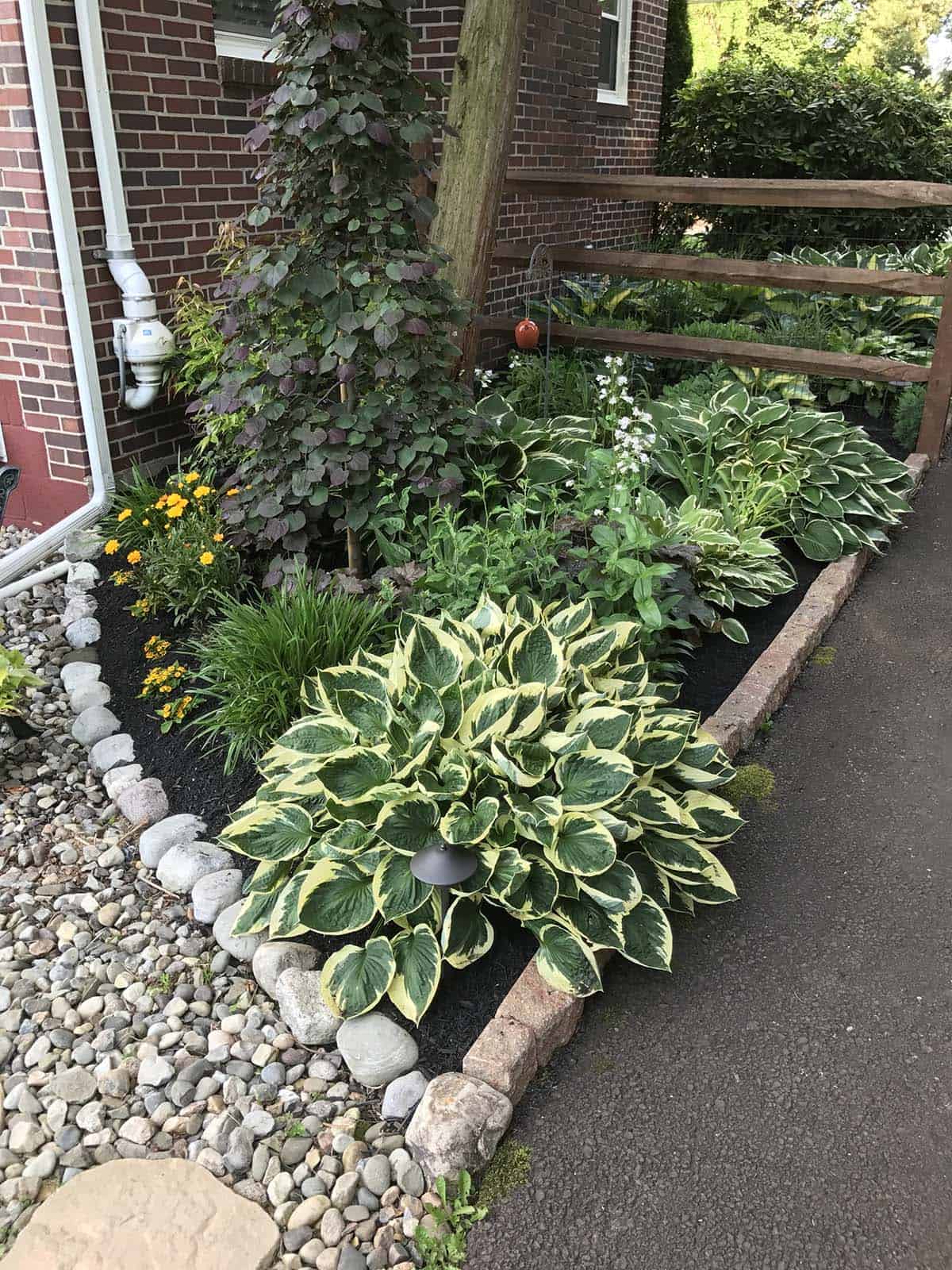
This side garden beautifully combines two edging materials: river rocks along the gravel border and flat, brick-style stone along the driveway edge. Large variegated hostas brighten this partially shaded spot beside the house. Marigolds and ornamental grasses add seasonal color and texture in the sunnier corner near the fence. Edging your garden bed with two complementary rock styles is a great way to adapt to different surfaces within the same garden. (via Bob Craig Landscaping)
25. River Rock Edging Along a Curved Garden Bed
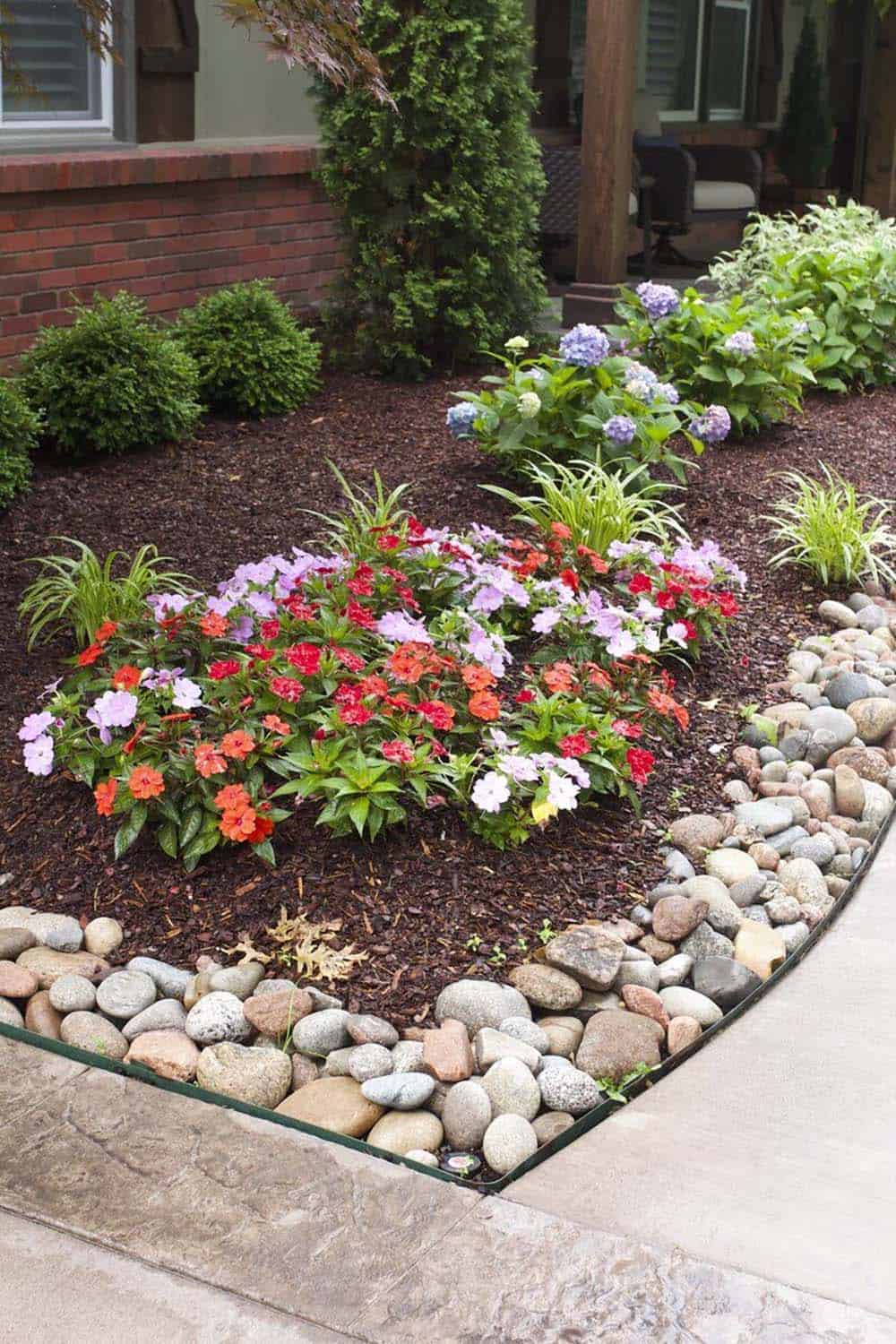
A wide border of mixed river rocks, framed by a low metal edging strip, creates a clean boundary between this curved garden bed and the concrete path. The rock acts as a buffer zone, preventing mulch from washing onto the pavement while adding natural texture. Colorful impatiens in red, orange, and lavender fill the foreground, with blue hydrangeas and variegated grasses adding height and contrast in the background. The metal edge holds the curve defined and keeps the stones in place. (via Mears Lawn & Landscape)
26. Layered Rock Edging
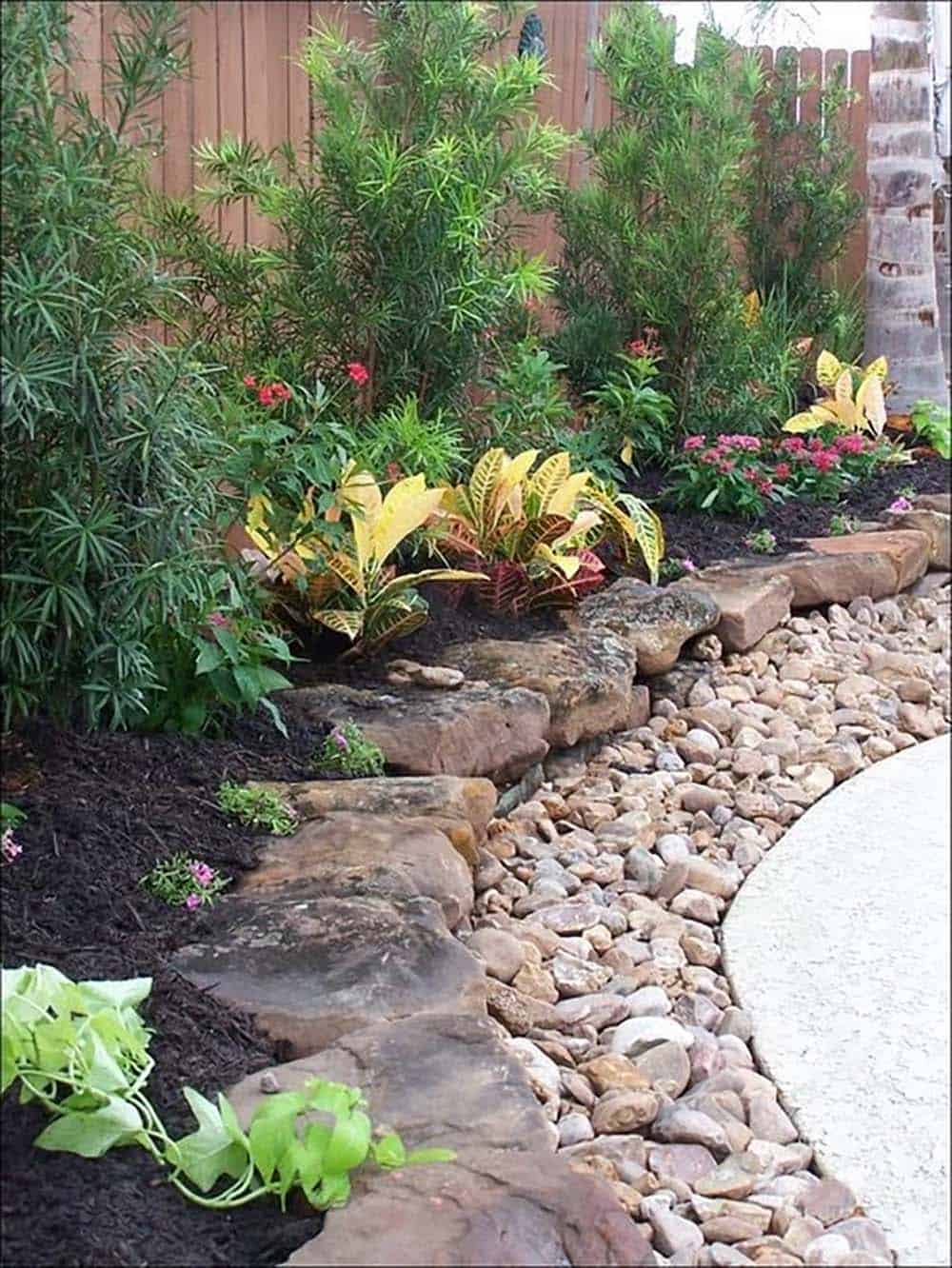
Multiple levels of rock along this garden border create a neat, orderly edge that still feels natural. A river rock channel on the outer side adds a second layer of texture and separates the bed from the concrete path. Behind the edging, colorful crotons, ixora, and podocarpus thrive. Stacking stones at varying heights is an easy way to add depth and visual interest to a straight or curved border. (via Pinterest)
27. Fieldstone Edging Along a Porch Garden Bed
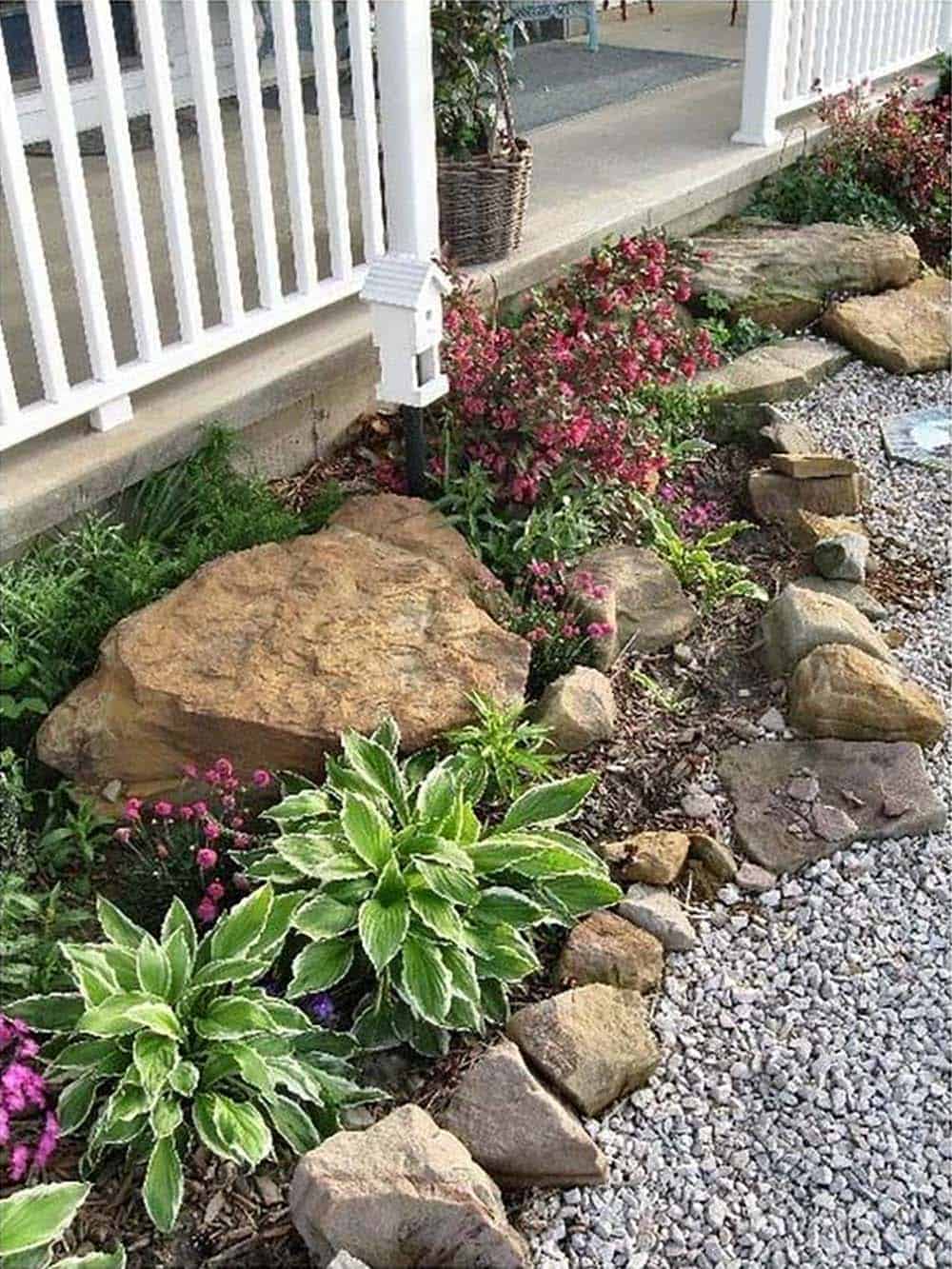
We love the easy, natural look of this garden, with stones placed loosely along this narrow porch, defining the space. The stones vary in size and placement, adding visual interest. Variegated hostas, globe amaranth, and begonias fill in around and between the rocks, softening the edge further. A grey gravel path on the outer side keeps the design low-maintenance. (via Pinterest)
Here are some words of advice for stone edging from Reddit Users:
- I did this a few years ago along my fence line, and I love it. I’m very conscious about maintaining its tidiness. Yes, it takes maintenance. Landscaping takes maintenance. When grass pops up, sometimes I pull it. The woven fabric underneath will get replaced this year. I have an edger that I use every few weeks during the growing season to keep the grass line at bay, and then I use a blower to clean up after I mow. I figure it will take a few days to roll off all the rock, put down new fabric, and put the rock back on.
- Put the stones inside the edging to prevent grass growing through them
- I did this, and I love it. It does have a few drawbacks, but overall, for me, it was worth it. Every other year, I basically take a wheelbarrow and pick up all the stones in the wheelbarrow, wash them, and add more mulch to the trench that I dug when I originally installed them. Sometimes, before adding the mulch, I’ll add some weed barrier fabric, then I’ll add the mulch and put the stones back down. I don’t think it’s too much. I just do it every other year, and they look great.
- If you want to keep this look, here’s how to make it manageable: Using a sharp spade or power edger, cut a border into the lawn 4-5 inches from the rocks. Strip the turf away from the rocks, leaving a strip of bare dirt. Use your string trimmer to maintain the bare strip. I have a similar border on huge beds. I really only have to do the maintence a couple of times a year.
- I bordered my whole house with field rocks, and I love it. They were free for me. I took them from my grandparents’ giant rock pile built up from picking rocks out of the corn fields for over 100 years. For any grass that grows between the rocks, I just turn my weed eater sideways so the string cleans out the cracks between the rocks. My leaf blower blows out any grass clippings or leaves that pile up against the rocks. It’s a tad more maintenance than straight paver edging. But it’s not labor-intensive to keep clean, and I enjoy the time I spend outside keeping my yard looking nice.




2 comments