


❤️ Would you like to save this?
By saving, we'll email this post to you for later. Unsubscribe anytime.
Growing your own food can be very appealing, especially in your front yard in lieu of grass or rock hardscaping. An edible front yard is lush, layered, and designed with as much thought and care as any ornamental landscape. Whether you have a sprawling lawn or just a narrow strip between the sidewalk and your front door, there are plenty of clever ways to make it both beautiful and productive.
A well-designed front-yard vegetable garden adds beautiful curb appeal, can spark conversations with neighbors, and connects you to your food in a way that a backyard garden simply cannot. It can also be very practical, turning unused lawn space into something that feeds your family all season long, not to mention that your front yard may be very sunny and your backyard shady, necessitating a front yard veggie garden!
One important consideration that sets an edible garden in the front yard apart from one out back is visibility. People will notice if the whole thing falls apart at the end of summer, when most food crops are harvested. To keep your edible front yard looking good through every season, incorporate attractive perennials, evergreens, and structural elements such as obelisks, tuteurs (vertical support structures that help climbing plants grow upward), paths, and attractive fencing.
From raised beds and galvanized stock tanks to container gardens and cottage-potage plantings, continue below for inspiring ideas to grow your own edible landscape. Note: Before tearing up your front lawn, be sure to check your local ordinances and HOA guidelines. Some neighborhoods have restrictions on front yard food gardens. A tidy, well-designed edible landscape is much harder for neighbors to object to than an overgrown patch.
Tell Us: Would you grow a vegetable garden in your front yard? Let us know why or why not in the Comments below!
1. Cottage Vegetable Garden
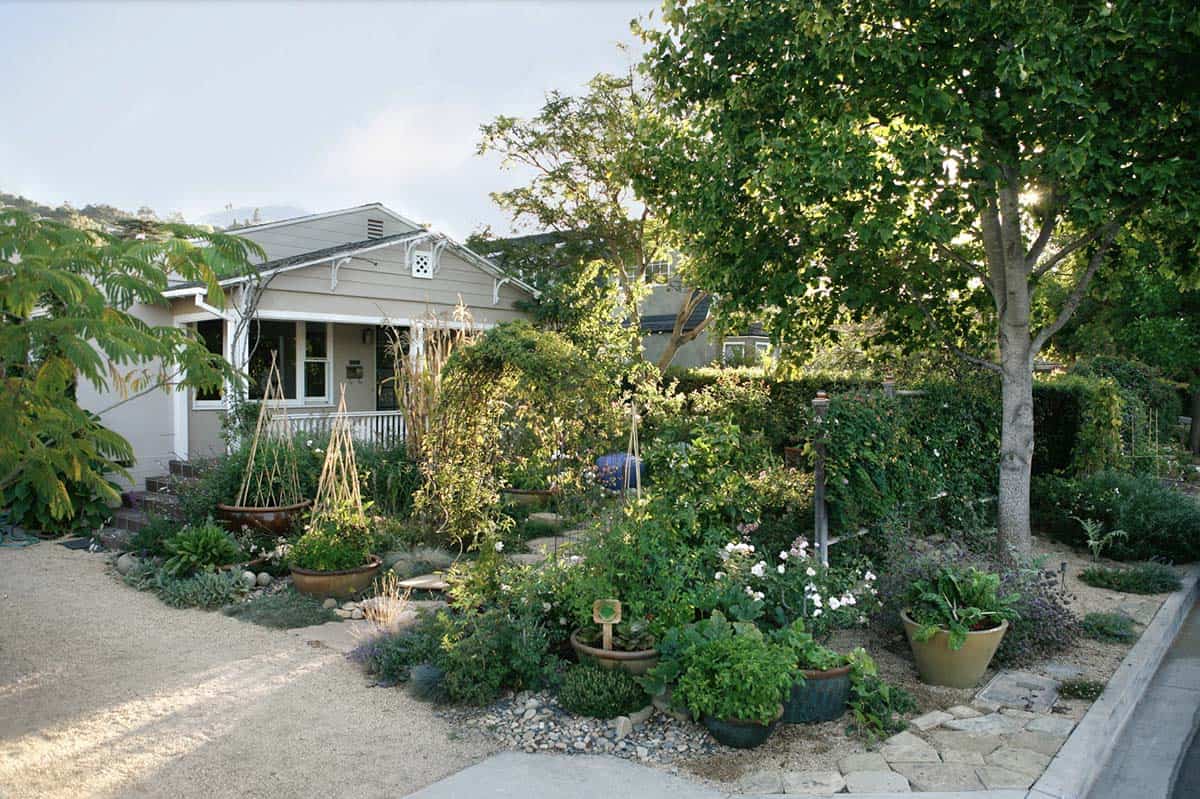
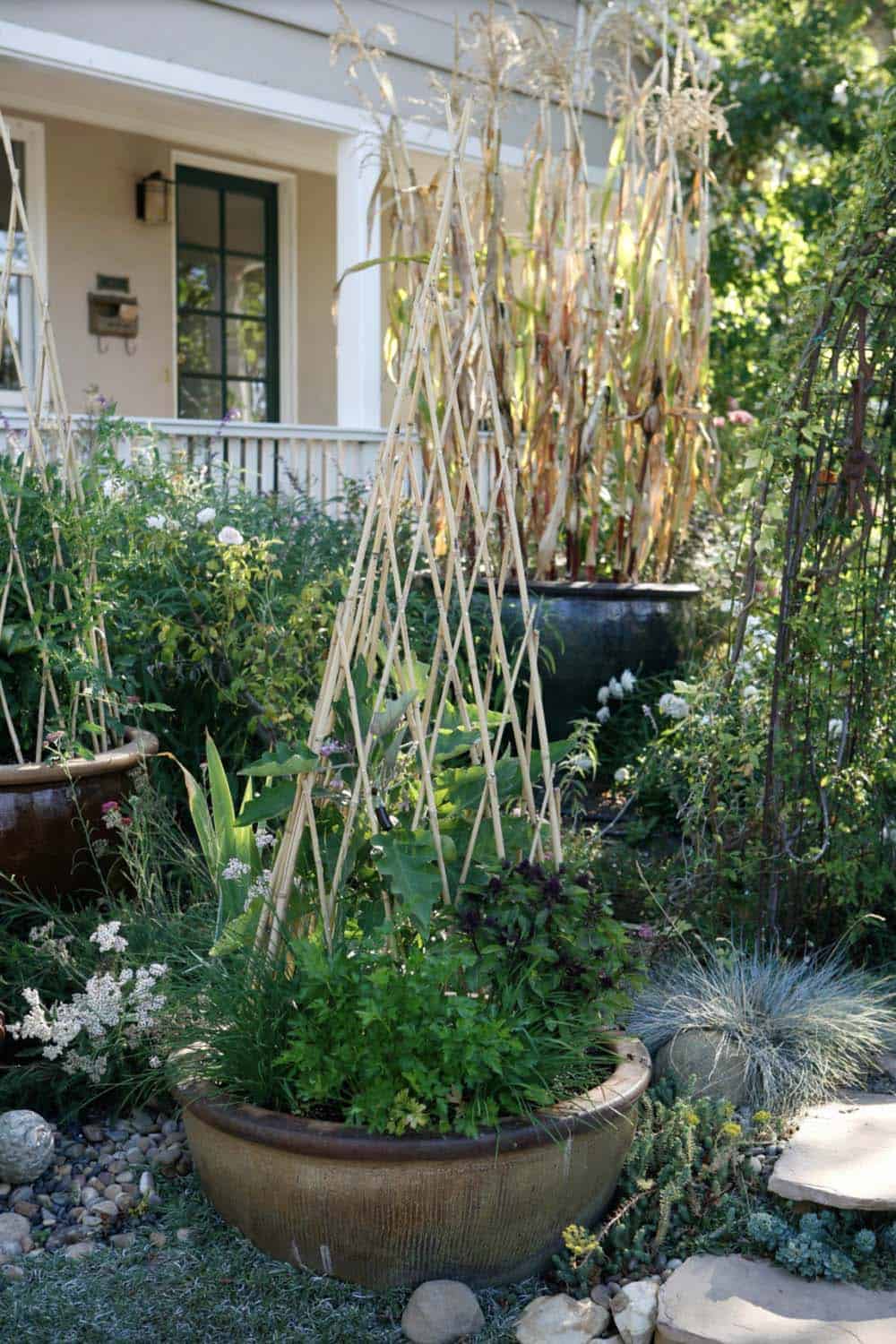
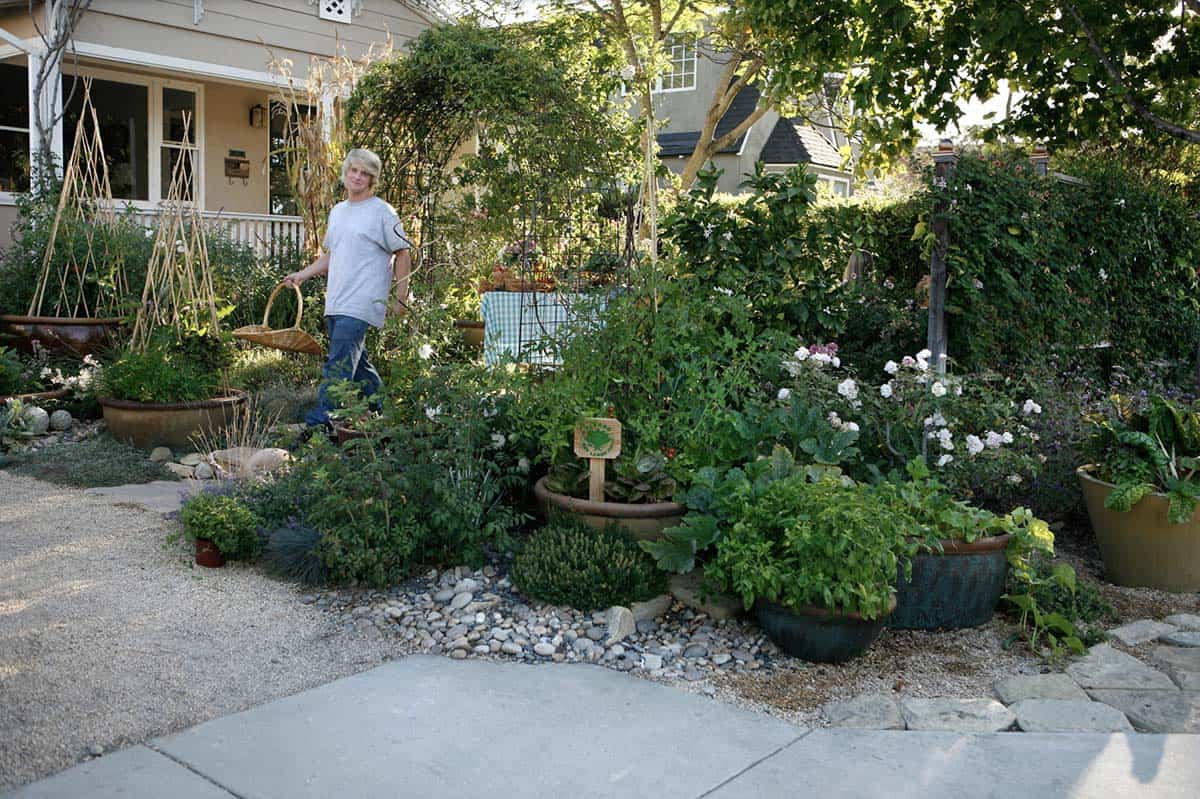
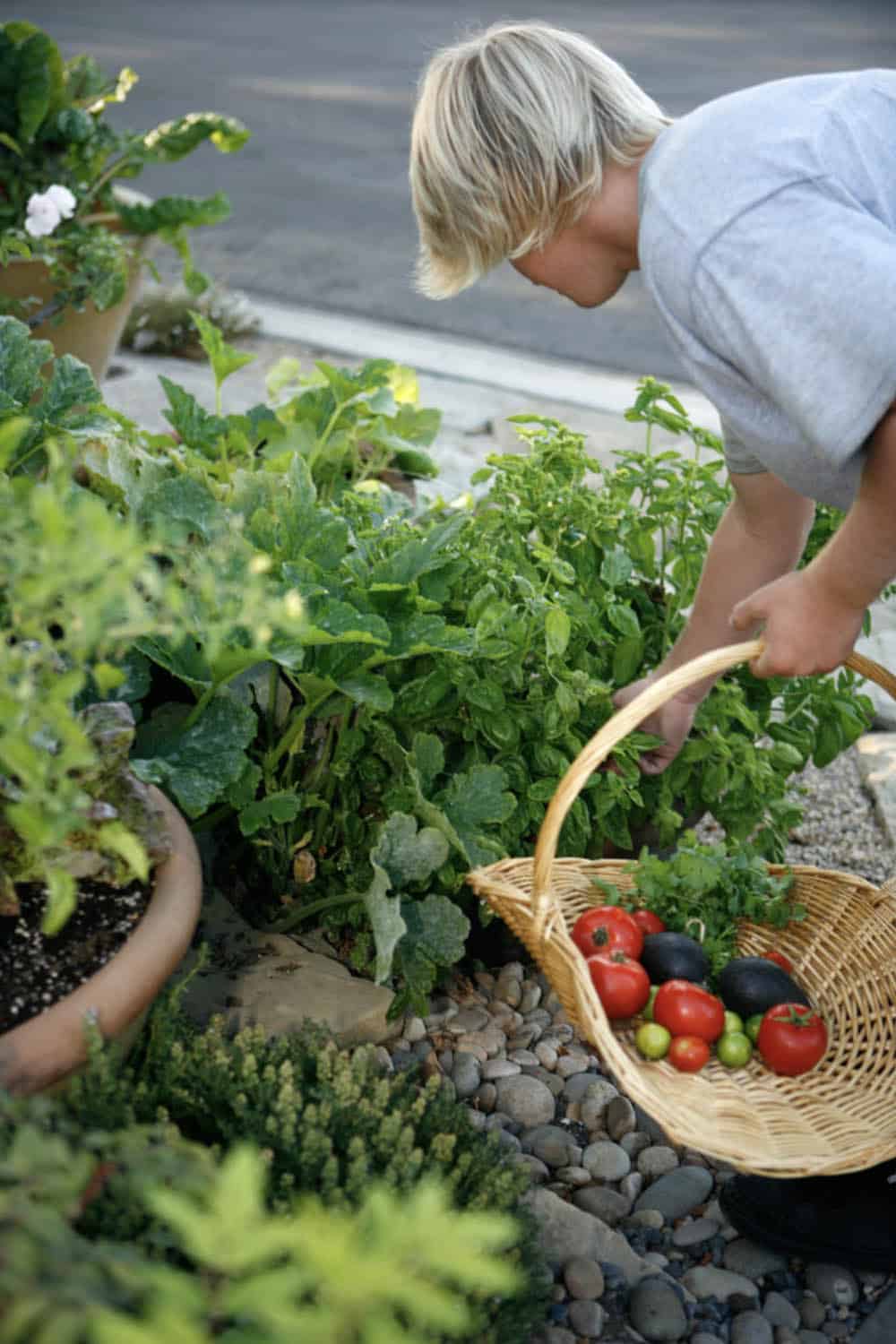
Grow vegetables in large pots in your front yard garden, like this one in coastal Santa Barbara. The owner of this garden raises produce in large, colorful containers set amongst flowering perennials in the curb strip and along the driveway. The advantage of the large pots is that they provide “no-bend, clean-shoe gardening”. Place the pots where they receive full sun and good air circulation, adding structure, color, and visual interest to the garden. They will look great during the height of the growing season and off-season. Coming home from work, the owner spends about five minutes collecting fresh produce on the way to her door, helping her decompress and figure out what’s for dinner! TIP: To keep costs down on a large pot, look for the section at large pottery supply stores that offers discounts on chips and dings.
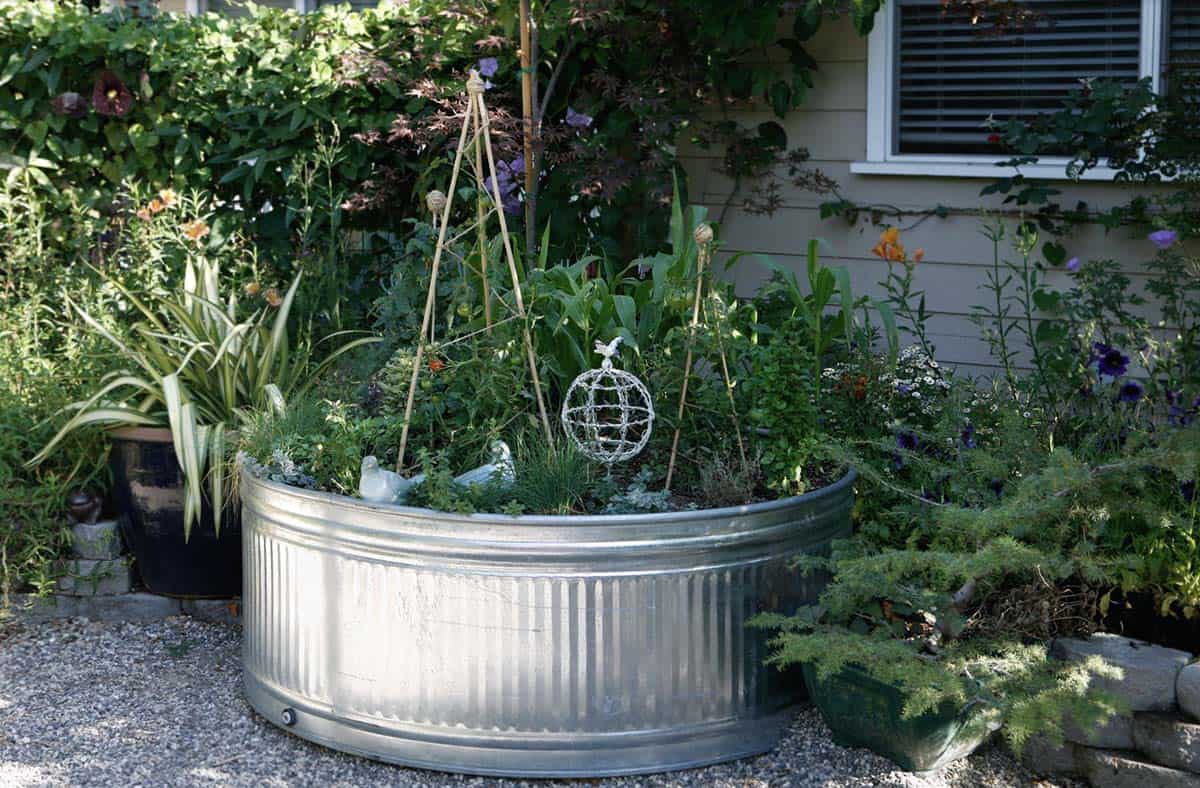
The bamboo tomato cages are store-bought from the local retail nursery (Terra Sol in Goleta, CA). They are expanding “tipis” and can be opened wider or closed down skinnier to suit your needs. For a less expensive option, you can make a version of this by taking three bamboo canes and tying them together at the ends, then sticking them into the ground like a tipi frame. Take shorter pieces of bamboo and lash horizontal pieces along the three sides. Corn works great in a pot, but the pot has to be really big. The one used in the image is 4′ in diameter and about 3′ high. You can also use a 5′ diameter galvanized stock tank. They also keep away bunnies and gophers! (via Grace Design Associates)
2. Replace Your Lawn with an Edible Landscape
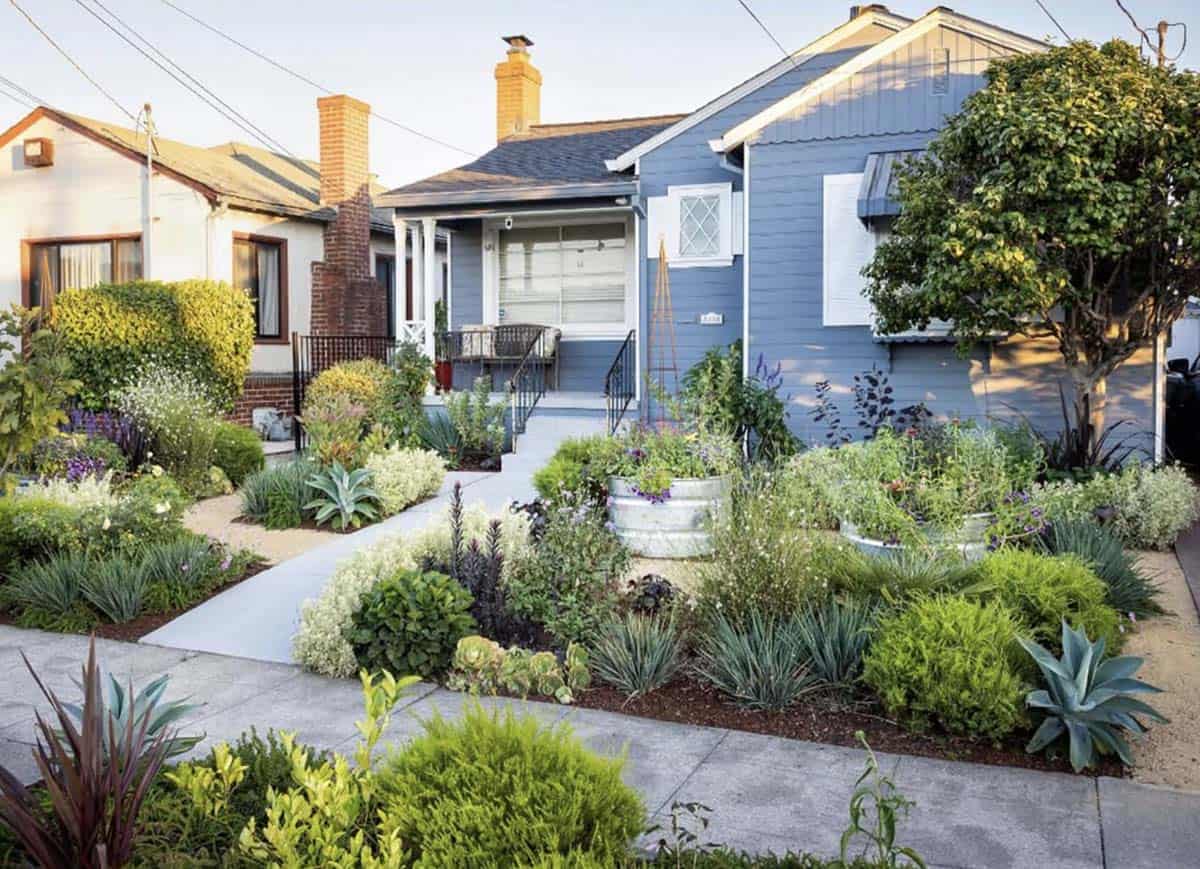
This front yard garden project in East Oakland, California, was created to support the owner’s love of cooking, gardening, and making herbal teas. The result is a front yard overflowing with fruits, flowers, and so many amazing culinary and medicinal herbs! This includes agave, artichoke, purple basil, dark-leafed chard, salvia, lavender, borage, agapanthus, and silvery artemisia weaving through ornamental grasses and succulents. The galvanized stock tanks anchoring the path are planted with herbs, beautifully pulling the whole edible landscape together. (via @pinehouseediblegardens / Instagram)
3. Transform Your Front Yard into a Food Forest
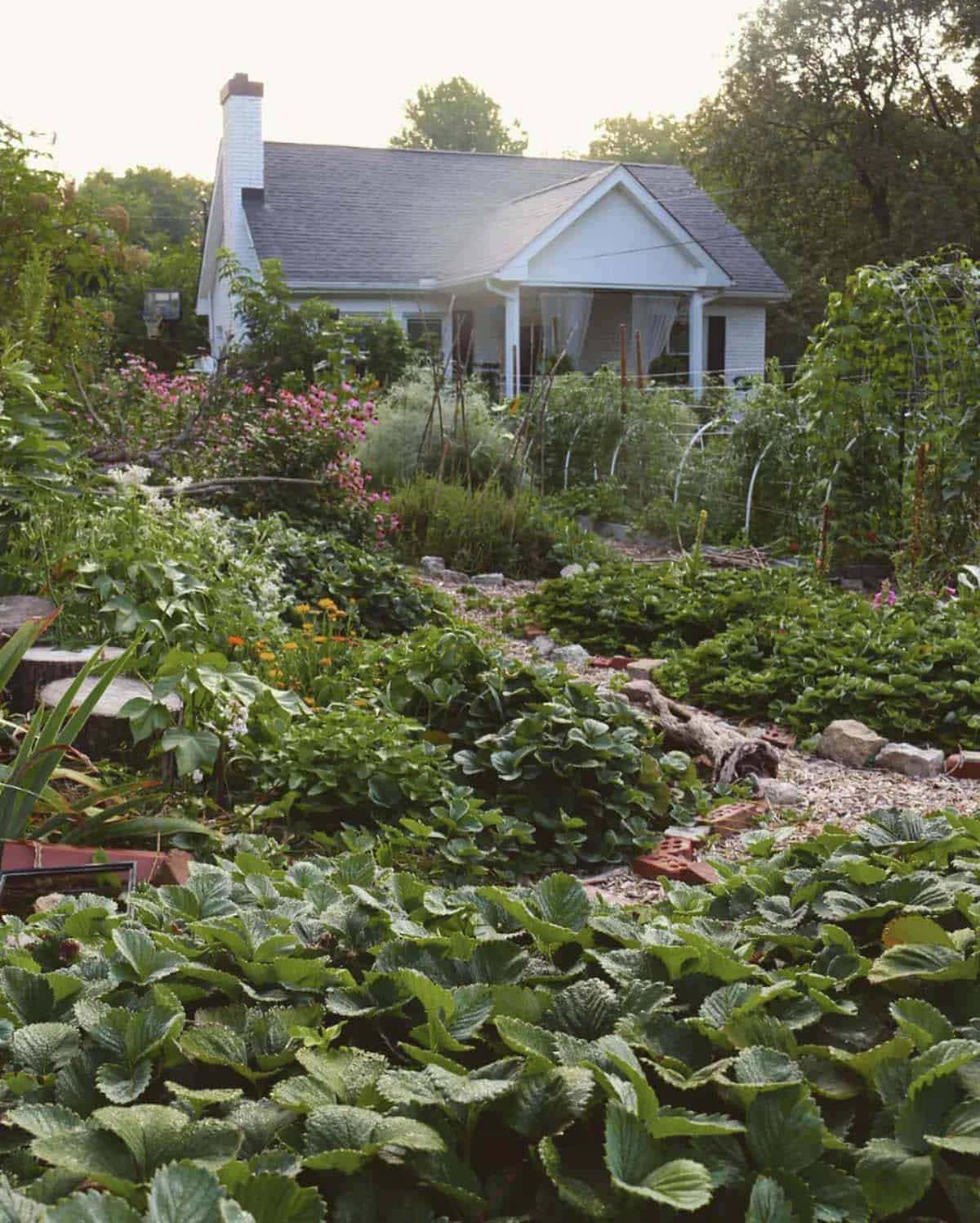
This abundant front yard food forest in Xenia, Ohio, shows just how dramatically a grass lawn can be replaced with something far more interesting and productive. Strawberries carpet the foreground; calendula and cosmos add pops of orange and pink; tomatoes climb wire supports; and brick and stone edging define the beds as pathways wind through it all, creating a diverse and resilient edible landscape that supplies the bulk of this family’s produce through the season. With a solid plan, a front yard can transform faster than you might think. (via @humblehiveconsulting / Instagram)
4. Go All In with a Full Edible Landscape
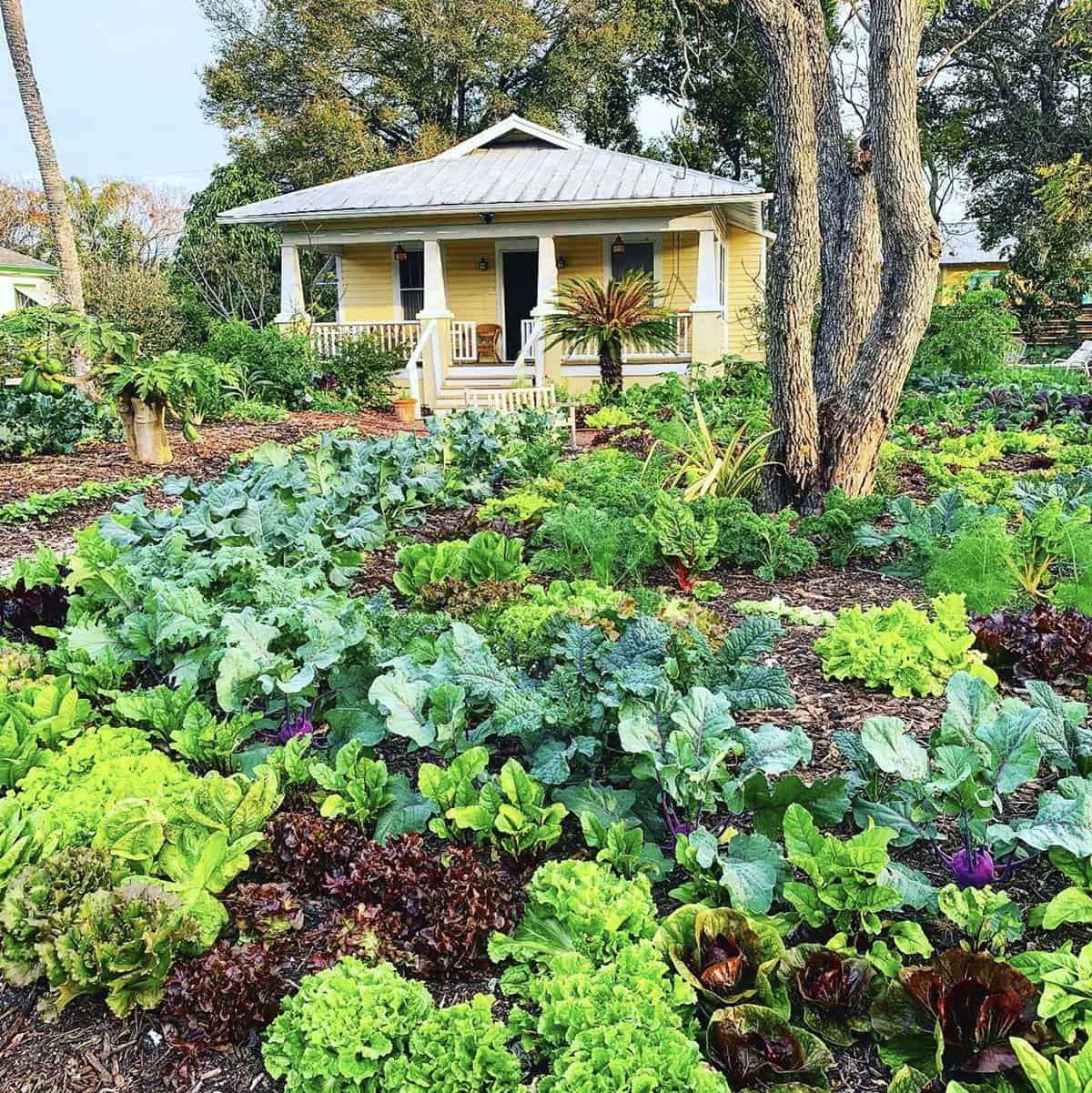
This beautiful edible garden in New Port Richey, Florida, is about as far from a traditional lawn as you can get. Rows of kale, lettuce, kohlrabi, chard, and fennel fill every inch of the property in a rich tapestry of greens, purples, and reds, with mulched pathways winding between the beds. The warm Florida climate makes year-round growing possible, and this garden takes full advantage of every single inch. (via @greendreamstv / Instagram)
5. Front Garden Food Forest
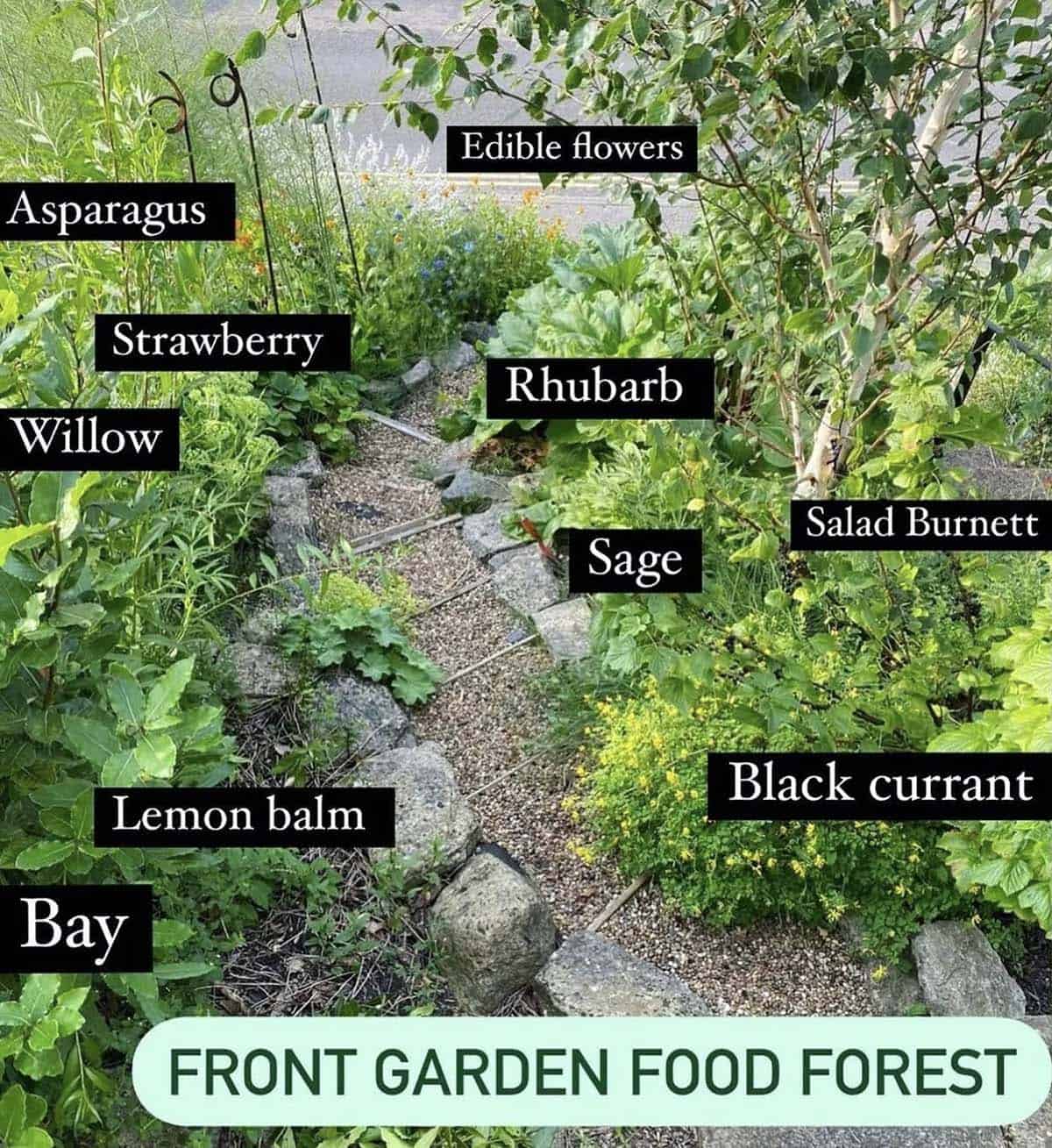
This front garden food forest features a gravel path edged with stone winding between asparagus, strawberries, rhubarb, sage, black currant, lemon balm, bay, salad burnet, willow, and edible flowers, a diverse and layered planting that looks as good as it tastes. It also works as the perfect companion garden: lemon balm and sage draw bees to pollinate the strawberries and rhubarb, bay repels pests naturally, and black currants’ deep roots pull up nutrients that the shallow-rooted strawberries can use. The edible flowers bring in beneficial insects, keeping the whole garden healthy with very little intervention. (via @perma_flo / Instagram)
6. Kitchen Garden with Corten Steel Raised Beds
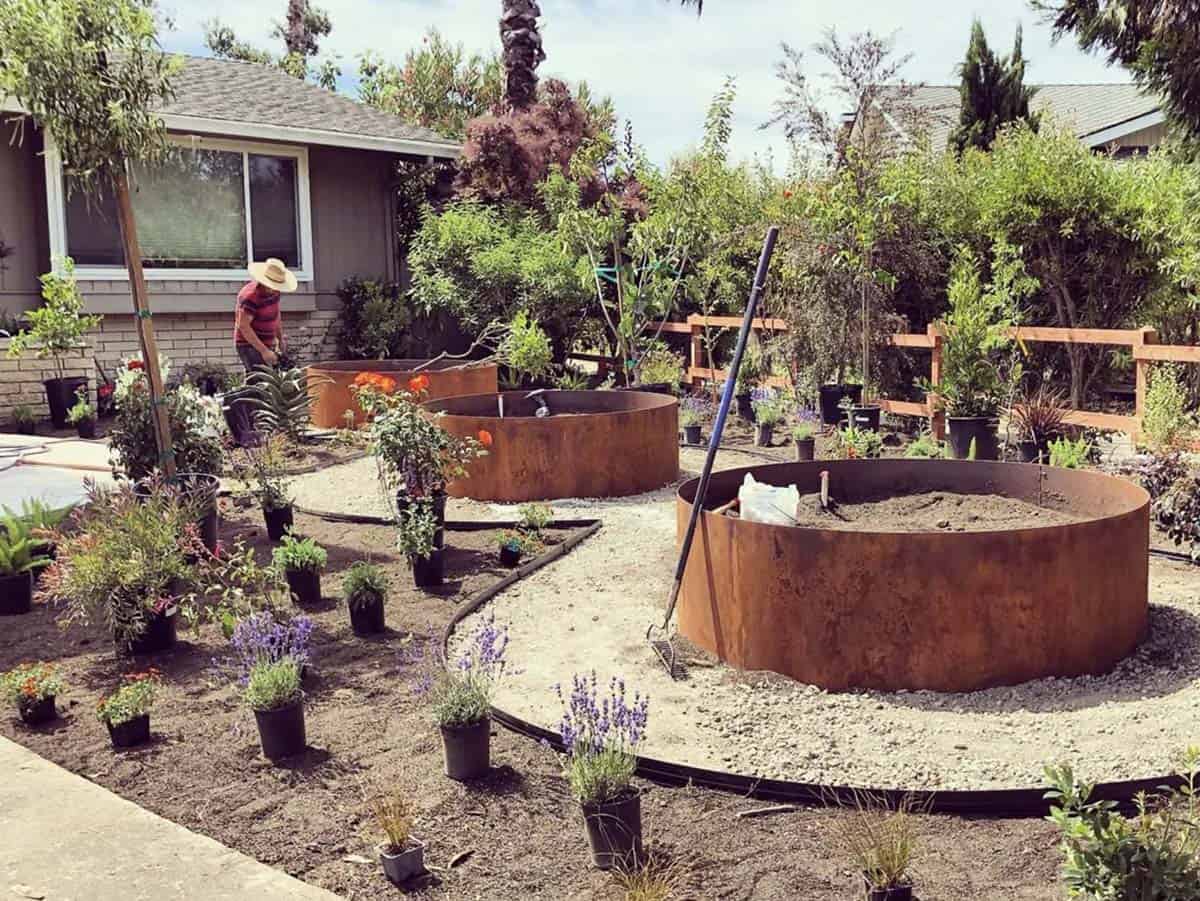
This edible landscape in Fremont, California, transforms a small, previously unused front yard of a classic ranch-style house into a major food producer. Three circular corten steel raised beds anchor the design for vegetables, surrounded by in-ground perennial edibles including mandarin orange, makrut lime, jujube, mulberry, kumquat, blueberries, Chilean guava, tiger panache fig, and natal plum. A couple of special aloes, chilopsis linearis, leptospermum dark shadow, and leucadendron ebony are in there too for a bit of structural edge, while roses, salvia, ornamental grasses, and yarrow bring blooms and pollinators to the yard. As the new garden grows in, the subtle screening provided by the layered planting will create the effect of an outdoor room that invites you to walk through, harvest, and enjoy. (via @pinehouseediblegardens / Instagram)
7. Use Galvanized Raised Beds to Grow Vegetables
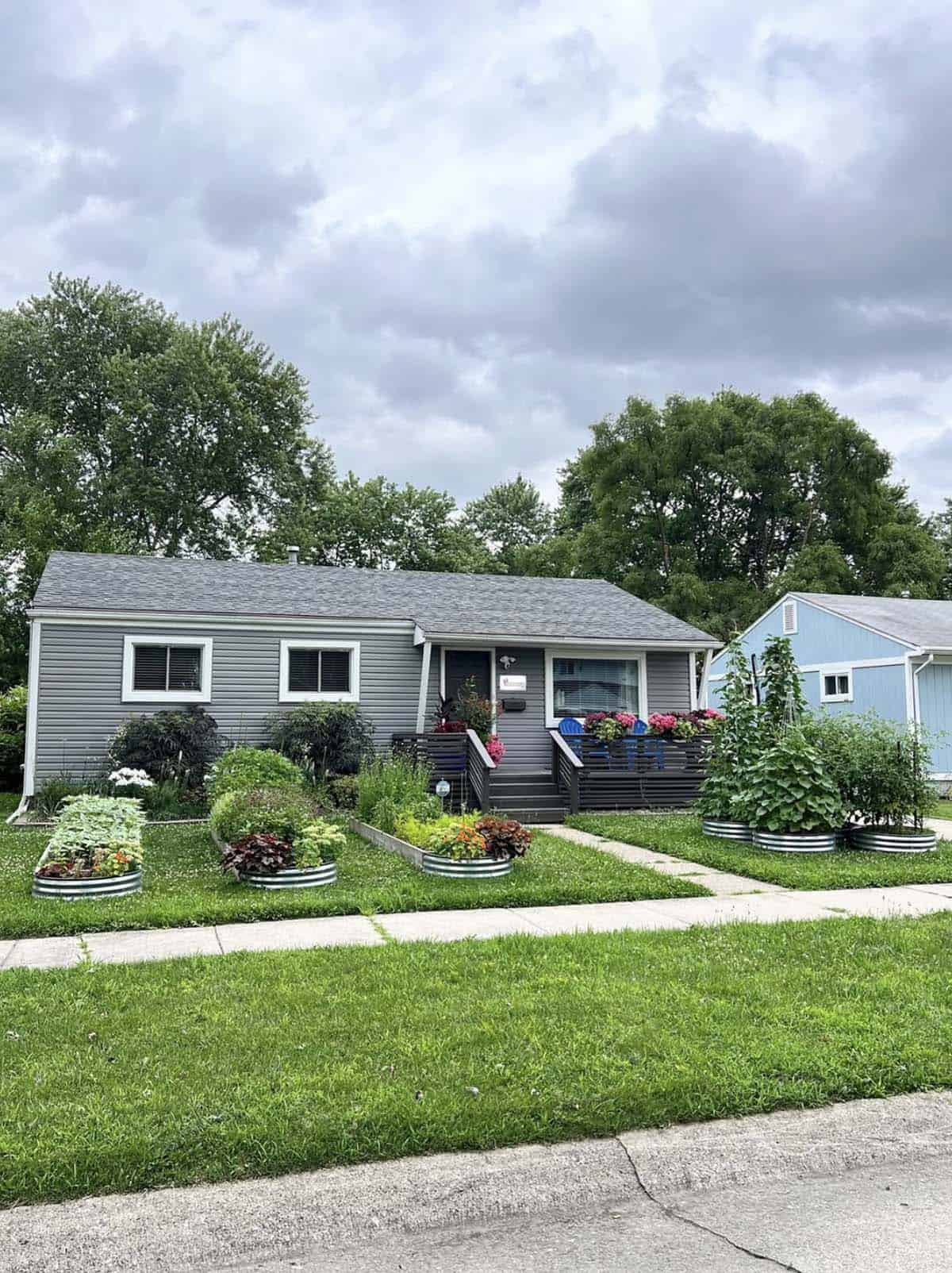
This urban front yard of a home in Detroit, Michigan, features a mix of galvanized circle and rectangular raised beds dotting the lawn. The circle beds are planted with tomatoes, pickling cucumbers, and pole beans, while the rectangle beds are filled with flowers for cutting and arranging. It is a clever way to have the best of both worlds, a productive vegetable garden and a steady supply of fresh blooms, without giving up the whole lawn. (via @flower.church / Instagram)
8. Turn a Sloped Front Yard into Tiered Raised Beds
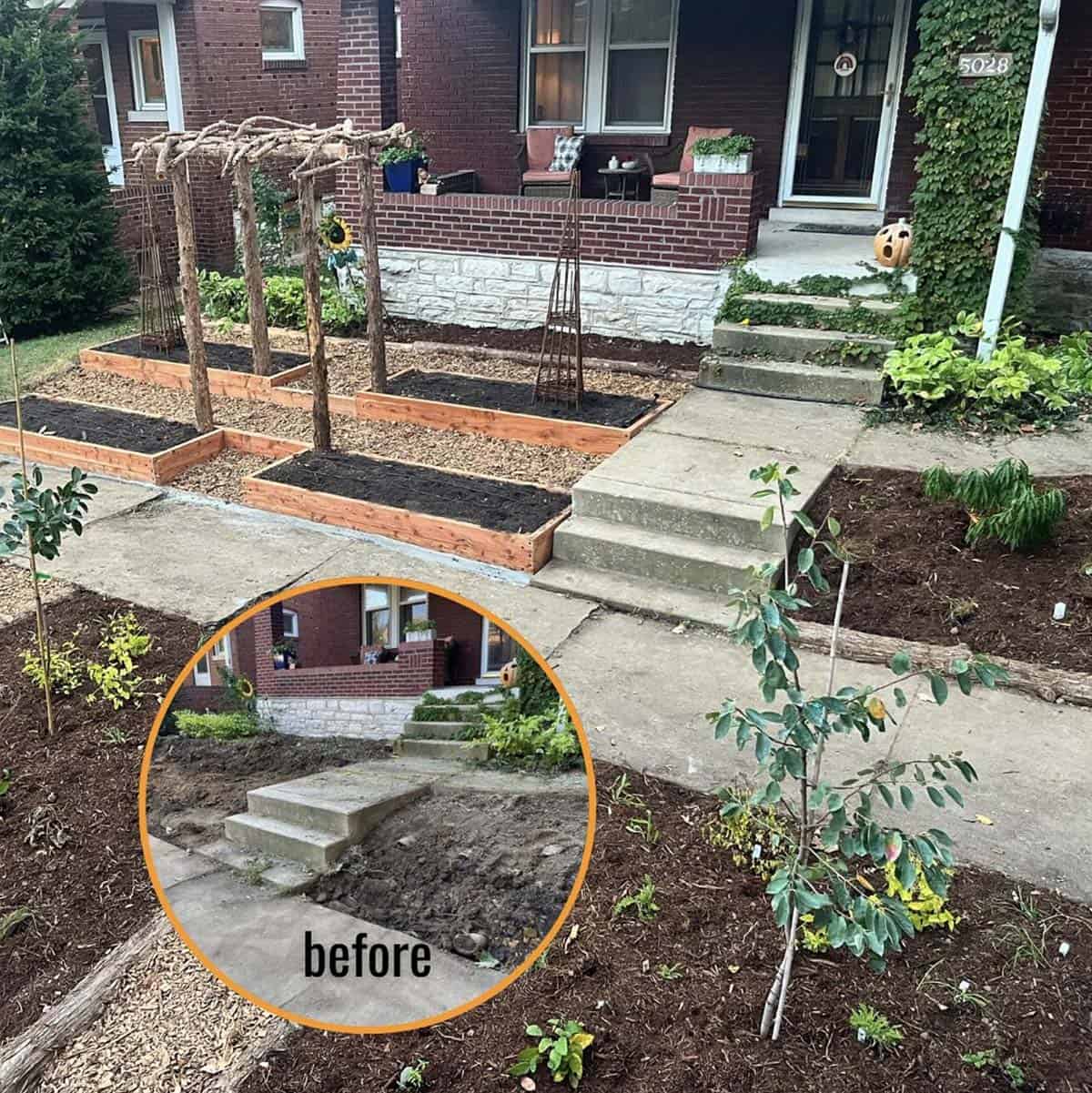
A sloped city lawn was transformed into a stunning, functional foodscape. This front yard transformation solved several challenges by replacing the steep slope with beautiful 2-tiered garden beds along the sidewalk. The tiered design adds visual interest while preventing erosion, improving drainage, and maximizing growing space for fresh produce. The beds were filled with premium soil and compost, wood chips were added, pathways were created for a natural look, and a drip irrigation system was installed for low maintenance. What was once a tricky slope is now a thriving edible landscape ready for planting, growing, and harvesting. (via @customfoodscape / Instagram)
9. Kitchen Garden with Terraced Cedar Raised Beds
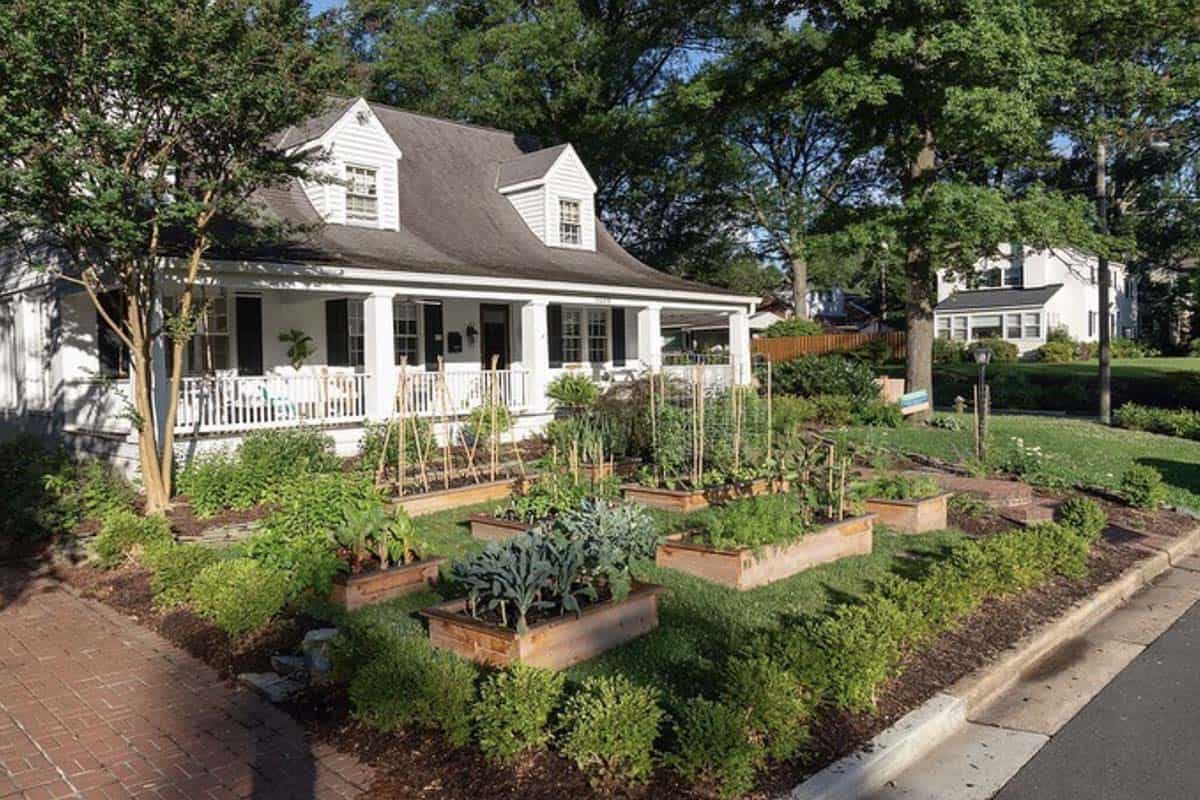
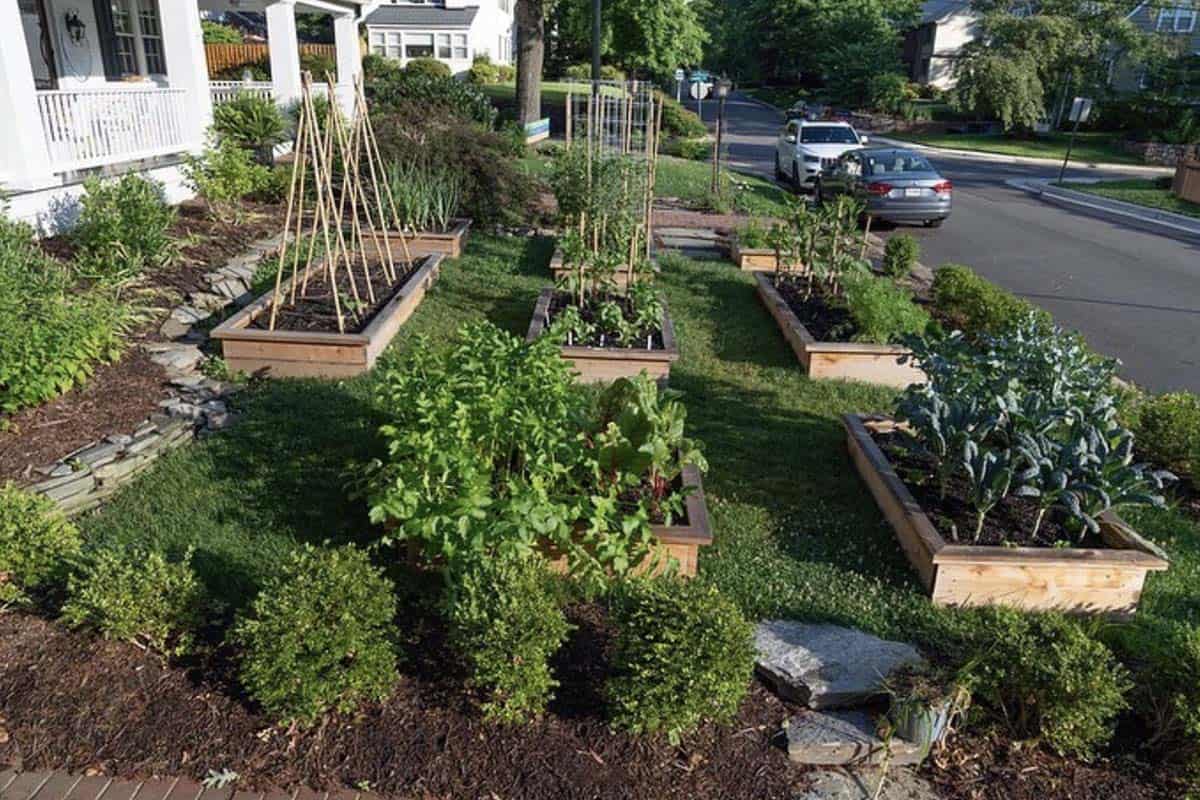
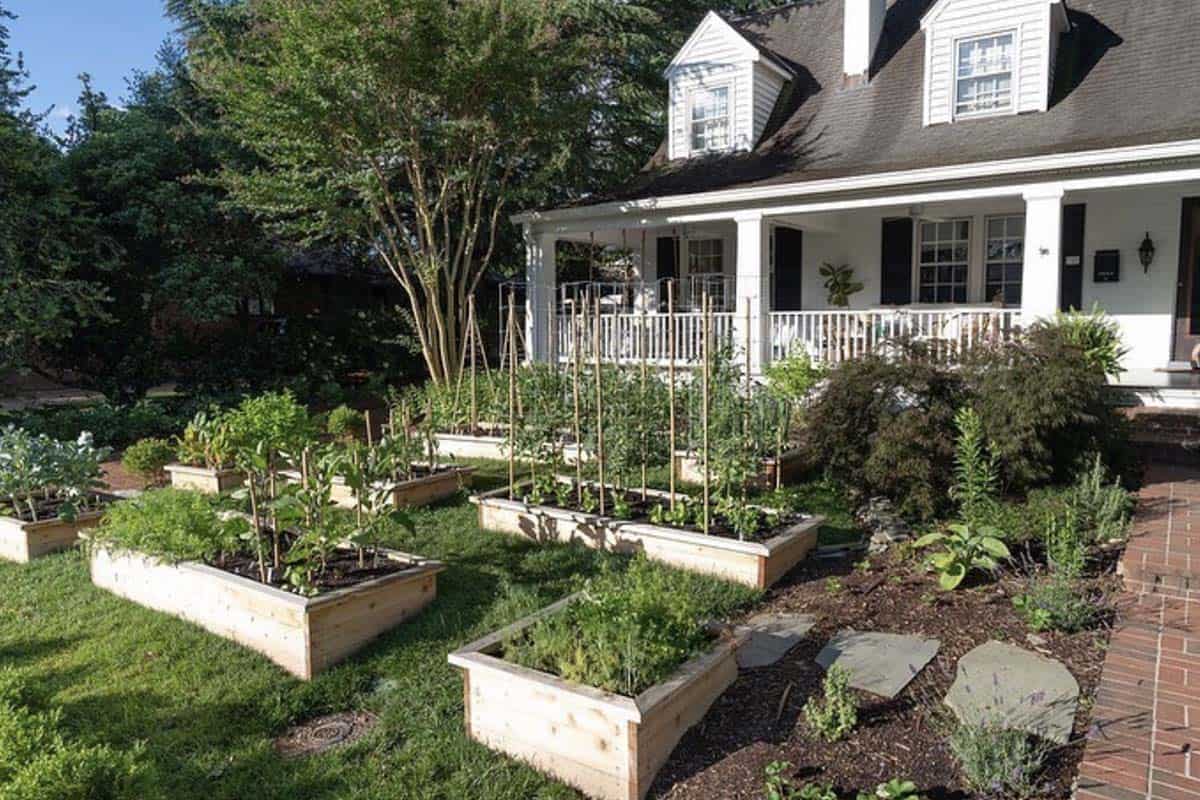
This stunning front yard kitchen garden in Washington, D.C., turns a sloped lawn into a neighborhood showpiece. The cedar raised beds are terraced into the slope and built with custom sitting ledges, making the garden as functional as it is beautiful. The border is landscaped with perennial herbs, pollinator-friendly flowers, and tidy boxwoods to keep it looking polished year-round. As the homeowner puts it: “We love the culture it is promoting with our neighbors. So many great conversations happen there, and the neighbor kids come to pick fresh snacks.” (via @abbycruikshank / Instagram)
10. Cottage-Potage Front Yard
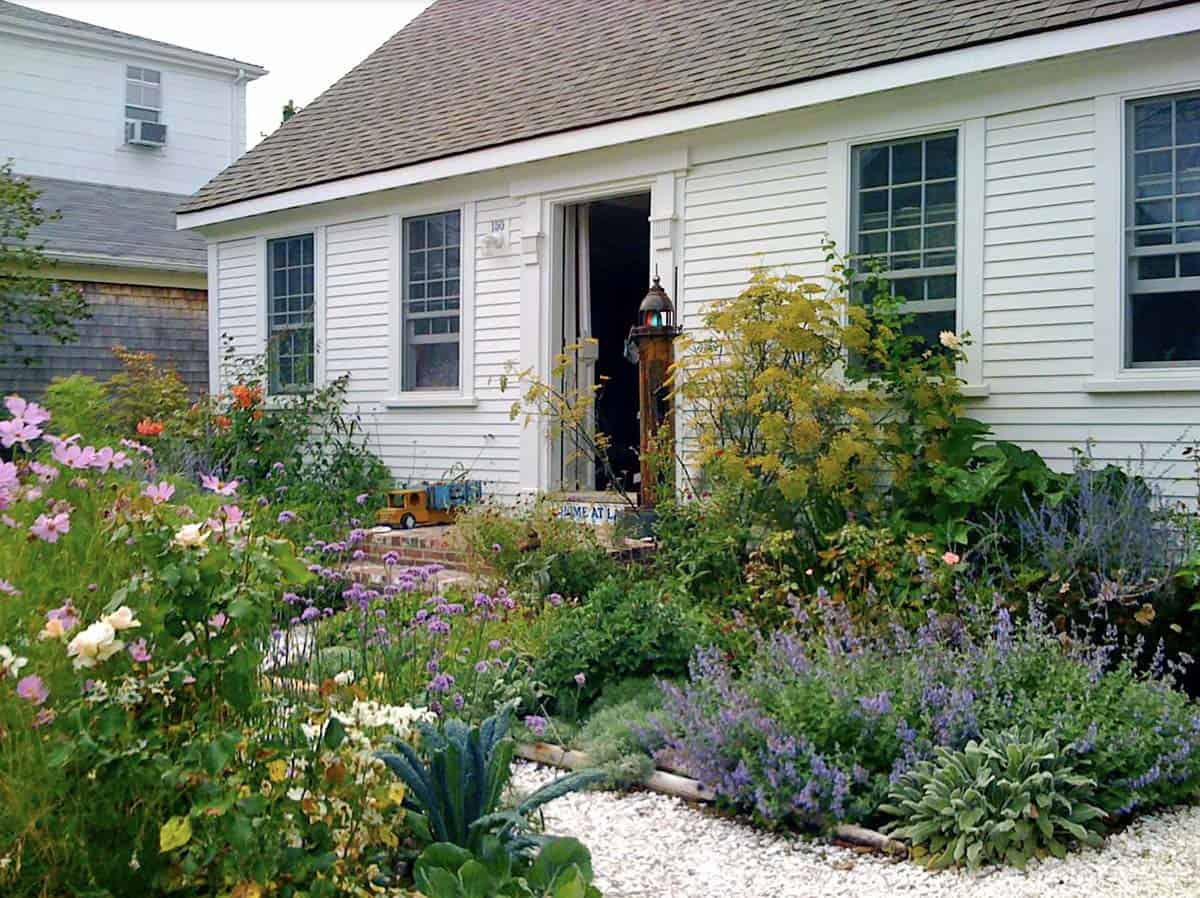
This cottage-potage-style front garden of a home in Provincetown on Cape Cod features kale, edible herbs, and squash growing alongside cosmos, roses, catmint, and lavender, creating gorgeous curb appeal. The gravel path keeps it looking intentional rather than wild, and the mix of purples, pinks, and greens creates a front yard that is as beautiful as anything growing out back. (via Becky Harris)
11. Front Path Lined With Edibles
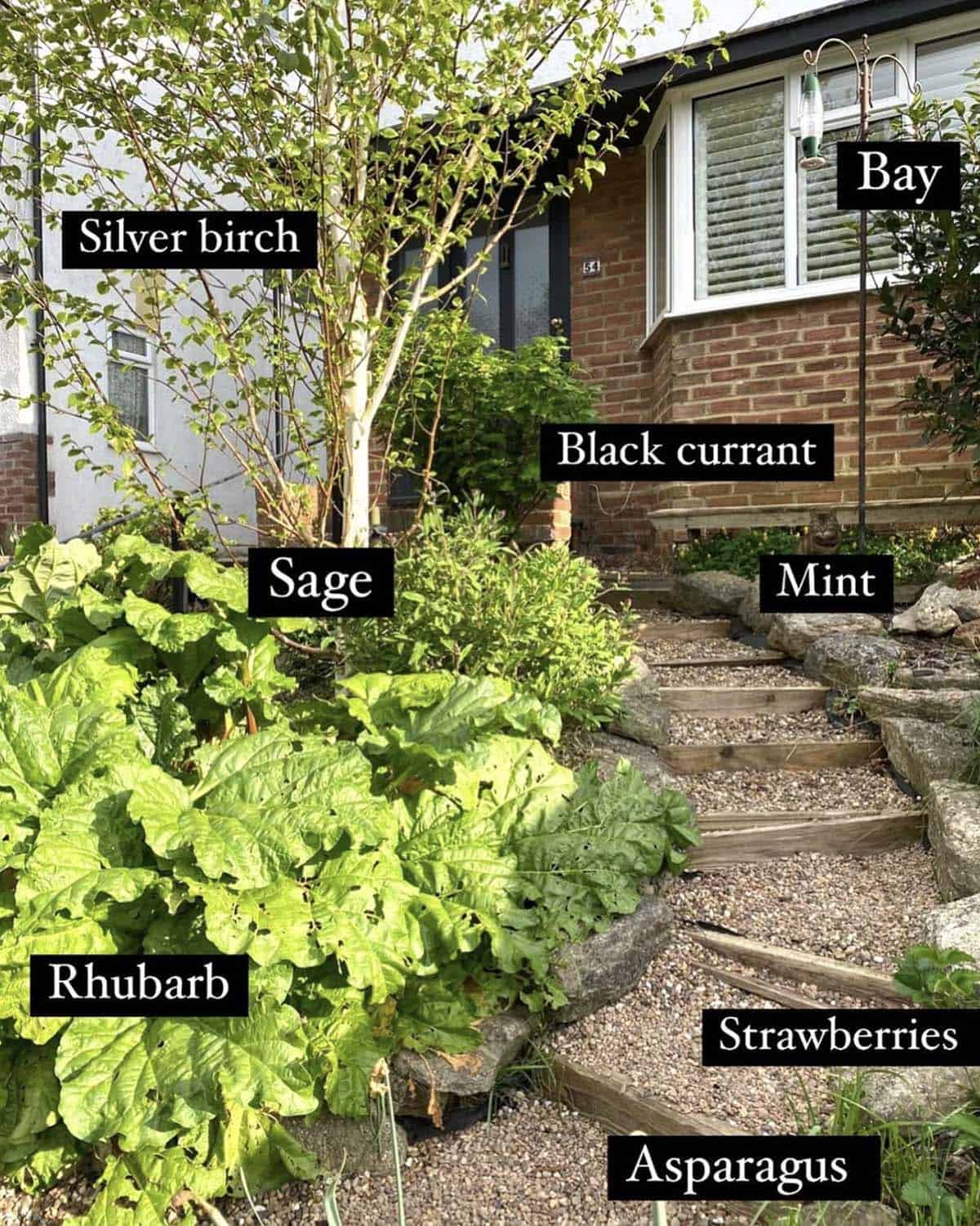
This front garden pathway of a home in the UK is lined with edibles, producing a generous harvest of food and herbs. Rhubarb, sage, black currant, mint, strawberries, asparagus, and bay grow alongside a silver birch, with gravel and wood steps winding up to the front door. It is low-maintenance while looking beautiful: a small amount of weeding two or three times a year, a mulch of compost and manure once in winter, and the rest is harvesting. In the UK climate, it does not even need watering most years. (via @perma_flo / Instagram)
12. Turn an Awkward Slope into a Thriving Edible Garden
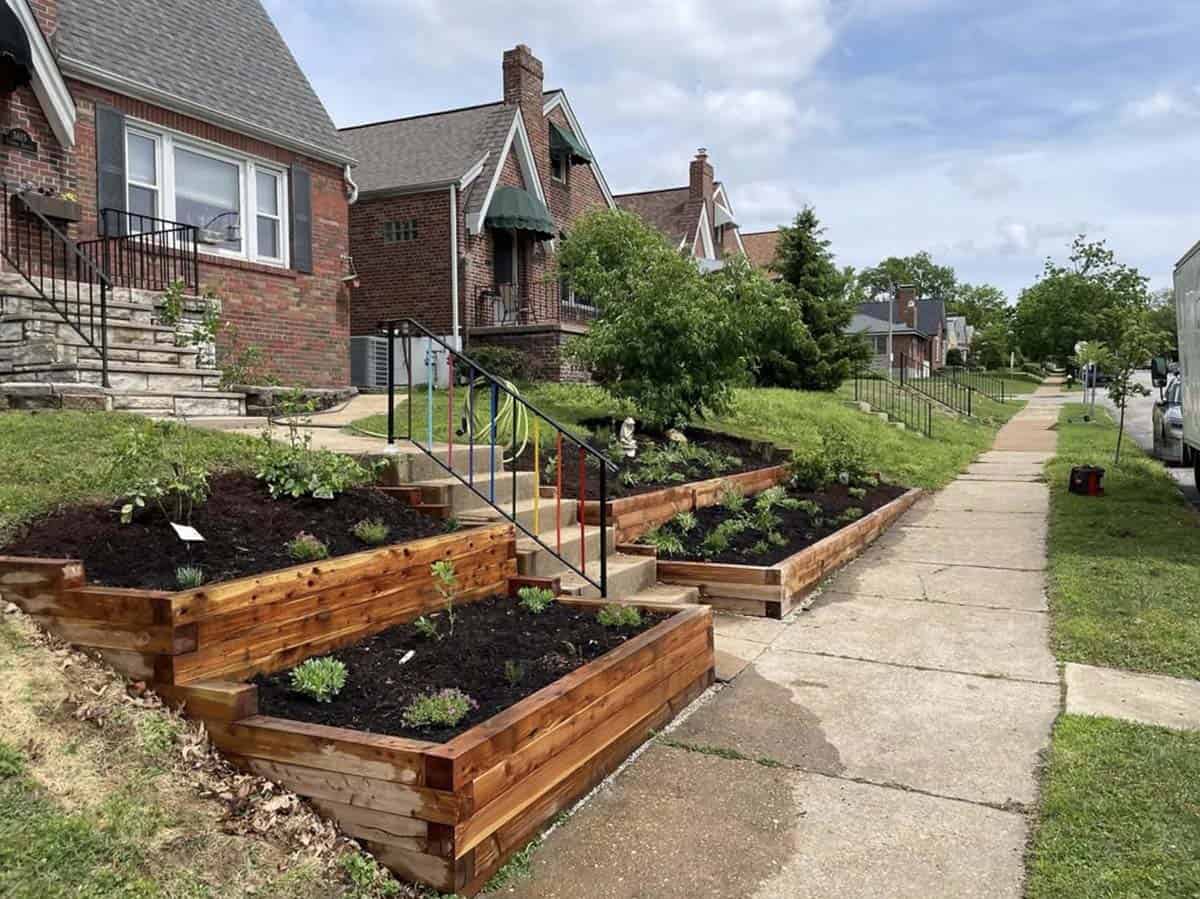
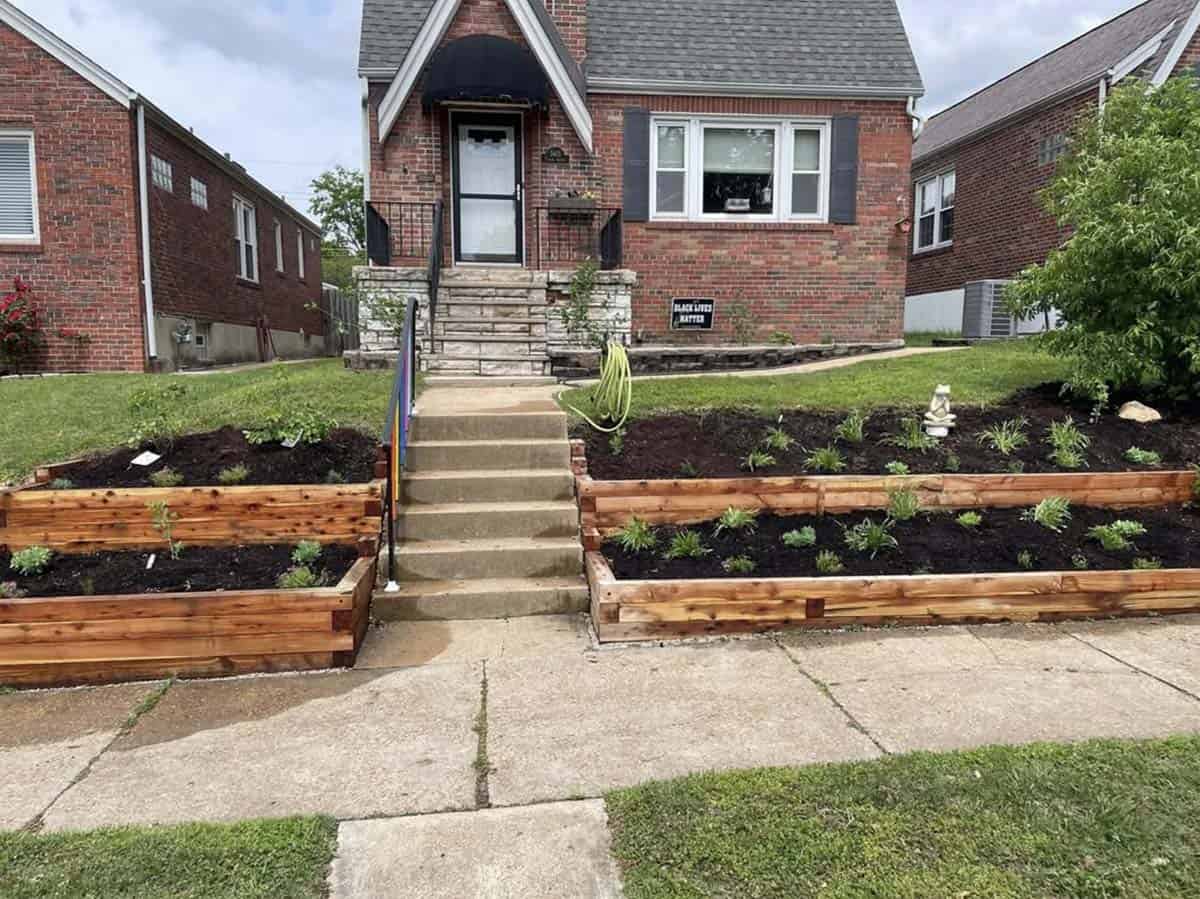
This hillside in St. Louis used to just sit there, hard to use, hard to maintain, and not much to look at. Now it is packed with food, pollinator plants, herbs, and enough texture and movement to keep it interesting through the seasons. Blueberries and aronia were planted up top, thyme and lavender were tucked in throughout, and natives such as blue false indigo and Arkansas bluestar were mixed in. A retaining wall built from local eastern red cedar ties the whole thing together beautifully. Sometimes, the most awkward part of a property becomes the most interesting space. (via @customfoodscape / Instagram)
13. Kitchen Garden in Place of a Front Lawn
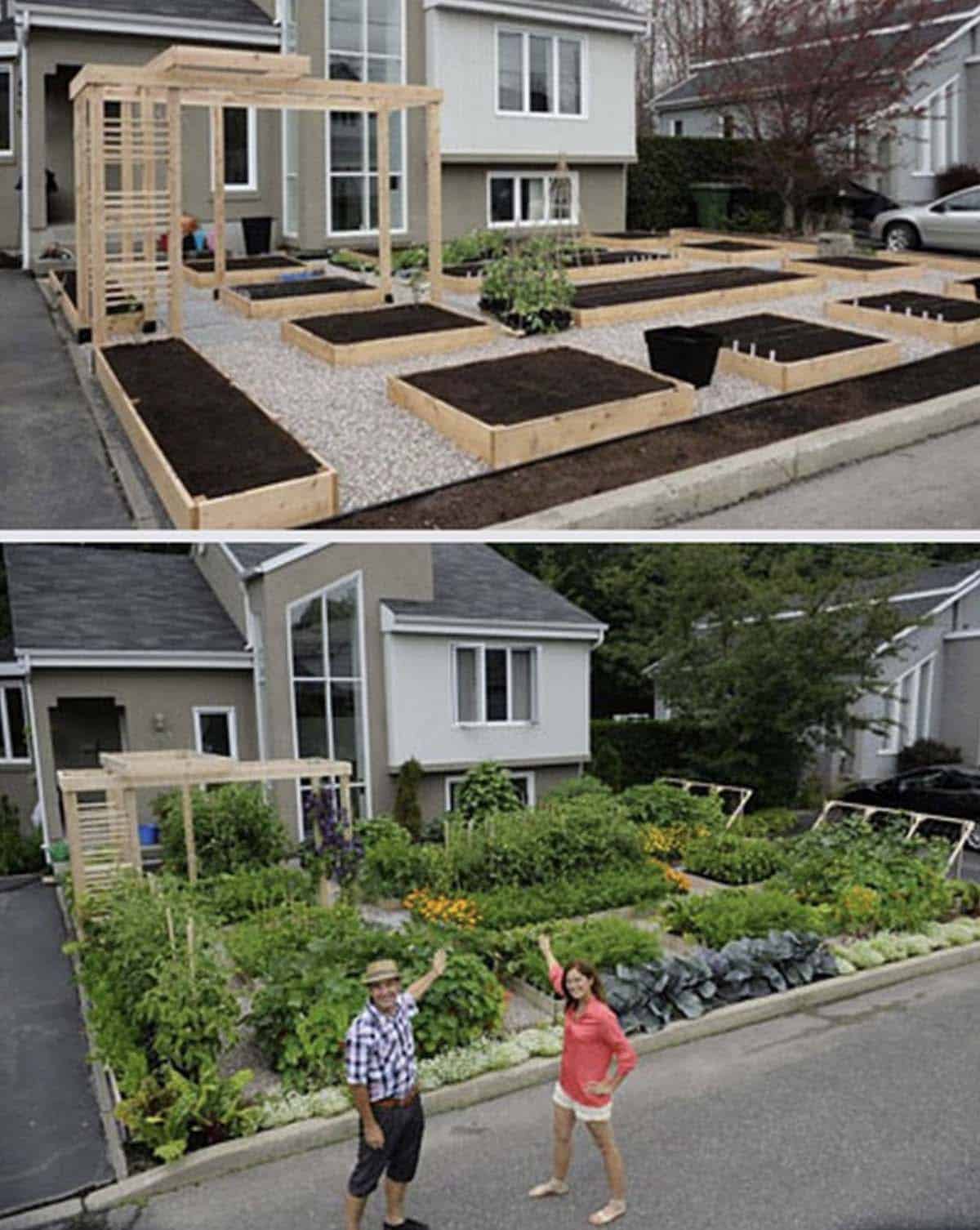
Michel Beauchamp and Josée Landry turned their front yard in Quebec, Canada, into a lush food garden for a simple reason: the back yard was too shady. The before photo shows a neat grid of fresh cedar raised garden beds and a wooden arbor ready for climbing plants. The after photo tells the rest of the story: a thriving, abundant garden bursting with vegetables, marigolds, cabbage, and herbs. (via @g.bergeron_photographe for @gardeners / Instagram)
14. Use Row Covers and Obelisks to Extend Your Growing Season
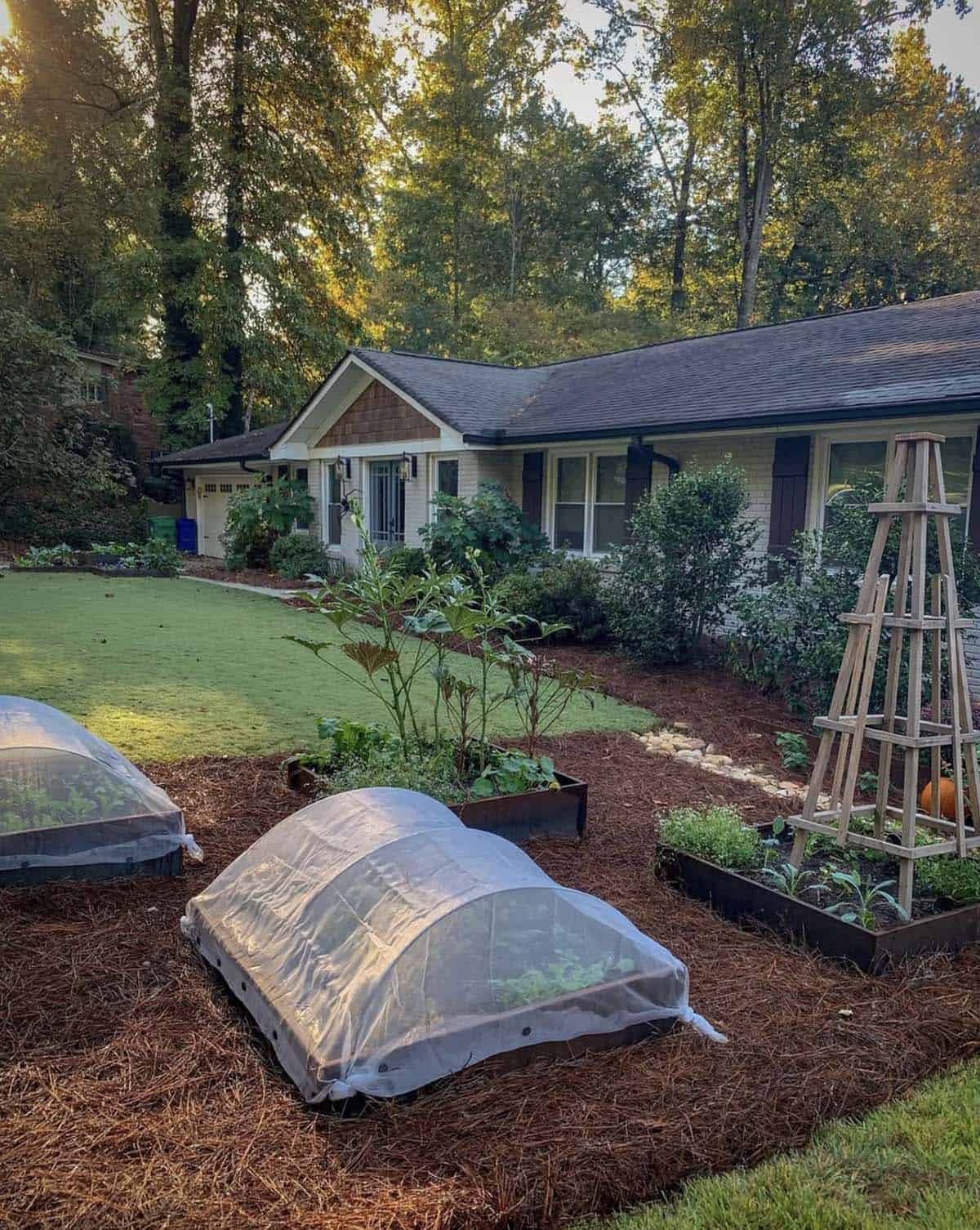
This front yard edible garden at a home in Georgia is set up for serious year-round growing. Corten steel raised beds are tucked into the landscape alongside row cover tunnels that protect cool-season crops from frost, while a tall wooden obelisk adds height and structure for climbing plants. A river rock path winds between the beds, keeping the garden looking polished even in the off-season. (via @fischer_busby / Instagram)
15. Galvanized Raised Beds for a Polished Edible Yard
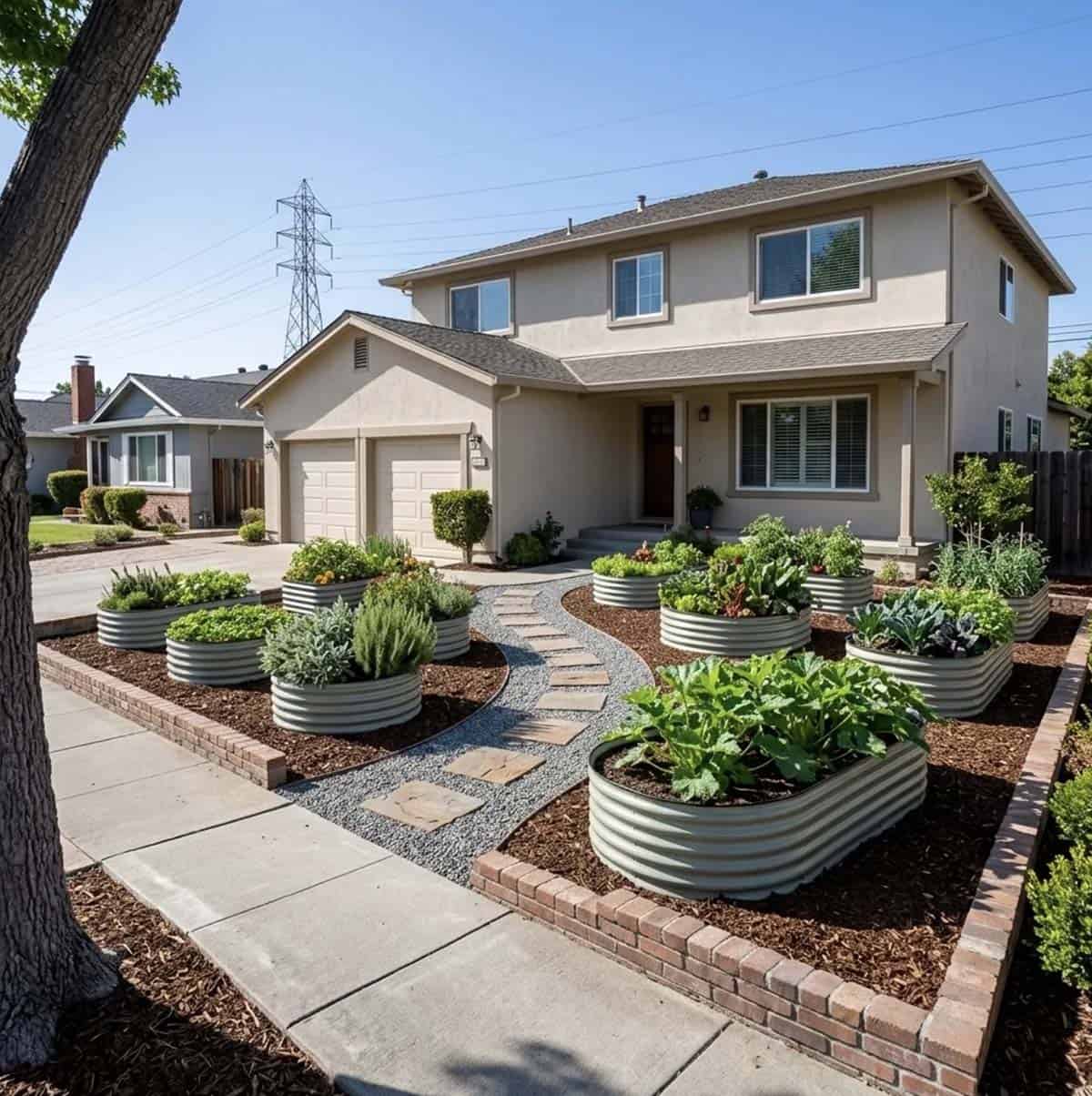
This front yard in California strikes the perfect balance between style and productivity. A winding gravel and flagstone path runs between galvanized oval raised beds planted with lettuce, chard, lavender, herbs, and brassicas, all set within a tidy brick border and wood-chip mulch. The oval beds from Oro Garden give the design a more sculptural look than traditional rectangular raised beds, making this a visually appealing, edible front yard. (via @oro.garden / Instagram)
16. Add Built-In Trellis Panels to Your Raised Beds
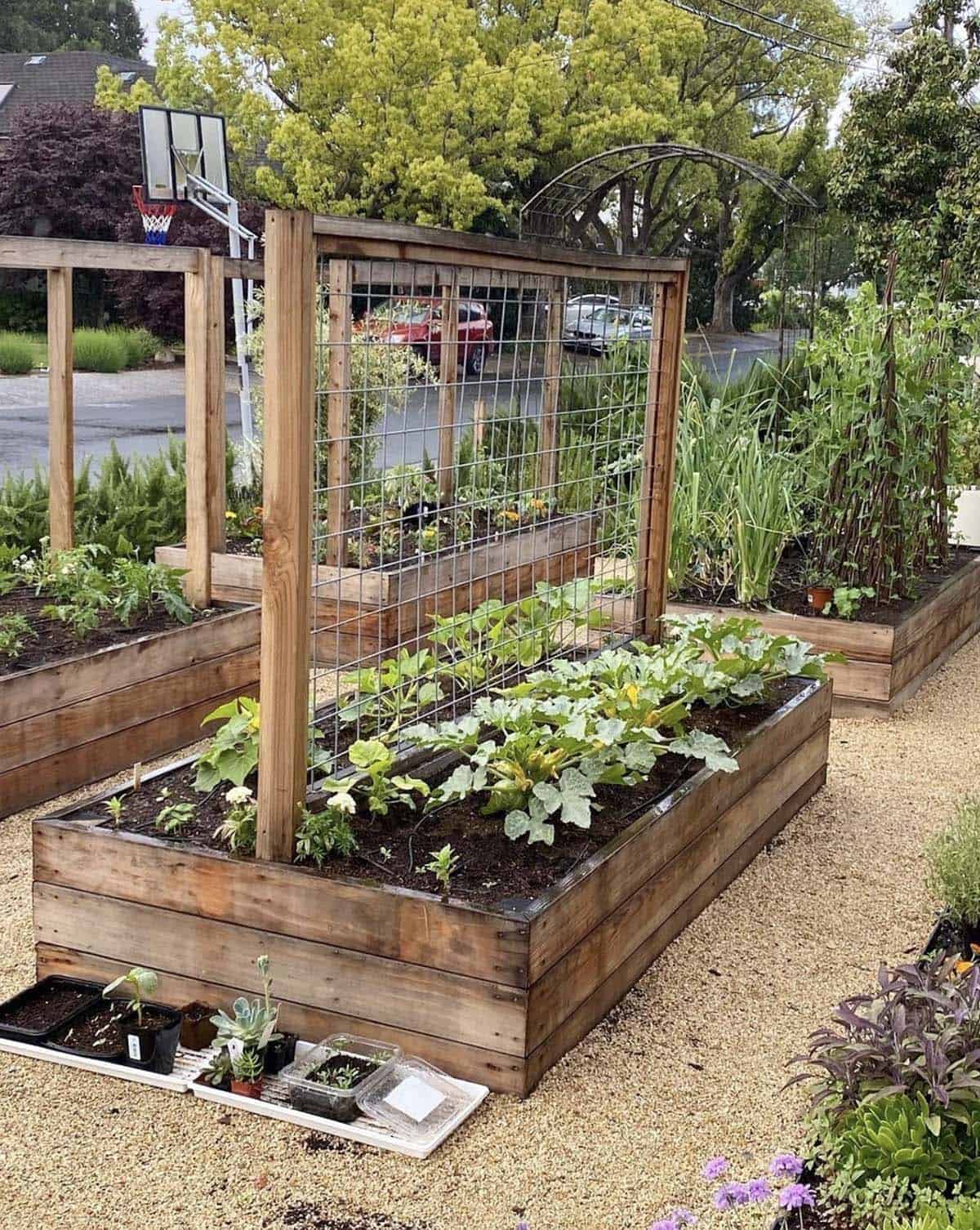
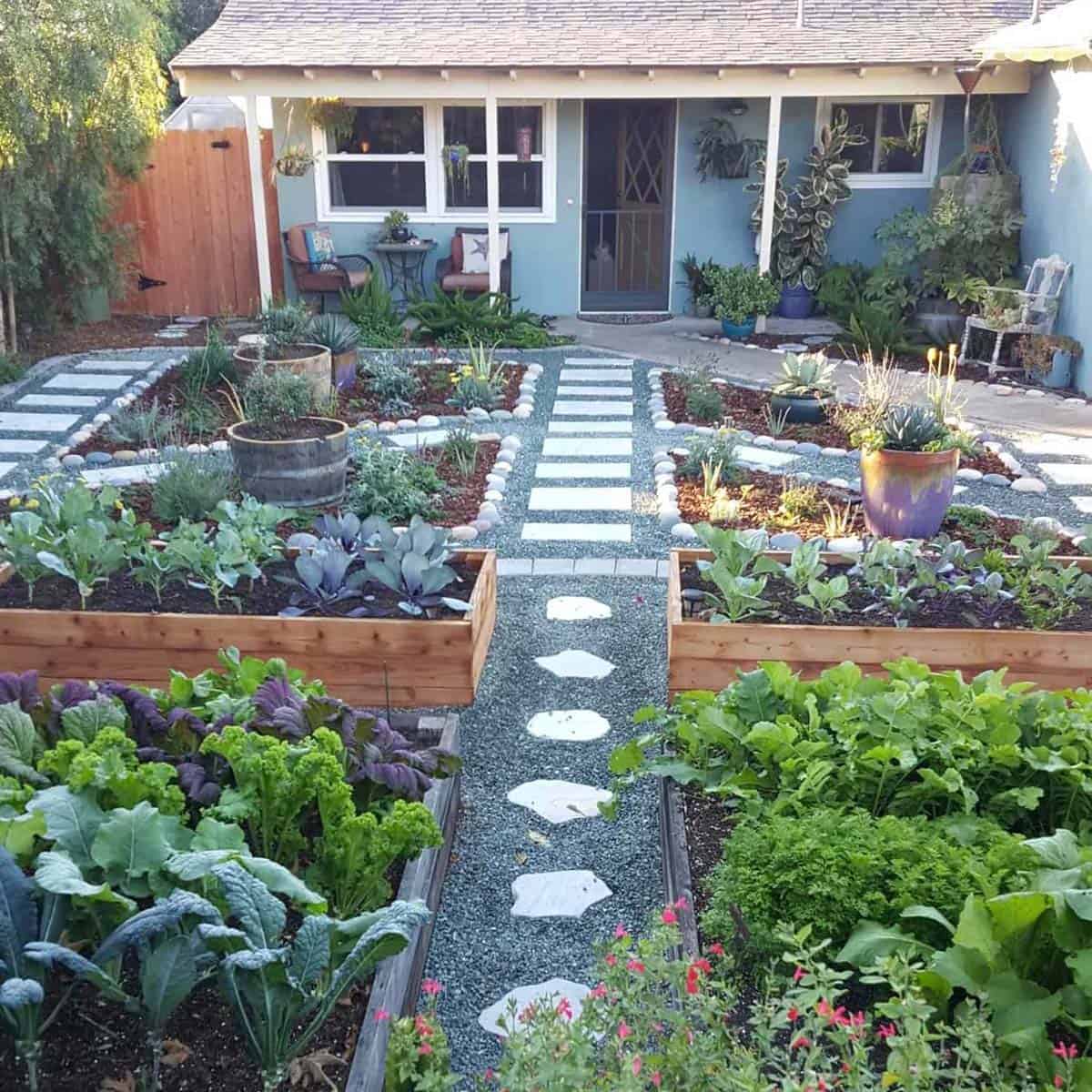
The beds of this beautiful front yard garden are 4X8, they are 18” tall. This size works well if you have space all the way around the bed to work both sides. If one side is up against a wall/fence/landscaping, etc., the homeowner recommends no more than 40” wide so you can work the back of the bed. They used mostly (3) 6” boards (they have a slight slope, so a few spots needed a partial board to keep all beds level at 18”h).
The 6” boards are just right so that you see 3 planks without it getting too tall. The taller the bed, the more soil you need to fill it! To make the hog wire trellises, the homeowner followed a tutorial from @urbanfarmstead. The hog wire was purchased from Tractor Supply. For the gravel, it’s a 1/8” crushed granite called Desert Gold. It was mixed with some decomposed granite to stabilize and slightly compact the paths.
Veggies include tomatoes, peas, cucumber, squash, and tomatillos. “I sure love this sunny spot we call home. Our front yard farm brings me so much joy, whether tending to the crops or feeding my family, this plot of sunshine is incredibly rewarding. Neighbors are always stopping to talk and ask questions,” states the homeowner. (via @simpleproofgarden / Instagram)
17. Urban Edible Garden with Raised Beds
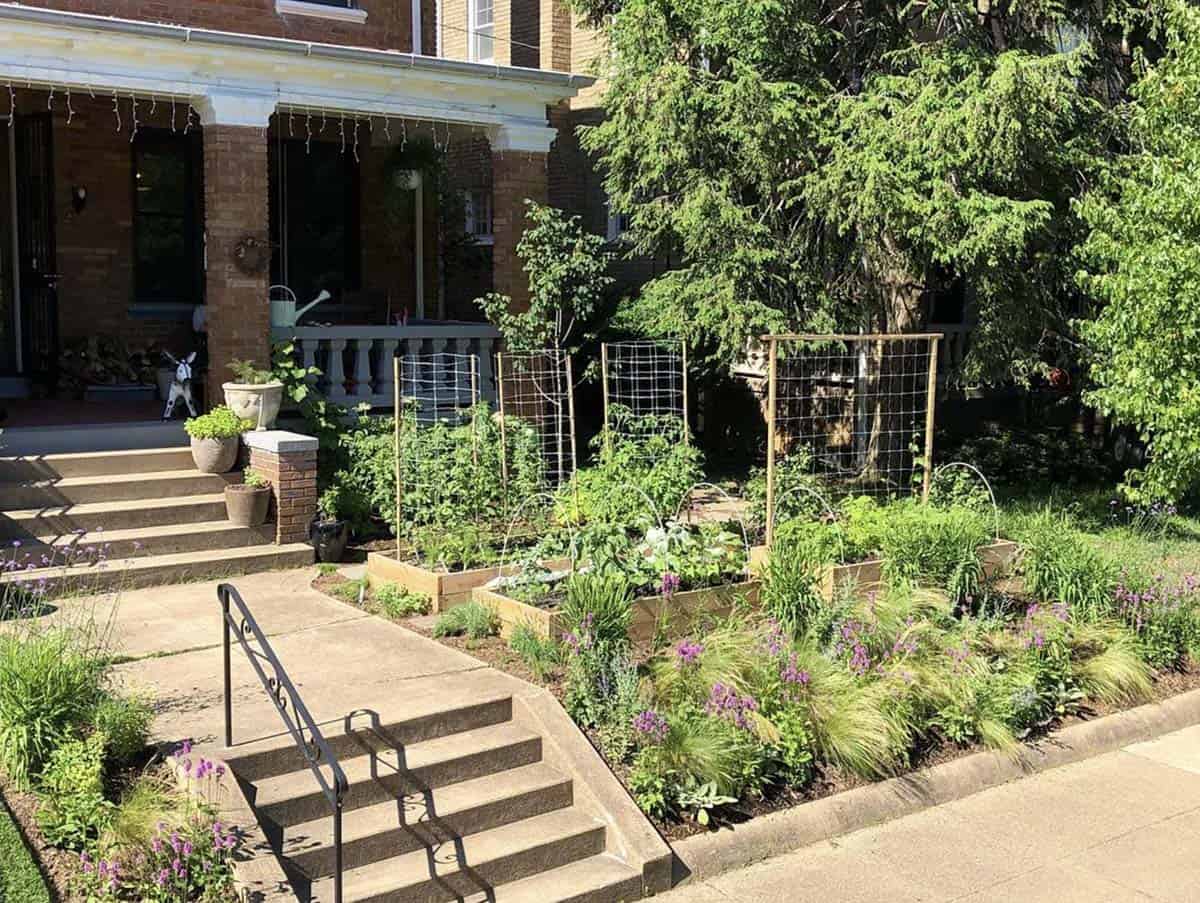
Just three months after design and installation, this front yard garden in Washington, D.C. is thriving. The homeowner removed every square inch of grass to create space for food production and an urban habitat for pollinators and beneficial insects. Cedar raised beds with wire trellis panels grow tomatoes, kale, cabbage, herbs, and beans, while Mexican feather grass, Hummelo stachys, nepeta, verbena, and chives weave through the borders, drawing pollinators and adding season-long color. Front yard gardens are unique in that they spark connections in a neighborhood. (via @loveandcarrots / Instagram)
18. A Front Yard Transformed into an Edible Paradise
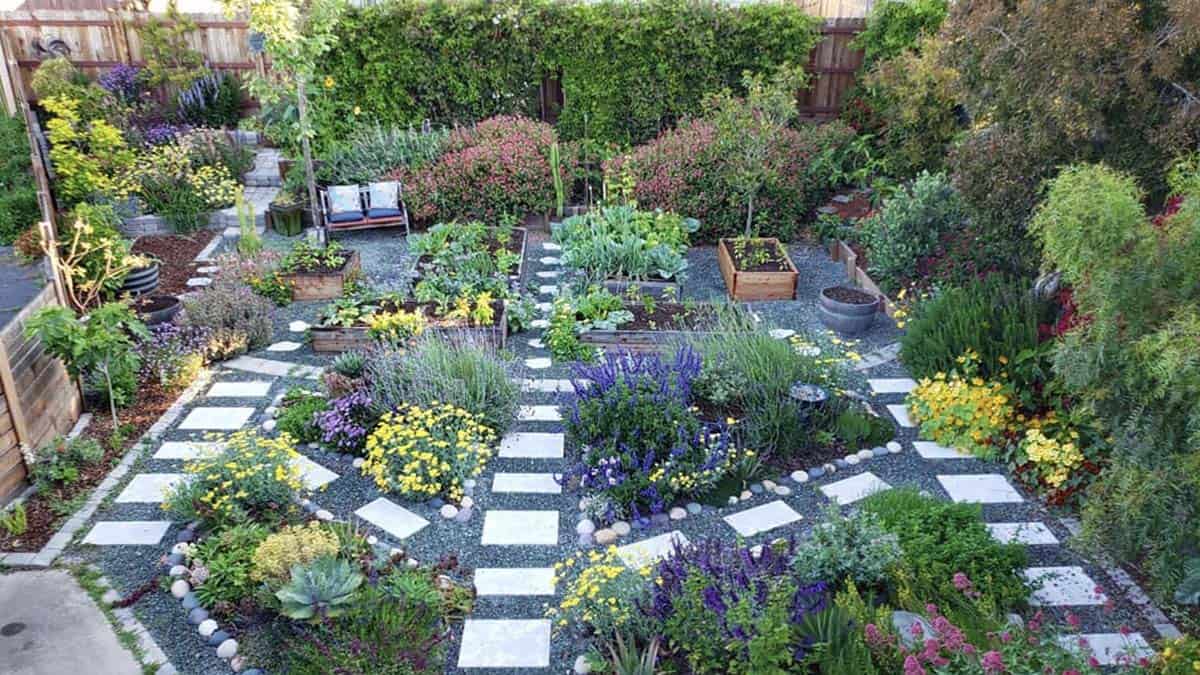
This stunning aerial view shows what six years of patience and vision can produce. What was once a weedy grass lot is now a lush, layered front yard garden with cedar raised beds, gravel paths, stepping stones, pollinator plantings, trellises, vines, and fruit trees. The property sits set back off the street behind another home, giving it the feel of a private sanctuary. The garden was tackled in three major stages: removing the grass and adding raised beds and gravel, establishing the pollinator zones, and finally expanding along the driveway. As the homeowner puts it: “Dream big, but remember it doesn’t happen overnight. Enjoy the process.” (via @deannacat3 / Instagram)
19. A Colorful Eclectic Edible Front Yard Garden
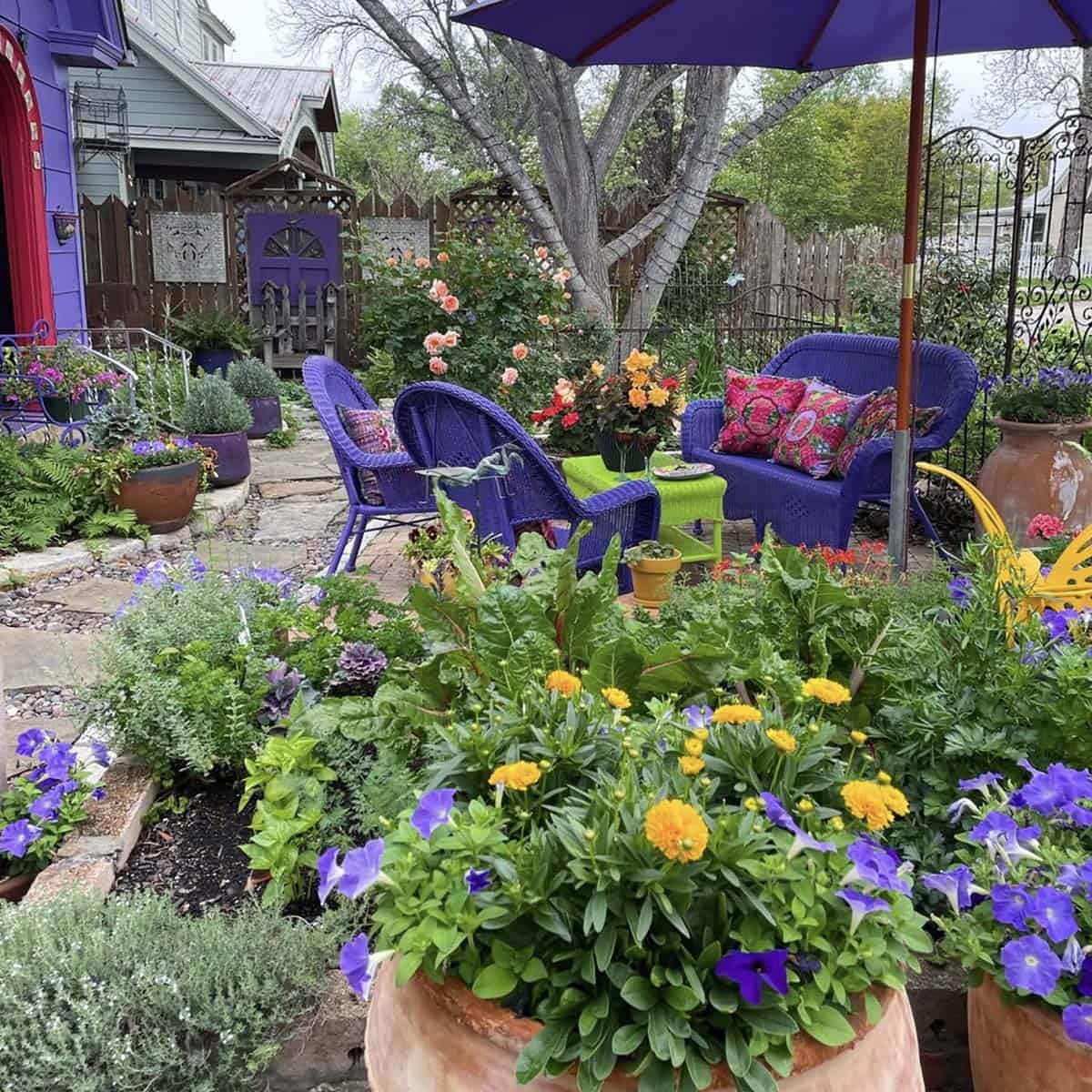
This is the front yard of Lucinda Hutson, an Austin-based cookbook author, herb gardener, and lifestyle writer whose colorful purple cottage in Austin’s Rosedale neighborhood has become one of the most celebrated private gardens in Texas. Her passion for purple runs through every corner, from the purple wicker furniture and purple gate to purple blooms throughout, with marigolds, petunias, roses, kale, and herbs spilling from terracotta pots in every direction. Bold and one of a kind. (via @pamdigging / Instagram)
20. A Fruit Cage Potager Garden
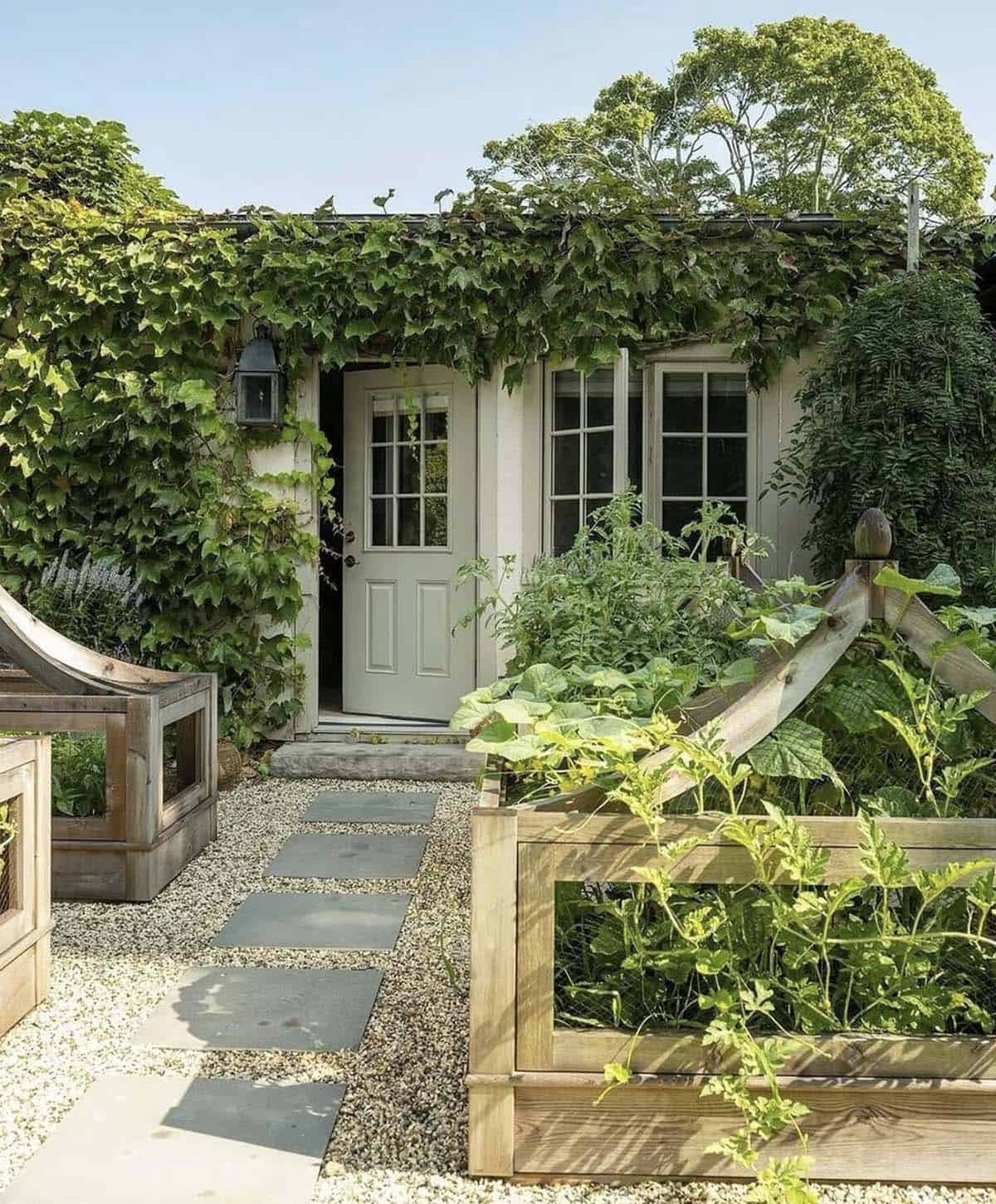
Climbing vines drape the facade of this cottage home, while bespoke cedar raised beds overflow with squash, tomatoes, and herbs alongside a bluestone and gravel path. A potager garden with style. (via @gentleman.gardener / Instagram)
21. Metal Raised Beds for a Refined Kitchen Garden
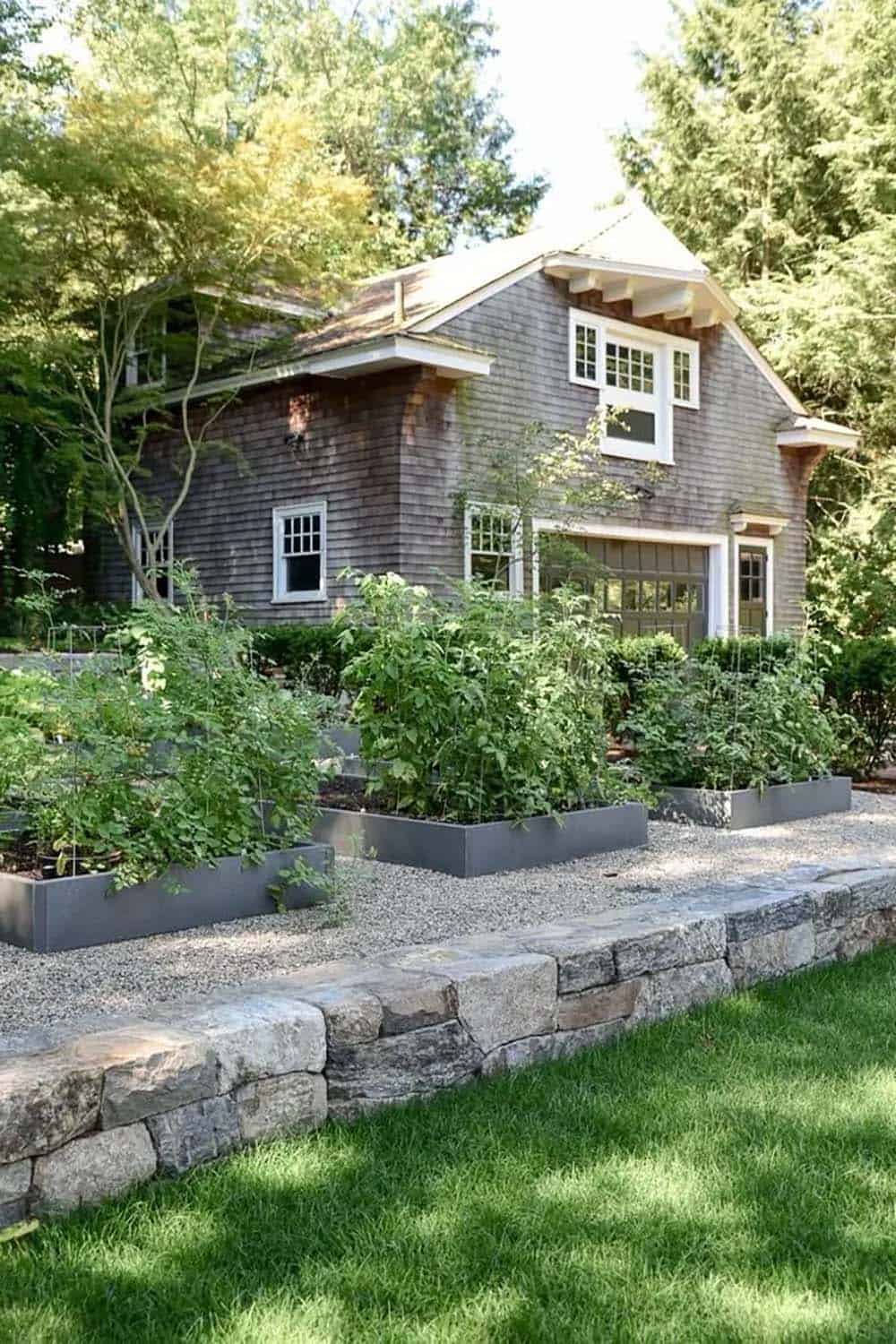
This kitchen garden at a cedar-shingled estate in Brookline, Massachusetts, keeps things refined and unfussy. Sleek gray metal raised beds planted with tomatoes sit on a gravel terrace edged by a fieldstone retaining wall. Clean lines, no clutter, and plenty of room to grow. (via Matthew Cunningham)
22. Raised Kitchen Garden Planters
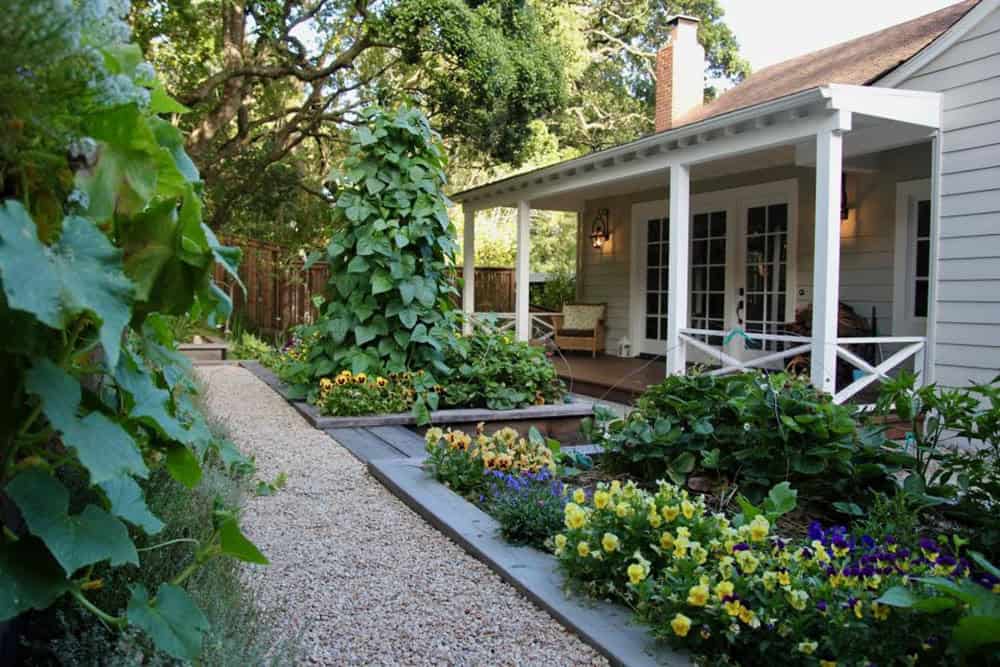
Raised redwood kitchen garden beds transformed this sloped front yard into a pretty and functional space. Gravel paths and redwood steps ease access between the beds, which overflow with climbing beans, squash, and pansies. This beautiful scene can be comfortably enjoyed from the shade of the porch, an added bonus! (via Christian Douglas Design)
23. Start Small with a Single Herb Container by the Front Door
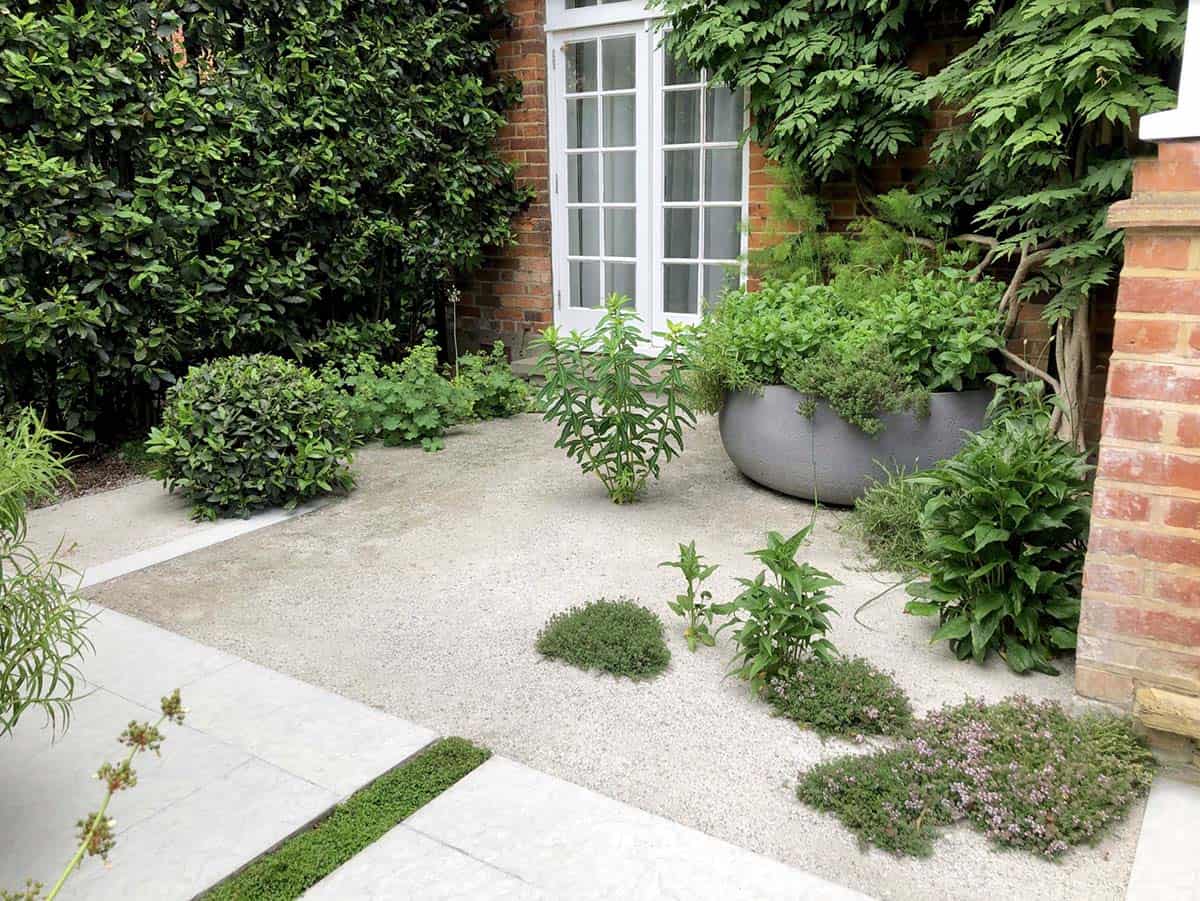
Not every front yard edible garden needs to be a major undertaking. Here, a single large gray oval planter filled with herbs sits right next to the front door, surrounded by thyme creeping through the gravel, a clipped boxwood ball, and climbing vines on the brick facade. It is a quiet, considered approach that shows you don’t need a lot of space to grow something edible right outside your door. (via Charlotte Rowe Garden Design)
Should you add a vegetable garden to your front yard?
Here is what some Reddit users have to say:
- All my veggies are out front. I talk to admiring, curious passers-by all year long about the evolution of my garden. I hand out produce when I can. I interplant lots of flowers (this year was heirloom marigolds, scarlet runner beans, calendulas, heirloom alyssum, hollyhocks, lots of herbs that I allow to flower, and more) so it’s eye catching and has a cheerful, laid back design element. I have NEVER had such good pollination – the bird and insect diversity in my yard just exploded. Next year I’m going to emphasize native wildflowers. My goal is to be an ambassador for the no lawn movement and eat well. Join us! — @riparian_delights
- We have chickens in the backyard that will devour everything and there is better sun the the front yard :)I live in a neighborhood so it’s just trying to have things in nice looking planters to not make the front yard look trashy. — @shelleyrp18
- I am using a raised bed square foot gardening plan to make my front yard garden look nice. That’s where the light is, so it’s the only choice if I actually want food. I have the benefit that my front is very small, so it actually looks much better than a tiny strip of grass next to some bushes. —@non_linear_time
- I do it (im a renter, and i have access to the front and side of the house, which gets the most sun). Im also in a city. A few people here do it, its not unheard of. Also, because front yards offer the opportunity for social interaction, it can be nice to chat with neighbors or passers by about what u got growing. I think you should go for it! — @Jella7ine
- If you live in a place where the roads get salted in the winter you will want to plant far enough away from any over spray. The salts will stay in the soil and you’d have a hard time growing in it come spring. Also some municipalities have laws around gardening in the front yard so make sure you check up on that before you plant. If that all checks out the. Go for it! — @meow-meow-meow5
- Do it! I live in a townhome with an HOA that’s not that active. I tore out the scrubs planted by the HOA and have grown basil, rosemary, peppers and sunflowers. It’s the area that gets the most sun. Neighbors seem to like it because I can see them running their hands over the rosemary as they walk by. — @dirt_runnning
- Do it, do it! Yay! But lead paint is a genuine concern so do a soil test if possible. If your soil tests clean, you can follow its suggestions and just add compost, mulch, and whatever mineral the test recommends. No need for raised beds. — @HighColdDesert
- My front yard has sun…backyard is shade. We have our edible gardens in the front. I have tried to make it attractive so we have various raised beds as well as a plan of native plants supporting an avocado tree and blueberry bushes. — @Green-Eyed-BabyGirl
- I have veggies in my front yard, tucked in with some other stuff so not a straight up vegetable garden, although I have seen that work too! My city technically requires maintained grass and landscaping of a certain height, blah blah blah, but it’s not enforced unless somebody really complains.
To prevent complaining, here are my tips:
No tomatoes. At least for me. I grow my tomatoes elsewhere. They are scraggly looking plants and instantly recognizable even to non-gardeners.
I also plant flowering plants, and keep something blooming at all times. If possible. People look at the flowers. A couple of years ago my blackberries had turned into a veritable thicket in my front yard, the butternut squash vine was going crazy with fruit — and when I was telling someone where my house was they said, “oh the one with the sunflowers! I drive by those everyday!” Nobody notices the food if there is a sunflower blooming. In my area, zinnias and marigolds are easy from seed. Purple coneflower, coreopsis, and rudbeckia take longer but once established they come back every year.
Potatoes, bush beans, annual and perennial herbs, greens (lettuce, Chard kale), basil, okra, fennel, squash, berries — All of these and more I have harvested from the front yard. I’ll be leaning heavily into some very attractive Asian mustards next year. — @CitySky_lookingUp - Depending on what zone you’re in, I suggest avoiding wood because of termites if you go with a raised bed. Alternatively, you could use pressure treated wood or, as I’ll be doing in the future, metal. — @eagles_arent_coming






0 comments