


❤️ Would you like to save this?
By saving, we'll email this post to you for later. Unsubscribe anytime.
A shade garden can be the most rewarding landscape you create, yet it is often overlooked. While gardeners favor full sun, some of the lushest, most serene gardens thrive without it. The trick is to work with the shade rather than against it, embracing its coolness and deep green hues, and allowing just a single pop of color to delight the senses.
Whether you already have a shady spot that you are nurturing or you are looking to transform an underutilized space in your yard, these shade garden ideas will help you get started. We have also included the planting zones to help guide you. If you are unsure which zone you are in, you can check out this handy tool: USDA Plant Hardiness Zone Map.
Use Plants That Thrive in Shade
Creating a successful shade garden starts with selecting the right plants. Below are plants commonly used in shade garden design.
1. Tree Ferns
Tree ferns add height and a lush feel with their tall, arching fronds. They are often used as a focal point in shaded, humid landscapes.
2. Rhododendrons
A classic shade garden shrub, rhododendrons provide evergreen structure and abundant spring blooms in pink, purple, and white tones.
3. Azaleas
Closely related to rhododendrons, azaleas are widely recommended for partial shade thanks to their reliable flowering and seasonal color.
4. Hostas
One of the most trusted shade perennials, hostas are valued for their wide range of leaf shapes, sizes, and colors.
5. Brunnera ‘Jack Frost’
Known for its eye-catching silver-patterned leaves, this plant brightens darker areas and adds visual contrast.
6. Lamium ‘White Nancy’
A popular groundcover with silvery foliage, Lamium spreads easily and softens shaded garden edges.
7. Lenten Rose (Hellebores)
Hellebores provide evergreen or semi-evergreen foliage and offer structure and interest even in winter months.
8. Epimedium (Barrenwort)
Often recommended by landscape designers, epimedium thrives in dry shade and features delicate foliage and subtle seasonal flowers.
9. Bleeding Heart (Dicentra)
A spring favorite, bleeding heart produces arching stems with distinctive heart-shaped flowers that add elegance to shaded spaces.
10. Astilbe
Astilbe is frequently used in shade gardens for its feathery plumes in shades of pink, red, and white, bringing soft seasonal color.
11. Virginia Bluebells
These native woodland plants produce soft blue, bell-shaped flowers and are especially attractive to pollinators like hummingbirds.
12. Foxglove (Digitalis)
Foxglove adds vertical interest with tall spikes of tubular blooms that perform well in partial shade.
13. Oakleaf Hydrangea
A landscape designer’s favorite, oakleaf hydrangea offers large blooms that shift color through the seasons, adding long-lasting interest.
1. A Cottage Style Shade Garden
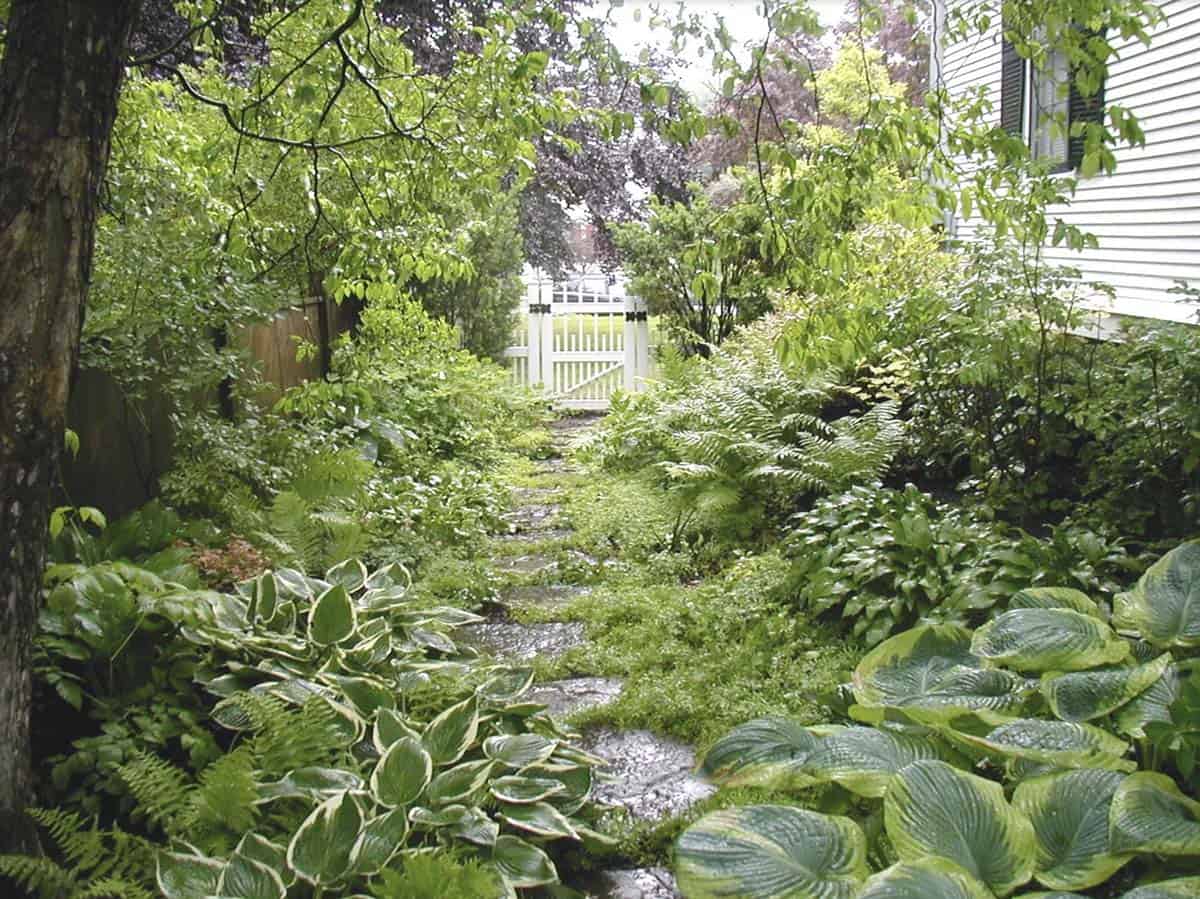
On the north side of a three-story home in Newburyport, Massachusetts, a struggling side yard was converted into a cottage-style shade garden. The area received little sun, and the previous lawn had never thrived, so it was replaced with a thoughtful planting scheme and a new stepping-stone pathway. The plant palette embraces the conditions beautifully, with mixed hostas (zones 3 to 9), bleeding heart, sweet violet (zones 4 to 9), McKana’s Giant columbine (zones 3 to 8), and sweet woodruff (zones 5 to 9) at ground level, and three fern varieties provide layers of texture: Japanese painted fern (zones 3 to 8), eastern hayscented fern (zones 3 to 8), and ostrich fern (zones 3 to 8). Check to see which zone you are in with this handy USDA Plant Hardiness Zone Map. (via Leonard Design Associates)
2. Woodland Shade Garden
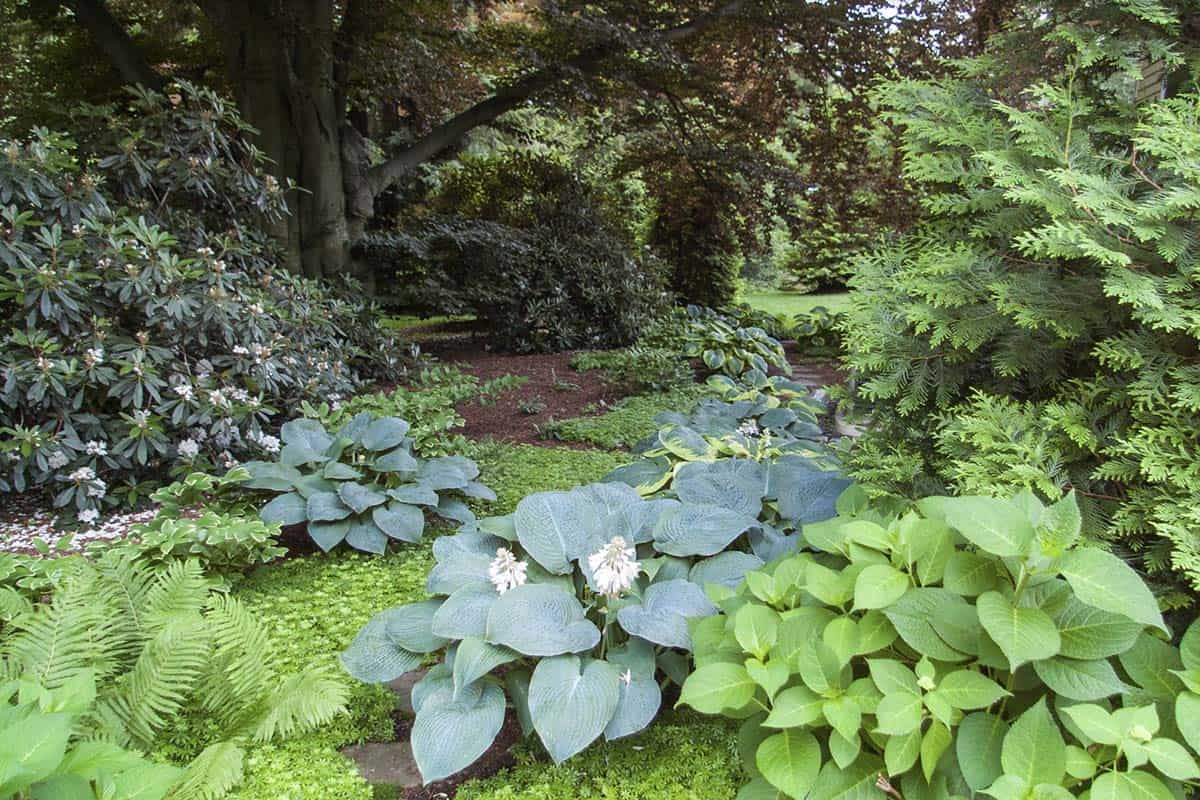
This woodland shade garden of a home in Boston, Massachusetts, features layered planting. Rhododendrons and a conifer anchor the mid-story, while blue-green hostas dominate the ground level, their broad textured leaves catching filtered light, and one variety sending up slender white flower stalks. Ferns soften the edges, and a carpet of sweet woodruff (Galium odoratum, zones 5 to 9) spreads beneath. (via a Blade of Grass)
3. Define Paths Through The Shade
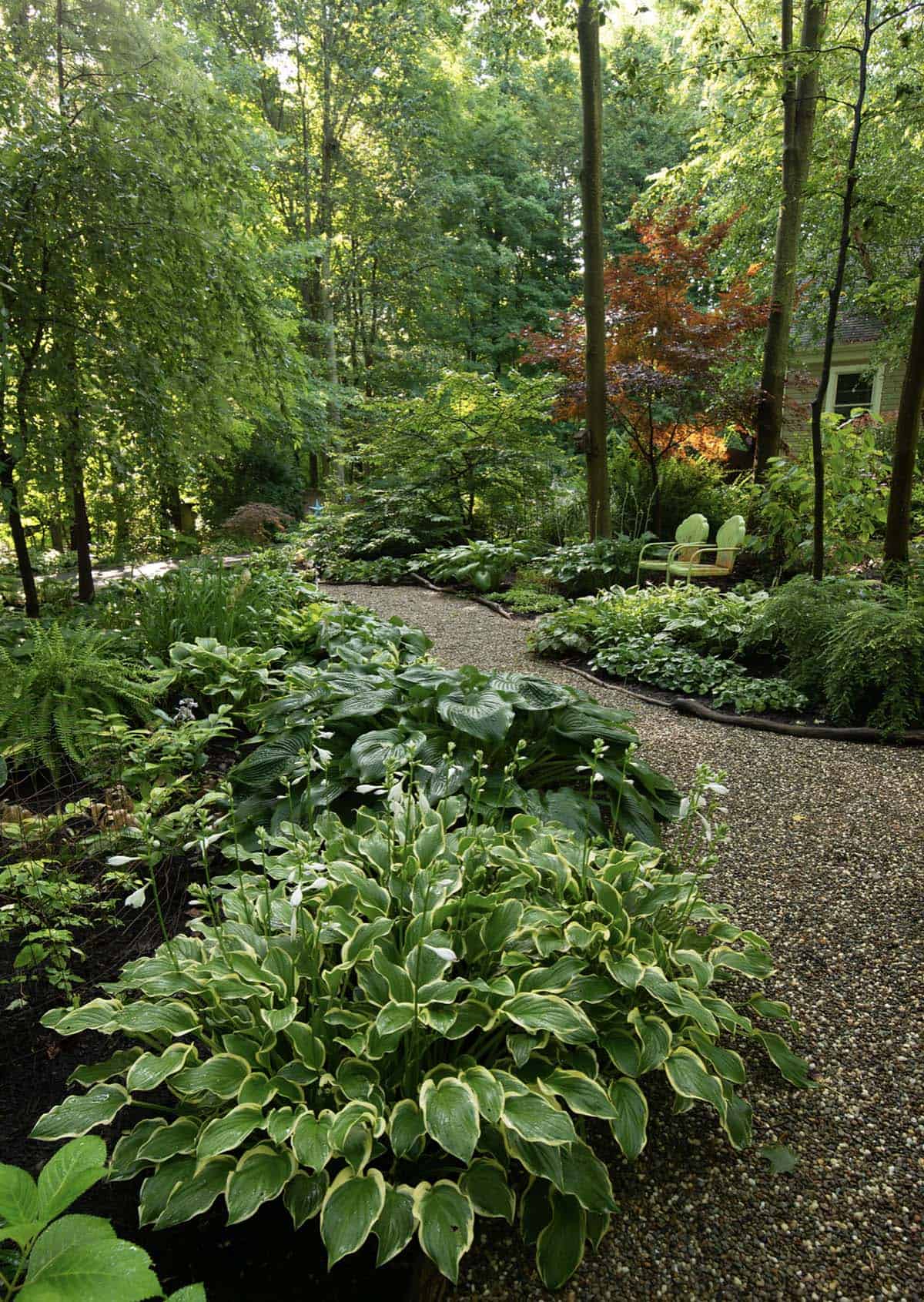
This stunning backyard shade garden in northeast Ohio (zone 5) is entirely the work of one dedicated homeowner who has been gardening since 1989 and has shaped this space from scratch since 2001. A winding gravel path curves through beds of hostas and ferns, past a fiery Japanese maple, and leads to a vintage seating area beneath the tree canopy. (via Lori Roach / Pinterest)
4. Carpet the Ground with Shade-Loving Groundcover
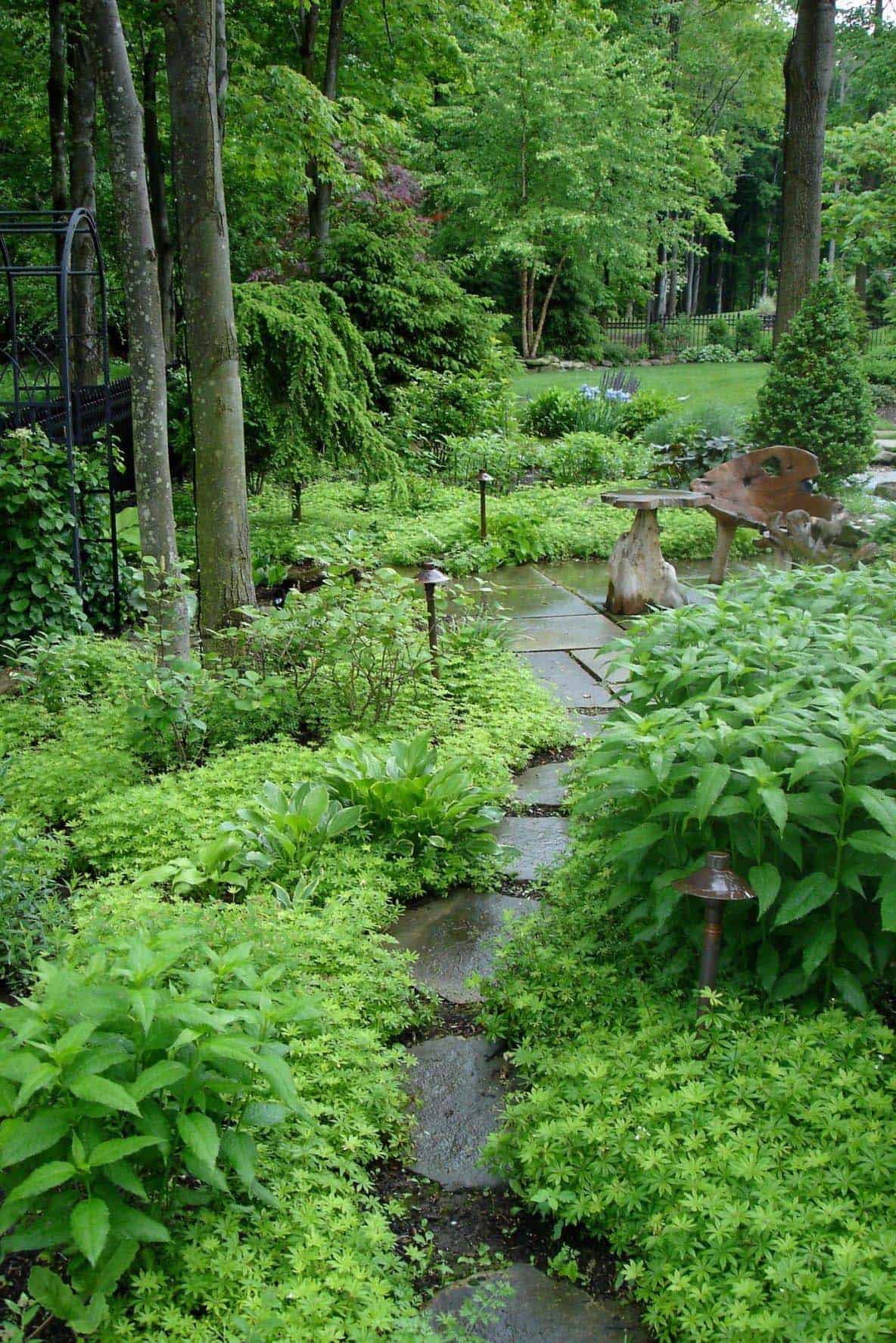
A bluestone path winds through this shade garden, flanked by a dense carpet of low-growing groundcover. Hostas punctuate the planting here and there, path lights line the way, and a rustic wood stump table makes a charming focal point mid-garden. A black iron arbor frames the entry on the left, while the canopy opens up to a sunny lawn beyond, making the shaded foreground feel like a sanctuary. (via Nic W / Pinterest)
5. Let Texture Do the Work
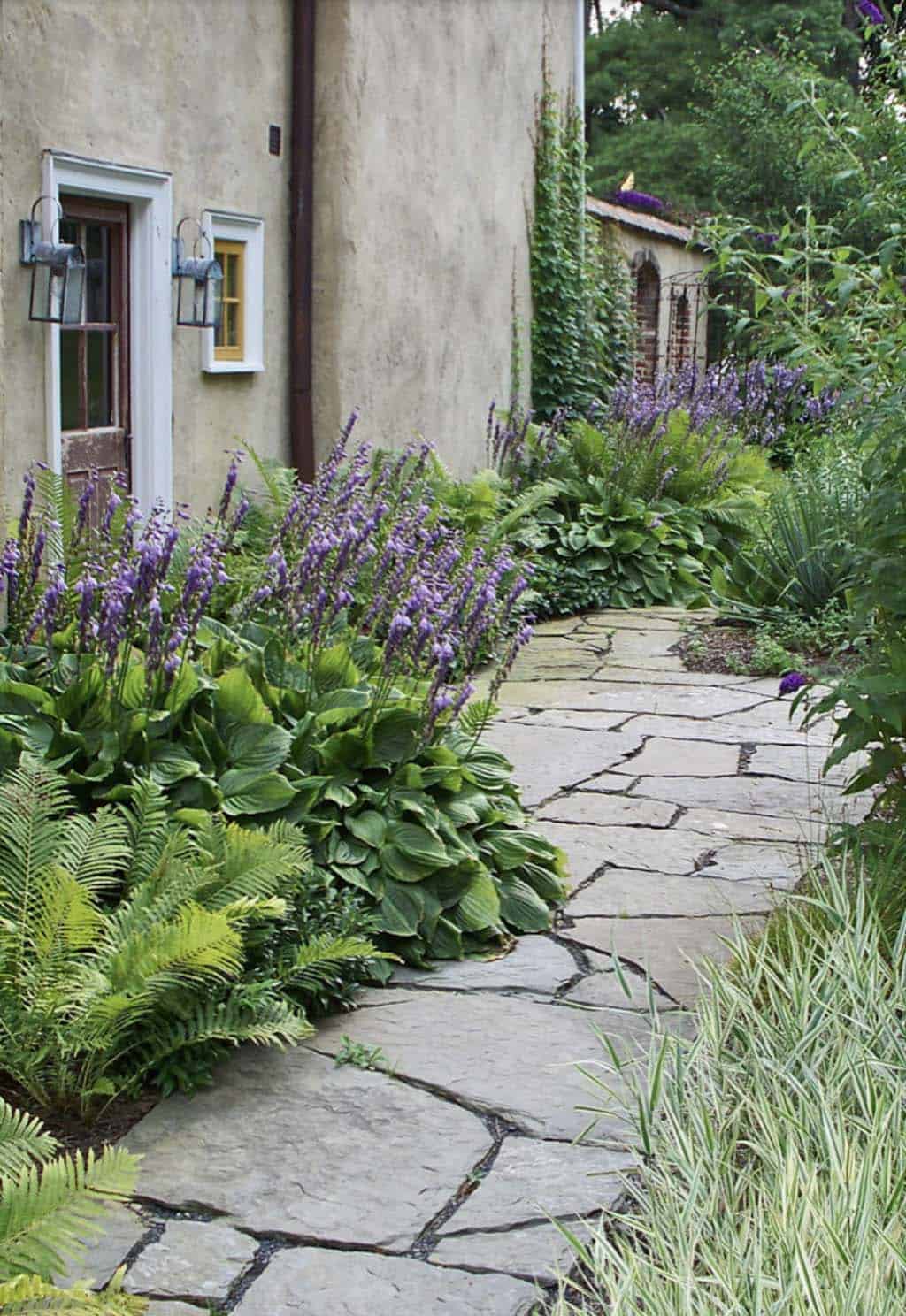
A walkway of irregular bluestone and a garden space dependent upon texture: the foliage of Hosta (Hosta sp., zones 3 to 9) and the feathery fronds of Ostrich Fern (Matteuccia struthiopteris, zones 3 to 8) contrast well with the Variegated Ribbon Grass (Phalaris arundinacea var. picta, zones 4 to 9) across the path. A lot of interest can be generated within a small plant palette. Caution: Reed canary grass, though native to the U.S., can be an aggressive spreader. Check with your local nursery before planting. (via Dear Garden Associates)
6. Design an Asian-Inspired Shade Garden
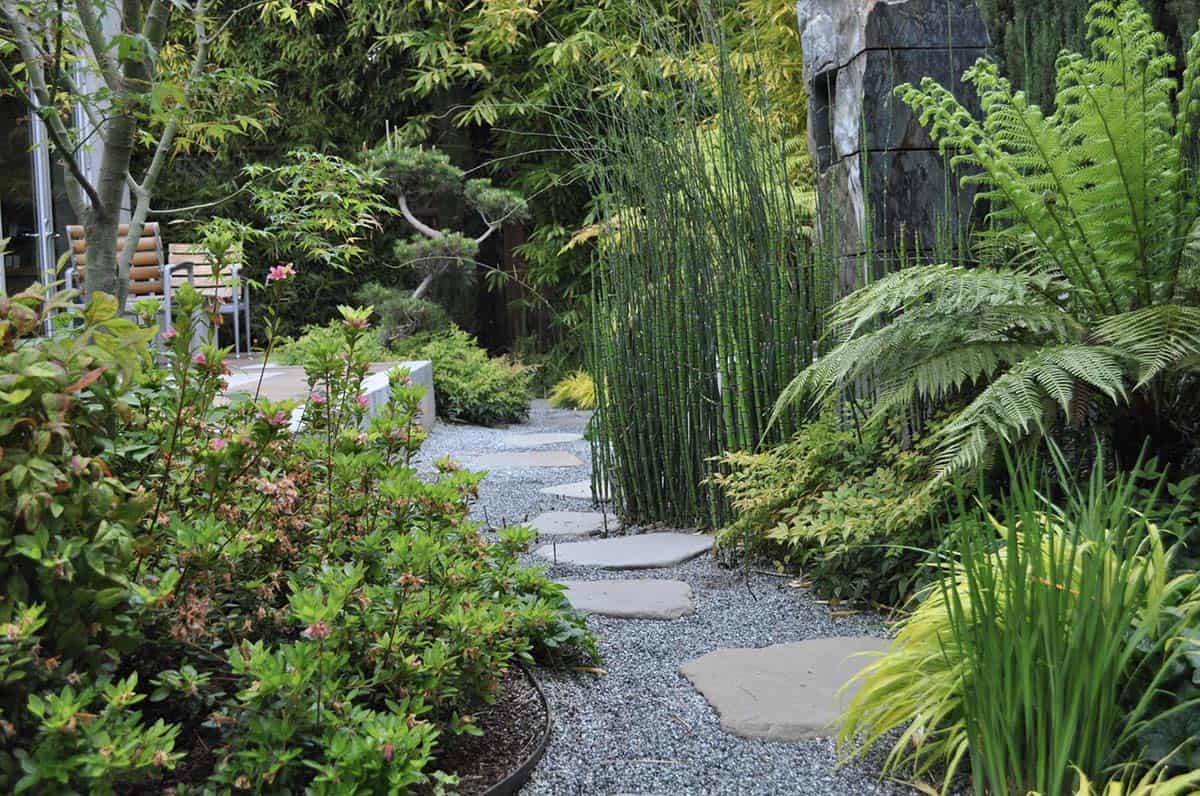
This Asian-inspired shade garden in Palo Alto, California (zone 9) features a beautiful palette of Asian style plant species, including horsetail (Equisetum hyemale, zones 3 to 11), tree fern (zones 9 to 11), azalea (zones 5 to 9), and Japanese maple (Acer palmatum, zones 5 to 9), along with meandering stone and gravel pathways. The stone column was handpicked from American Soil and Stone and sent to a specialty stone artist for fabrication. (via Modern Landscaping)
7. Use a Focal Point Fern to Command Attention
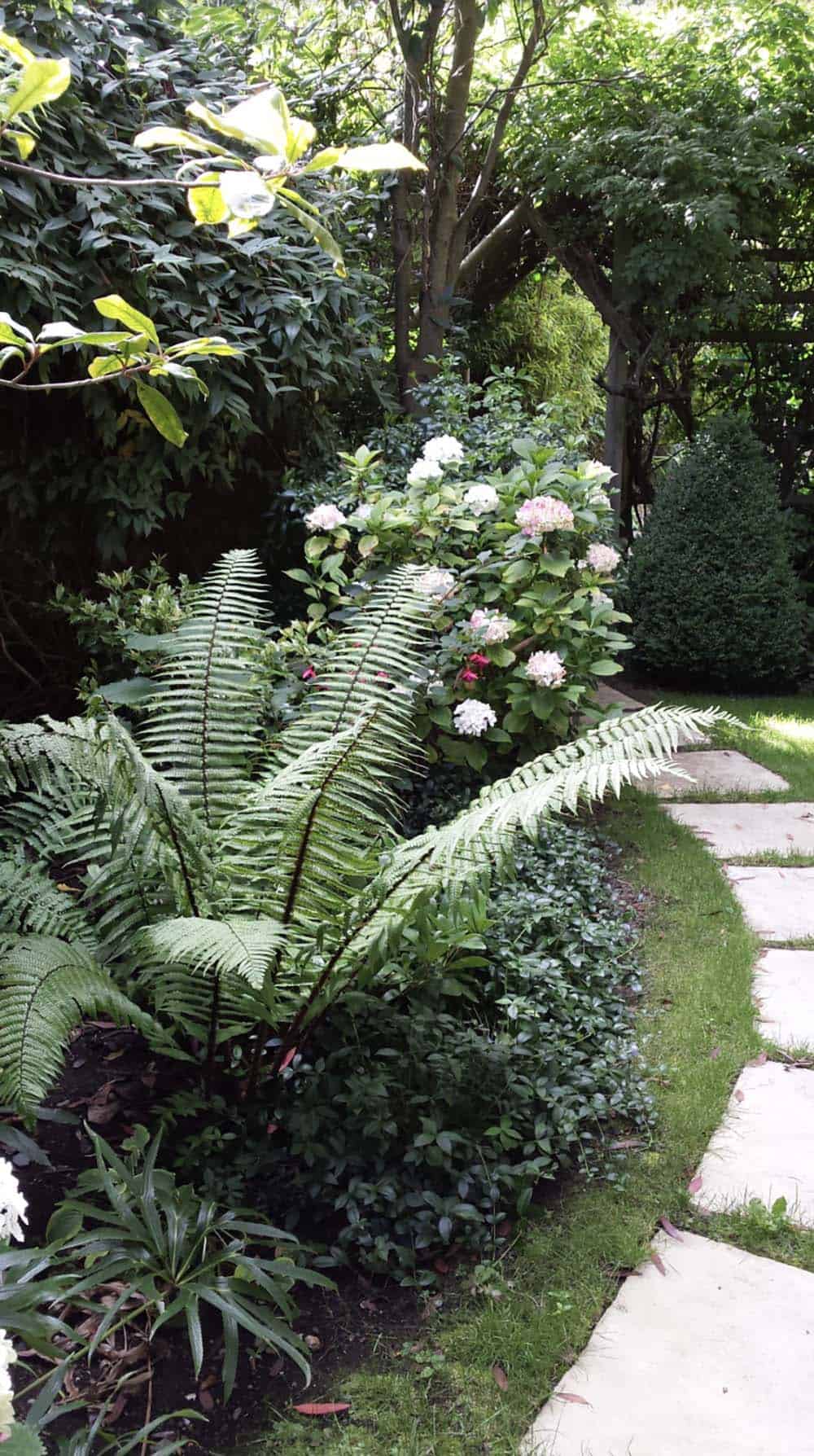
Adding a curve to a side yard path creates space for a focal point, which draws the eye and helps distract from the space’s narrowness. In this semishaded garden in Dublin, the landscape designer took advantage of the curve of a stepping-stone path to showcase the bold shape and semitranslucent foliage of a large alpine woodfern (Dryopteris wallichiana, zones 5 to 8). Pale pink hydrangeas and a carpet of periwinkle complete the planting. (via Patricia Tyrrell Living Landscapes)
8. Grow A Hosta Shade Garden
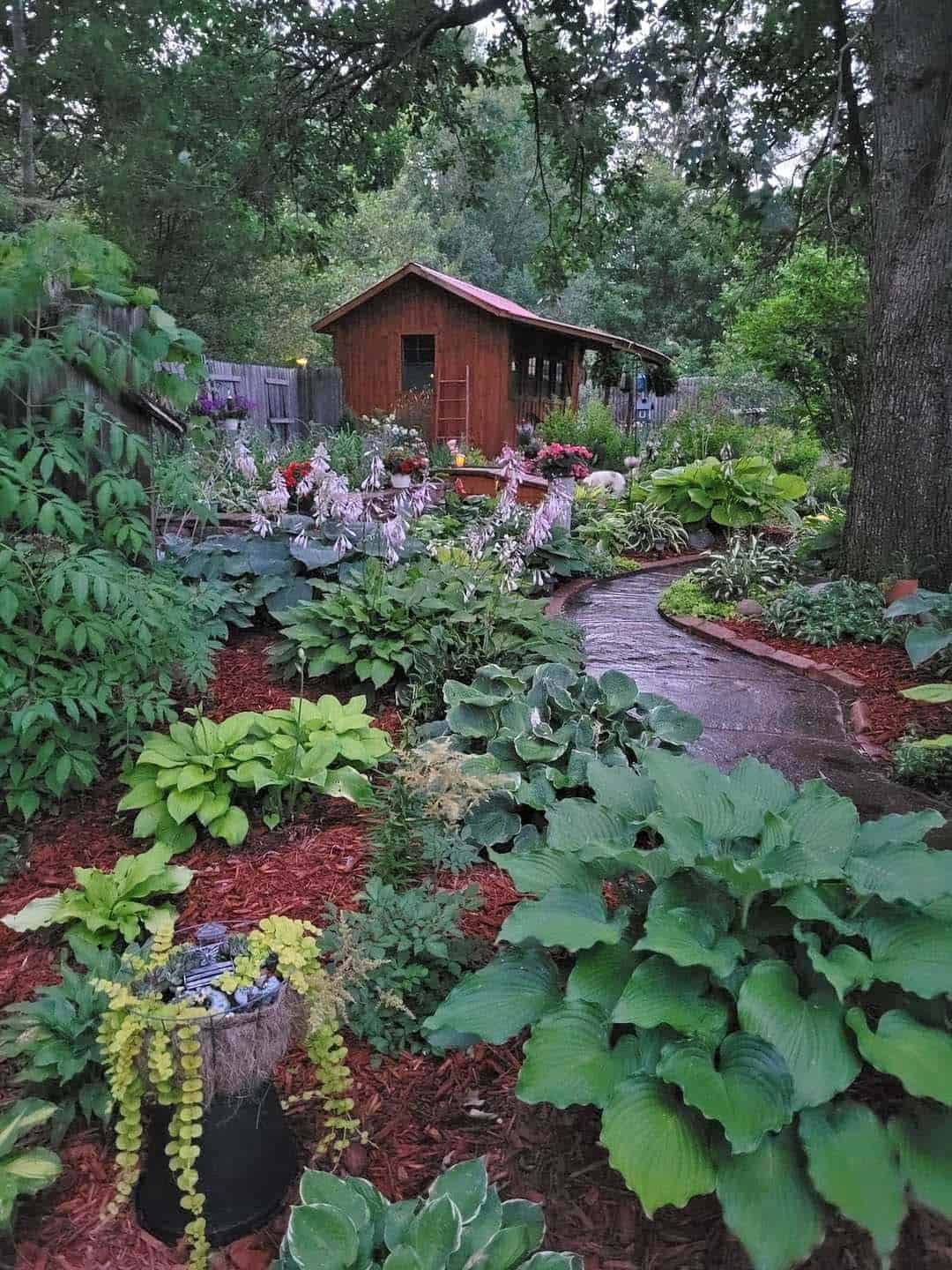
This beautiful hosta garden has been fifteen years in the making. Dozens of varieties fill the beds in an extraordinary range of leaf size, color, and texture, many sending up tall flower stalks with lavender blooms. A winding brick path edged in red mulch leads the eye through the planting and toward a rustic shed beneath the tree canopy. (via Diy Home & Garden Decoration / Facebook)
9. Make a Garden Shed Your Focal Point
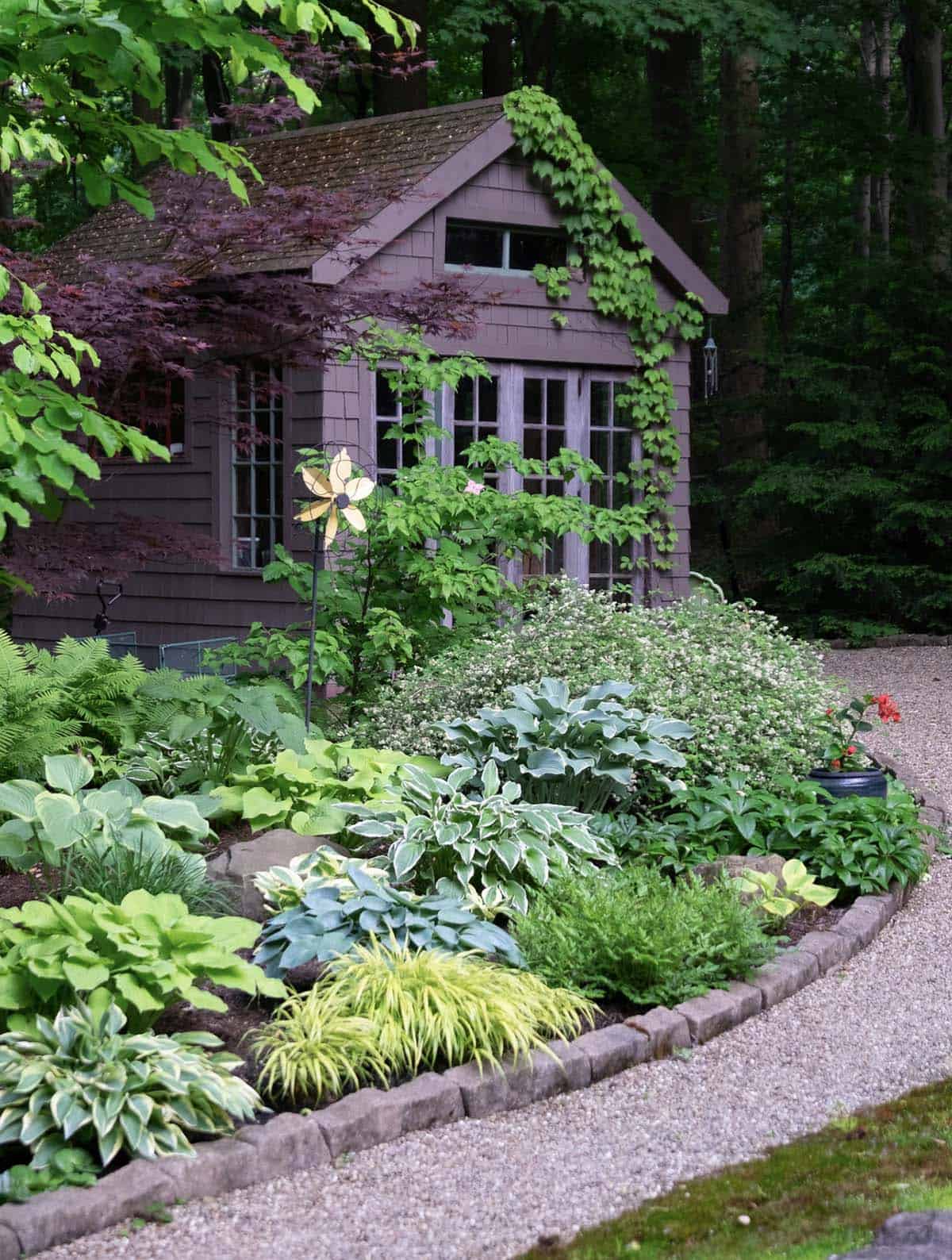
A vine-covered garden shed tucked into the tree line provides a lovely backdrop for this curved shade bed, edged neatly in brick and bordered by a gravel path. The planting features a variety of hostas, with blue-green, chartreuse, and white-edged cultivars creating color and texture at ground level. Golden Japanese forest grass (Hakonechloa macra, zones 5 to 9) spills between the hostas, and a white-flowered shrub anchors the mid-story behind. A Japanese maple (Acer palmatum, zones 5 to 9) adds burgundy contrast overhead, while ferns soften the left edge of the bed. (via Lori Roach / Pinterest)
10. Create a Secret Retreat in Your Woodland Garden
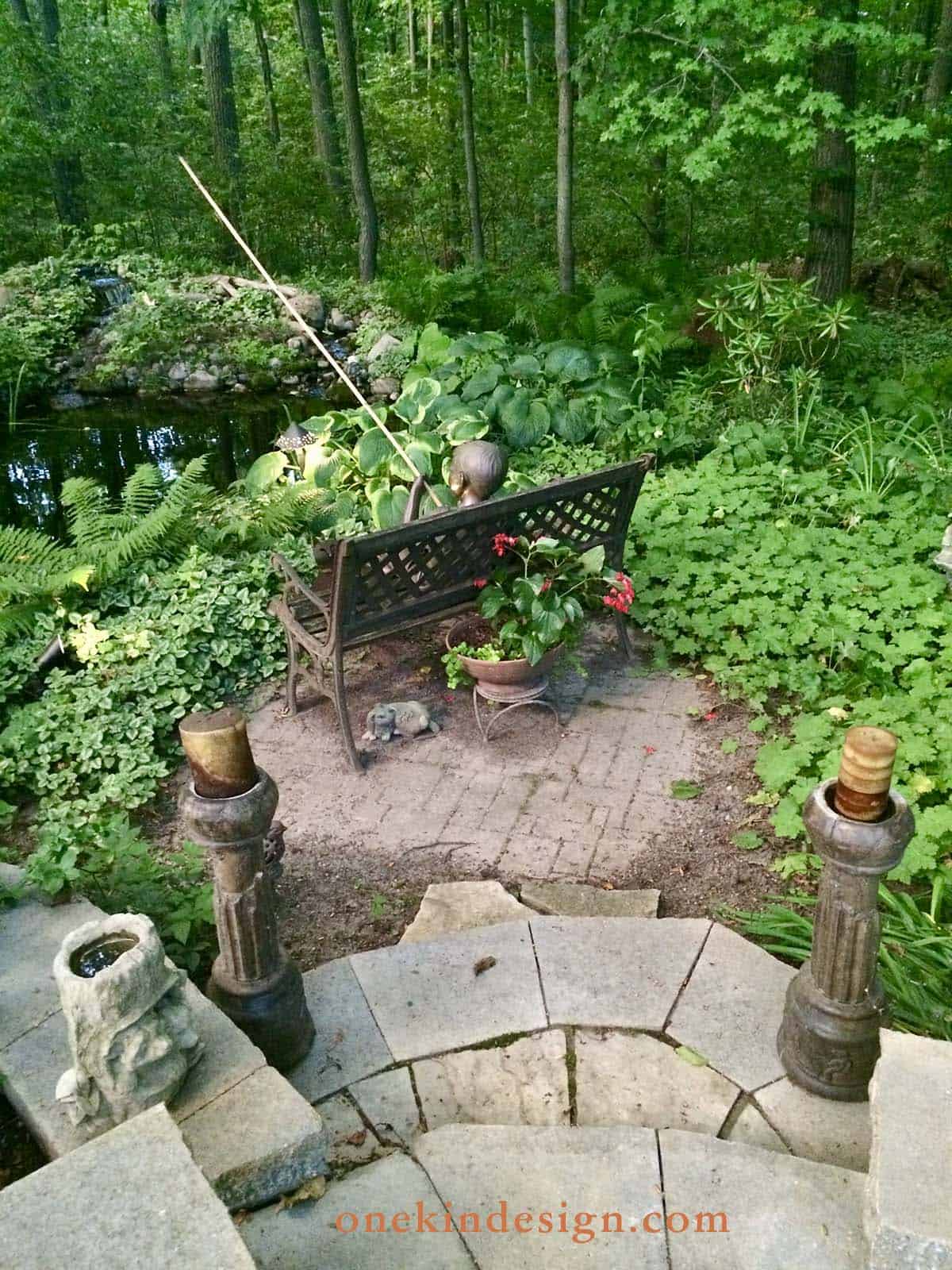
Tucked into the woods behind a home in Ontario, Canada, this peaceful shade garden makes you feel connected to nature. Stone steps lead down to a brick patio where a bronze statue of a fisherman sits contentedly on a garden bench beside a waterfall pond stocked with goldfish. The surrounding planting is lush and naturalistic, with hostas, ferns, and a dense carpet of groundcover filling every inch of the woodland floor. Rhododendron adds structure to the right, while potted begonias bring a cheerful spot of red to the patio. FYI: This home was once on a garden tour! (via onekindesign)
11. Design a Shaded Garden Corridor with Climbing Vines
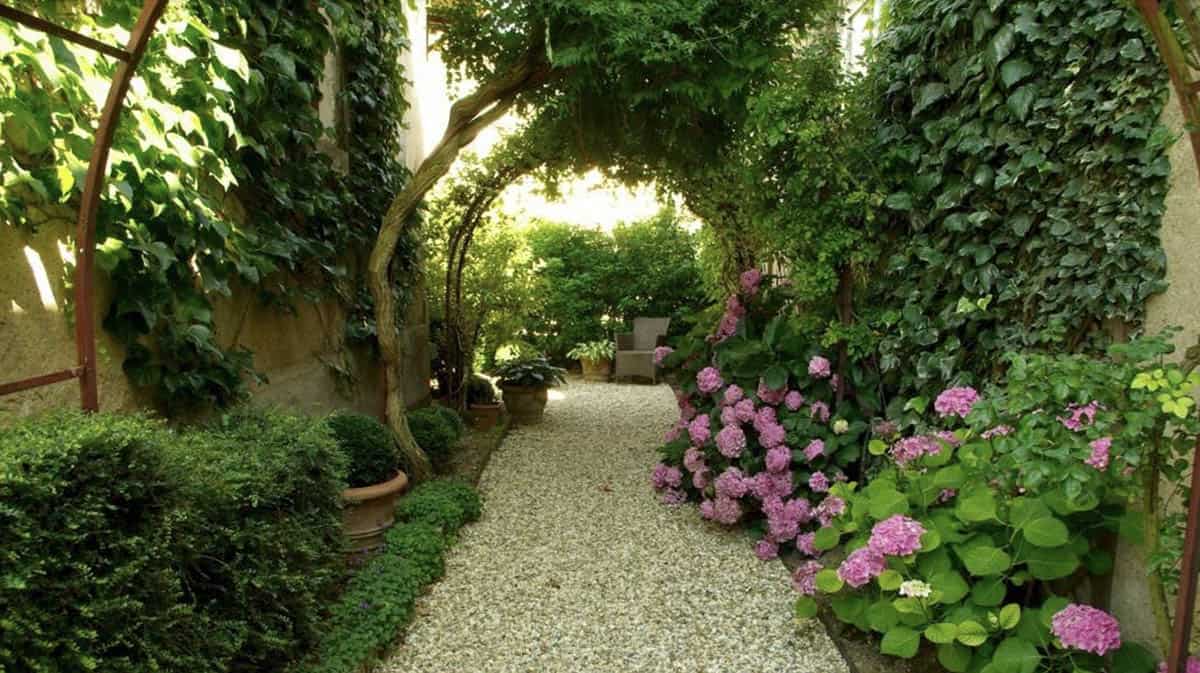
This stunning European-style courtyard shows how a shaded garden corridor can provide a romantic space in the landscape. The arching tunnel is formed by classic wisterias (Wisteria sp., zones 5 to 9) trained into their bent form from a very young age, with ivy (Hedera sp., zones 4 to 9) covering the walls on either side. Pink hydrangeas (Hydrangea spp, zones 3 to 9) spill from the right border, clipped boxwood (Buxus sp., zones 5 to 9) balls add structure on the left, and terracotta containers planted with hostas line the gravel path toward a seating area at the far end. (via Vert Anis)
12. Japanese-Inspired Side Yard
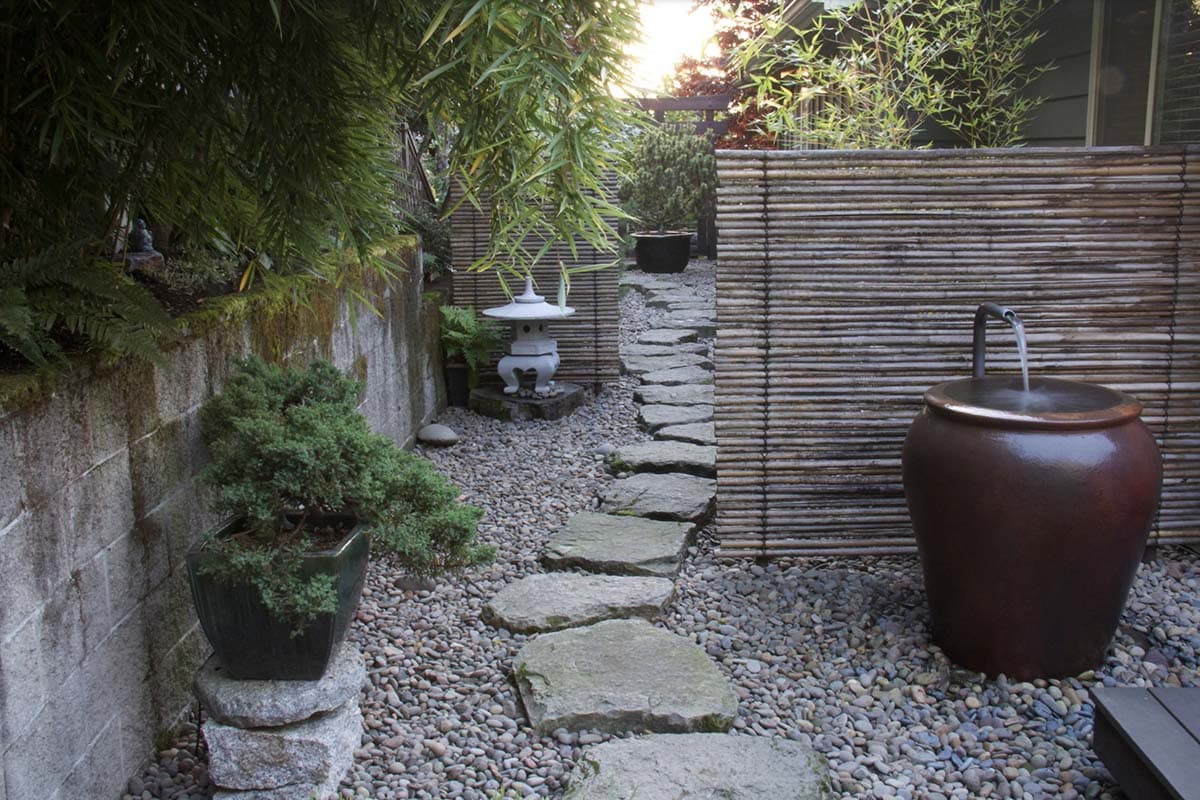
This shaded side yard in Eugene, Oregon, was once just a concrete floor and uninviting cinder blocks. The concrete couldn’t be removed due to drainage concerns, but it is now hidden under quick-draining local river rock gravel and a stepping-stone pathway. Carefully placed bamboo screens invite you to slow down and admire a juniper bonsai (Juniperus sp.), a potted pine (Pinus sp.), and a recirculating water feature, while a lush border of clumping bamboo and a Japanese maple (Acer palmatum, zones 5 to 8) softens the walls above. A classic stone lantern completes the meditative mood. (via Mosaic Gardens)
13. Alfresco Dining in the Shade
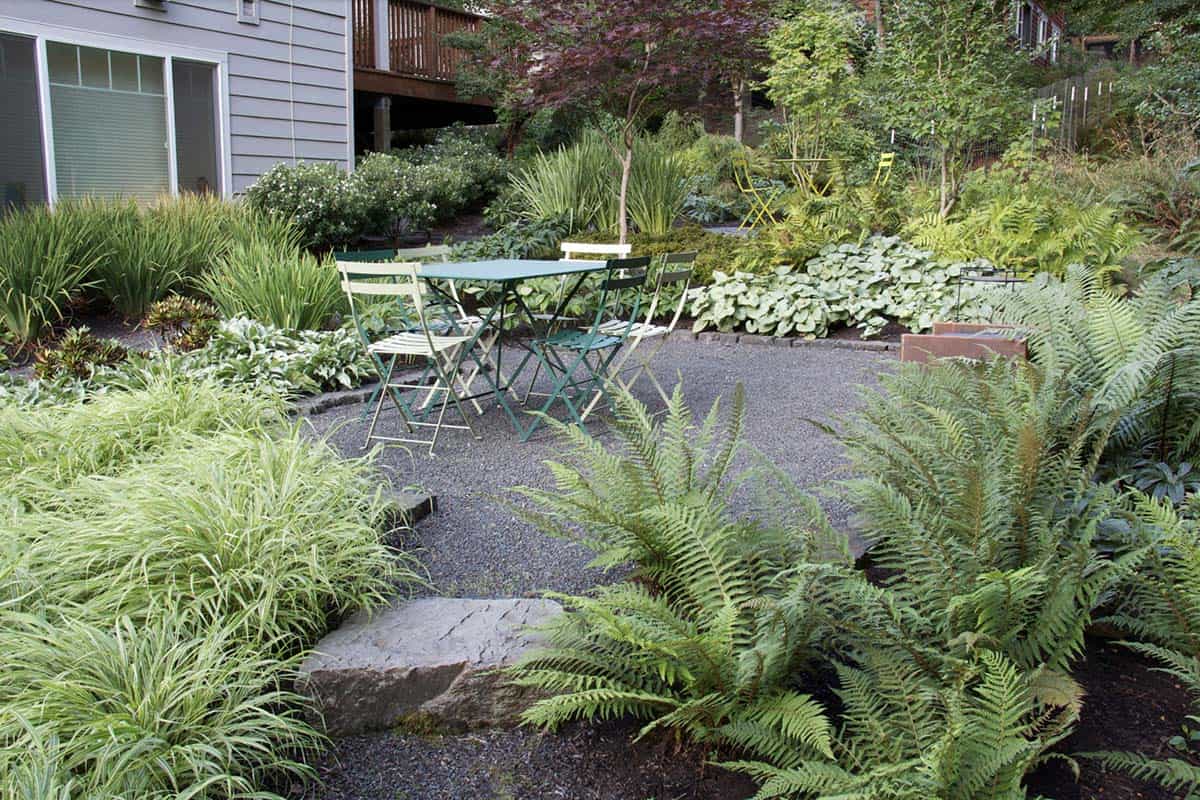
A shady backyard doesn’t have to feel closed in. This rectangular gravel terrace is a great place for a family dinner or just roasting marshmallows. and low plantings with occasional small deciduous trees keep it feeling inviting and open rather than claustrophobic. Ferns, hostas, and ornamental grasses surround the space, while a Japanese maple adds height and burgundy color overhead without blocking the sky. (via Mosaic Gardens)
14. Design a Romantic Woodland Garden
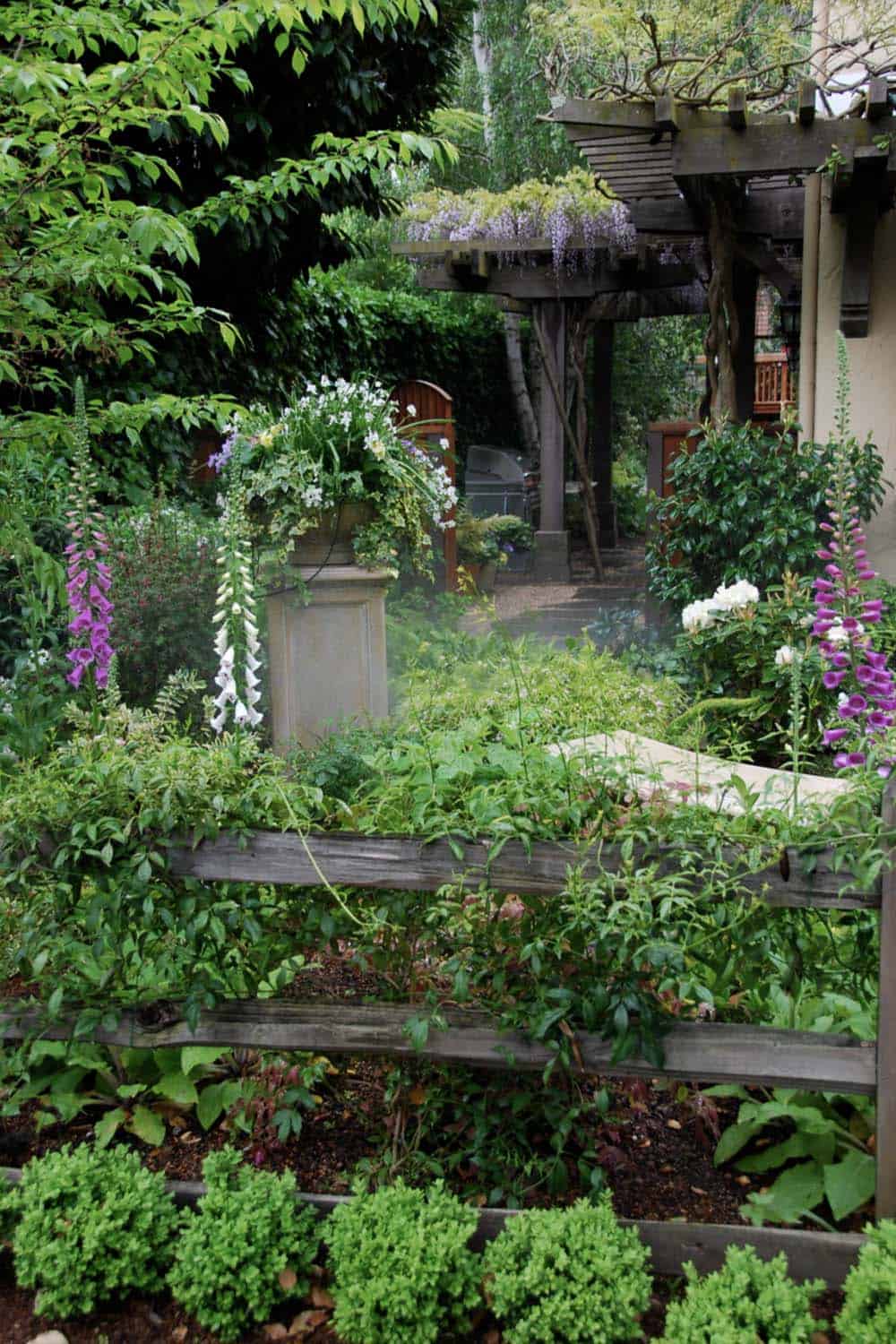
In this Northern California side yard, a romantic woodland garden gives way to a gravel patio with a pergola draped with wisteria (Wisteria sp., zones 5 to 9) and a grill set beneath. The design places plants up front, where they receive more sunlight, while the grill is tucked out of sight near the home, in the yard’s most shaded area. Foxglove (Digitalis purpurea, zones 4 to 9), boxwood (Buxus sp., zones 5 to 9), camelia, ferns, and ‘Marjorie Channon’ kōhūhū (Pittosporum tenuifolium ‘Marjorie Channon’, zones 8 to 11) fill the borders, and a Connecticut bluestone flagstone path ties the garden and patio together. (via Verdance Landscape Architecture)
15. Create a Tranquility Garden
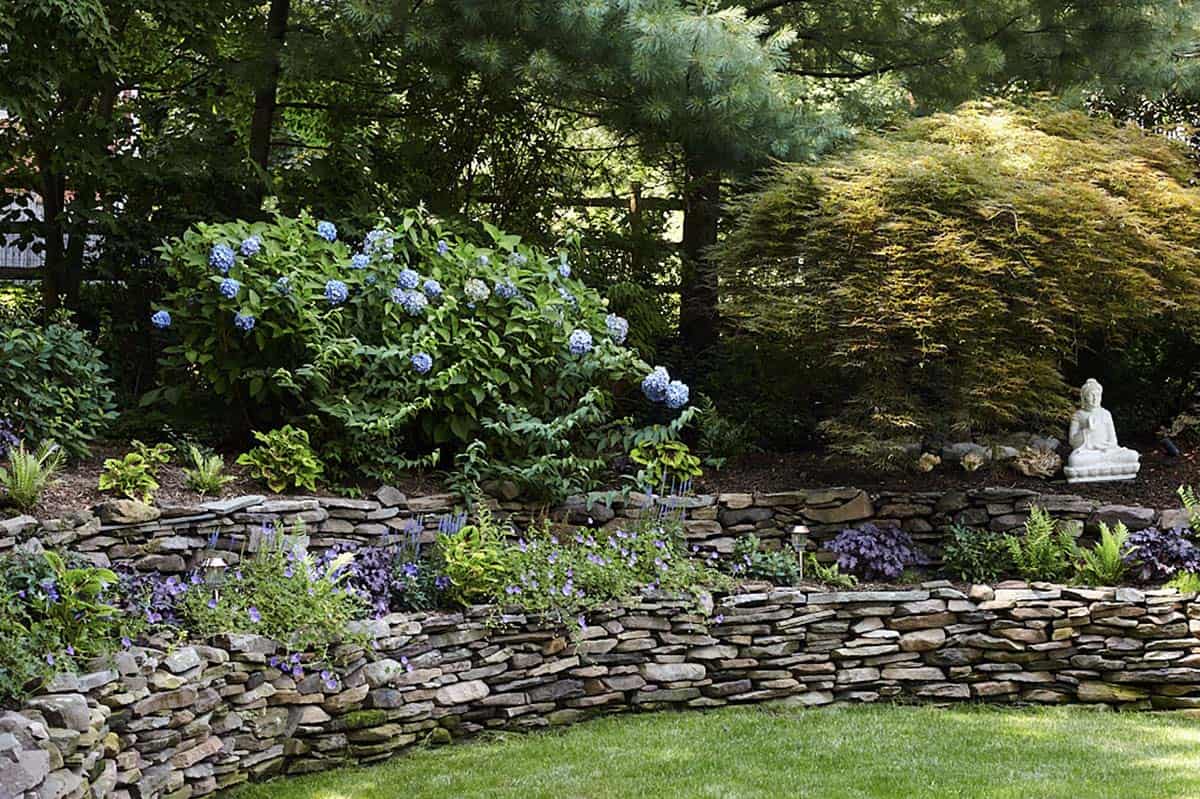
Colors behave differently in shade than in the sun. What gets washed out in full sun will appear brighter, almost intensely vivid, in a shaded garden. This planting behind a dry-stacked stone wall shows the effect beautifully, with blue hydrangeas (Hydrangea sp., zones 3 to 9) and purple geraniums forming a cool-toned palette against deep green foliage. A golden Japanese maple (Acer palmatum, zones 5 to 9) glows beside a white Buddha statue, adding a warm focal point. Limit your palette to two or three colors to create a harmonious look. (via The Inspired Garden)
16. Asian-Inspired Shade Garden
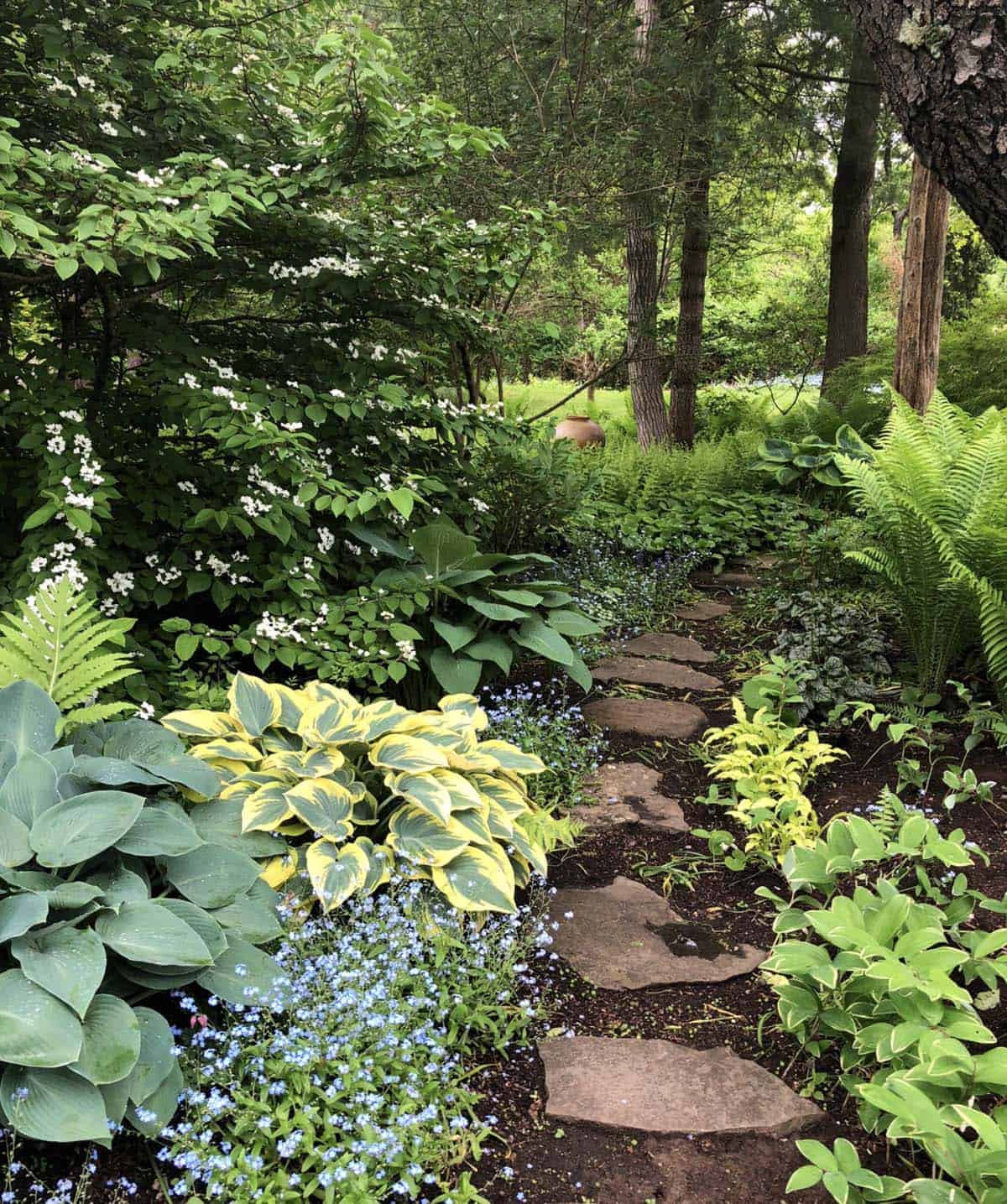
Shaded by deciduous trees, this garden in Massachusetts provides a tranquil woodland retreat. Swaths of mostly native fern varieties form a sea of green each spring as fronds unfurl beneath the trees, including eastern hayscented fern (Dennstaedtia punctilobula, zones 3 to 8), lady fern (Athyrium filix-femina, zones 4 to 8), and ostrich fern (Matteuccia struthiopteris, zones 3 to 8). Hostas (Hosta sp.), white flowering dogwood (Cornus sp.), and naturalized forget-me-nots (Myosotis sp.) border the flagstone pathway, with a terracotta urn visible at the far end as a focal point. (via Hilarie Holdsworth Design)
17. Line Your Garden Path with Hostas and Hydrangeas
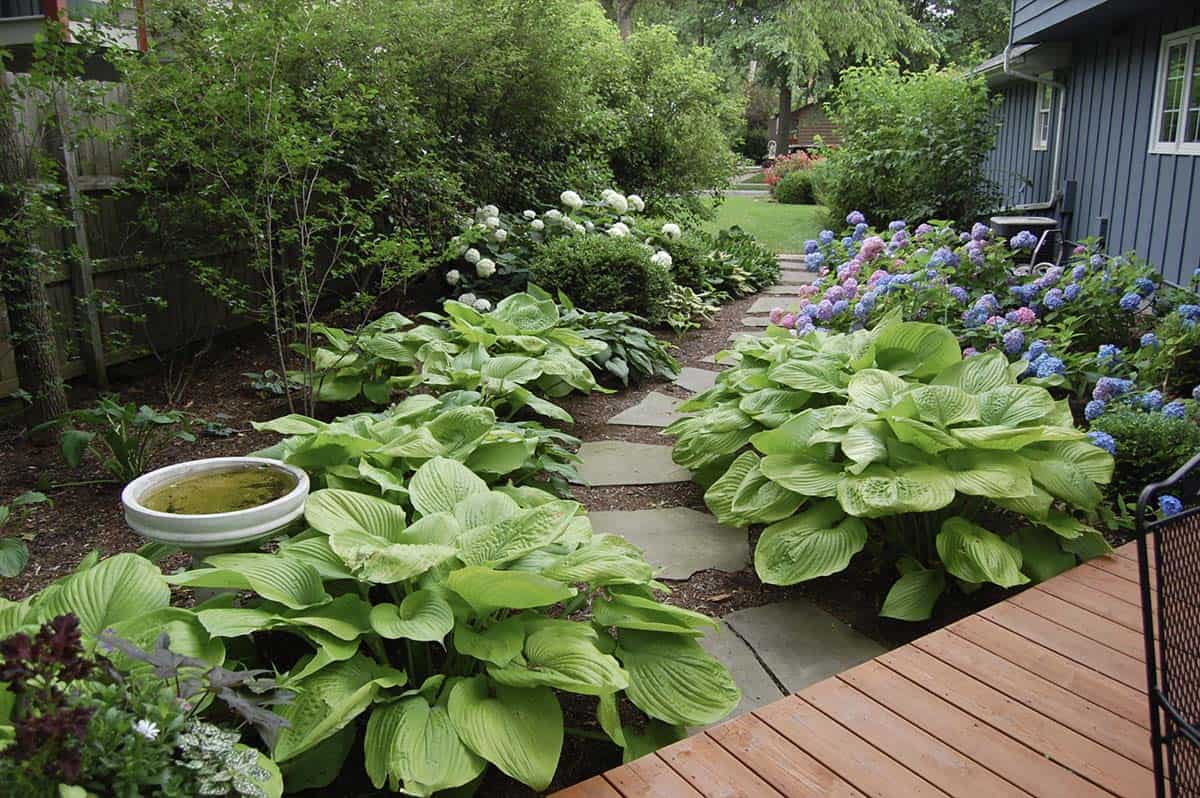
This backyard shade garden keeps the plant palette simple. Large-leafed hostas fill the beds on both sides of the flagstone path in overlapping clumps, while white and blue hydrangeas (Hydrangea sp., zones 3 to 9) provide height and season-long color in the background. A simple white birdbath adds a classic garden accent without competing with the planting. Together, hostas and hydrangeas are one of the most reliable and rewarding combinations you can choose for a shaded yard. (via Green View Landscaping)
18. Woodland Retreat Shade Garden
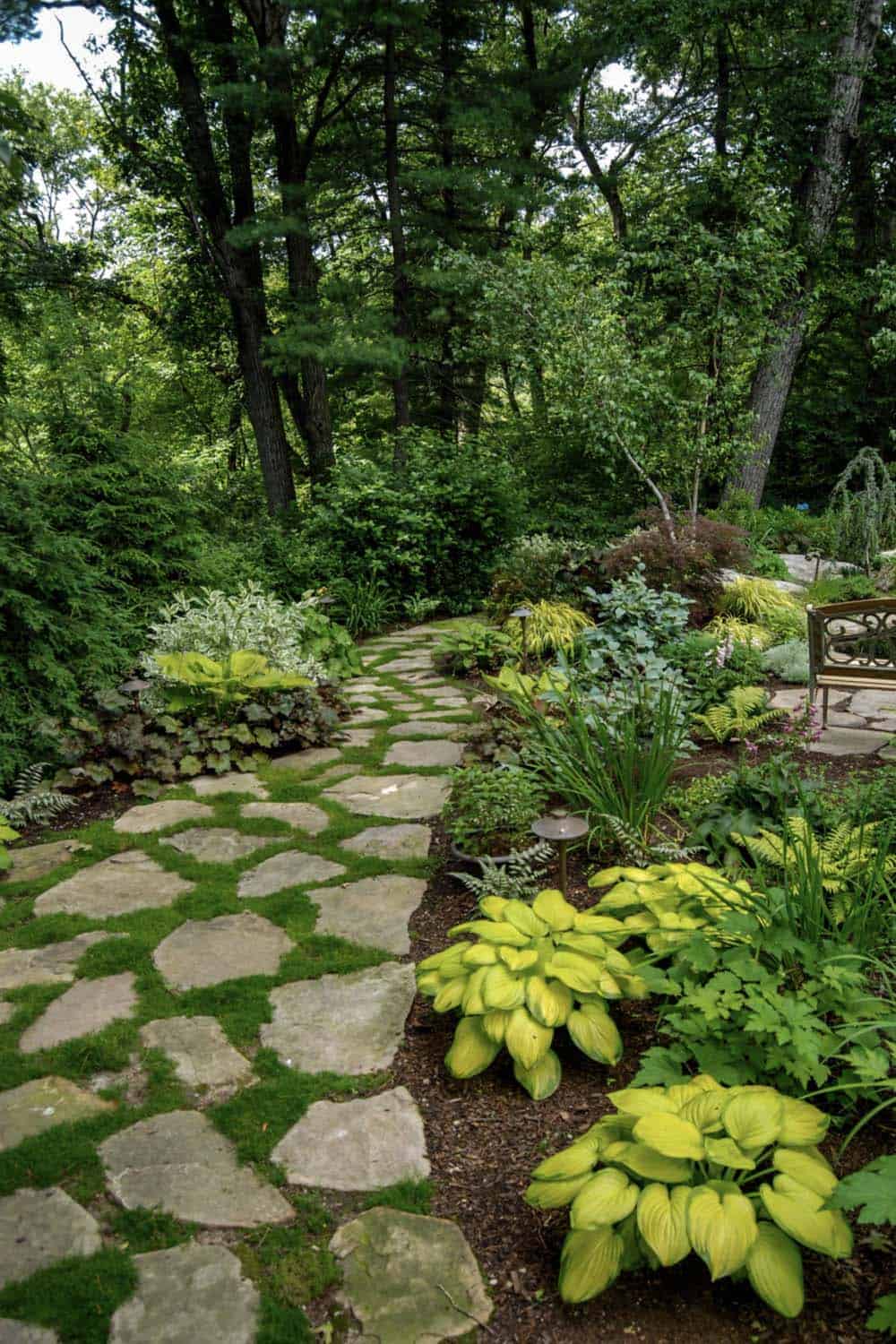
An irregular bluestone-stepper path meanders through a woodland shade garden. The stones are set on a compacted base of crushed stone, which prevents them from settling or heaving with frost and allows water to percolate beneath them. Sagina subulata, also commonly called Irish Moss, is what is growing between the rocks (it grows really well in the shade). Irish Moss will grow almost anywhere. It is hardy from zone 4b to zone 9. It does like a well-drained soil. It is recommended to have part shade in warmer climates.
The large yellow leaves with green edges are Hosta ‘Gold Standard’. The sharper leaves in the bottom right corner are Anemone. The silvery fern is Athyrium niponicum ‘Pictum’ (Japanese Painted Fern). The shrub with white leaves in the middle left is Cornus ‘Ivory Halo’ (Red Twig Dogwood). Across the path to the right, with the silvery blue green leaves is Fothergilla ‘Blue Shadow’. On either side of the shrubs, the grass with the yellow blades is Hakonechloa ‘Aureola’. Behind that, with the maroon leaves, is a Crimson Queen Japanese Maple. Most of these plants need a fair amount of water. TIP: Perennials that will tolerate shade and not get eaten by deer are: Ferns, Dicentra, Helleborus, Ligularia, Hakonechloa, and Pulmonaria. (via a Blade of Grass)
19. Plant a Bold Splash of Color
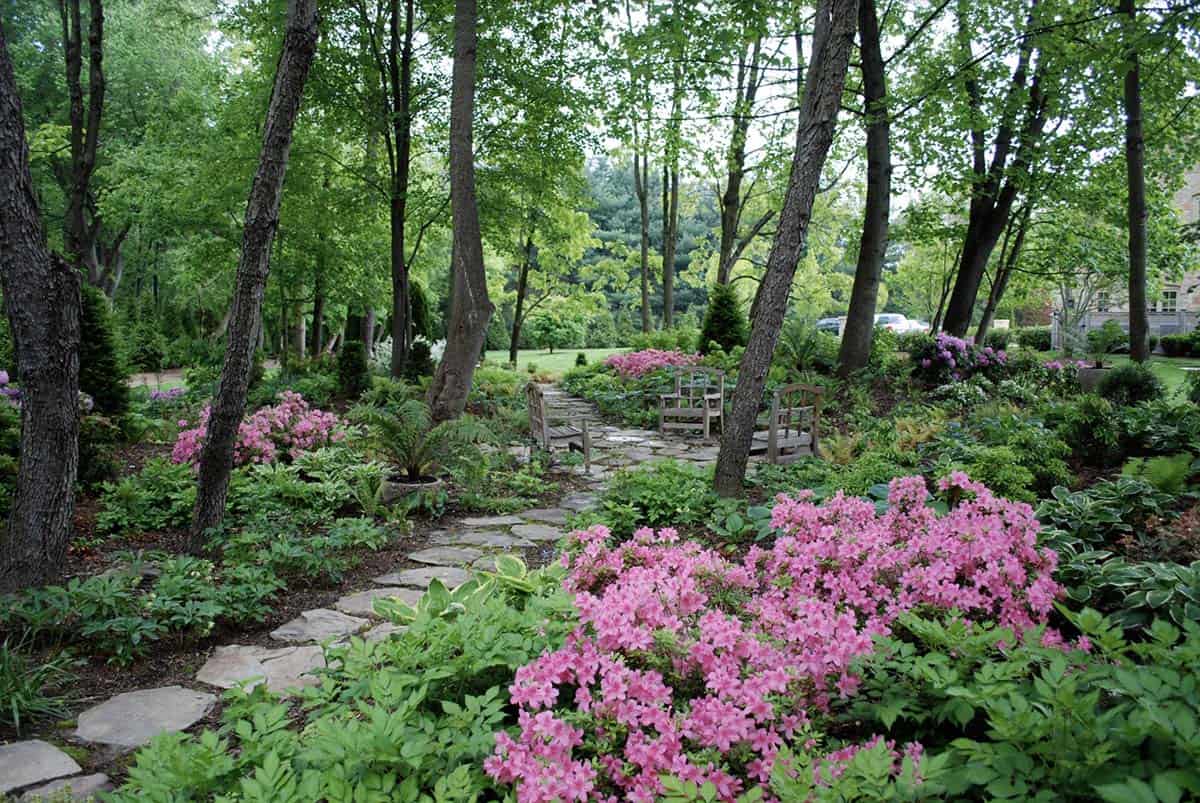
This woodland shade garden in the DC Metro area pops with color in spring, thanks to plantings of azalea ‘Aphrodite’ (Rhododendron ‘Aphrodite’, zones 5 to 9) in vivid pink. The garden grows beneath a natural canopy of hickory, cherry, maple, oak, and poplar trees, with hostas and ferns filling the ground layer between. A flagstone path winds through the planting to wooden benches, making it both functional and beautiful. Note: Azaleas are a target for deer. This is a deer-fenced property. (via Sisson Landscapes)
20. Add a Water Feature to Your Shade Garden
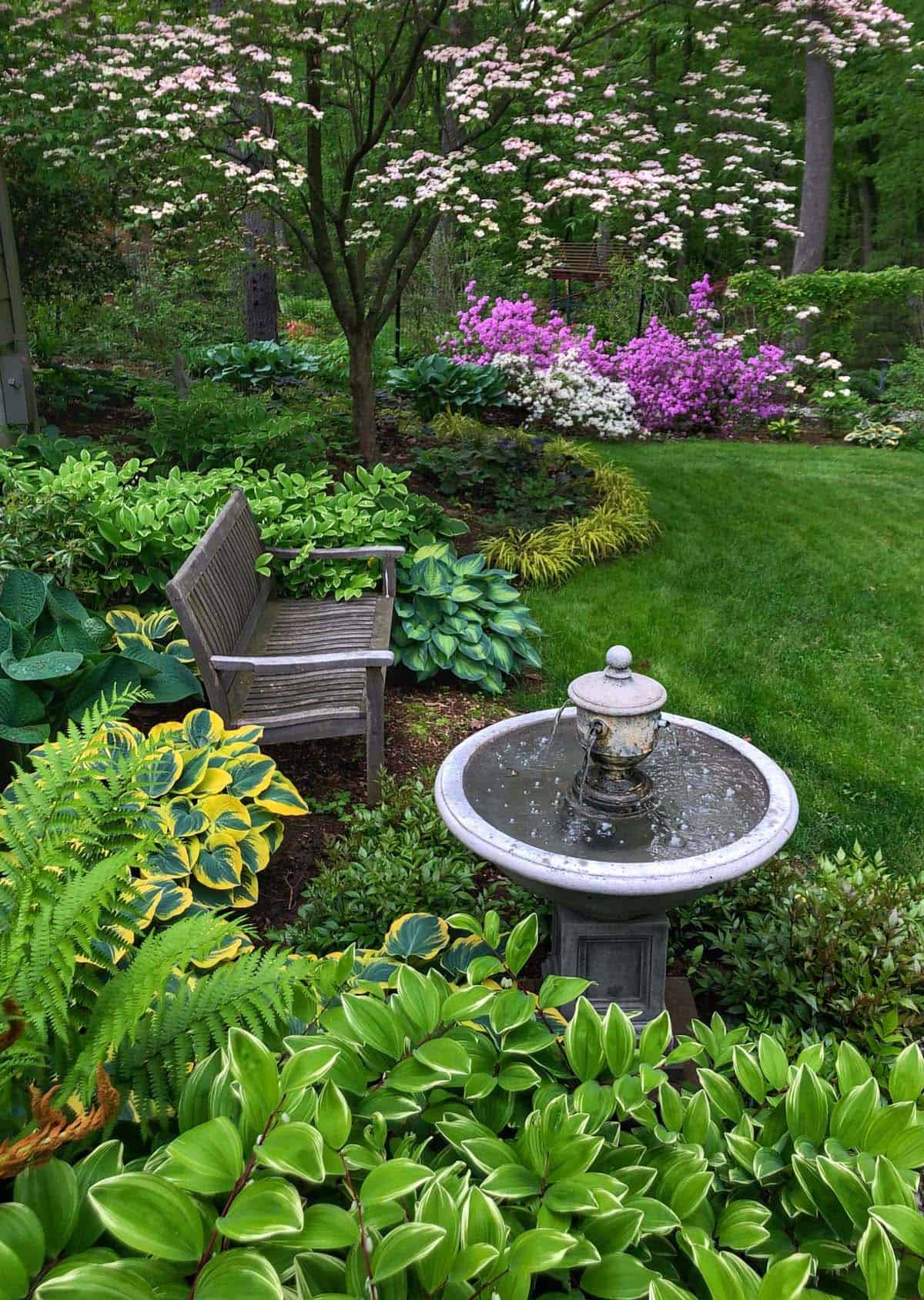
A birdbath garden fountain and a teak bench make this shaded backyard an oasis. Variegated hostas (Hosta sp., zones 3 to 9), ferns, astilbes, and ligularias fill the ground layer, while Japanese forest grass (Hakonechloa macra, zones 5 to 9) and variegated false Solomon’s seal (Maianthemum racemosum, zones 3 to 7) add texture and light. In the background, a pink flowering dogwood (Cornus sp., zones 5 to 9) and sweeps of white and lavender azaleas bring the whole spring garden to life. (via Ann DeCamp / Pinterest)
21. Design a Sensory Shade Garden
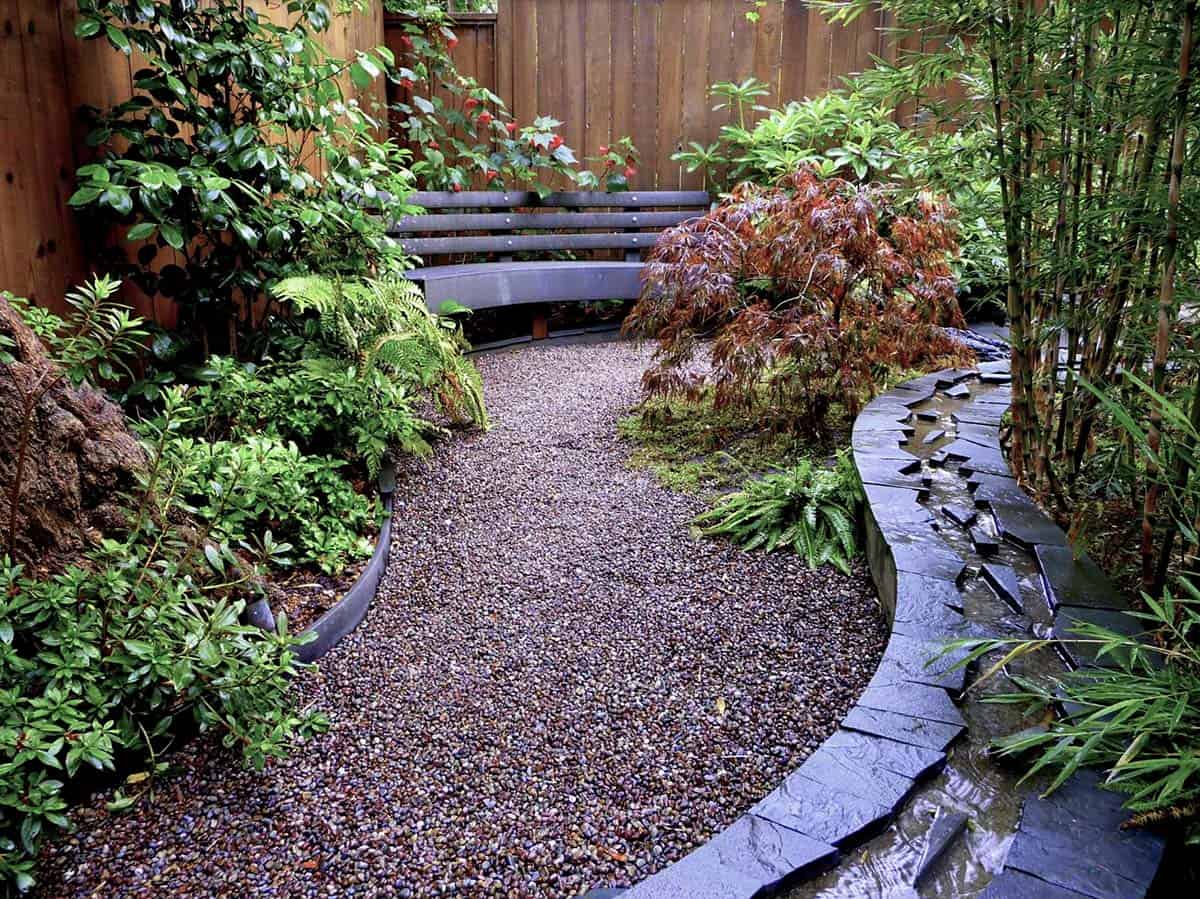
This Japanese-inspired shade garden in San Francisco was custom-built by Sculpt Gardens for a client who is blind. The slate-lined water stream running along the right edge is the heart of the design, as the stones can be moved to change the sound of the water as it flows through, creating an ever-changing experience. A pea gravel pathway, a curved bench, a sculptural Japanese maple (Acer palmatum, zones 5 to 9), bamboo, ferns, and rhododendron complete this beautiful sensory garden. (via Sculpt Gardens Inc.)
Tell Us: Which one of these shade garden design ideas most inspires you and why in the Comments below!




0 comments