


❤️ Would you like to save this?
By saving, we'll email this post to you for later. Unsubscribe anytime.
After visiting a farm-to-table Airbnb in Washington, we got inspired to put together this collection of fabulous ideas for growing a vegetable garden in your backyard. The hosts had a greenhouse where they could grow their vegetables year-round, and it got us thinking about all the ways you can bring fresh produce home. The wonderful thing about vegetable and herb gardens is that they can be grown anywhere. You can put them in containers on your front porch, patio, or balcony, or plant them in your backyard.
They can be in raised beds, wooden or plastic barrels, galvanized troughs, or a fenced-in garden to keep away the bunnies and deer. Planting seeds in rich soil is exciting, and you get to watch your vegetables grow. They taste fresh and delicious compared to buying them at the grocery store, not to mention the money you save feeding your family from your own kitchen garden.
You can plant vegetables in the spring and in the fall. Tomatoes, peppers, corn, and zucchini are just some of the delicious crops to plant in spring. Ideal crops for fall include spinach, lettuce, Swiss chard, carrots, radishes, kale, parsnips, turnips, leeks, fennel, Chinese cabbage, and cauliflower. If you live in a warmer winter climate, hardy vegetables such as Swiss chard may keep producing into the winter months.
Growing your own vegetables has other benefits, too. Organic, farm-fresh veggies can get a little pricey, so growing your own gives you pesticide-free produce without the premium price tag. You can also harvest at peak ripeness, when vegetables have the most flavor and nutrients, and there’s real peace of mind in knowing you’ll have fresh food on the table.
Have fun creating your own garden! If you have a small garden space, that is okay! There are many alternatives you can use. For example, you can incorporate window boxes and tomato cages into your vegetable garden plan or create a keyhole garden. You can also grow edible garden flowers to add some fun color to your small garden.
Planning Your Vegetable Garden
Find your sunniest spot. Most vegetables need 6 to 8 hours of direct sun a day. Leafy greens like lettuce and spinach can manage with a bit less, but tomatoes, peppers, and squash need full sun to produce well.
Keep beds reachable. Raised beds work best at 3 to 4 feet wide, so you can reach the middle without stepping on the soil. Leave paths 2 to 3 feet wide, a little wider if you’ll be using a wheelbarrow.
Go deep enough. Twelve inches of soil depth works for most vegetables. Carrots, potatoes, and other root crops are happier with 18 inches or more.
Choose food-safe materials. Untreated cedar and redwood resist rot naturally. Galvanized steel and Cor-ten steel are long-lasting alternatives. If you use pressure-treated lumber, line the inside of the bed with heavy plastic so the soil doesn’t touch the wood.
Plan your watering. A simple drip irrigation line on a timer saves time and water, and it keeps leaves dry, which helps prevent disease.
Know your frost dates. Look up your area’s last spring frost and first fall frost. They tell you when to plant warm-season crops like tomatoes and when to switch to cool-season crops like kale and carrots.
Have a look below at our collection of backyard vegetable garden ideas to help you plan your own vegetable and herb garden, one that is both attractive and edible.
Tell Us: Do you have a vegetable garden in your backyard, and if so, what have you planted? Please let us know in the Comments!
1. Backyard Vegetable Garden.
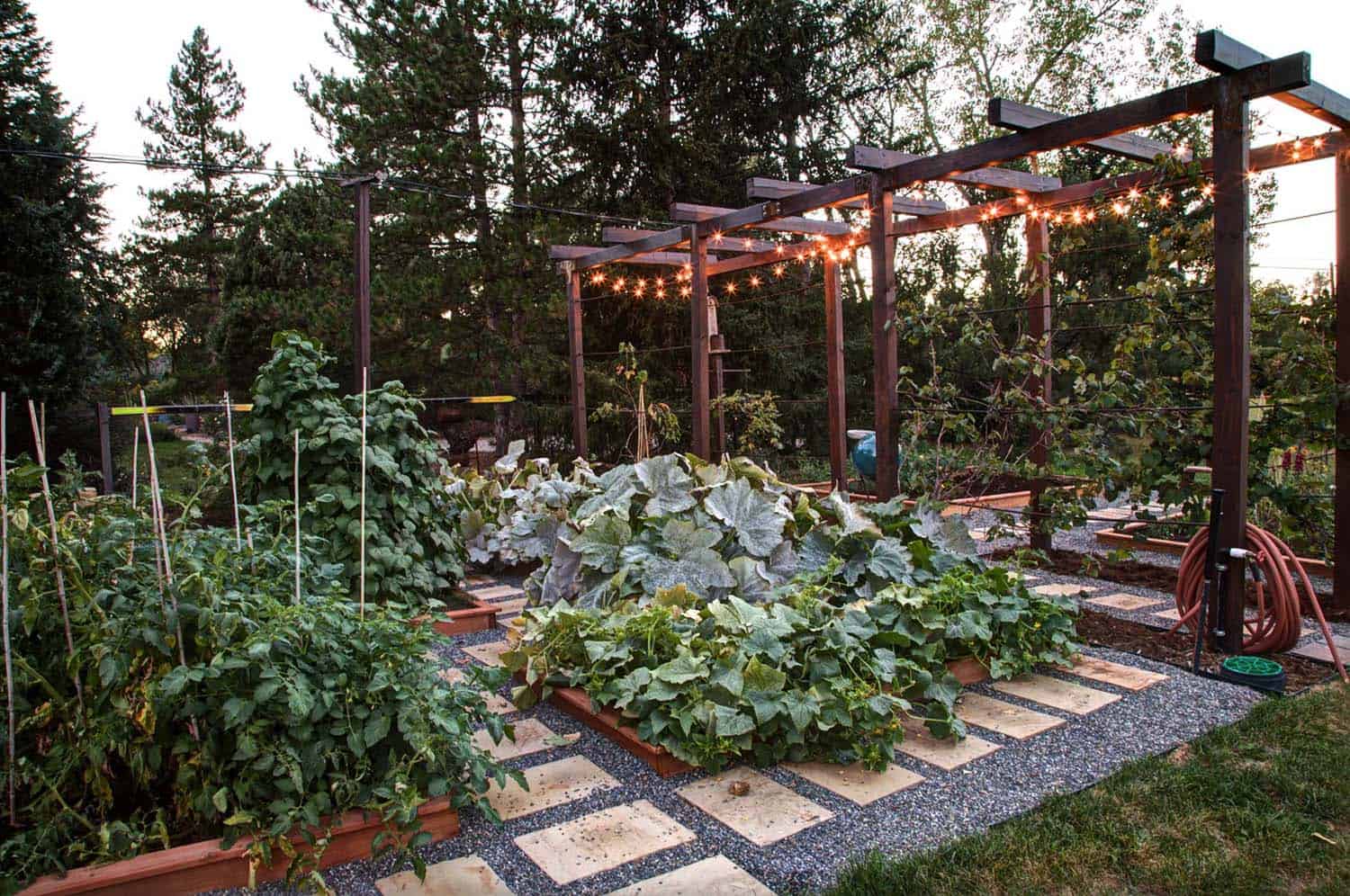
This lovely backyard garden features cucumber and zucchini in the front right planter, while yellow squash and onion are in the back right. The beds are bordered with treated timber, while the walkway is a 3/8″ crushed granite with a dimensional-cut Watermark buff flagstone. The pavers are 16″ x 24″ and about 2″ thick. There is a 4″ galvanized green roll-top steel edger to contain the gravel. An arbor has string lights for evening ambiance in the garden. If you’re building with pressure-treated lumber, consider lining the inside of the beds with heavy plastic, or choose untreated cedar or redwood instead. (via Watermark Landscapes)
2. Stone Raised Beds.
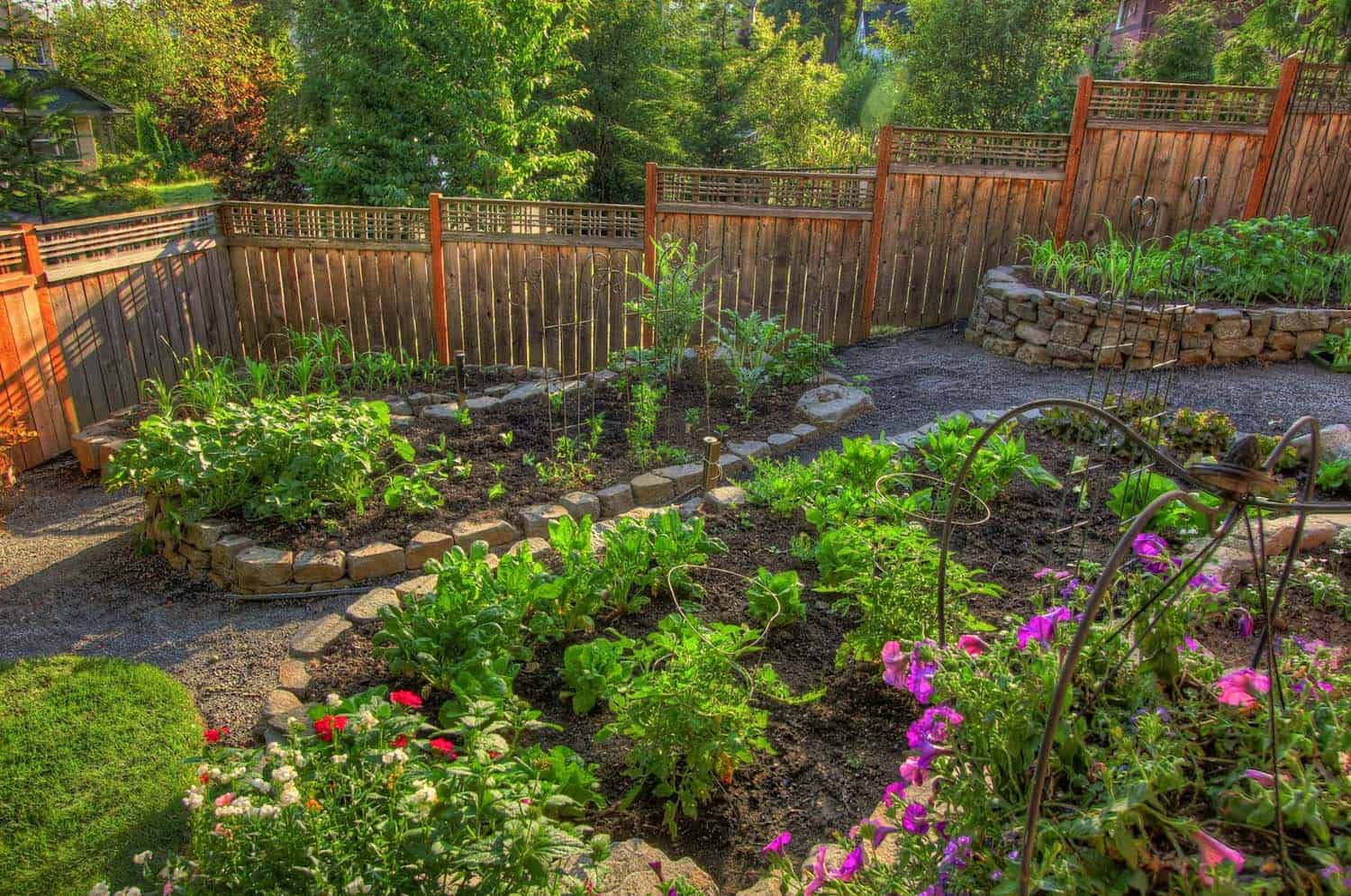
Raised garden beds with stone walls are a great way to define your spaces, especially if you are planting varying vegetable seeds. (via Paradise Restored Landscaping & Exterior Design)
3. French Potager Garden.
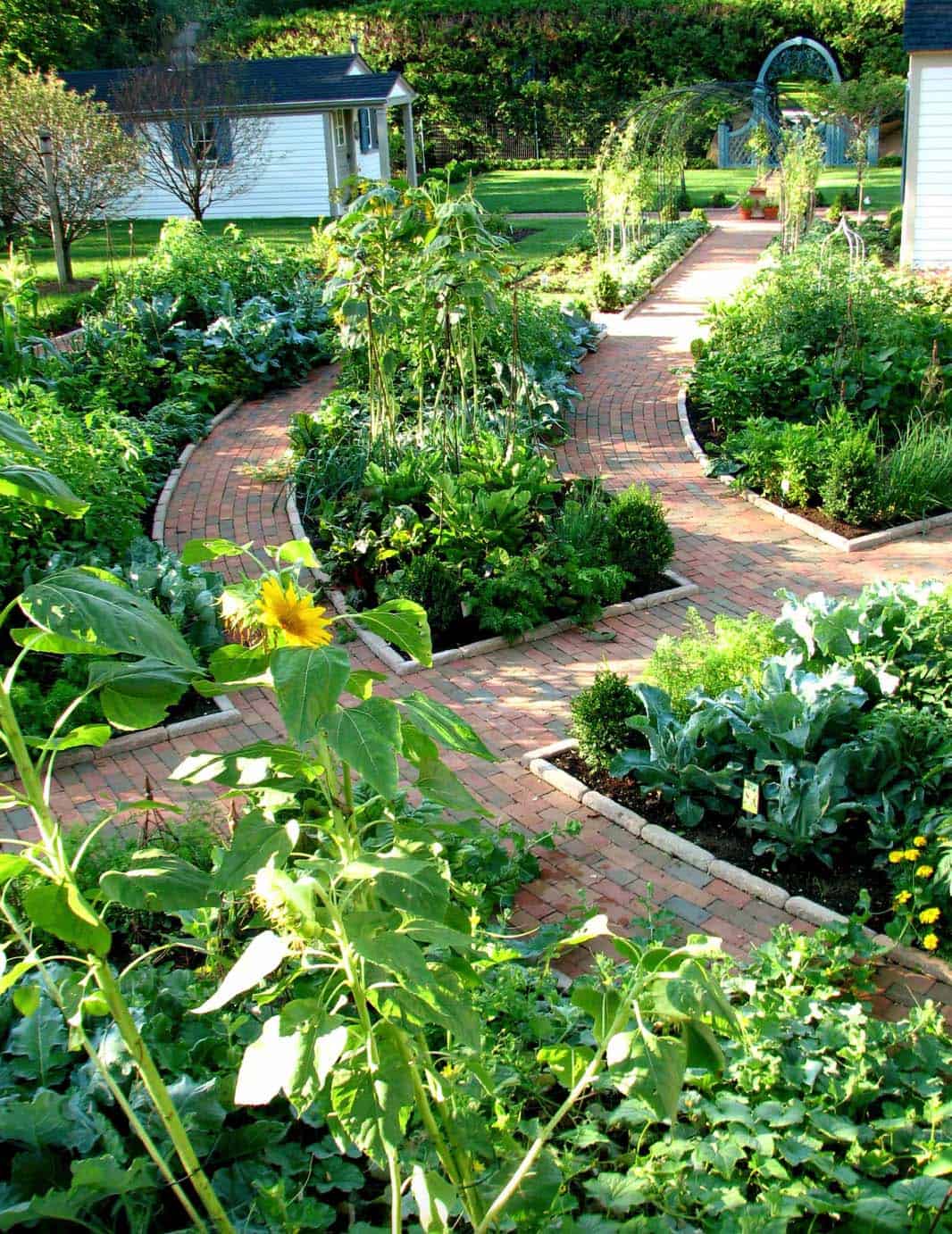
This particular garden is a “Potager Garden,” which is a traditional garden in the French style that contains fruits, berries, herbs, cuttings, and a vegetable garden. To accommodate this varied garden, the size is approximately 90′ by 140′. The image above shows the vegetable portion of the garden. Radiating pathways of brick are just over 3-1/2′ wide with 6′ wide planting spaces. This gives the garden access from the walkway without stepping into the soil. The edging is made from reclaimed and over-run tumbled concrete retaining wall cap stones with a dimension of 3-1/2″ x 16″ x 12″. (via Staab & Olmsted)
4. Kitchen Garden.
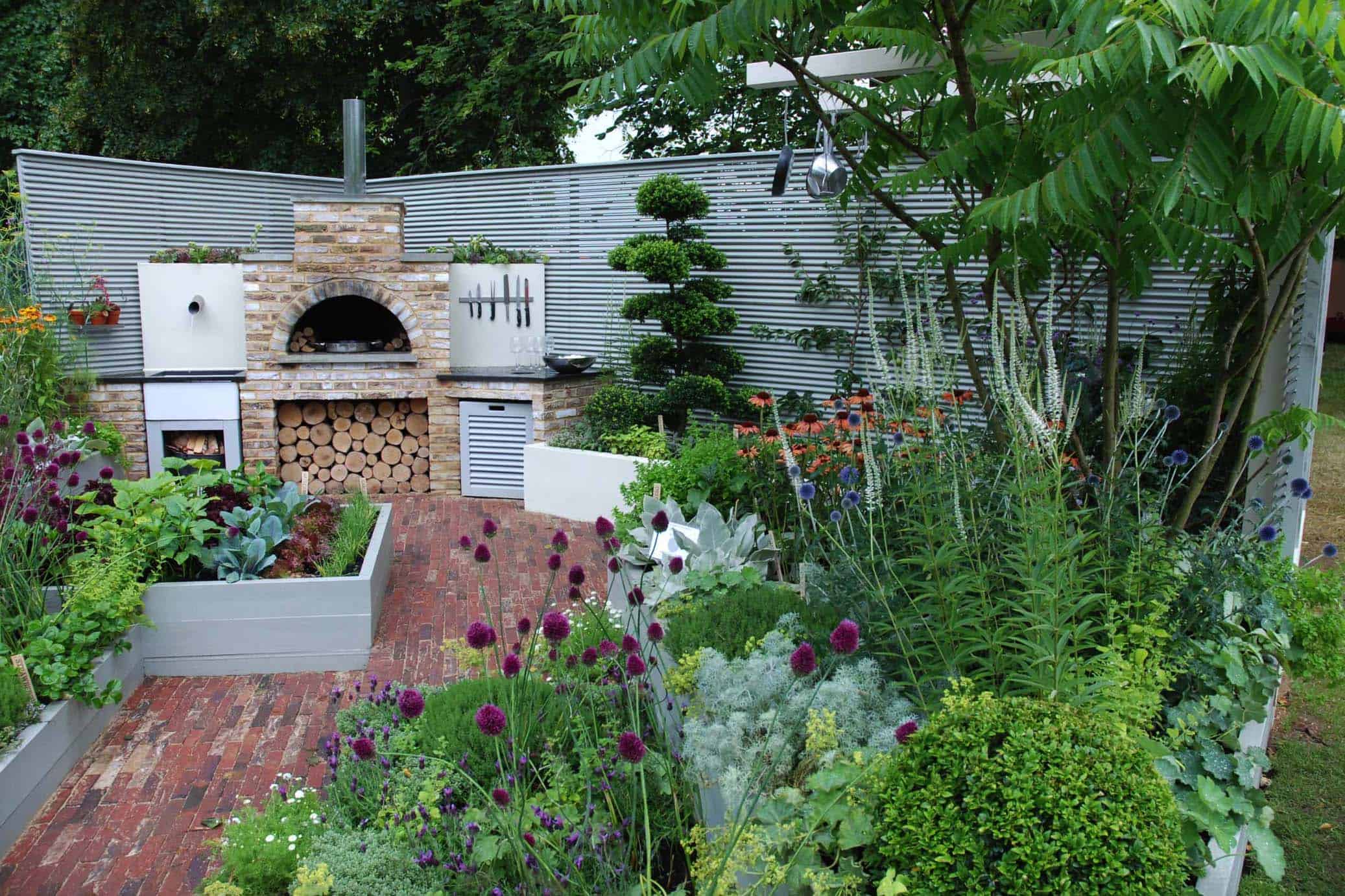
A kitchen garden in London features an outdoor pizza oven surrounded by lush landscaping. Flowering gardens are complemented by vegetables and herbs, providing fresh ingredients for your pizza! (via URBANSCAPING LTD)
5. Cor‑Ten Planter Boxes.
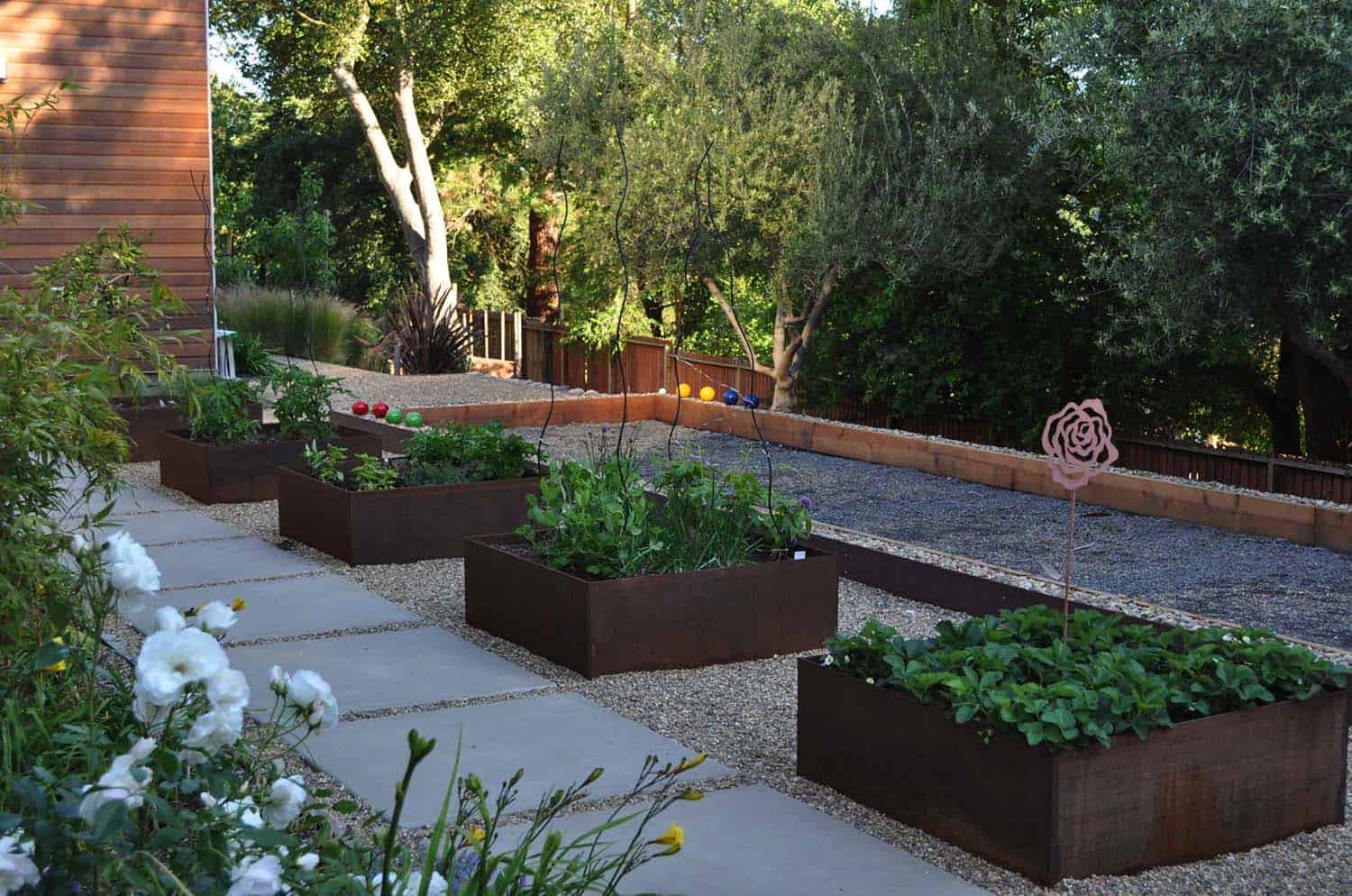
In an outdoor landscape of a home in Venice, California, Cor-ten planter boxes filled with vegetables run along a bocce ball court. The dimensions are 3′ x 3′ x 16″ or 18″. These are custom fabricated ($200-$400) by welding the 1/4″ steel into squares — open on top and bottom. (via Huettl Landscape Architecture)
6. Cedar Raised Beds.

This vegetable garden features three cedar-raised beds and is part of an overall drought-tolerant garden. These boxes are made from untreated cedar. Cedar is high in oil; therefore, it is naturally resistant to rot and insects. It also will not warp and will weather to a silvery gray after a couple of seasons. Redwood is also a good option for edibles. (via Eden Condensed Garden Design)
7. Balcony Container Garden.
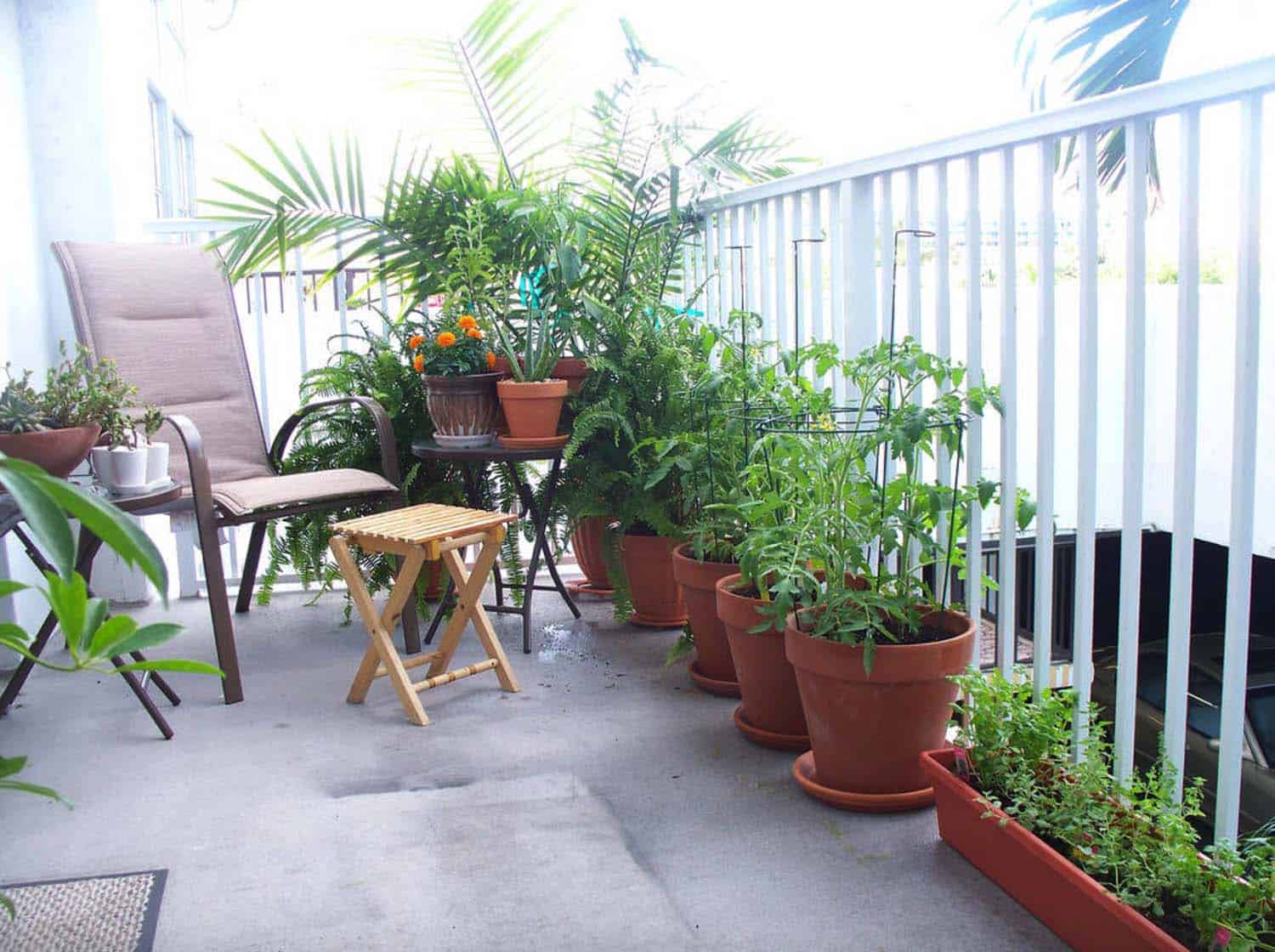
For those who live in an apartment or condo or just lack available space, a container garden can be a fantastic solution. This balcony garden in Miami, Florida, offers a 6′ x 14′ outdoor space. This provides sufficient space for Meyer lemon and key lime trees, herbs, aloe, succulents, and leafy ornamentals. (via Priscilla Torres)
8. Organized Shed Garden.
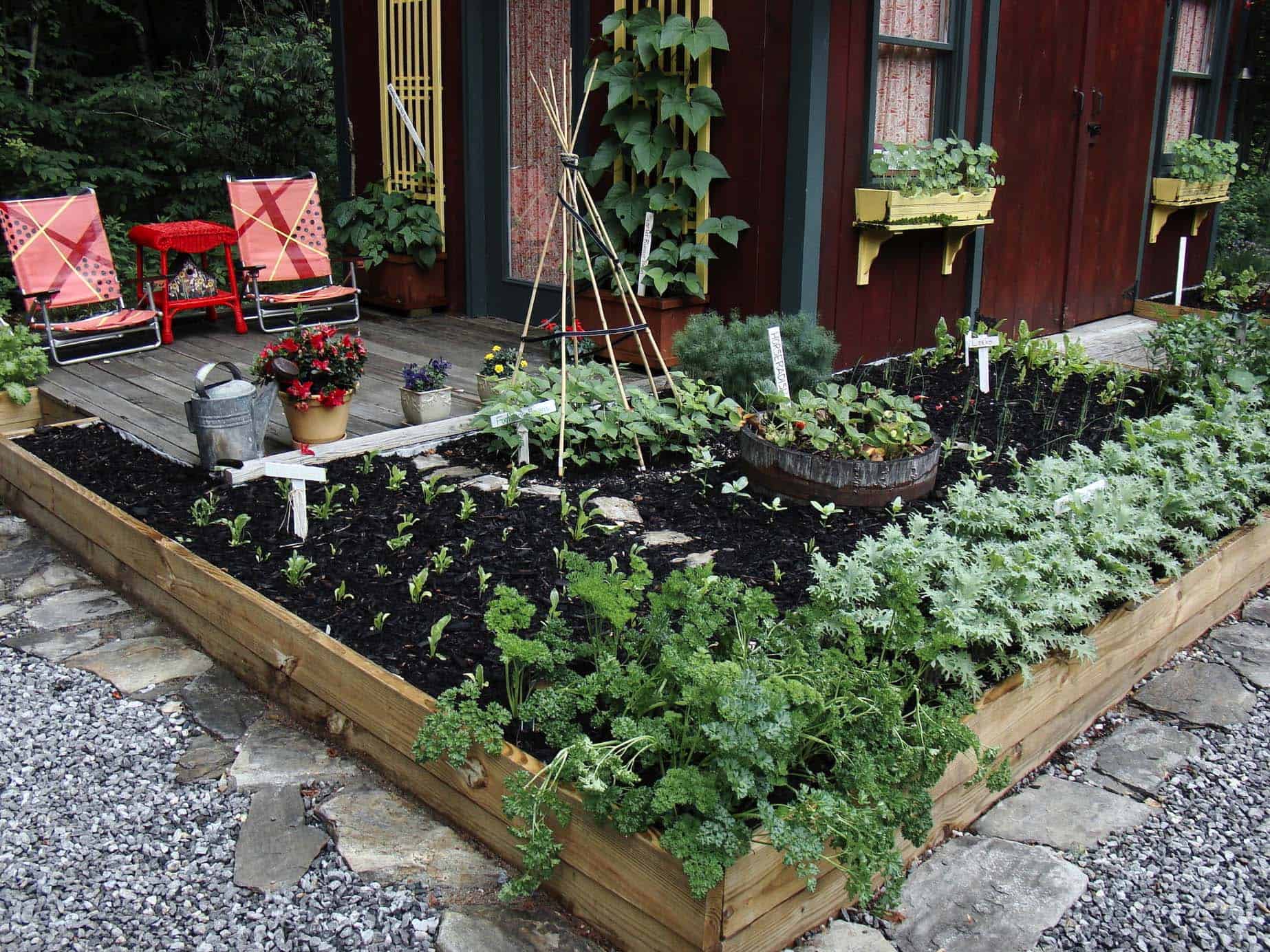
A shed garden in Maine features plant markers to keep it organized. This bed is bordered with pressure-treated pine, combining stacked 2×6, 2×8, and 2×10 boards. The boards should be a minimum of 12-13″ deep. (via Atmoscaper Design)
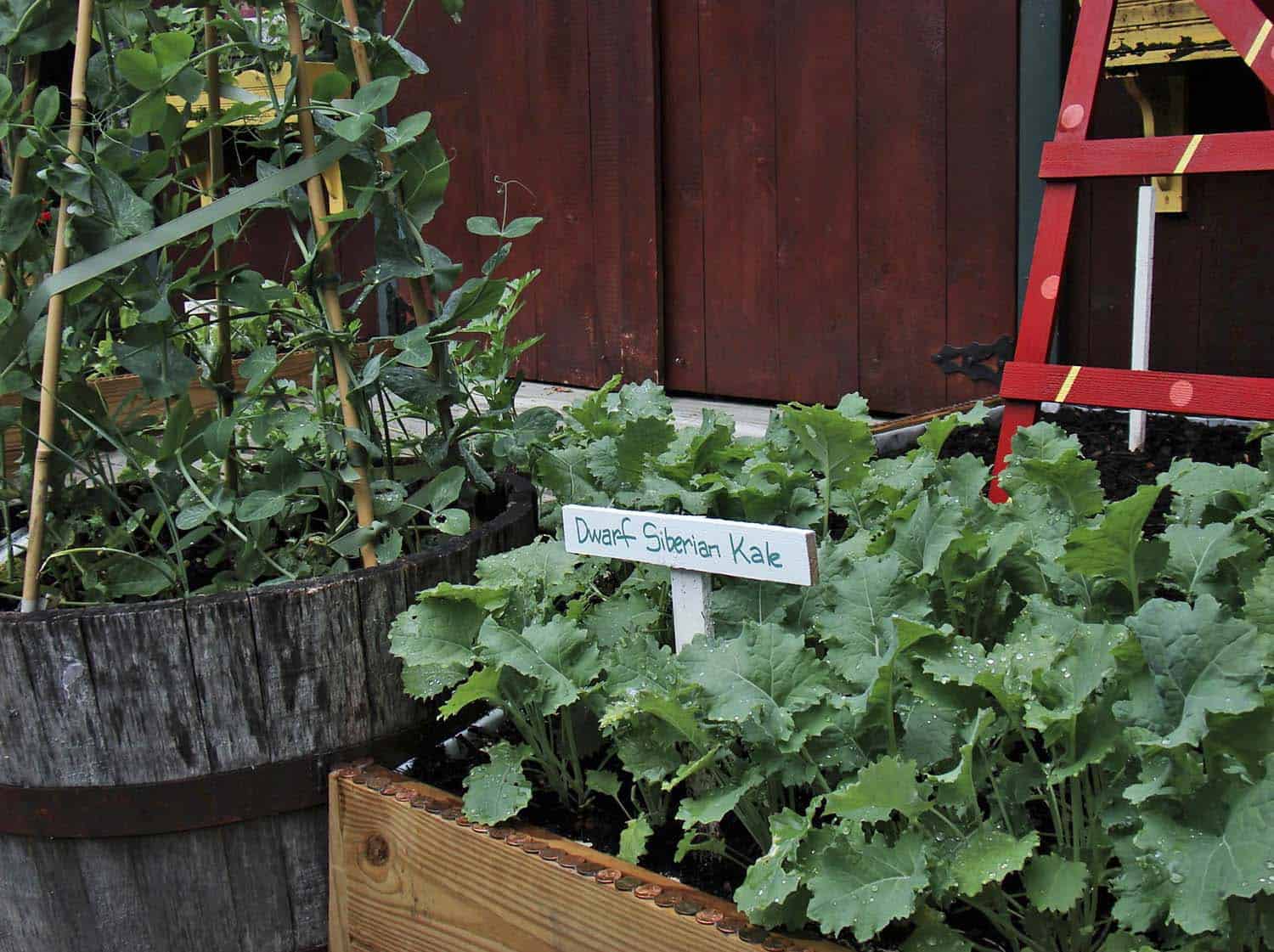
Above: A closer detail from the prior image shows pennies placed around the plants to deter slugs. Copper tape wrapped around the top edge of a raised bed is a more reliable version of this classic trick, since most modern pennies are mostly zinc. Garden markers give the gardener a clear indication of what each of the vegetables/herbs is, especially if they look similar. (via Atmoscaper Design)
9. Simple Box Containers.
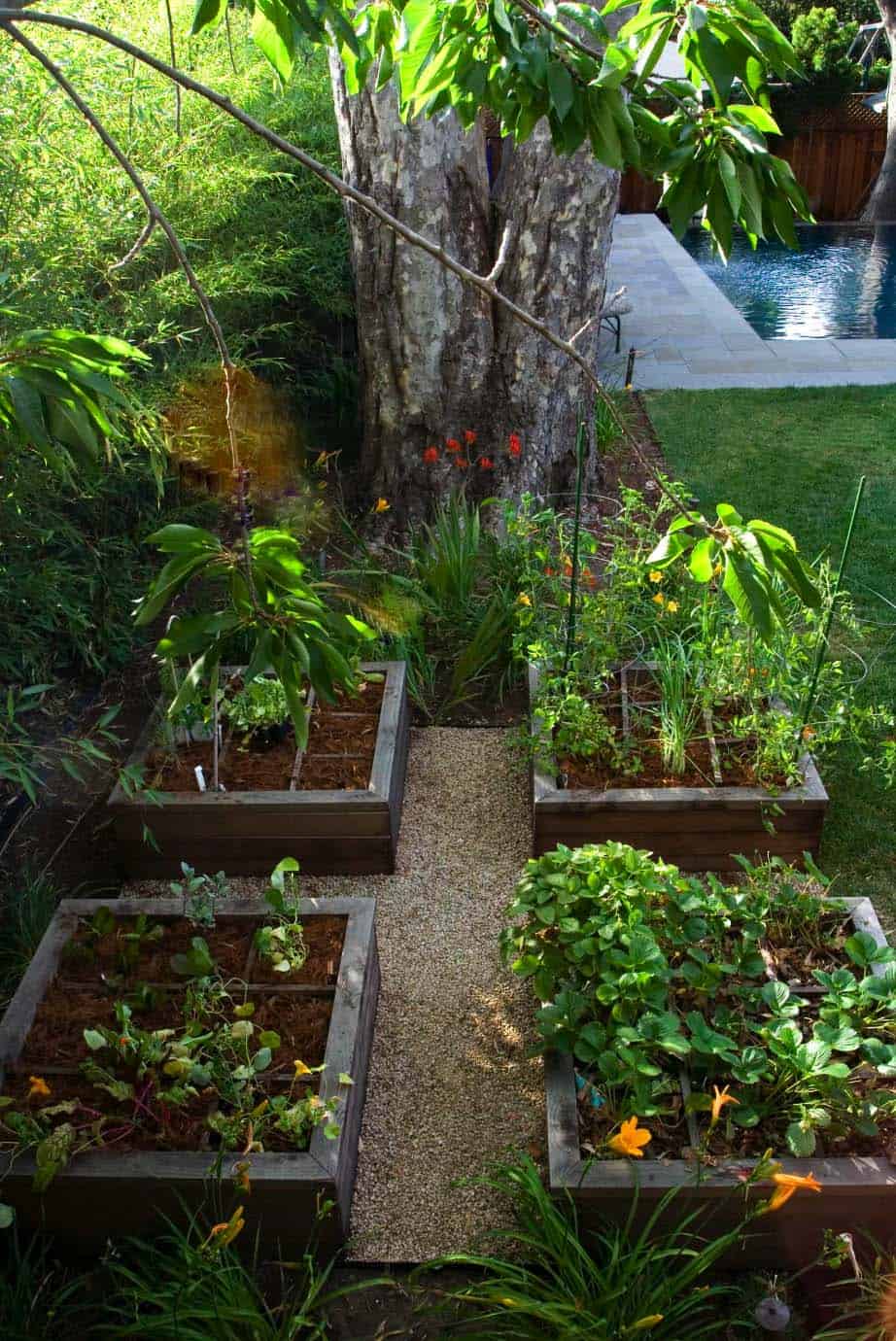
Simple box containers provide a raised bed for your backyard veggie garden. Each one can be planted with different veggies to keep them organized. Not planting them in the ground helps you control the soil you use. (via Shades Of Green Landscape Architecture)
10. Redwood Bed Garden.
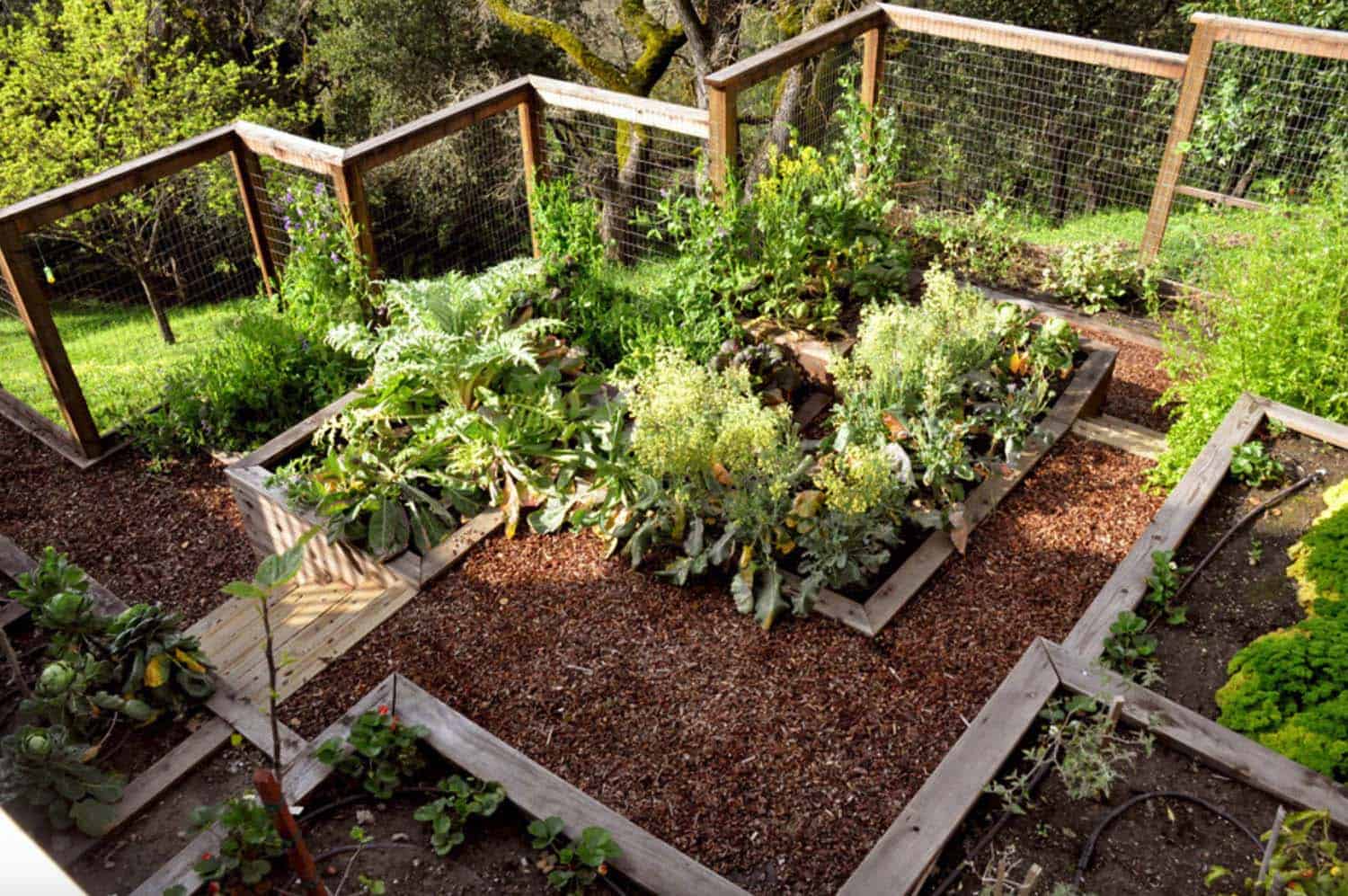
The beds and steps of a vegetable garden in Northern California are composed of redwood. To keep the deer out of the garden, hog-wire and cedar posts, cap, and fascia were specified as 8 feet high. (via Arterra Landscape Architects)
11. Chip & Joanna’s Garden.
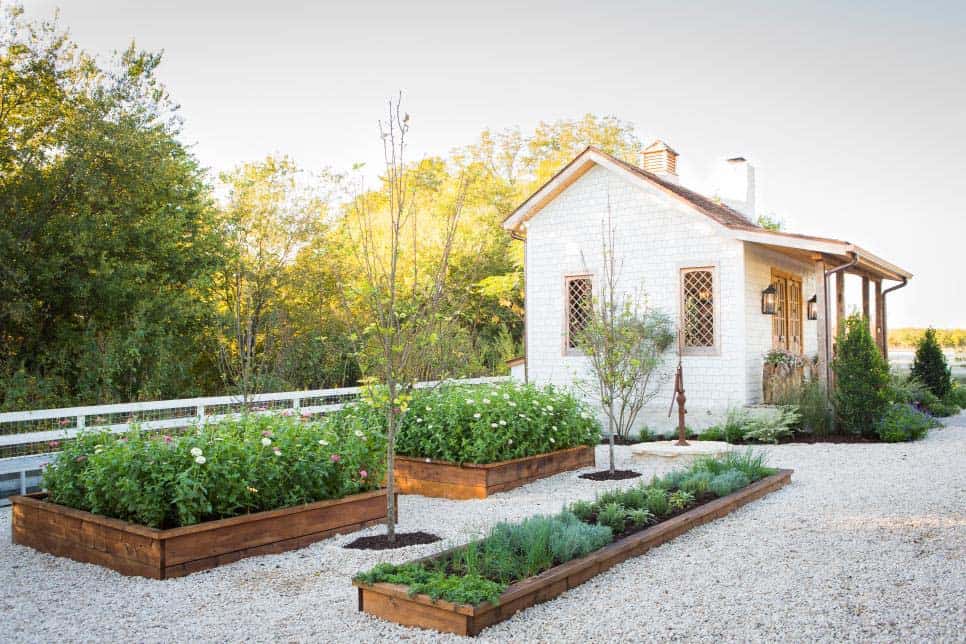
A charming garden shed belonging to Chip and Joanna Gaines from the show Fixer Upper features raised beds of beautiful flowers, herbs, and vegetables. Pictured here is an herb garden with rows of rosemary, lavender, oregano, and sage to season delicious meals. (via HGTV)
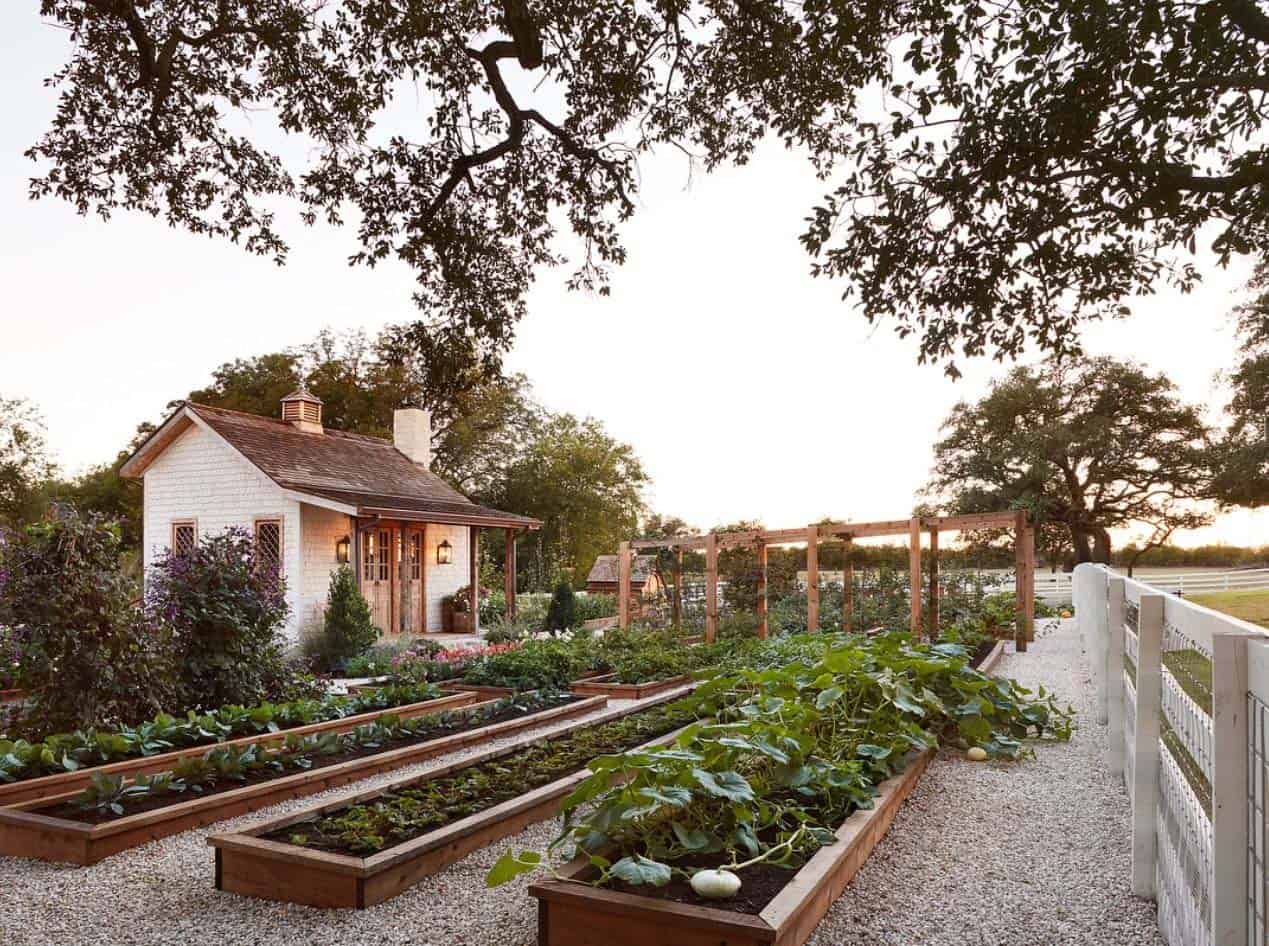
Above: Another detail from the prior image of the raised vegetable gardens from Chip and Joanna Gaines’s beautiful gardens. (via HGTV)
12. Cottage Garden Pathway.
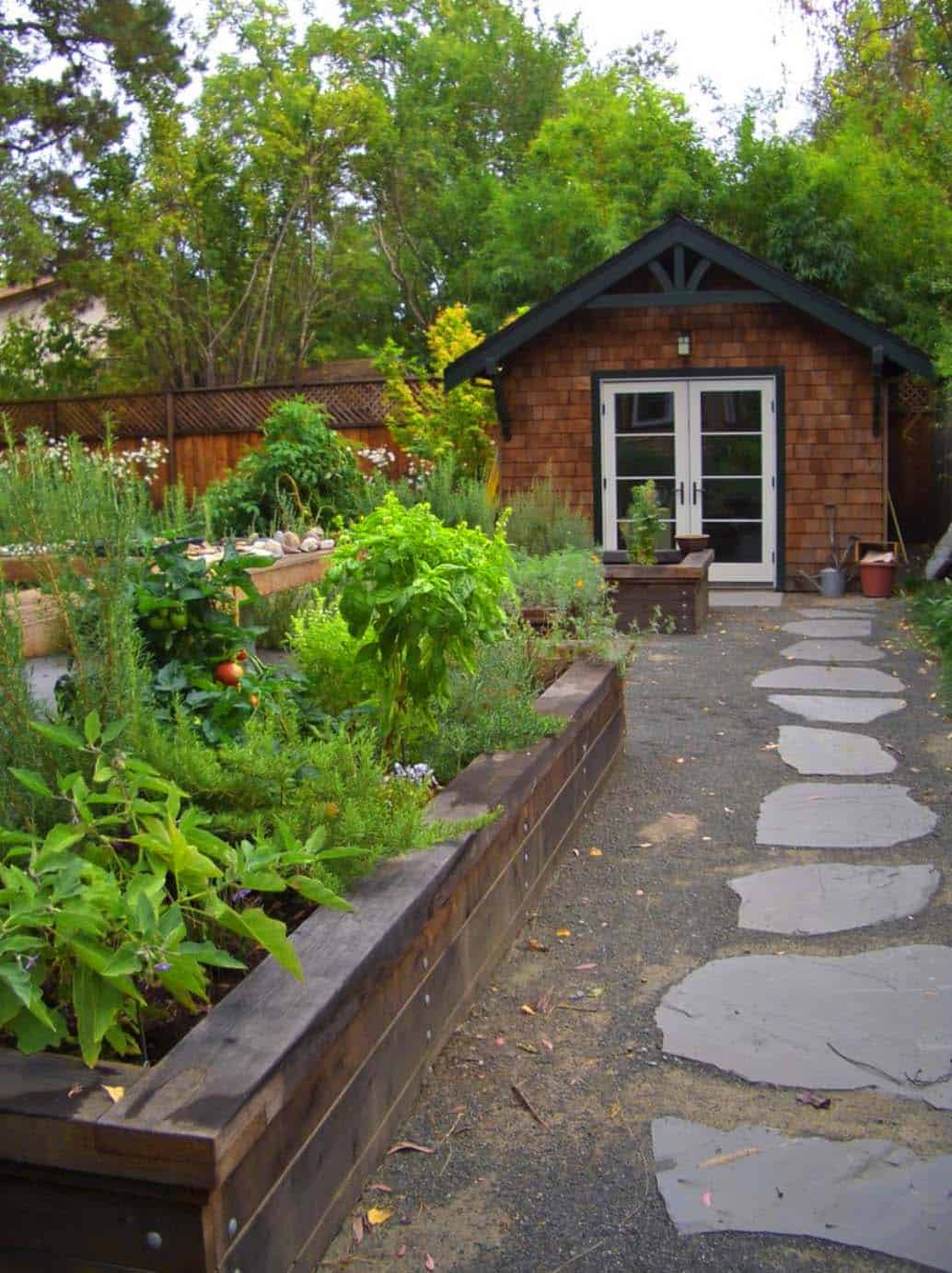
A lovely cottage garden shed features a flagstone pathway leading to a raised bed of delicious vegetables. (via Shades Of Green Landscape Architecture)
13. Chef Bayless Kitchen Garden.
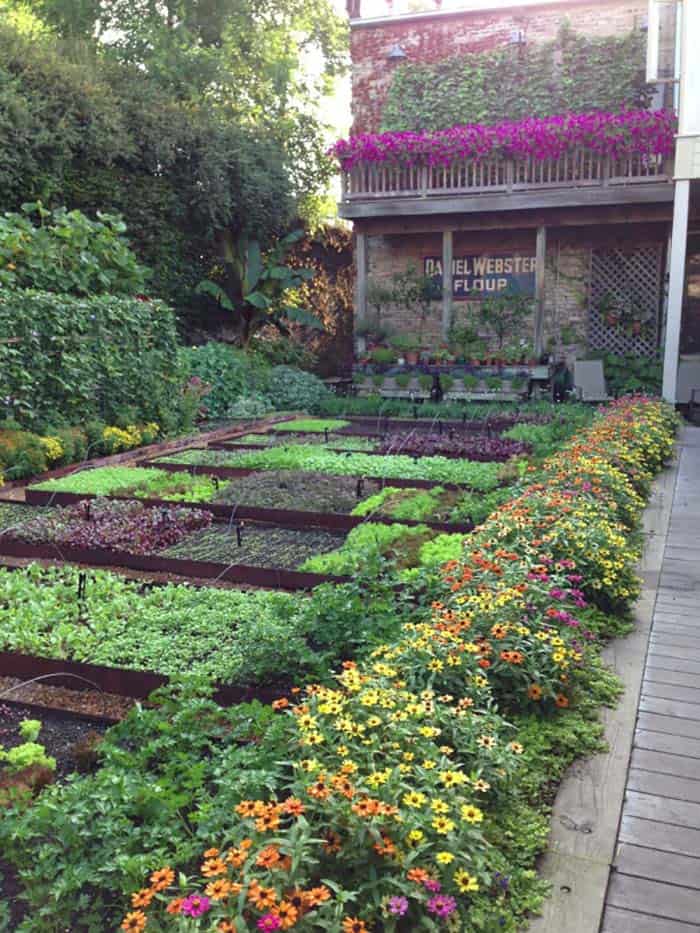
The beautiful summer garden of Chef Rick Bayless offers a mix of fresh vegetables and flowers. (via Chef Rick Bayless)
14. Ornamental Potager Garden.
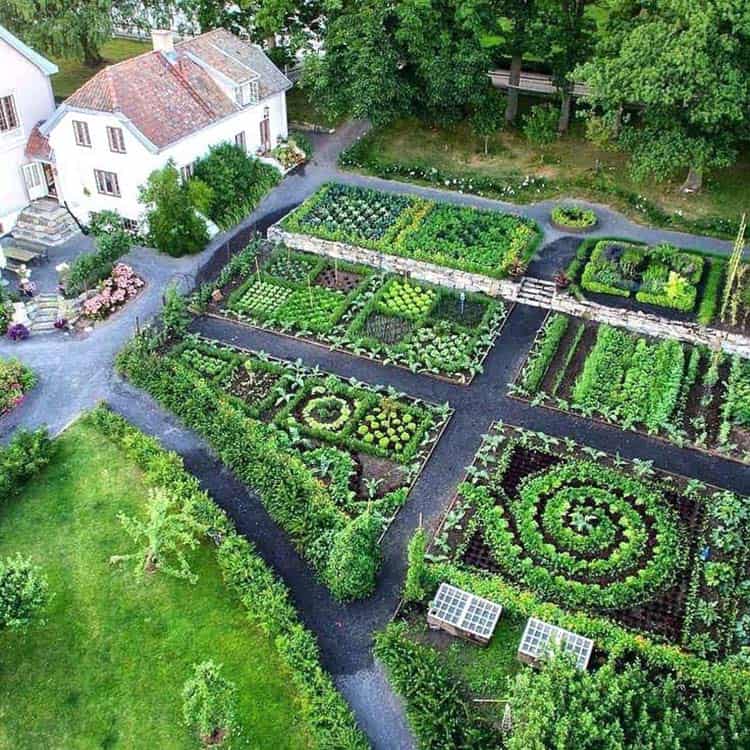
An impressive “Potager Garden” for growing vegetables. Potager is a French term for an ornamental vegetable or kitchen garden. (via Pinterest)
15. Glass Greenhouse Garden.
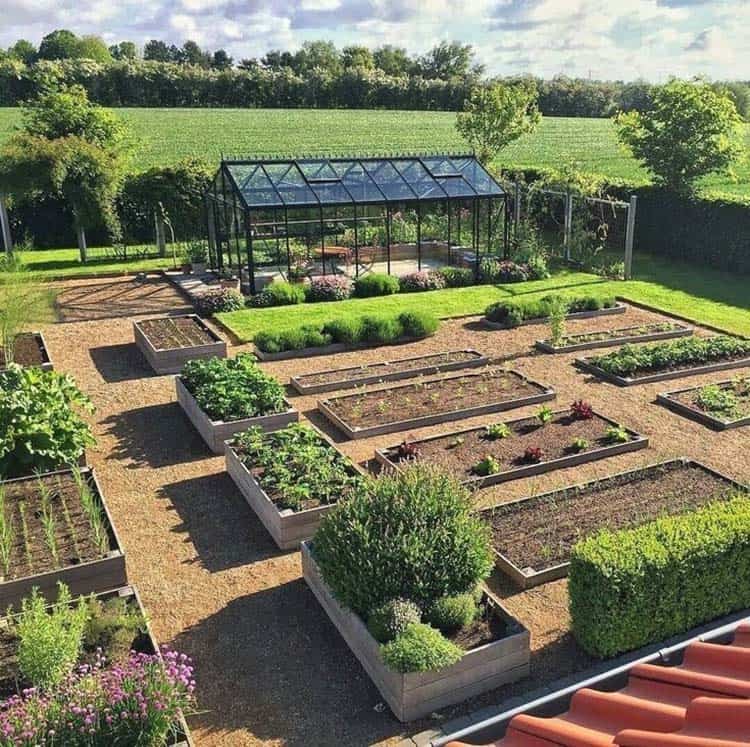
A heavy-duty powder-coated steel frame and glass greenhouse are surrounded by raised planter beds filled with fresh, growing vegetables. (via lothlorienlover.tumblr)
16. Raised Bed Garden.
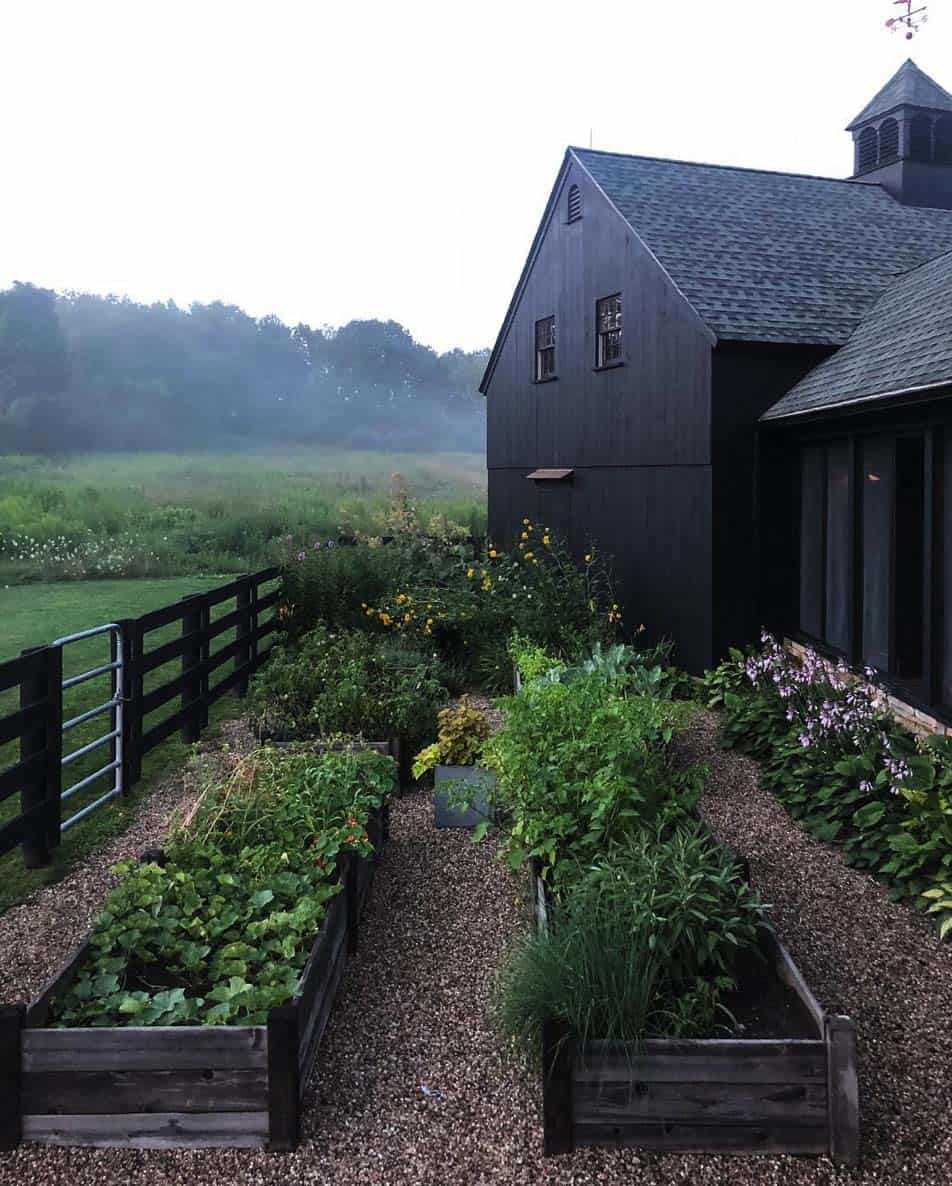
A beautiful raised bed garden in Dutchess County, New York, offers plenty of inspiration to make your own! (via @yolorenzo)
17. Potting Shed Garden.
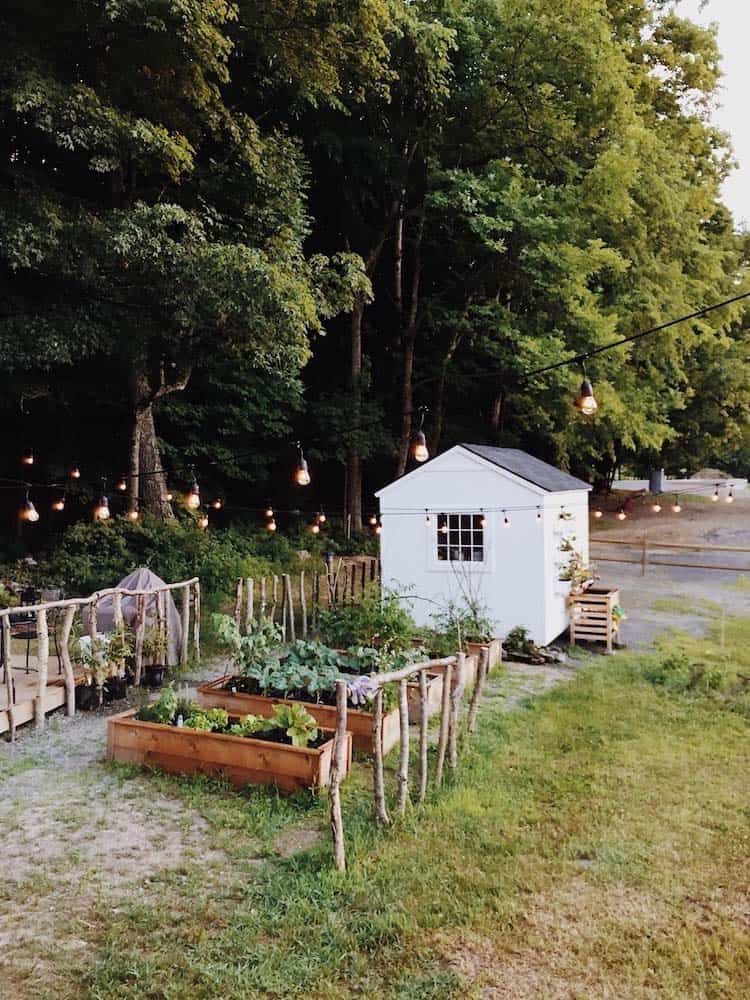
The potting shed of a home in Vermont features raised beds full of fresh growing vegetables. String lights overhead help create a magical ambiance at night. (via Sugarhouse Homestead)
18. Fenced Potager Garden.
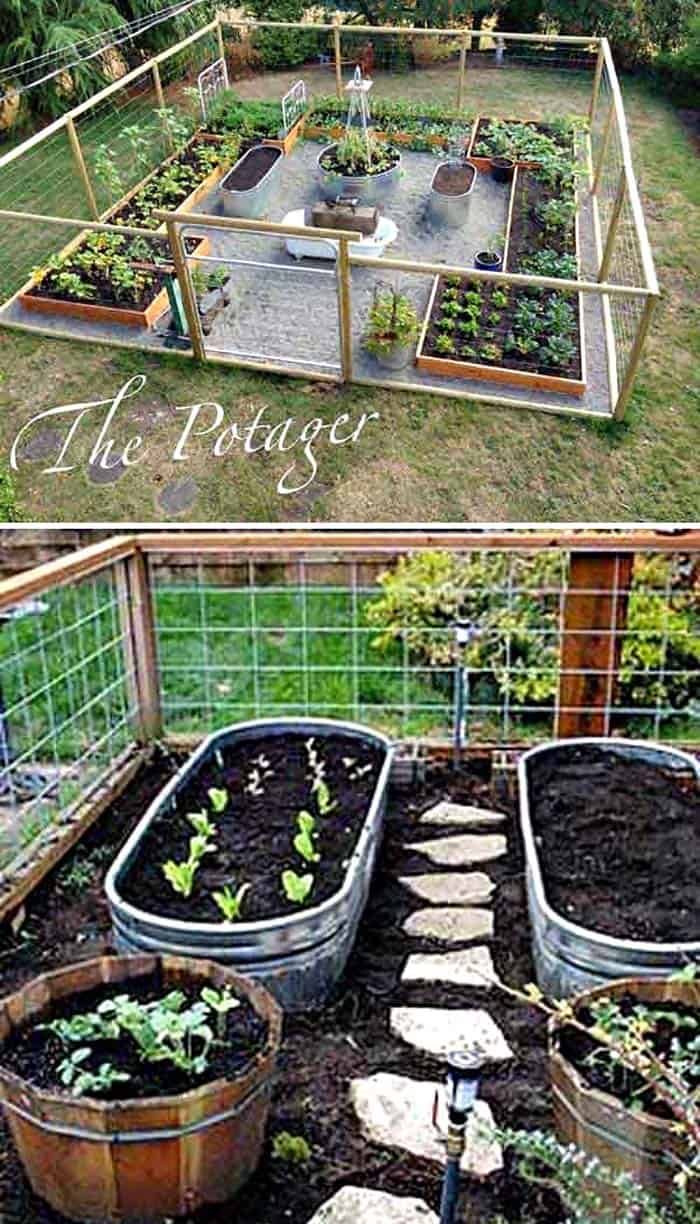
This “Potager” garden features fencing to prevent wildlife from devouring the garden. Raised beds and metal troughs contain varying types of vegetables. In the lower image, a stone pathway provides accessibility to the garden without trampling on the plants. (via House + Bloom)
19. Spiral Herb Garden.
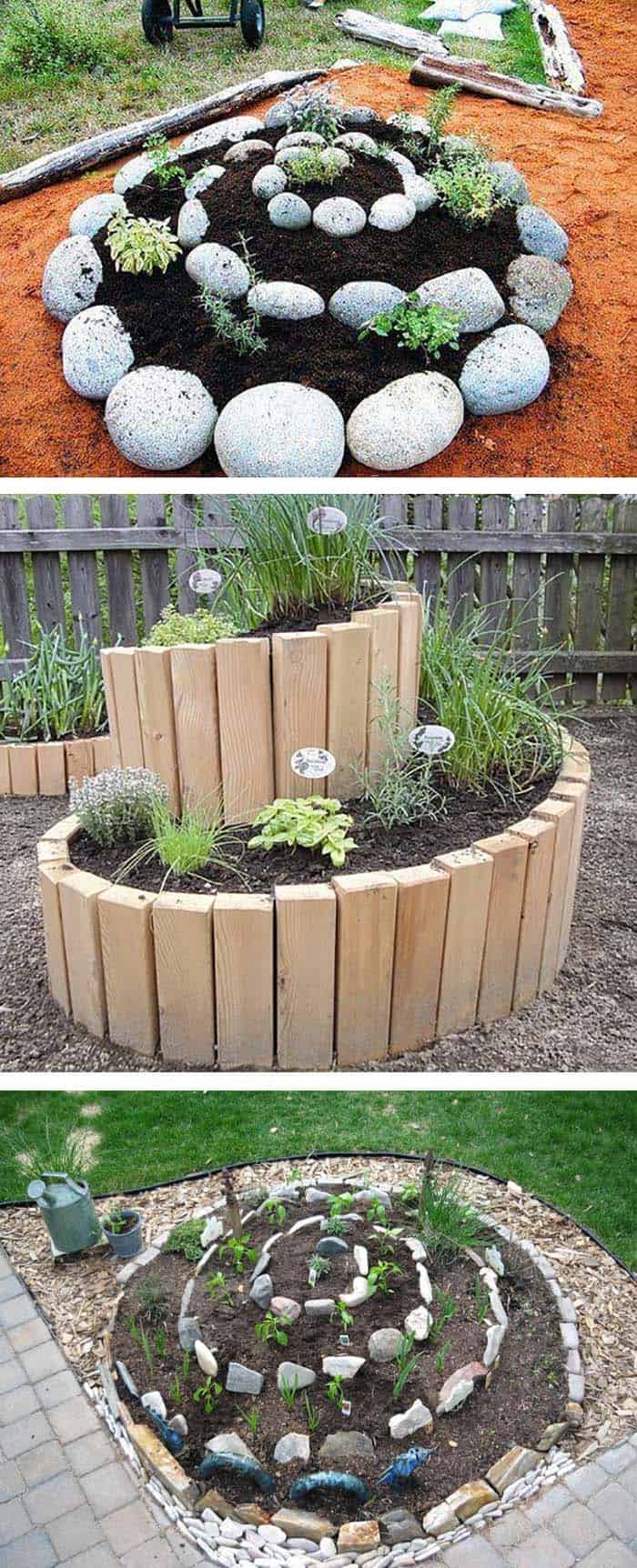
Spiral gardens are ideal for properties with limited space or those seeking something more unique. Grow your favorite herbs in this smaller garden to add a delicious taste to your meals. (via Recycledaw Blog)
20. Organic Front Yard Beds.
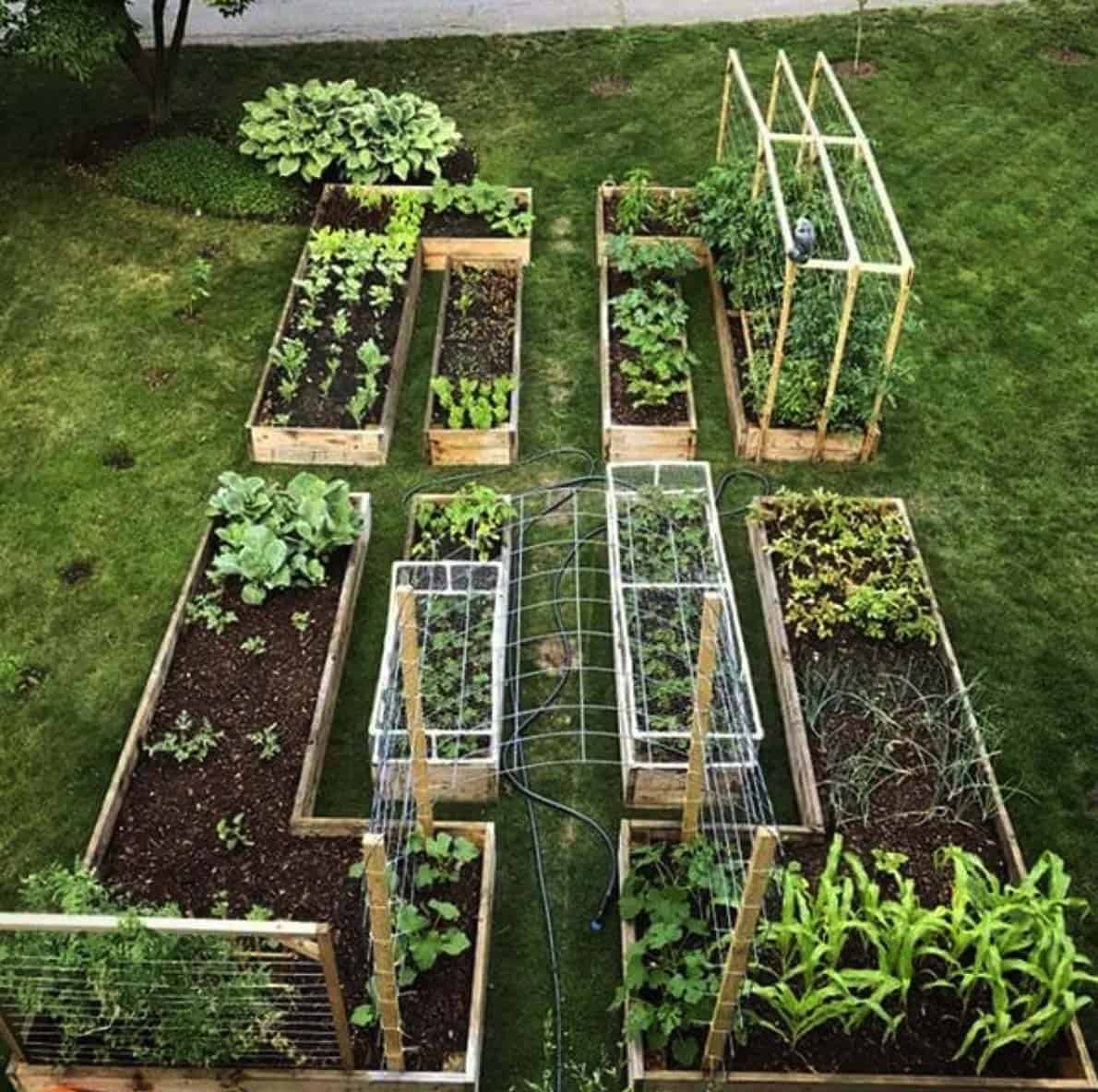
This organic front yard vegetable garden features raised beds to control the type of soil you would like to grow your veggies in. They also improve drainage, use space more efficiently, and increase crop yields. (via @chelsierosetroxel)
21. Pyramid Trellis Support.
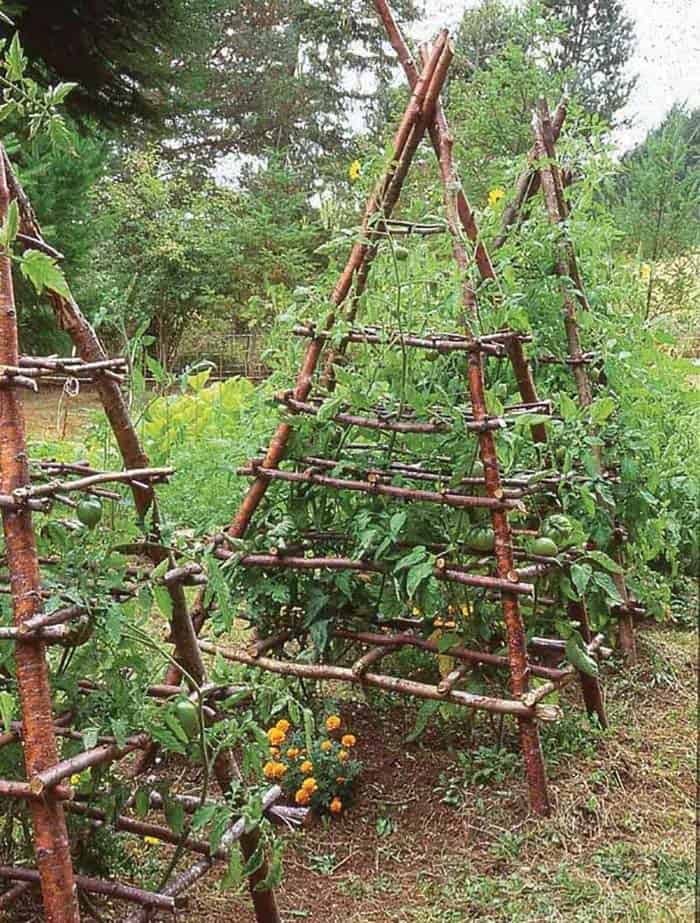
A pyramid-shaped trellis made of branches helps structure tomato plants. The trellis also helps to keep the ripened fruit in place when it is time for the gardener to harvest. (via Rick Wetherbee for GRIT)
22. Narrow Backyard Beds.
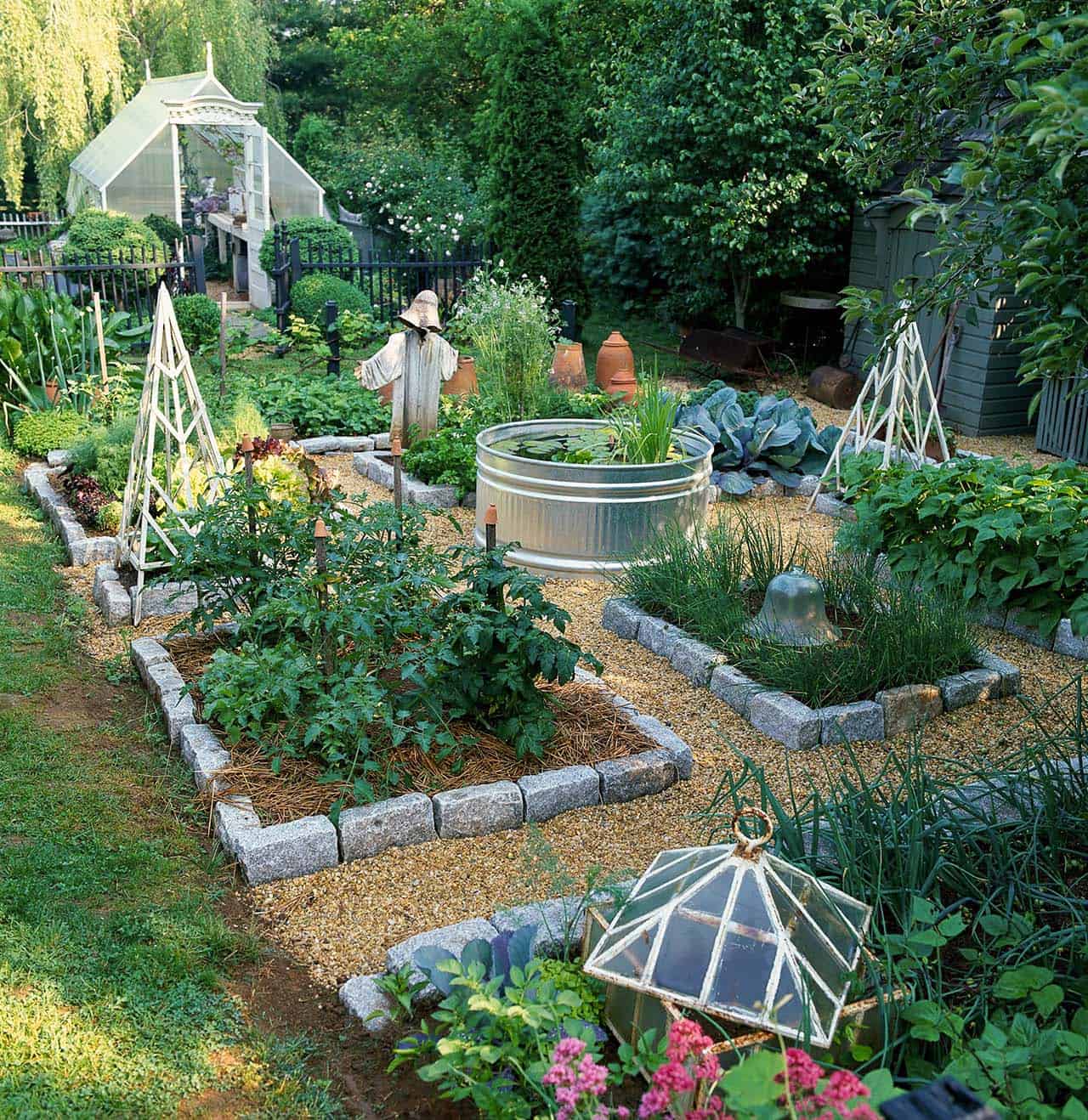
Growing your own vegetables can be very rewarding, not to mention delicious. This fabulous garden is set in a long and narrow backyard. A series of raised beds is composed of repurposed cobblestones. Using gravel pathways through the garden creates accessibility to the beds. A galvanized steel tub in the center of the garden features aquatic plants and serves as a convenient spot to fill a watering can. (via Better Homes & Gardens)
23. Planter Beds With Trellis.
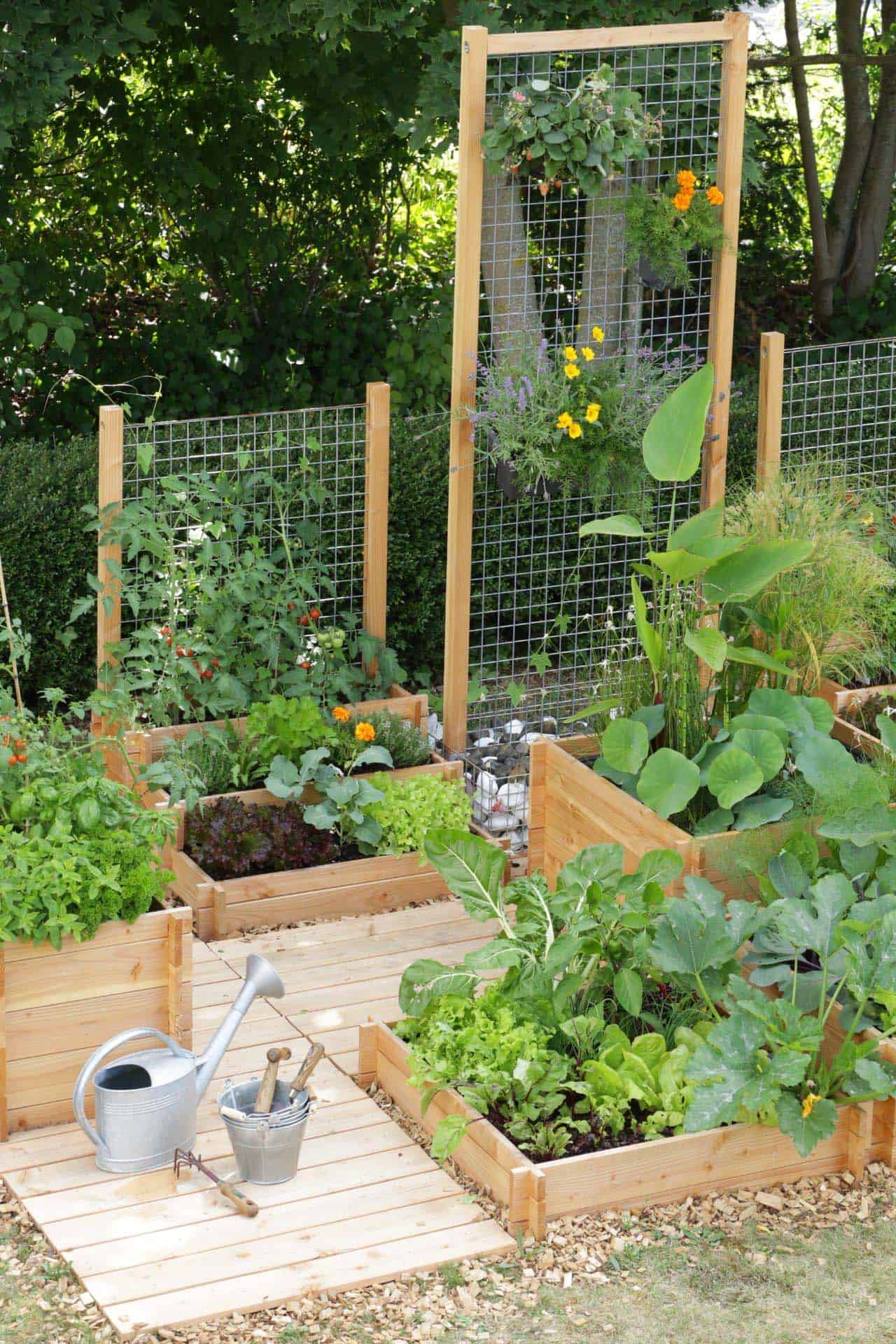
Raised planter beds and vertical wire create a highly efficient garden. The vertical wire acts as a garden trellis to aid climbing vines. If you have a retaining wall or fence in your backyard, it will improve the aesthetics. (via Pinterest)
24. DIY Pallet Garden.
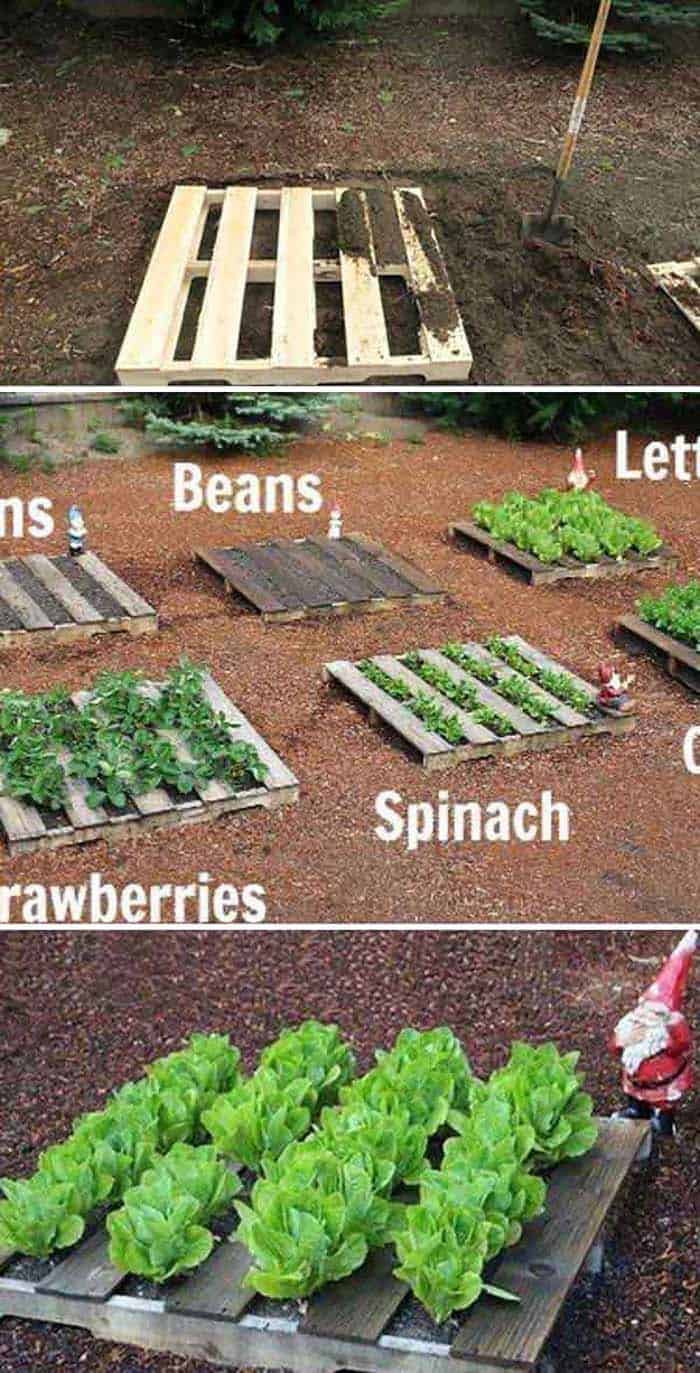
Pallet gardens are a simple DIY. All you need are pallets and a few bags of garden soil to start your project. Buy garden seeds for the vegetables you would like to grow, add some water, and watch them grow! You may wish to add plant labels for organization and visual interest. (via Ideacoration)
25. Vertical Garden Wall.
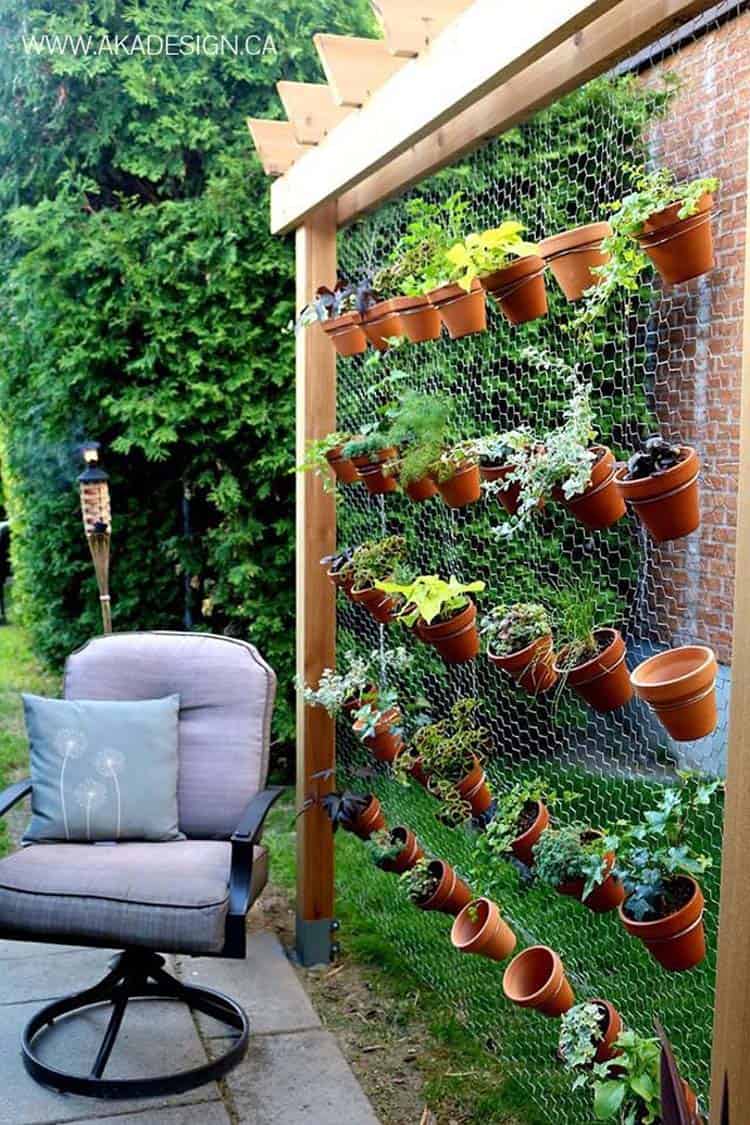
A DIY vertical garden wall is ideal for those with limited space or who prefer a simple setup. Four-inch terra cotta pots (35 are pictured here) are affixed to wire netting attached to cedar posts. Plant a variety of culinary herb seeds in each of your pots. Get the full tutorial on the provided link. (via Home Made Lovely)
26. VegTrug Raised Planter.
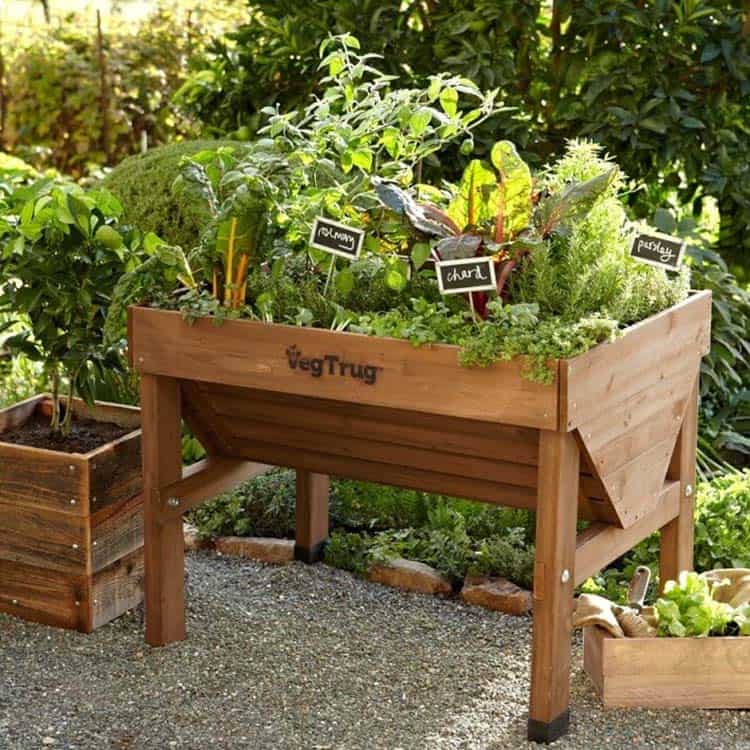
Grow your own vegetables in a raised planter such as this VegTrug. They come in various sizes and colors to meet your gardening needs and aesthetic preferences. If you are looking for a larger size, consider this VegTrug. This one mixes herbs and vegetables together in composting soil. Add etched garden labels for visual organization. (via A Grateful Life)
27. Organized Raised Planters.
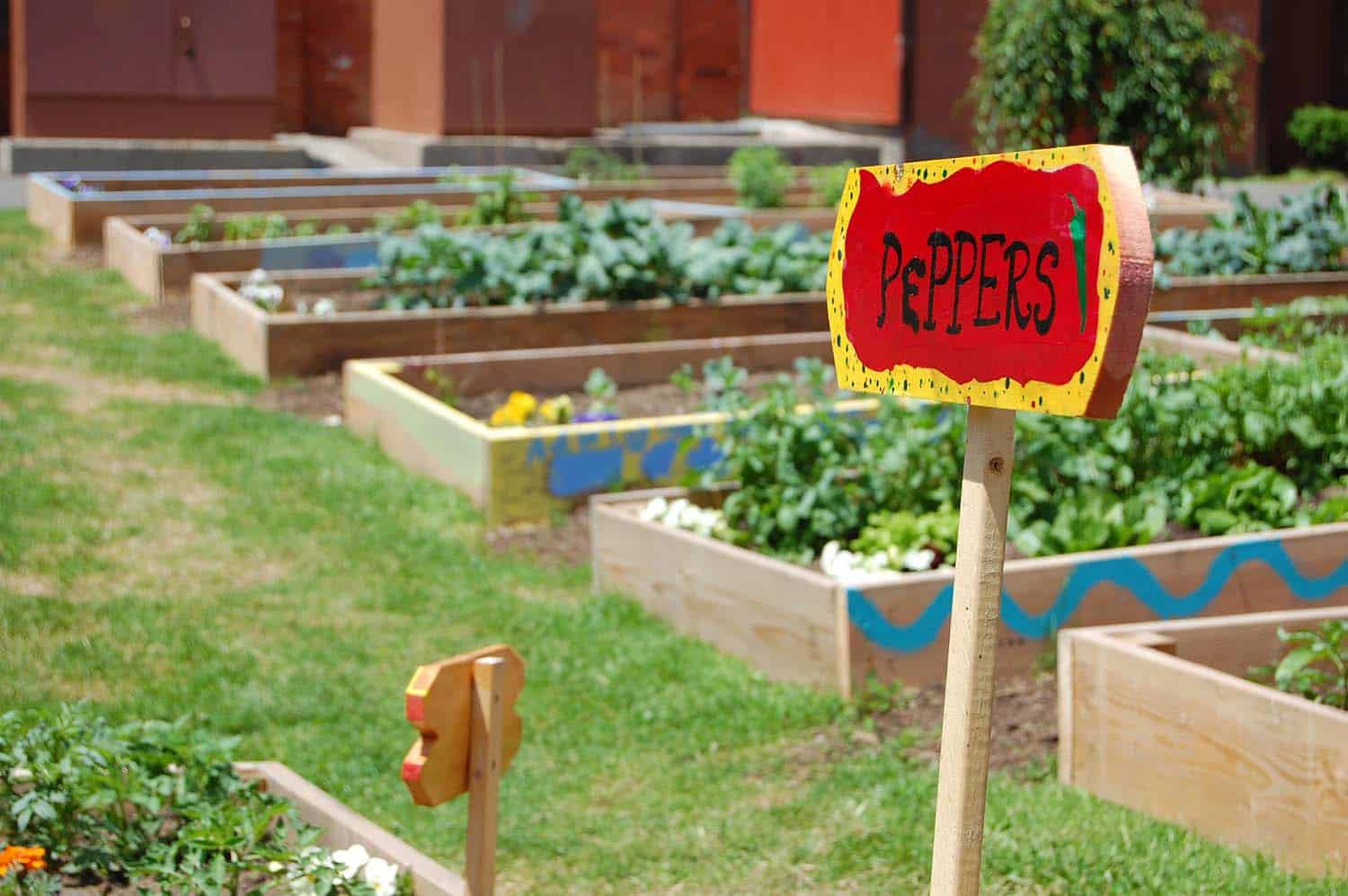
Organize your vegetables in raised planters. Some may need more tending than others, so it helps to make gardening a little simpler. Add colorful signage with garden stakes to help with organization. (via Better World International)
28. Raised Wooden Planters.
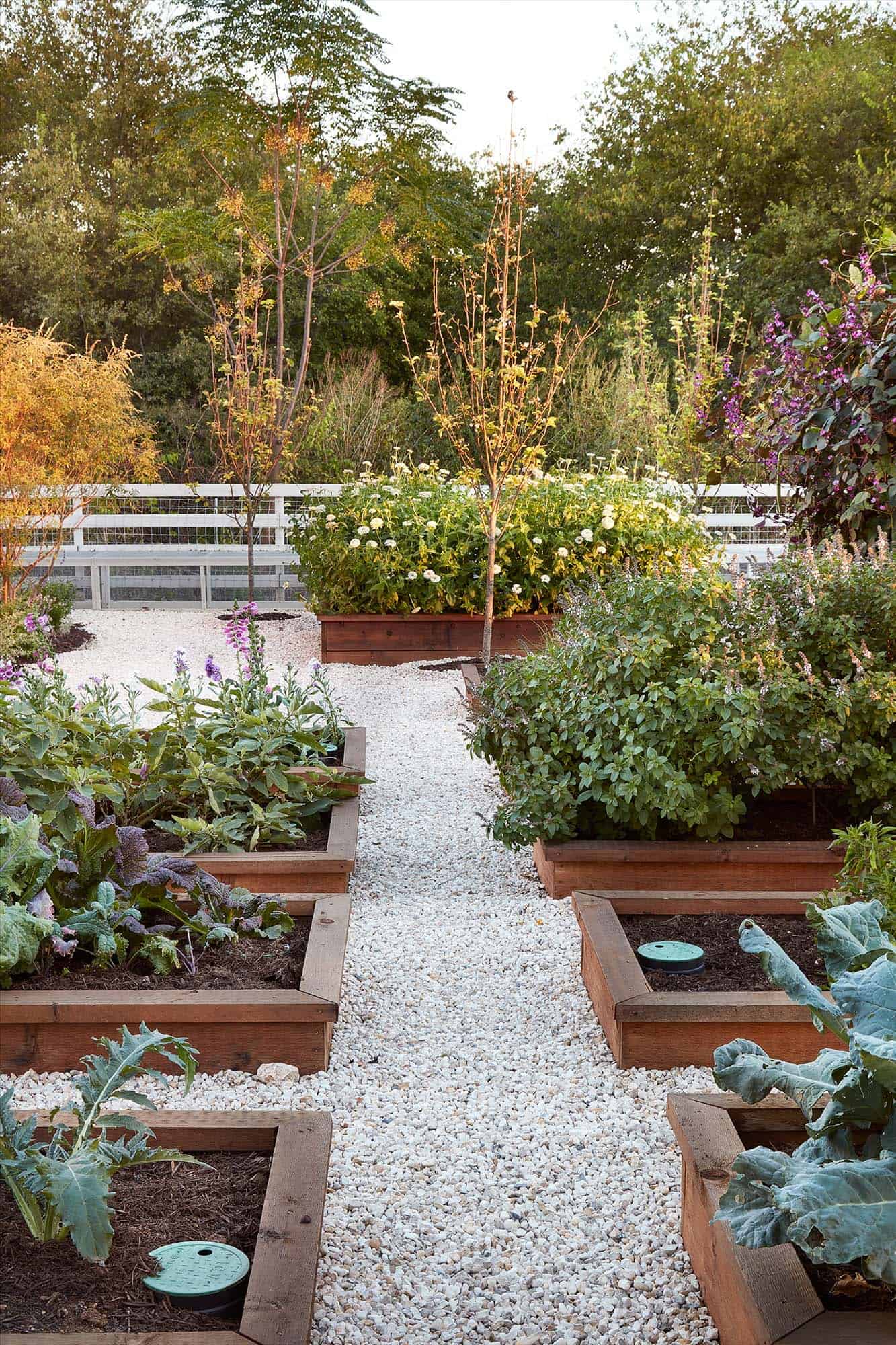
Raised garden beds offer several benefits. Elevating them helps separate your fertilized soil from the native soil, allowing you to control your plants’ nutrient levels. If you set the wooden planter beds on rocks, they can drain easily and prevent your roots from drowning, the main reason plants die. (via Magnolia Blog)
29. Hanging Gutter Garden.

A hanging tiered gutter garden is filled with lettuce, chives, and herbs, perfect for small spaces. Many gardeners prefer aluminum gutters over vinyl or PVC for growing edibles, and they work the same way. You’ll need gutter sections with end caps, chains, and S-hooks or brackets to hang each tier. Be sure to drill drainage holes along the bottom. (via The Whoot)
30. Wine Crate Planters.
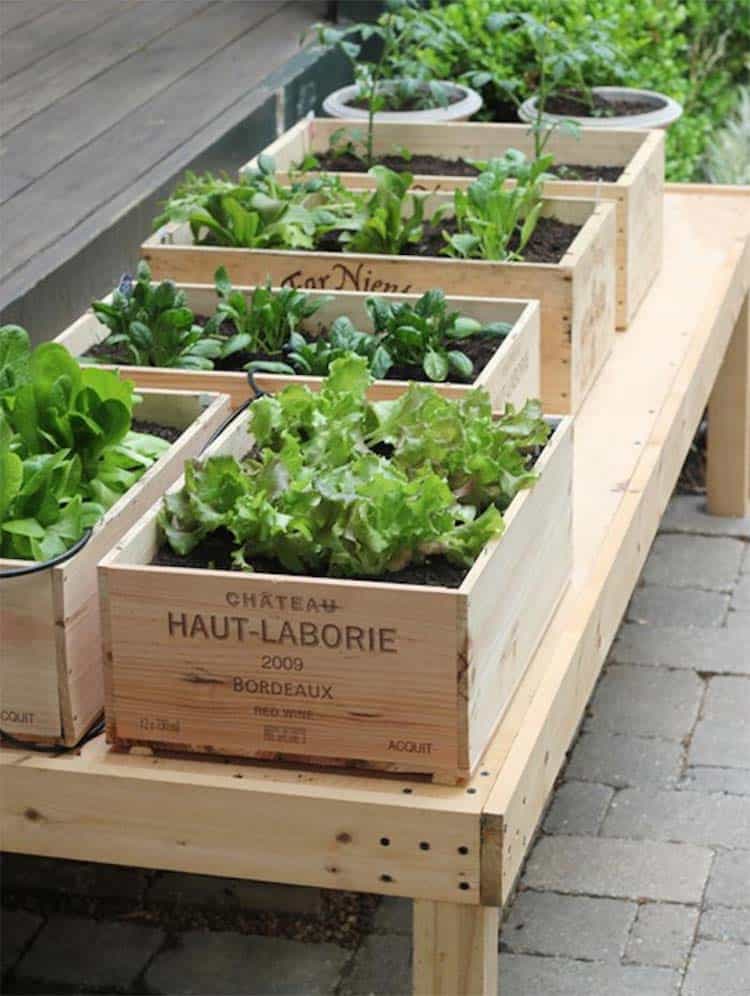
This DIY salad garden is ready to harvest, planted in a wine crate — which is ideally portable and perfect for small spaces. If you want some delicious leafy greens, try these Heirloom Organic Seeds. Be sure to drill drainage holes. If you are setting these on a table, use a thin layer of sheet metal for waterproofing. Crates can be sourced from wineries, liquor stores, grocery stores, hardware stores, arts & crafts stores, home decor stores, eBay, and Craigslist. (via Remodelista)
31. Framed Cedar Garden Beds.
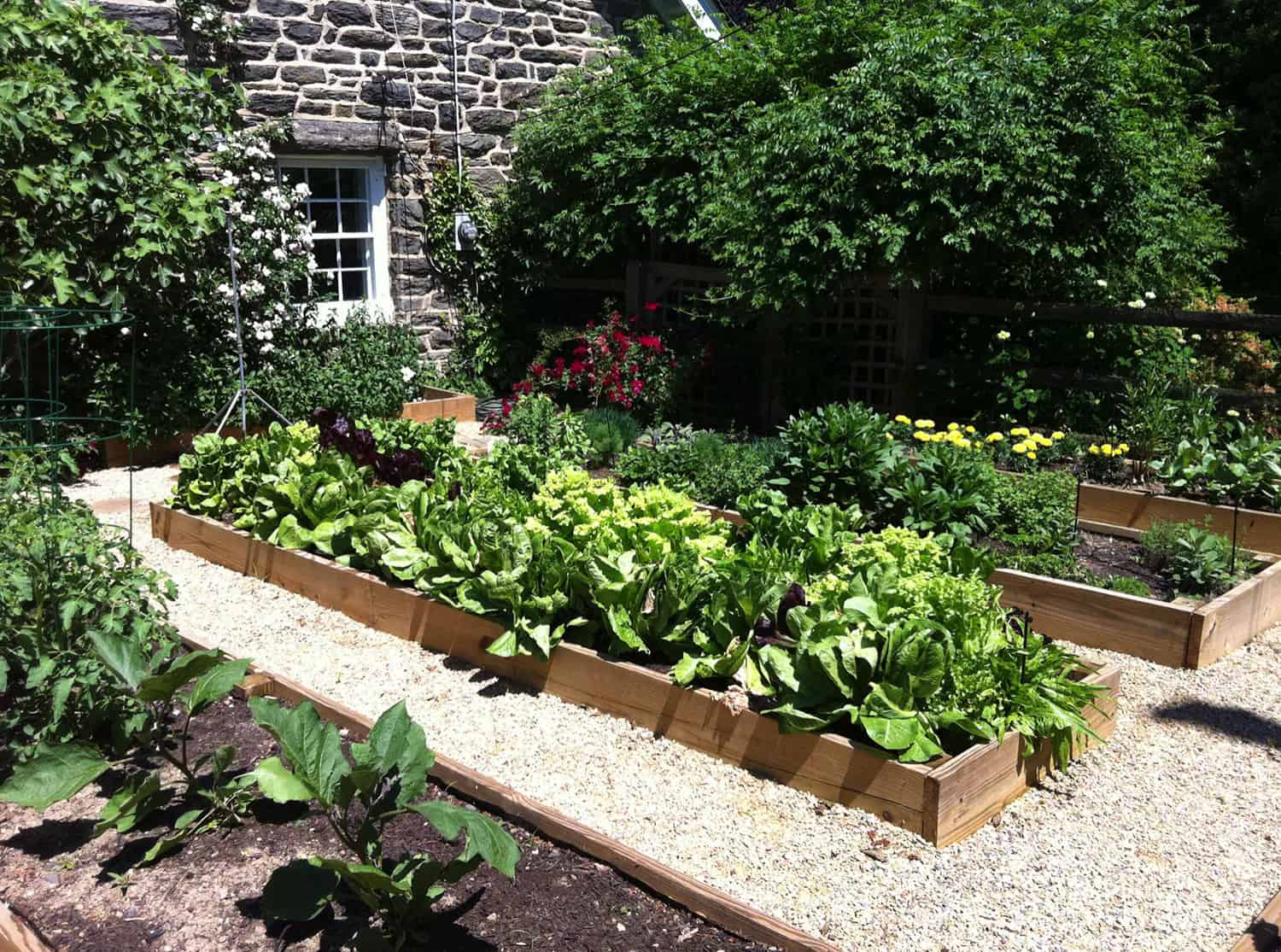
This garden in its entirety, including the gravel paths, is approximately 30 ft. x 30 ft. Raised vegetable beds range from 3 ft. – 6 ft. wide so you can easily reach across without stepping in your soil. Gravel access paths are usually 2-3 ft. wide, with some larger open areas for a wheelbarrow to fit through. The wood is 2″ x 12″ cedar. For durability, you can line the wood with plastic. The ground cover is a 3/8″ tan river rock gravel. (via Burke Brothers Landscape Design/Build)
32. Metal Garden Containers.
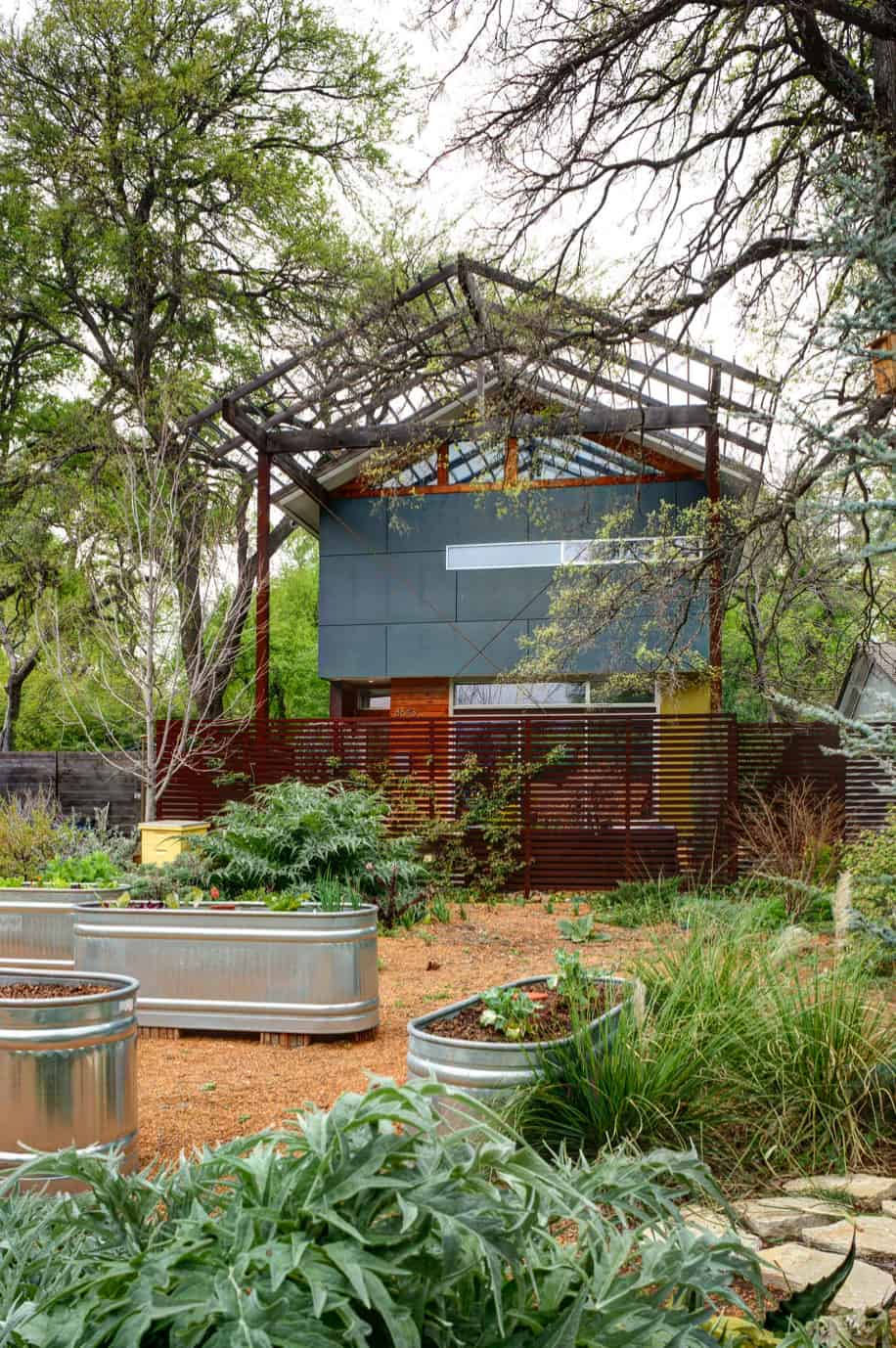
This backyard of a home in Texas features metal garden containers and watering troughs that can be found at any feed supply store. (via A.GRUPPO Architects)
33. Raised Cedar Garden Beds.
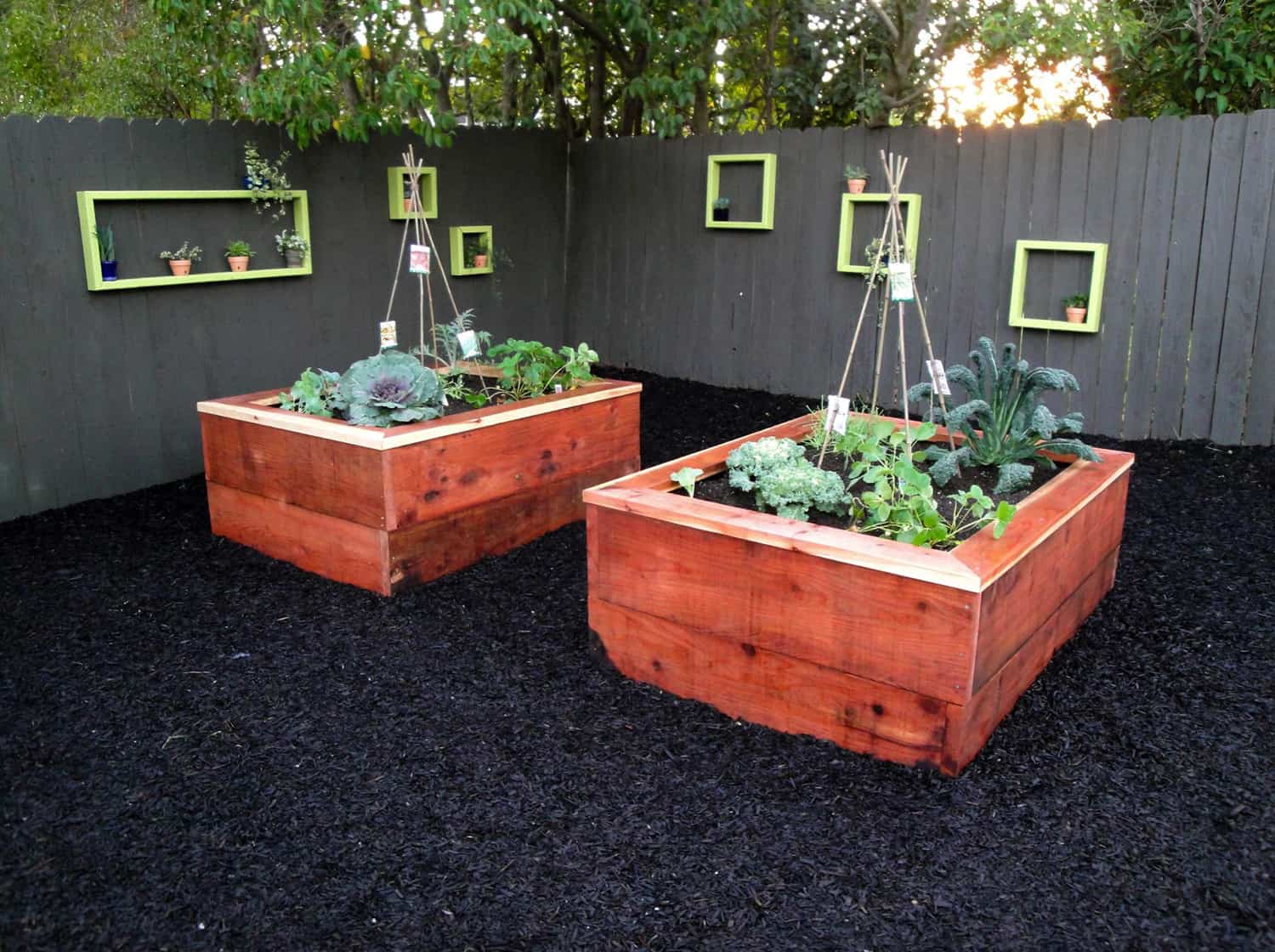
These raised cedar garden beds are framed by a fence with artwork and frames to dress up the fence and add dimension. The ground cover is recycled black bark. It’s basically ground-up wood pallets that get dyed black. (via Clean Cut Landscape)
34. Raised Juniper Wood Beds.
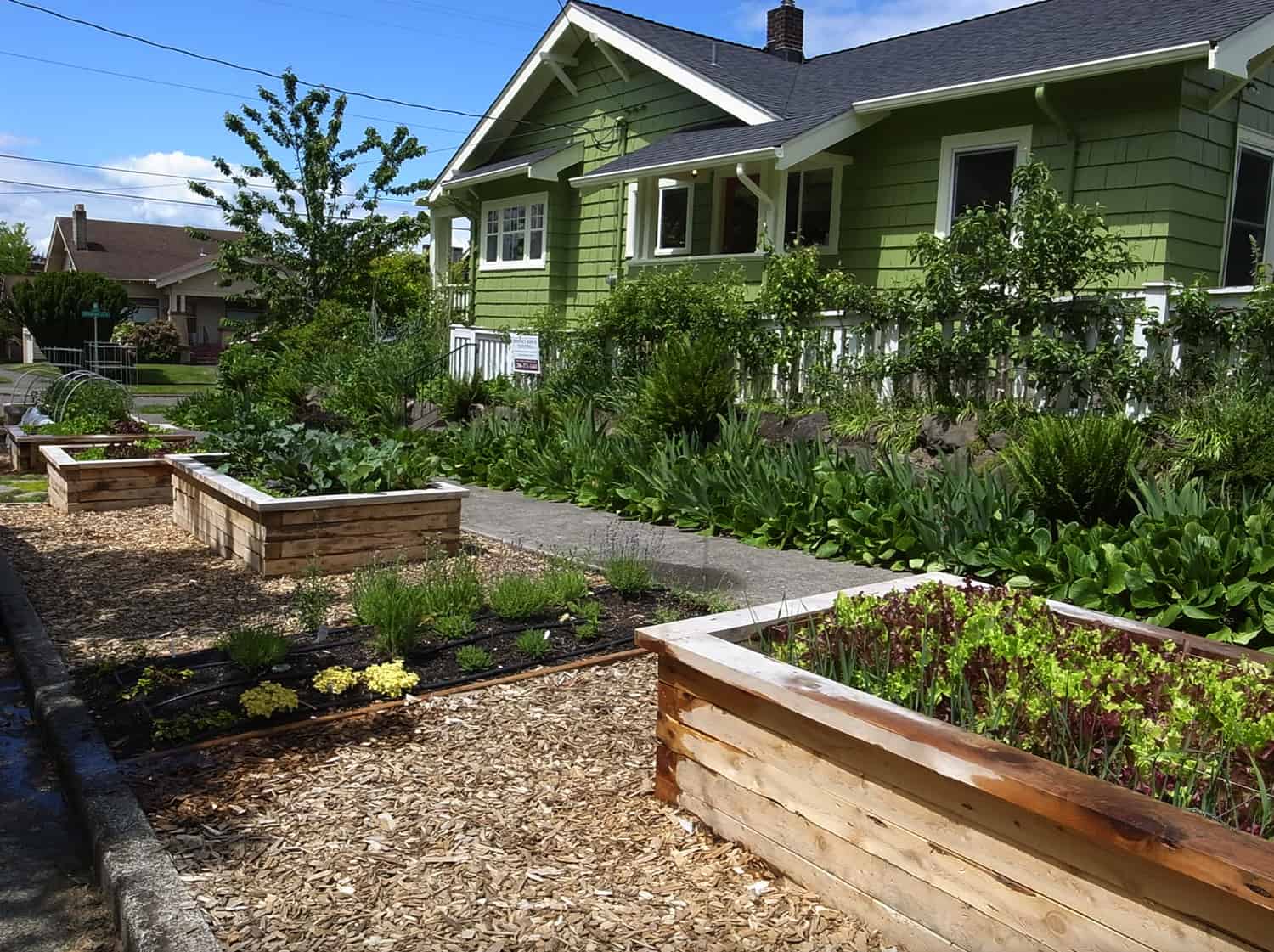
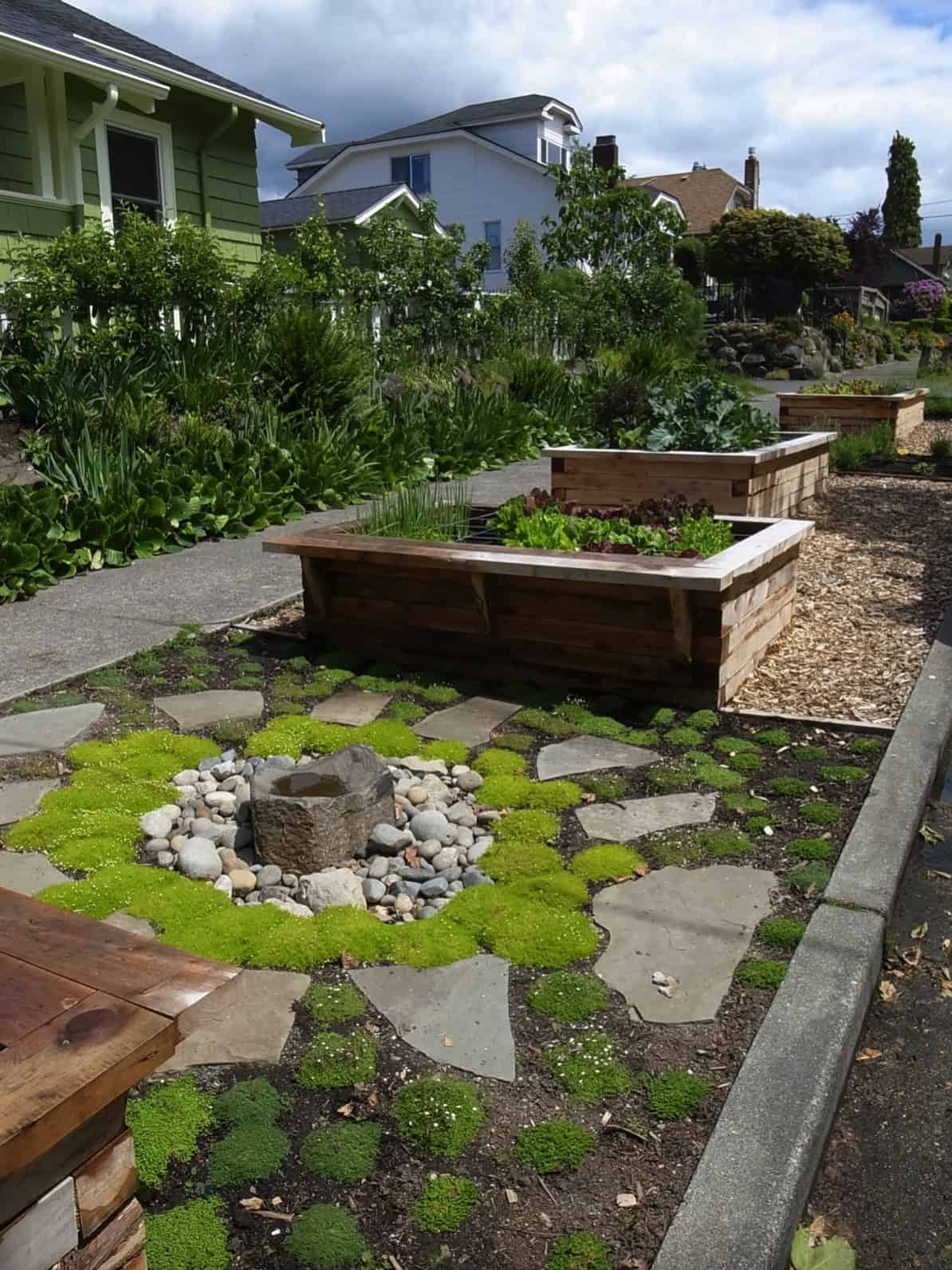
Scotch moss and pebbles surround a basalt dish rock. Raised beds of juniper wood are planted with veggies and also provide seating for a passerby. Woodchips surround the beds. (via Erin Lau Landscape Design)
35. Raised Vegetable Beds.
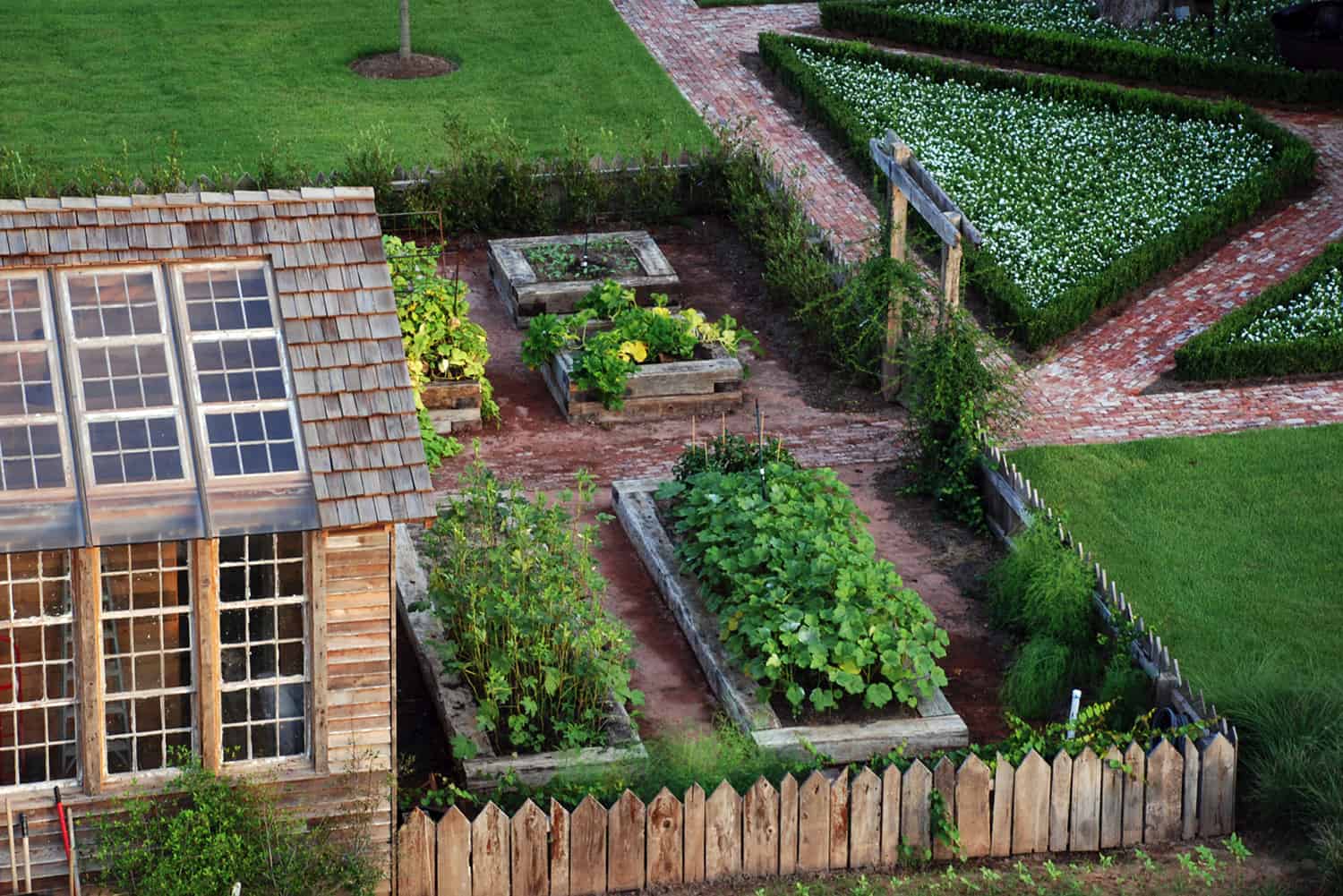
Next to a large potting shed are raised vegetable beds with a lovely small fence to keep out little critters. Brick pathways travel through the garden. (via Al Jones Architects)
36. Kitchen Garden.
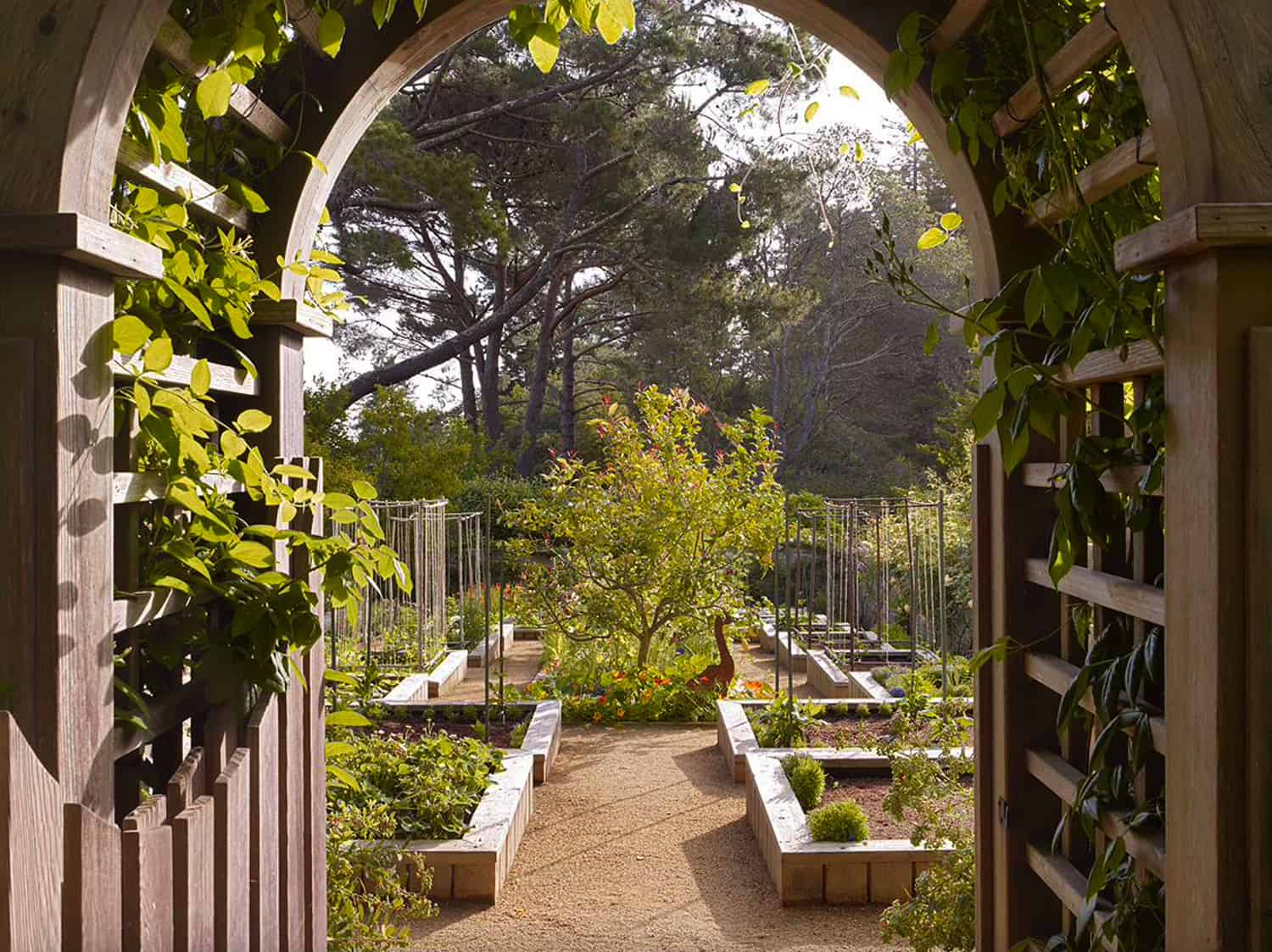
In Northern California, this beautiful kitchen garden is entered through a vine-covered trellis. (via Zeterre Landscape Architecture)
37. Tomato Cage Planters.
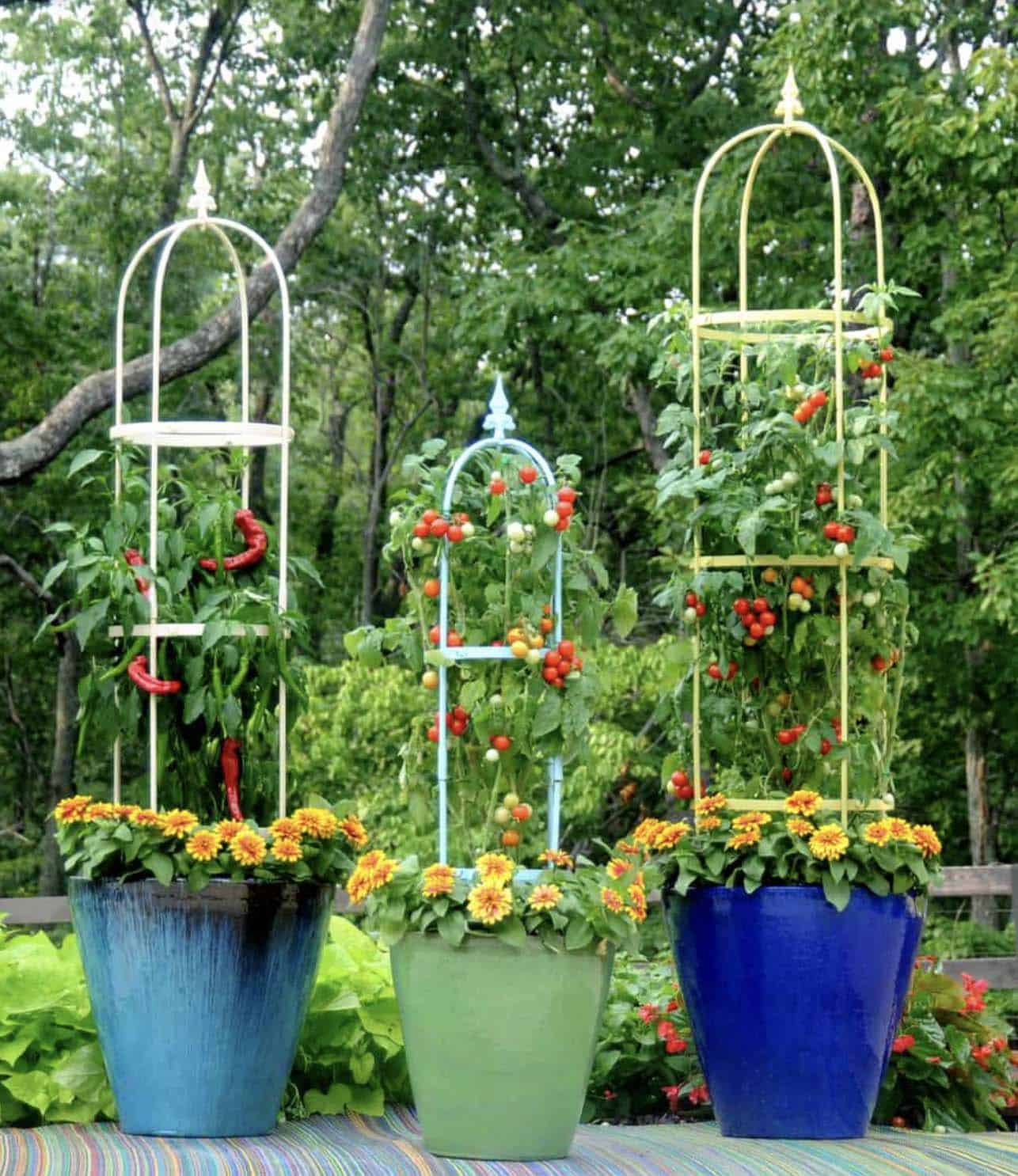
Peppers and tomatoes are underplanted with zinnias in this beautiful vegetable garden. These garden obelisks were ordered online. They are fabulous when used with tomatoes. These ones shown in the pots were spray-painted. (via Pamela Crawford)
38. Eat Better With a Homefront Garden.
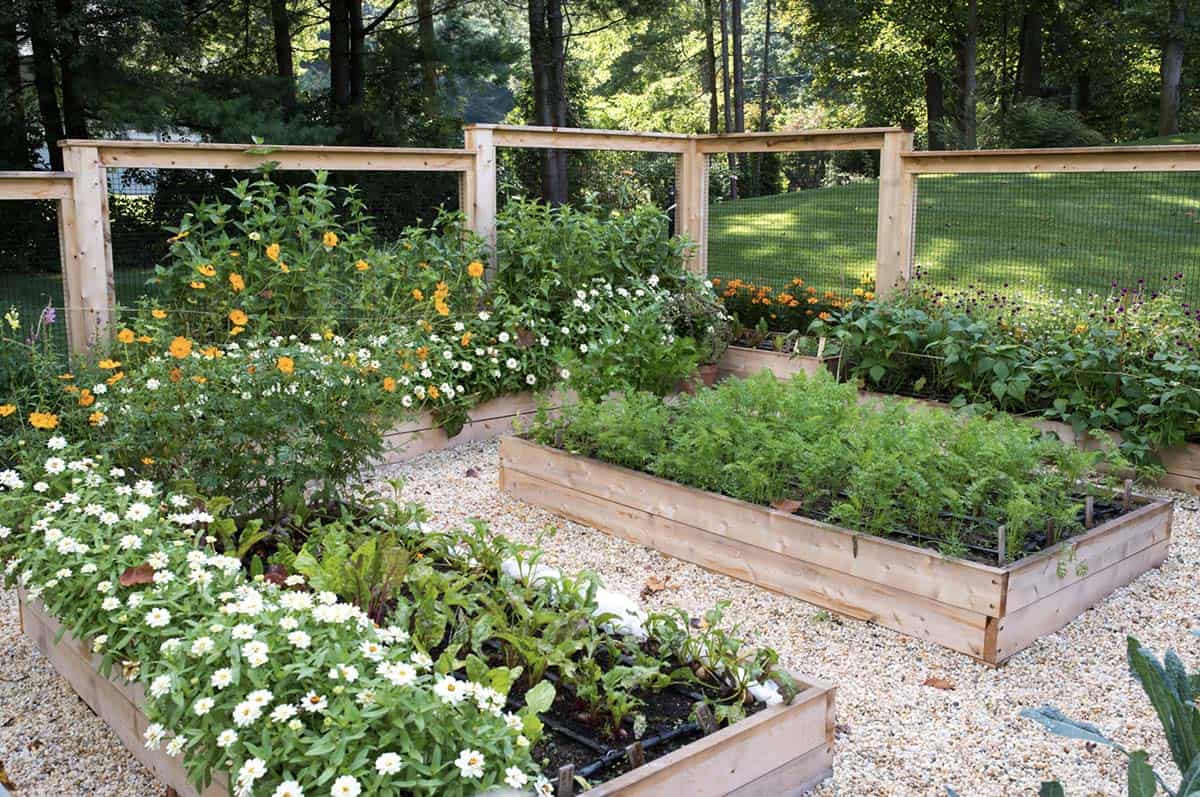
If you’d like to start eating better (not just healthier, but tastier too), you will love yard-to-table gardening. Growing your own fresh food steps from the kitchen ensures you’ll always have options come dinner time. Flowers and vegetables make great companions, both aesthetically and functionally. Flowers add splashes of color to the sea of green and attract beneficial pollinators, helping ensure your garden is successful and productive.
This garden features split rail or post-and-rail fencing, a great option for adding a touch of rustic charm to your yard. Long-lasting cedar fencing, durable, attractive galvanized “cage mesh,” below-ground pest barrier, and raised beds filled with balanced organic soil. The netting is 16-gauge welded wire. (via Homefront Farmers)
39. Organic Vegetable Garden.
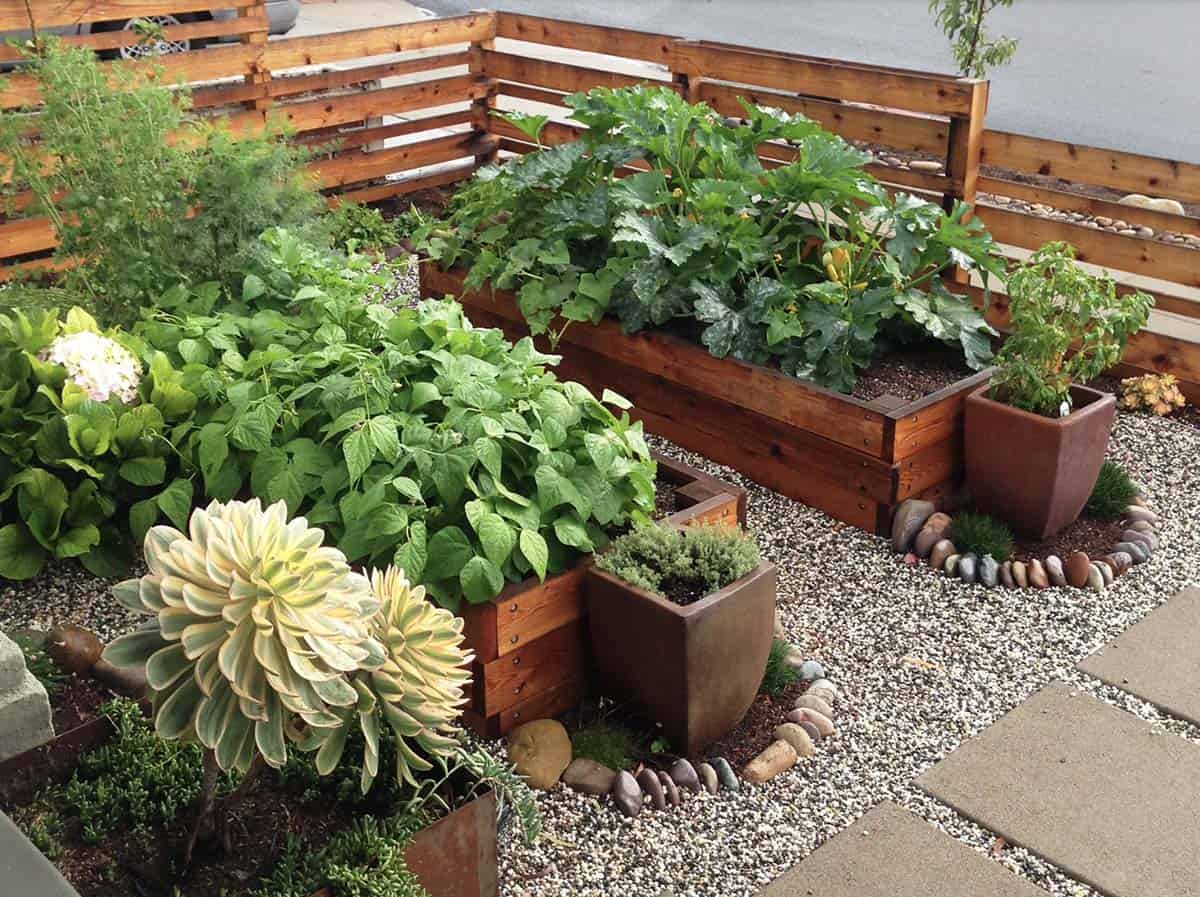
This inspiring backyard vegetable garden features raised cedar beds, a classic cedar fence, and container herbs, along with custom steel planters filled with succulents. Perfect for growing organic vegetables in style, this multifunctional garden blends practical gardening with elegant design. (via Revolution Landscape)
Vegetable Garden FAQs
How big should a vegetable garden be for a family of four?
A common starting point is about 100 to 200 square feet of growing space, roughly four 4×8 raised beds, which will keep a family in fresh salads, herbs, and summer vegetables. Starting with two or three beds and adding more once you get the hang of it is often the better approach.
What are the easiest vegetables for beginners?
Lettuce, radishes, bush beans, zucchini, cherry tomatoes, and herbs like basil and chives are all forgiving and productive, making them great first crops.
Are raised beds better than planting in the ground?
Raised beds let you control the soil, drain well, warm up earlier in spring, and are easier on your back. In-ground gardens cost less to set up and hold moisture longer in hot climates. Both work well; it comes down to your soil, budget, and space.
How do I keep deer and rabbits out of my vegetable garden?
Fencing is the most reliable solution. For deer, fences generally need to be about 8 feet tall (see idea #10). For rabbits, 2 to 3 feet of wire mesh, buried a few inches below ground, works well.
When should I start planting?
Cool-season crops like peas, lettuce, and spinach can go in a few weeks before your last spring frost. Warm-season crops like tomatoes, peppers, and squash should wait until after the last frost, when the soil has warmed up.



2 comments